Introduction
Geology Modeling Software helps mining companies, oil and gas operators, geotechnical engineers, and earth science professionals visualize, analyze, simulate, and interpret subsurface geological structures and spatial datasets. These platforms are widely used for mineral exploration, reservoir analysis, mine planning, geological mapping, seismic interpretation, groundwater studies, and geotechnical modeling across exploration and production environments.
As geological datasets become larger and more complex, traditional manual interpretation methods are no longer sufficient for modern exploration and resource management. Modern geology modeling platforms now combine AI-assisted interpretation, 3D visualization, GIS integrations, cloud collaboration, geostatistical analysis, digital twins, real-time data integration, and predictive simulation workflows to improve exploration accuracy and operational decision-making.
Real-world use cases include:
- Mineral and ore body modeling
- Oil and gas reservoir interpretation
- Geological mapping and visualization
- Geotechnical and hydrogeological analysis
- Resource estimation and mine planning
Buyers evaluating Geology Modeling Software should focus on:
- 3D geological visualization capabilities
- GIS and spatial data integration support
- Resource estimation and geostatistical tools
- Cloud collaboration and scalability
- Seismic and subsurface interpretation workflows
- AI-assisted modeling capabilities
- Data import and interoperability support
- Simulation and forecasting functionality
- Cybersecurity and governance controls
- Integration with mine planning and reservoir systems
Best for: Mining companies, oil and gas operators, geological survey organizations, geotechnical engineering firms, environmental consulting teams, and enterprise exploration organizations managing complex geological datasets.
Not ideal for: Small organizations requiring only lightweight GIS mapping or simple CAD visualization without advanced subsurface modeling or resource estimation capabilities.
Key Trends in Geology Modeling Software
- AI-assisted geological interpretation improving exploration accuracy
- Cloud-native geological collaboration replacing isolated desktop workflows
- Digital twins expanding subsurface operational intelligence
- GIS integrations becoming central to geological analysis
- Real-time drilling and sensor data improving modeling accuracy
- Automated resource estimation reducing manual workflows
- High-performance 3D visualization improving decision-making
- Predictive geological simulation expanding exploration intelligence
- Drone and satellite data integration increasing rapidly
- Cybersecurity becoming critical for geological and exploration data
How We Selected These Tools (Methodology)
- Adoption across mining and geological industries
- 3D geological modeling and visualization depth
- GIS, CAD, and seismic integration capabilities
- Resource estimation and simulation functionality
- Scalability for enterprise geological operations
- Cloud deployment and collaboration support
- Security and governance capabilities
- Data interoperability and import flexibility
- Operational reporting and analytics functionality
- Balance between enterprise, geological, and cloud-native solutions
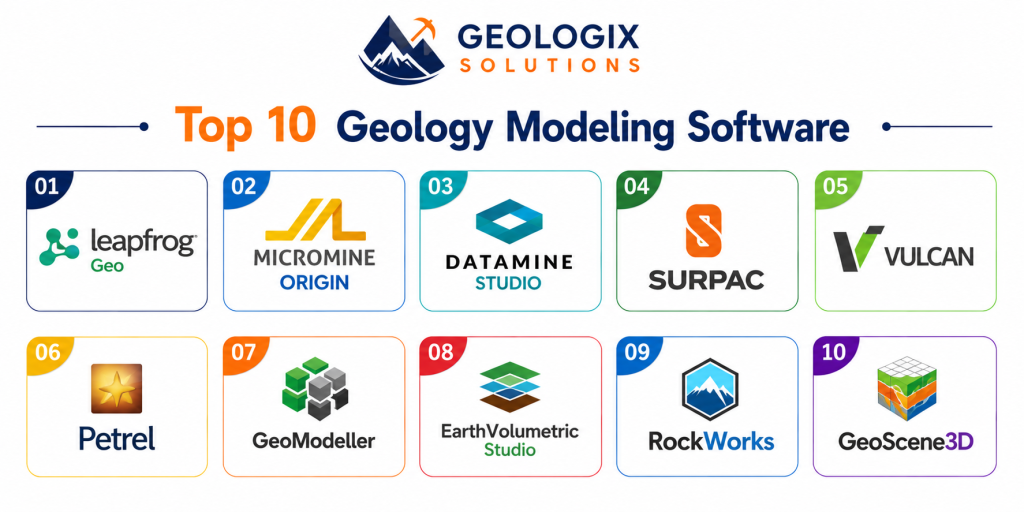
Top 10 Geology Modeling Software
1- Leapfrog Geo
Short description:
Leapfrog Geo is one of the most widely used geological modeling platforms for mining and exploration workflows, providing rapid 3D geological interpretation and subsurface visualization.
Key Features
- 3D geological modeling
- Rapid implicit modeling workflows
- Drillhole data visualization
- Resource estimation support
- GIS and CAD integrations
- Geological interpretation tools
- Cloud collaboration workflows
Pros
- Strong geological visualization capabilities
- Excellent usability for exploration workflows
- Reliable enterprise scalability
Cons
- Premium licensing structure
- Requires geological expertise
- Advanced workflows may require training
Platforms / Deployment
- Windows
- Cloud / Self-hosted
Security & Compliance
Supports secure authentication, encryption, RBAC, and governance workflows.
Integrations & Ecosystem
Integrates with GIS systems, CAD tools, drilling databases, mine planning platforms, and resource estimation systems.
- APIs
- GIS platforms
- CAD tools
- Mining systems
- Geological databases
Support & Community
Large global geological and mining ecosystem.
2- Seequent Central
Short description:
Seequent Central provides collaborative geological data management and modeling workflows for exploration, mining, and geotechnical organizations.
Key Features
- Geological collaboration workflows
- Centralized geological data management
- 3D model synchronization
- Cloud-based project coordination
- GIS integrations
- Drillhole data management
- Resource modeling support
Pros
- Strong collaboration functionality
- Good enterprise geological coordination
- Reliable cloud-based workflows
Cons
- Best optimized within Seequent ecosystems
- Enterprise deployment complexity
- Premium implementation costs
Platforms / Deployment
- Web / Windows
- Cloud
Security & Compliance
Supports encryption, RBAC, secure APIs, and governance controls.
Integrations & Ecosystem
- Leapfrog Geo
- GIS systems
- APIs
- Geological databases
Support & Community
Strong geological collaboration ecosystem.
3- Datamine Studio RM
Short description:
Datamine Studio RM provides resource modeling, geological interpretation, and mine planning workflows for mining exploration and operational environments.
Key Features
- Geological resource modeling
- 3D mine visualization
- Geostatistical analysis
- Drillhole management workflows
- Resource estimation support
- Operational forecasting analytics
- CAD and GIS integrations
Pros
- Strong resource modeling capabilities
- Reliable mining workflow integration
- Good geostatistical functionality
Cons
- Requires mining geology expertise
- Enterprise licensing complexity
- UI can feel technical for new users
Platforms / Deployment
- Windows
- Self-hosted / Hybrid
Security & Compliance
Supports secure authentication and operational governance controls.
Integrations & Ecosystem
- CAD tools
- GIS systems
- APIs
- Mining planning platforms
Support & Community
Strong mining geology ecosystem.
4- Petrel
Short description:
Petrel is a widely adopted subsurface modeling platform for oil and gas reservoir interpretation, seismic analysis, and geological simulation workflows.
Key Features
- Reservoir modeling workflows
- Seismic interpretation tools
- Subsurface simulation support
- Well and drilling analytics
- 3D geological visualization
- AI-assisted interpretation workflows
- Operational forecasting tools
Pros
- Strong reservoir modeling capabilities
- Excellent seismic interpretation support
- Reliable enterprise scalability
Cons
- Complex enterprise deployments
- Premium licensing costs
- Requires advanced geoscience expertise
Platforms / Deployment
- Windows
- Self-hosted / Hybrid
Security & Compliance
Supports RBAC, encryption, secure authentication, and governance workflows.
Integrations & Ecosystem
- Seismic systems
- APIs
- Reservoir engineering tools
- Geological databases
Support & Community
Large oil and gas geoscience ecosystem.
5- Vulcan
Short description:
Vulcan provides geological modeling, mine planning, and resource estimation workflows for mining operations and exploration projects.
Key Features
- Geological and mine modeling
- Resource estimation workflows
- Drillhole analysis support
- 3D visualization tools
- GIS and CAD integrations
- Operational mine planning
- Geostatistical analysis capabilities
Pros
- Strong mining geology workflows
- Good operational planning integration
- Reliable visualization capabilities
Cons
- Requires mining engineering expertise
- Technical learning curve
- Enterprise deployment complexity
Platforms / Deployment
- Windows
- Self-hosted / Hybrid
Security & Compliance
Supports secure operational workflows and governance controls.
Integrations & Ecosystem
- CAD systems
- GIS platforms
- APIs
- Mining planning tools
Support & Community
Strong mining engineering ecosystem.
6- Micromine
Short description:
Micromine provides geological exploration, resource estimation, and mine design workflows for mining and exploration organizations.
Key Features
- Geological data visualization
- Resource estimation support
- Drillhole management workflows
- Geostatistical analysis
- GIS integrations
- Mine design workflows
- Operational reporting analytics
Pros
- Strong usability for exploration teams
- Good geological data workflows
- Reliable resource estimation support
Cons
- Smaller enterprise ecosystem
- Advanced automation capabilities vary
- Complex workflows require expertise
Platforms / Deployment
- Windows
- Cloud / Self-hosted
Security & Compliance
Supports secure authentication and operational governance controls.
Integrations & Ecosystem
- GIS platforms
- APIs
- Geological databases
- Mining systems
Support & Community
Growing global mining ecosystem.
7- GeoModeller
Short description:
GeoModeller provides geological and geophysical modeling workflows focused on subsurface analysis, hydrogeology, and resource exploration.
Key Features
- Geological and geophysical modeling
- 3D subsurface visualization
- Hydrogeological analysis
- Spatial data interpretation
- GIS integrations
- Resource exploration support
- Geological simulation workflows
Pros
- Strong geophysical analysis capabilities
- Good subsurface modeling support
- Reliable geological simulation workflows
Cons
- Smaller ecosystem than mining-focused vendors
- Advanced workflows require expertise
- Limited enterprise automation support
Platforms / Deployment
- Windows
- Self-hosted
Security & Compliance
Supports encrypted communications and governance controls.
Integrations & Ecosystem
- GIS systems
- APIs
- Geological databases
- Spatial analysis tools
Support & Community
Strong academic and geological research ecosystem.
8- ArcGIS Geology Tools
Short description:
ArcGIS Geology Tools provides GIS-centric geological mapping, spatial visualization, and geological analysis workflows for exploration and environmental operations.
Key Features
- GIS-based geological mapping
- Spatial analysis workflows
- Geospatial visualization dashboards
- Terrain and subsurface analysis
- Remote sensing integrations
- Field data collection support
- Geological reporting tools
Pros
- Strong GIS ecosystem integration
- Excellent geospatial visualization
- Reliable spatial analytics capabilities
Cons
- More GIS-focused than deep geological modeling
- Limited advanced reservoir simulation support
- Requires GIS expertise
Platforms / Deployment
- Web / Windows
- Cloud / Hybrid
Security & Compliance
Supports RBAC, encryption, and governance workflows.
Integrations & Ecosystem
- ArcGIS ecosystem
- APIs
- Remote sensing tools
- Geological databases
Support & Community
Large global GIS ecosystem.
9- Earth Volumetric Studio
Short description:
Earth Volumetric Studio provides advanced subsurface visualization and seismic interpretation workflows for oil, gas, and geological exploration environments.
Key Features
- Seismic visualization workflows
- 3D subsurface interpretation
- Geological simulation support
- Well planning analytics
- AI-assisted interpretation tools
- Operational dashboards
- Geospatial data integration
Pros
- Strong subsurface visualization capabilities
- Good seismic interpretation support
- Reliable geological analysis workflows
Cons
- Enterprise deployment complexity
- Requires geoscience expertise
- Smaller ecosystem than major enterprise platforms
Platforms /Deployment
- Windows
- Self-hosted / Hybrid
Security & Compliance
Supports secure operational workflows and governance controls.
Integrations & Ecosystem
- Seismic systems
- APIs
- Geological databases
- Reservoir tools
Support & Community
Growing geoscience visualization ecosystem.
10- Geovia Surpac
Short description:
Geovia Surpac provides geological modeling, mine planning, and resource estimation workflows for mining exploration and operational environments.
Key Features
- Geological resource modeling
- Mine planning support
- Drillhole analysis workflows
- Geostatistical estimation tools
- GIS integrations
- Operational reporting dashboards
- 3D visualization support
Pros
- Strong mining geology workflows
- Reliable resource estimation support
- Good operational mine integration
Cons
- Technical learning curve
- Enterprise implementation complexity
- Advanced workflows require expertise
Platforms / Deployment
- Windows
- Self-hosted / Hybrid
Security & Compliance
Supports secure authentication and governance workflows.
Integrations & Ecosystem
- GIS systems
- APIs
- Mining planning tools
- Geological databases
Support & Community
Strong mining geology ecosystem.
Comparison Table
| Tool Name | Best For | Platforms Supported | Deployment | Standout Feature | Public Rating |
|---|---|---|---|---|---|
| Leapfrog Geo | Exploration modeling | Windows | Hybrid | Rapid implicit modeling | N/A |
| Seequent Central | Geological collaboration | Web, Windows | Cloud | Centralized geological workflows | N/A |
| Datamine Studio RM | Resource modeling | Windows | Hybrid | Geostatistical resource estimation | N/A |
| Petrel | Reservoir interpretation | Windows | Hybrid | Seismic and reservoir modeling | N/A |
| Vulcan | Mining geology workflows | Windows | Hybrid | Integrated mine planning | N/A |
| Micromine | Exploration operations | Windows | Hybrid | Geological usability | N/A |
| GeoModeller | Geophysical analysis | Windows | Self-hosted | Geological simulation workflows | N/A |
| ArcGIS Geology Tools | GIS geological mapping | Web, Windows | Hybrid | Geospatial visualization | N/A |
| Earth Volumetric Studio | Seismic interpretation | Windows | Hybrid | Advanced subsurface visualization | N/A |
| Geovia Surpac | Mining resource estimation | Windows | Hybrid | Geological mine modeling | N/A |
Evaluation & Scoring of Geology Modeling Software
| Tool Name | Core 25% | Ease 15% | Integrations 15% | Security 10% | Performance 10% | Support 10% | Value 15% | Weighted Total |
|---|---|---|---|---|---|---|---|---|
| Leapfrog Geo | 9.5 | 8.4 | 9.1 | 9.0 | 9.3 | 9.2 | 8.2 | 9.0 |
| Seequent Central | 9.0 | 8.5 | 9.2 | 9.1 | 9.0 | 9.0 | 8.3 | 8.9 |
| Datamine Studio RM | 9.2 | 7.8 | 8.9 | 8.9 | 9.1 | 8.8 | 8.1 | 8.7 |
| Petrel | 9.5 | 7.5 | 9.2 | 9.2 | 9.4 | 9.1 | 7.9 | 8.9 |
| Vulcan | 9.0 | 7.8 | 8.8 | 8.8 | 9.0 | 8.8 | 8.2 | 8.6 |
| Micromine | 8.8 | 8.3 | 8.6 | 8.7 | 8.8 | 8.6 | 8.5 | 8.6 |
| GeoModeller | 8.7 | 7.9 | 8.4 | 8.6 | 8.7 | 8.5 | 8.4 | 8.4 |
| ArcGIS Geology Tools | 8.8 | 8.5 | 9.3 | 8.9 | 8.8 | 9.0 | 8.5 | 8.8 |
| Earth Volumetric Studio | 8.9 | 7.8 | 8.5 | 8.7 | 8.9 | 8.4 | 8.3 | 8.5 |
| Geovia Surpac | 9.0 | 7.9 | 8.8 | 8.8 | 9.0 | 8.8 | 8.2 | 8.6 |
These scores are comparative and intended to help organizations evaluate Geology Modeling Software based on visualization capabilities, geological interpretation depth, integrations, scalability, geostatistical functionality, cybersecurity, and long-term exploration value.
Which Geology Modeling Software Is Right for You?
Small Exploration Teams
Best suited: Micromine, ArcGIS Geology Tools
These provide easier usability and strong geospatial analysis workflows.
SMB Mining and Geological Firms
Best suited: Leapfrog Geo, GeoModeller
These balance geological modeling and operational flexibility.
Mid-Market Exploration Organizations
Best suited: Datamine Studio RM, Vulcan
These provide stronger resource estimation and operational planning workflows.
Large Enterprise Mining and Energy Operations
Best suited: Petrel, Leapfrog Geo, Seequent Central
These offer enterprise scalability, advanced subsurface analytics, and collaborative geological intelligence.
Budget vs Premium
Budget-friendly: ArcGIS Geology Tools, GeoModeller
Premium enterprise: Petrel, Leapfrog Geo
Feature Depth vs Ease of Use
Deep enterprise functionality: Petrel, Datamine Studio RM
Ease of use: Leapfrog Geo, Micromine
Integrations & Scalability
Best integrations: ArcGIS Geology Tools, Seequent Central, Petrel
Best scalability: Petrel, Leapfrog Geo
Security & Compliance Needs
Organizations managing sensitive exploration and geological data should prioritize systems supporting RBAC, MFA, encryption, audit logging, and secure cloud collaboration workflows.
Frequently Asked Questions
1. What is Geology Modeling Software?
It is software used to visualize, interpret, analyze, and simulate geological structures and subsurface environments.
2. Why is geology modeling important?
It improves exploration accuracy, resource estimation, operational planning, and geological decision-making.
3. Can these platforms integrate with GIS systems?
Yes, GIS integration is a core capability of most modern geology modeling platforms.
4. What analytics capabilities are common?
Geostatistical analysis, seismic interpretation, resource estimation, predictive simulation, and spatial modeling are commonly supported.
5. Are cloud-based geology platforms common?
Yes, cloud-native geological collaboration platforms are increasingly common because they improve scalability and team coordination.
6. What security features are important?
RBAC, MFA, encryption, secure APIs, and audit logging are critical for protecting geological and exploration data.
7. Which industries use geology modeling software most?
Mining companies, oil and gas operators, geological surveys, environmental consultants, and geotechnical engineering organizations heavily rely on these platforms.
8. Can these platforms support AI-assisted interpretation?
Yes, many modern platforms now include AI-assisted geological interpretation and predictive analysis workflows.
9. What are common implementation challenges?
Data migration, GIS integration, user training, geological model calibration, and large-scale dataset management are common challenges.
10. How should organizations choose a geology modeling platform?
Organizations should evaluate scalability, visualization capabilities, integrations, geostatistical functionality, cybersecurity, and long-term exploration strategy.
Conclusion
Geology Modeling Software has become essential infrastructure for exploration organizations managing increasingly complex geological datasets and subsurface analysis workflows. Modern platforms now combine AI-assisted interpretation, 3D visualization, GIS integrations, predictive simulation, cloud collaboration, and digital twin capabilities to support intelligent geological operations. Enterprise solutions such as Leapfrog Geo, Petrel, and Seequent Central provide deep operational functionality and advanced geological intelligence, while platforms like Micromine and ArcGIS Geology Tools offer flexible and highly accessible workflows for evolving exploration environments. The best solution ultimately depends on operational scale, exploration complexity, integration priorities, geostatistical requirements, and long-term geological strategy. A structured evaluation process combined with pilot deployments and operational workflow validation can significantly improve exploration accuracy, operational efficiency, and long-term geological decision-making.