Introduction
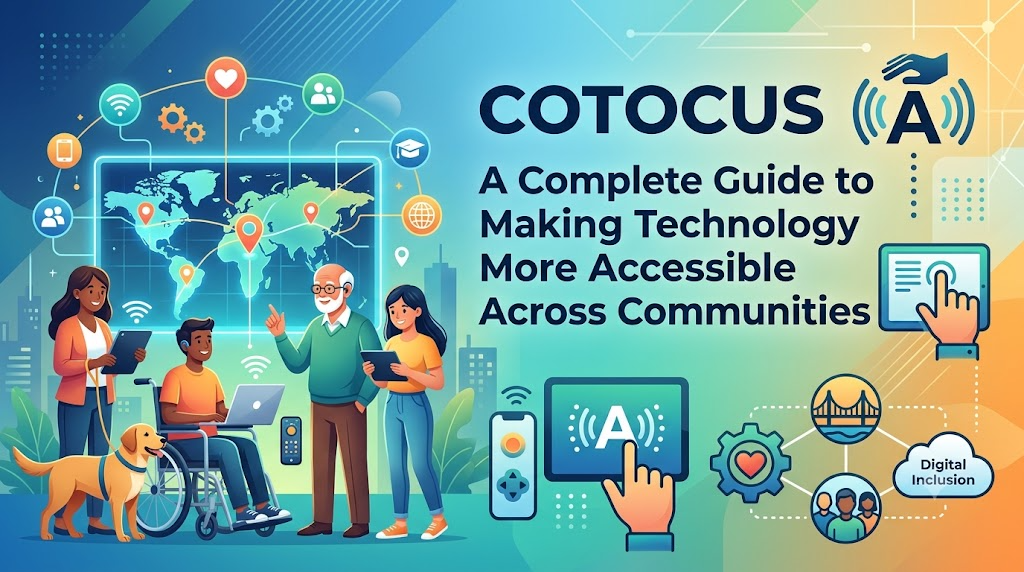
Technology shapes nearly every part of modern life, yet access to its benefits remains unevenly distributed. While some communities thrive on rapid digital innovation, others face significant barriers related to access, skills, and understanding. Addressing this gap requires a deliberate focus on human needs rather than commercial growth.
Cotocus Foundation is a nonprofit organization dedicated to addressing this challenge. By combining technology, research, education, and community engagement, the Foundation works to make innovation more accessible and inclusive. This article explores the core work of Cotocus Foundation, examining its major pillars, programs, and broader concepts such as digital inclusion, responsible artificial intelligence, and technology education.
What Is Cotocus Foundation?
Cotocus Foundation is an independent nonprofit organization focused on using technology, research, and education to create positive social impact. Unlike a commercial software company driven by profit margins, the Foundation operates with a mission centered on public good, community empowerment, and social equity.
The mission of Cotocus Foundation focuses on making technology, innovation, and education more accessible to everyone. Its vision is to bridge the digital divide, support inclusive innovation, and empower individuals and communities to participate meaningfully in a technology-driven world. By centering its efforts on humanity, the Foundation functions as a dedicated Technology Nonprofit Organization that bridges the gap between advanced technical concepts and grassroots community needs.
Understanding the Five Pillars of Cotocus Foundation
Cotocus Foundation organizes its initiatives around five core pillars. This structured framework ensures that its work remains balanced, addressing both immediate community needs and long-term research goals.
Technology for Humanity
The first pillar centers on using technology to solve real-world human challenges. This approach prioritizes digital access, ethical deployment, and human-centered design. Instead of developing technology for its own sake, this pillar focuses on ensuring that digital tools serve to uplift communities, improve daily life, and protect individual dignity.
Innovation and Research
Innovation requires careful study and evidence-based experimentation. The second pillar supports research into emerging technologies and their societal implications. By fostering analytical thinking and structured investigation, Cotocus Foundation explores how new tools can be designed and deployed responsibly for the public benefit.
Education and Skills
Access to hardware and software means little without the knowledge to use them effectively. The third pillar emphasizes digital literacy, technical training, and lifelong learning. Through structured educational initiatives, the Foundation helps individuals develop the practical skills required for modern employment and civic participation.
Healthcare and Digital Wellbeing
Technology profoundly influences physical and mental health. The fourth pillar addresses digital health awareness, healthcare technology accessibility, and the promotion of digital wellbeing. This includes exploring how digital tools can support health education and make health-related resources more accessible to underserved populations.
Community and Sustainability
Technology initiatives succeed only when they involve the communities they aim to serve. The fifth pillar focuses on community development, local participation, and environmental sustainability. This area ensures that technological growth aligns with sustainable practices and inclusive growth at the local level.
What Are Digital Literacy Programs?
Digital literacy goes beyond knowing how to operate a smartphone or computer. It encompasses the ability to find, evaluate, utilize, and create information using digital technologies. This includes understanding internet safety, recognizing misinformation, protecting personal data, and navigating digital services for education, employment, and civic engagement.
For underserved populations, a lack of basic digital skills creates a profound barrier to opportunity. Digital Literacy Programs are designed to bridge this gap by providing structured training that builds confidence and technical competence from the ground up.
Cotocus Foundation addresses this need through initiatives such as the Digital Literacy for All program. This program focuses on equipping individuals with foundational digital skills, helping participants navigate online environments safely and effectively, and fostering long-term digital confidence across diverse communities.
How Digital Inclusion Programs Help Reduce the Digital Divide
The digital divide refers to the gap between those who have affordable, reliable access to digital technology and information and those who do not. This divide is influenced by multiple factors, including geography, income, infrastructure, and education.
True digital inclusion requires more than simply distributing devices. Digital Inclusion Programs address the entire spectrum of barriers, encompassing:
- Connectivity: Ensuring reliable access to high-speed internet.
- Affordability: Making hardware and data services accessible to low-income households.
- Accessibility: Designing digital tools that accommodate individuals with disabilities.
- Confidence and Support: Providing ongoing guidance so users can make meaningful use of technology.
Cotocus Foundation incorporates digital inclusion into its core mission, recognizing that equitable access to technology is a fundamental prerequisite for modern social and economic participation.
AI for Social Impact
Artificial intelligence offers powerful capabilities for analyzing complex data, automating repetitive tasks, and generating insights. When applied thoughtfully, AI for Social Impact directs these capabilities toward solving pressing societal challenges rather than commercial optimization.
Applications in this field span multiple domains:
- Healthcare: Assisting in early disease detection, streamlining administrative workflows, and expanding health education reach.
- Education: Supporting personalized learning experiences and identifying students who need additional academic support.
- Environmental Protection: Analyzing climate data, tracking resource consumption, and supporting conservation efforts.
- Community Development: Optimizing resource distribution for social services and disaster response.
Cotocus Foundation supports these goals through initiatives like the AI for Social Impact Fellowship. This program brings together technologists, researchers, and social entrepreneurs to collaborate on responsible AI solutions designed to address specific community and humanitarian challenges.
Why Responsible AI Research Matters
As artificial intelligence systems become more integrated into daily life, the ethical implications of their deployment demand careful scrutiny. Responsible AI Research focuses on ensuring that AI systems are developed and used in ways that are fair, transparent, accountable, and safe.
Key areas of focus within responsible AI include:
- Bias and Fairness: Identifying and mitigating algorithmic bias to prevent discriminatory outcomes against marginalized groups.
- Transparency and Explainability: Ensuring that automated decisions can be understood and audited by humans.
- Accountability: Establishing clear lines of responsibility for the outcomes generated by AI systems.
- Privacy Protection: Safeguarding individual data used to train and operate AI models.
Cotocus Foundation engages in research exploring these ethical dimensions, examining how artificial intelligence can be deployed responsibly to support social good without compromising human rights or community trust. (Note: Specific research initiatives, such as publications on responsible AI for social impact, are developed in alignment with ongoing Foundation milestones as outlined on the organization’s official platform.)
Technology Education Programs for Lifelong Learning
Rapid technological advancement means that learning cannot stop with formal schooling. Continuous skill development is essential for navigating changing job markets and engaging with new digital tools. Technology Education Programs provide structured pathways for individuals to acquire technical knowledge, critical thinking skills, and practical experience.
Effective technology education programs typically feature:
- Practical Curriculum: Focusing on real-world problem-solving rather than rote memorization.
- Mentorship: Connecting learners with experienced professionals who can guide their development.
- Inclusivity: Ensuring programs are accessible to learners of all backgrounds and age groups.
- Adaptability: Evolving course content to reflect current technological trends and community needs.
Cotocus Foundation designs its educational offerings to support lifelong learning, helping participants build sustainable technical capabilities that enhance their personal and professional lives.
Youth Innovation Programs and Young Problem Solvers
Empowering the next generation of thinkers is essential for long-term social progress. Youth Innovation Programs provide young people with the resources, mentorship, and platforms they need to transform creative ideas into tangible solutions.
These programs foster essential life skills, including collaborative problem-solving, critical inquiry, resilience, and technological literacy. By encouraging youth to examine local challenges and design technology-driven solutions, these initiatives build a sense of civic responsibility and creative confidence.
Cotocus Foundation supports this vision through initiatives such as the Youth Innovation Challenge, which encourages young minds to explore technology, design innovative projects, and address real-world community problems through creative thinking.
Nonprofit Digital Transformation
Many mission-driven organizations operate with limited resources, making it challenging to adopt modern digital tools effectively. Nonprofit Digital Transformation involves helping charities, community groups, and educational institutions integrate digital technologies into their operations, communications, and service delivery.
Effective digital transformation for nonprofits focuses on:
- Operational Efficiency: Streamlining internal processes using secure cloud tools and databases.
- Data Management: Improving how organizations collect, analyze, and protect stakeholder data.
- Outreach and Engagement: Utilizing digital platforms to connect with supporters and beneficiaries more effectively.
- Capacity Building: Training staff and volunteers to use new technologies confidently.
Cotocus Foundation addresses this area through its dedicated labs and collaborative programs, helping mission-driven organizations enhance their digital capabilities sustainably.
Innovation Labs and Technology Research
Innovation labs serve as dedicated spaces for experimentation, research, and prototype development. Cotocus Foundation structures its investigative work through specialized labs, each focusing on a distinct dimension of technology and society.
AI Innovation Lab
The AI Innovation Lab focuses on exploring practical applications of artificial intelligence for social good. It serves as a collaborative environment where researchers and technologists can test models, evaluate ethical implications, and develop proofs-of-concept for community-focused AI tools.
Future Technology Lab
The Future Technology Lab looks beyond immediate applications to examine emerging technological trends. This lab investigates how technologies on the horizon—such as advanced data systems, new interface modalities, and sustainable computing frameworks—might impact society in the coming years.
Digital Transformation Lab
The Digital Transformation Lab focuses on organizational capacity, helping nonprofits and community groups adopt digital workflows. It researches best practices for digital adoption in resource-constrained environments and develops practical frameworks for organizational modernization.
Technology and Healthcare for Social Impact
Access to reliable health information and medical technology remains unequal across different demographics. Integrating technology into healthcare initiatives can help bridge this gap by expanding health awareness, supporting telehealth access, and empowering patients with actionable health data.
Cotocus Foundation’s work in healthcare and digital wellbeing explores how digital tools can be used to promote health education, support preventative care initiatives, and ensure that health-related technology reaches underserved communities equitably.
Community and Sustainability Initiatives
Technology projects designed for social impact must be sustainable and deeply rooted in the communities they serve. Community and sustainability initiatives focus on ensuring that technological growth respects local cultures, protects environmental resources, and promotes inclusive, long-term growth.
Active community participation ensures that technology solutions are appropriate, accepted, and effectively maintained by local residents long after initial deployment.
Corporate Social Impact Partnerships
Achieving meaningful social impact requires collaboration across sectors. Corporate Social Impact Partnerships enable companies, academic institutions, and nonprofit organizations to pool their strengths in pursuit of common social goals.
Organizations can contribute through:
- Expertise Sharing: Providing technical guidance and professional mentorship.
- Research Collaboration: Partnering on studies related to digital inclusion and responsible technology.
- Resource Support: Contributing tools, infrastructure, or funding for community programs.
- Joint Initiatives: Co-developing programs that address specific educational or social challenges.
Cotocus Foundation engages with partners who share its commitment to responsible technology and social equity, fostering collaborative networks that amplify community benefit.
Technology Volunteer Opportunities
Volunteering in the technology sector allows professionals and students to apply their specialized skills directly toward social good. Technology Volunteer Opportunities can range from mentoring young learners and supporting digital literacy workshops to contributing to open-source research and community technology projects.
Cotocus Foundation facilitates community involvement through several structured avenues:
- Global Volunteer Network: Connecting individuals worldwide who want to contribute their skills to social-impact initiatives.
- Campus Ambassador Program: Empowering students to champion digital inclusion and technology education on their campuses.
- Innovation Circles: Collaborative groups that bring together diverse thinkers to brainstorm and develop community-focused technology solutions.
Who Can Benefit From Cotocus Foundation’s Work?
Students and Young Learners
Students gain access to digital literacy training, educational resources, and innovation challenges that build practical skills and inspire creative problem-solving.
Technology Professionals
Professionals can engage in volunteer networks, mentorship programs, and collaborative initiatives, using their technical expertise to drive social good.
Researchers and Academics
Researchers find collaborative platforms to study responsible technology, digital inclusion, and the societal impacts of emerging tools like artificial intelligence.
Nonprofit and Community Organizations
Nonprofits benefit from digital transformation guidance, capacity-building resources, and collaborative tools that enhance their operational reach.
Social Entrepreneurs and Innovators
Innovators can connect with fellowship programs and innovation labs to test, refine, and scale technology solutions addressing social challenges.
Organizations Interested in Technology for Social Impact
Corporations and institutions find structured pathways for meaningful corporate social responsibility partnerships and collaborative community projects.
How to Plan a Technology-for-Social-Impact Initiative
Step 1: Identify the Community Need
Begin by engaging directly with the community to understand their actual challenges, rather than assuming what technology they might need.
Step 2: Understand the People Affected
Analyze the demographic, economic, and cultural factors influencing the target group to ensure proposed solutions are appropriate and respectful.
Step 3: Define the Social-Impact Goal
Establish clear, measurable objectives focused on the social benefit the initiative aims to achieve.
Step 4: Select the Appropriate Technology
Choose tools that match the community’s infrastructure, technical proficiency, and ongoing maintenance capabilities.
Step 5: Consider Ethics and Inclusion
Evaluate potential privacy risks, algorithmic biases, and accessibility barriers before deploying any digital solution.
Step 6: Build Community Participation
Involve local community members in the design, implementation, and evaluation phases of the project.
Step 7: Measure Meaningful Outcomes
Track indicators that reflect genuine improvements in skills, access, or wellbeing rather than superficial metrics.
Step 8: Review, Improve, and Sustain the Initiative
Establish feedback loops to continuously refine the program and ensure its long-term viability without ongoing external intervention.
Cotocus Foundation Focus Areas and Social Impact
| Cotocus Foundation Focus Area | Main Purpose | Related Social Impact |
| Technology for Humanity | Advancing human-centered, ethical digital access | Empowering marginalized communities with safe technology |
| Innovation & Research | Studying emerging technologies and societal impacts | Building evidence-based frameworks for responsible tech |
| Education & Skills | Promoting digital literacy and lifelong learning | Equipping individuals for modern economic participation |
| Healthcare & Digital Wellbeing | Expanding health awareness and digital health access | Improving health literacy and resource accessibility |
| Community & Sustainability | Fostering inclusive growth and local participation | Ensuring sustainable, community-led technological progress |
Common Challenges in Technology-for-Social-Impact Work
Addressing social challenges through technology frequently involves navigating complex operational hurdles. Understanding these common obstacles helps organizations design more resilient and effective programs.
- Digital Access Barriers: Inadequate infrastructure, lack of reliable electricity, or prohibitive internet costs can prevent target populations from participating in digital programs.
- Skill Deficits: Introducing advanced tools without foundational digital literacy training often leads to frustration and low adoption rates.
- Affordability Constraints: High costs associated with hardware, software licenses, and ongoing maintenance can make technology initiatives unsustainable for underserved communities.
- Privacy and Security Risks: Collecting and managing data from vulnerable populations requires stringent security measures to prevent data breaches or misuse.
- Algorithmic Bias: Unchecked AI systems can perpetuate or exacerbate existing societal inequalities if trained on unrepresentative data.
- Community Adoption Resistance: Solutions imposed without genuine community consultation often fail to integrate into daily routines.
- Limited Organizational Capacity: Nonprofits frequently operate with stretched resources, making it difficult to maintain complex technical systems over time.
- Measuring Long-Term Outcomes: Quantifying sustained social change is considerably more difficult than tracking short-term output metrics.
Best Practices for Technology and Social Impact
- Start with Community Needs: Always prioritize grassroots listening over preconceived technological solutions.
- Design for Accessibility: Ensure that all digital tools accommodate diverse abilities, languages, and technical skill levels.
- Keep Ethics Central: Integrate privacy protection, fairness, and transparency into every phase of a project.
- Use Clear Data Practices: Collect only necessary data and handle it with strict confidentiality and respect.
- Involve Local Communities: Empower local stakeholders to take ownership of technology initiatives.
- Build Digital Skills: Pair hardware and software distribution with comprehensive training programs.
- Measure Meaningful Outcomes: Focus on qualitative and quantitative indicators that reflect genuine human benefit.
- Encourage Collaboration: Partner across sectors to combine diverse expertise and resources.
- Review and Improve Programs: Establish regular evaluation cycles to adapt initiatives based on user feedback.
- Focus on Long-Term Sustainability: Design programs that can endure and evolve independently over time.
Technology for Social Impact: Challenges and Approaches
| Technology for Social Impact Area | Key Challenge | Possible Approach |
| Digital Literacy | Low foundational computer and internet skills | Providing structured, community-based training workshops |
| Digital Inclusion | Unequal infrastructure and device access | Distributing affordable devices and expanding connectivity hubs |
| Responsible AI | Algorithmic bias and lack of transparency | Conducting rigorous ethical audits and human-in-the-loop reviews |
| Technology Education | Outdated curricula disconnected from modern needs | Developing practical, project-based learning modules with mentorship |
| Youth Innovation | Lack of platforms for young problem solvers | Organizing innovation challenges and collaborative maker spaces |
| Healthcare Technology | Limited access to digital health resources | Designing accessible health education platforms and awareness campaigns |
| Nonprofit Digital Transformation | Resource constraints and complex digital workflows | Offering capacity-building guidance and streamlined software tools |
Measuring Social Impact in Technology Programs
Evaluating the effectiveness of technology-focused nonprofit initiatives requires a balanced approach that looks beyond simple output numbers. Meaningful evaluation focuses on qualitative and quantitative indicators of human and community benefit.
Key measurement dimensions include:
- Participation Rates: Tracking active engagement across diverse demographic groups.
- Skill Acquisition: Assessing pre- and post-program competency in digital literacy and technical tasks.
- Access Expansion: Measuring improvements in reliable connectivity and device availability.
- Community Capacity: Evaluating whether local groups have gained the independence to manage technology initiatives on their own.
- Qualitative Feedback: Gathering direct testimonials and observations from participants regarding how technology has impacted their daily lives.
- Transparency: Maintaining open reporting practices regarding program progress, challenges, and outcomes.
Cotocus Foundation emphasizes evidence-based assessment, ensuring that its programs continuously adapt to deliver genuine, verifiable value to the communities it serves.
Frequently Asked Questions
1. What is Cotocus Foundation?
Cotocus Foundation is an independent nonprofit organization focused on leveraging technology, research, education, and community engagement to drive digital inclusion and social impact.
2. What does a technology nonprofit organization do?
A technology nonprofit organization applies technical expertise, research, and educational resources toward public good and social equity rather than commercial profit.
3. What are digital literacy programs?
Digital literacy programs provide structured training to help individuals acquire the foundational skills needed to use digital tools, navigate the internet safely, and participate in modern society.
4. How can AI support social impact?
Artificial intelligence can support social impact by optimizing healthcare delivery, personalizing education, analyzing environmental data, and streamlining resource distribution for community services.
5. Why is responsible AI research important?
Responsible AI research ensures that artificial intelligence systems are developed fairly, transparently, and safely, mitigating algorithmic bias and protecting human rights.
6. What does digital inclusion mean?
Digital inclusion means ensuring that all individuals and communities—regardless of income or geography—have affordable access to reliable technology, internet connectivity, and the skills to use them.
7. What types of technology education programs can support communities?
Programs ranging from basic digital literacy workshops to advanced technical mentorship and lifelong learning initiatives help communities build sustainable capabilities.
8. How can young people participate in innovation programs?
Young people can participate through initiatives like youth innovation challenges, mentorship networks, and collaborative community projects designed to foster creative problem-solving.
9. What is nonprofit digital transformation?
Nonprofit digital transformation is the process by which mission-driven organizations integrate modern digital tools and workflows into their operations to increase efficiency and impact.
10. How can professionals explore technology volunteer opportunities?
Professionals can join global volunteer networks, participate in campus ambassador programs, or collaborate in innovation circles to apply their skills toward social good.
Conclusion
The intersection of technology and humanity presents both profound challenges and extraordinary opportunities. When innovation is guided by empathy, research, and education, it has the power to dismantle barriers and create meaningful pathways for underserved communities.
Cotocus Foundation demonstrates how a nonprofit organization can approach technology through a lens of social responsibility. By championing digital inclusion, responsible AI research, technology education, and community development, the Foundation contributes to a more equitable digital future. Ultimately, ensuring that technology remains accessible, ethical, and useful for all of society requires ongoing collaboration, thoughtful planning, and an unwavering commitment to human wellbeing.