Introduction
Embedded Finance Platforms enable non-financial businesses to integrate banking, payments, lending, insurance, cards, and financial services directly into their products and customer experiences through APIs and infrastructure platforms. Instead of redirecting users to traditional financial institutions, businesses can offer financial capabilities natively within ecommerce platforms, SaaS products, marketplaces, mobile applications, and digital ecosystems.
Embedded finance has become a major driver of digital transformation because customers increasingly expect seamless financial experiences inside the platforms they already use. Modern embedded finance platforms focus on API orchestration, banking-as-a-service infrastructure, payment processing, compliance automation, real-time financial analytics, identity verification, and global financial connectivity.
Real-world use cases include:
- Embedded payments and wallets
- Buy now pay later services
- Embedded lending and credit
- Marketplace payouts
- SaaS platform financial services
Evaluation Criteria for Buyers
Organizations evaluating Embedded Finance Platforms should consider:
- Financial product coverage
- API reliability and scalability
- Compliance and regulatory support
- Payment and banking integrations
- Developer tooling and SDKs
- Global banking connectivity
- Security and fraud prevention
- Revenue-sharing capabilities
- Customer onboarding workflows
- Analytics and reporting features
Best for: Fintech companies, SaaS platforms, marketplaces, ecommerce businesses, mobility platforms, gig economy ecosystems, and enterprises building integrated financial experiences.
Not ideal for: Businesses without financial workflow requirements or organizations that only need standalone payment processing.
Key Trends in Embedded Finance Platforms
- Banking-as-a-service ecosystems are expanding rapidly.
- AI-driven financial personalization is becoming more common.
- Embedded lending and credit infrastructure adoption is increasing.
- Real-time payment capabilities are becoming standard expectations.
- Compliance automation and identity verification are becoming core platform features.
- Cross-border financial infrastructure support is growing.
- Vertical-specific embedded finance solutions are gaining popularity.
- Revenue-sharing models are evolving across fintech ecosystems.
- Open banking integrations are strengthening embedded finance capabilities.
- Fraud detection and transaction intelligence systems are becoming more advanced.
How We Selected These Tools
The following Embedded Finance Platforms were selected based on market adoption, API maturity, financial infrastructure depth, and scalability.
- Broad embedded finance capabilities
- API reliability and ecosystem maturity
- Banking and payment infrastructure support
- Developer tooling and onboarding quality
- Compliance and governance support
- Multi-region scalability
- Financial workflow flexibility
- Security and fraud prevention capabilities
- Enterprise and startup adoption
- Long-term ecosystem momentum
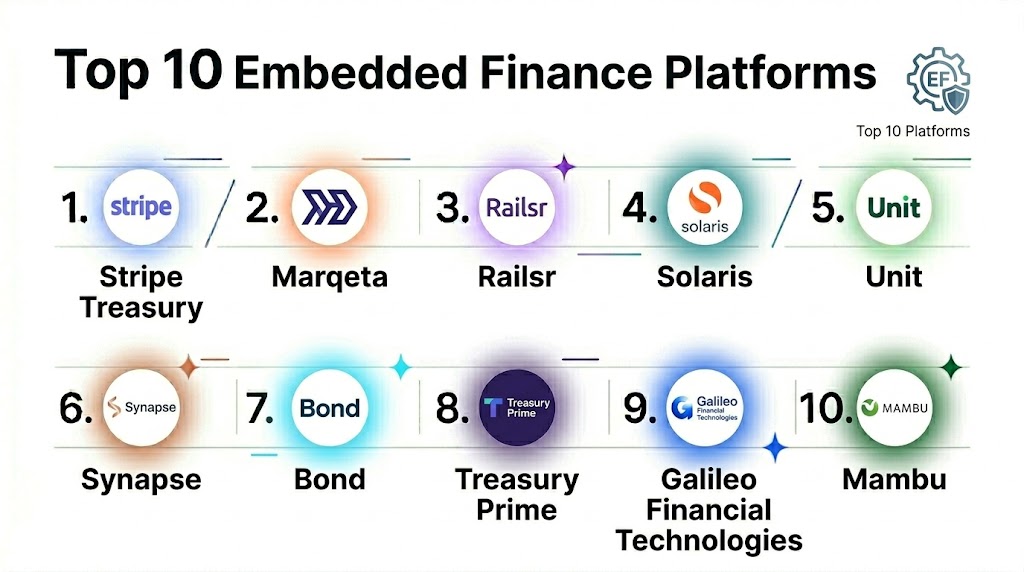
Top 10 Embedded Finance Platforms
1- Stripe Treasury
Short description: Stripe Treasury enables platforms and marketplaces to embed financial accounts, payments, cash management, and banking services directly into applications and digital products.
Key Features
- Embedded banking infrastructure
- Financial account management
- Payment orchestration
- Treasury and cash flow services
- API-first architecture
- Real-time financial workflows
- Marketplace payout infrastructure
Pros
- Strong developer ecosystem
- Excellent API usability
- Broad financial workflow support
Cons
- Regional availability varies
- Enterprise scaling costs can increase rapidly
- Advanced financial workflows require compliance planning
Platforms / Deployment
- Cloud
Security & Compliance
Supports encryption, authentication controls, fraud monitoring, and financial operational protections.
Integrations & Ecosystem
Stripe Treasury integrates deeply with payment, banking, and SaaS ecosystems.
- Stripe Payments
- Ecommerce platforms
- Marketplace systems
- SaaS applications
- Banking infrastructure
Support & Community
Large fintech and developer ecosystem with extensive documentation and onboarding resources.
2- Marqeta
Short description: Marqeta provides modern card issuing and embedded finance infrastructure for fintech companies, marketplaces, and digital banking applications.
Key Features
- Card issuing infrastructure
- Embedded payment workflows
- Real-time transaction controls
- Digital wallet integrations
- Spend management APIs
- Fraud prevention capabilities
- Banking ecosystem connectivity
Pros
- Strong card issuing capabilities
- Good fintech scalability
- Real-time transaction flexibility
Cons
- Card-focused deployment orientation
- Enterprise implementation complexity
- Advanced integrations require operational planning
Platforms / Deployment
- Cloud
Security & Compliance
Supports transaction monitoring, authentication controls, and operational governance protections.
Integrations & Ecosystem
Marqeta integrates with fintech, payment, and banking ecosystems.
- Digital wallets
- Banking platforms
- Payment gateways
- Marketplace systems
- Financial APIs
Support & Community
Strong embedded payments ecosystem with enterprise onboarding support.
3- Unit
Short description: Unit provides banking-as-a-service infrastructure that enables companies to launch embedded banking, cards, lending, and payment products.
Key Features
- Banking-as-a-service APIs
- Embedded account infrastructure
- Card issuing support
- Payment workflows
- Lending infrastructure
- Compliance tooling
- Financial product orchestration
Pros
- Broad embedded finance capabilities
- Good startup and SaaS support
- Strong API-first architecture
Cons
- Financial compliance complexity
- Regional banking availability varies
- Enterprise governance may require customization
Platforms / Deployment
- Cloud
Security & Compliance
Supports authentication controls, operational governance, and compliance-focused financial workflows.
Integrations & Ecosystem
Unit integrates with fintech and SaaS financial ecosystems.
- Banking systems
- Payment infrastructure
- Lending workflows
- Marketplace platforms
- Financial APIs
Support & Community
Strong developer onboarding and embedded banking ecosystem support.
4- Solaris
Short description: Solaris provides embedded banking and financial infrastructure for enterprises, fintech companies, and digital platforms across regulated banking ecosystems.
Key Features
- Embedded banking services
- Digital account infrastructure
- Card issuing capabilities
- Lending and payment support
- Compliance management
- API-driven banking connectivity
- Financial workflow orchestration
Pros
- Strong regulated banking infrastructure
- Broad financial service support
- Enterprise-grade compliance focus
Cons
- Enterprise onboarding complexity
- Regional availability limitations
- Premium infrastructure positioning
Platforms / Deployment
- Cloud
Security & Compliance
Supports banking governance controls, authentication workflows, and operational financial protections.
Integrations & Ecosystem
Solaris integrates with banking and fintech infrastructure ecosystems.
- Banking APIs
- Payment systems
- Financial applications
- Lending platforms
- Marketplace ecosystems
Support & Community
Strong financial infrastructure onboarding and enterprise support ecosystem.
5- Treasury Prime
Short description: Treasury Prime provides banking APIs and embedded finance infrastructure for fintech companies and enterprise financial applications.
Key Features
- Banking API infrastructure
- Embedded account management
- Payment orchestration
- Financial workflow APIs
- Compliance tooling
- Banking partner connectivity
- Real-time transaction support
Pros
- Strong banking integration focus
- Flexible API infrastructure
- Good embedded banking workflows
Cons
- Financial onboarding complexity
- Banking partner dependencies
- Enterprise governance planning required
Platforms / Deployment
- Cloud
Security & Compliance
Supports authentication controls, encrypted financial workflows, and governance protections.
Integrations & Ecosystem
Treasury Prime integrates with financial and banking ecosystems.
- Banking systems
- Payment gateways
- Fintech applications
- SaaS ecosystems
- Marketplace platforms
Support & Community
Strong banking-as-a-service ecosystem with developer-focused onboarding support.
6- Synapse
Short description: Synapse provides embedded banking and financial infrastructure APIs for payments, deposits, lending, and digital finance workflows.
Key Features
- Banking-as-a-service APIs
- Embedded payments
- Lending workflows
- Digital account support
- Compliance infrastructure
- Identity verification support
- Financial orchestration capabilities
Pros
- Broad embedded finance coverage
- Flexible API workflows
- Good fintech compatibility
Cons
- Operational complexity for large deployments
- Regulatory dependencies
- Enterprise implementation planning required
Platforms / Deployment
- Cloud
Security & Compliance
Supports authentication controls, operational monitoring, and financial workflow protections.
Integrations & Ecosystem
Synapse integrates with fintech and digital finance ecosystems.
- Payment systems
- Banking APIs
- Identity verification tools
- Lending systems
- Marketplace applications
Support & Community
Growing embedded banking ecosystem with fintech-oriented onboarding resources.
7- Railsr
Short description: Railsr provides embedded finance infrastructure for payments, digital wallets, banking, and card issuance services.
Key Features
- Embedded banking APIs
- Wallet infrastructure
- Payment orchestration
- Card issuing support
- Financial workflow automation
- Banking connectivity
- API-first infrastructure
Pros
- Good wallet and payment support
- Flexible embedded finance architecture
- Broad fintech applicability
Cons
- Enterprise scaling requires planning
- Regional banking support varies
- Advanced governance workflows may require customization
Platforms / Deployment
- Cloud
Security & Compliance
Supports secure financial APIs and operational governance protections.
Integrations & Ecosystem
Railsr integrates with digital finance and payment ecosystems.
- Banking systems
- Payment gateways
- Wallet applications
- Marketplace systems
- Financial APIs
Support & Community
Growing fintech ecosystem with developer-oriented onboarding support.
8- Braintree
Short description: Braintree provides payment and embedded commerce infrastructure that helps businesses integrate digital payments and financial workflows into applications.
Key Features
- Payment processing
- Digital wallet support
- Embedded checkout workflows
- Marketplace payment support
- Fraud protection
- Subscription billing support
- Global payment connectivity
Pros
- Strong payment ecosystem
- Broad merchant adoption
- Good wallet integration support
Cons
- Primarily payment-focused
- Less banking infrastructure depth
- Enterprise customization limitations
Platforms / Deployment
- Cloud
Security & Compliance
Supports fraud monitoring, payment authentication, and operational transaction protections.
Integrations & Ecosystem
Braintree integrates with ecommerce and payment ecosystems.
- PayPal
- Ecommerce platforms
- Mobile applications
- Subscription systems
- Marketplace platforms
Support & Community
Large payment ecosystem with extensive merchant onboarding resources.
9- Rapyd
Short description: Rapyd provides global embedded finance and payment infrastructure for businesses needing cross-border financial connectivity and digital payment orchestration.
Key Features
- Global payment infrastructure
- Embedded wallets
- Banking connectivity
- Payment orchestration
- Payout infrastructure
- Financial workflow APIs
- Cross-border transaction support
Pros
- Strong international payment coverage
- Broad financial workflow support
- Good embedded wallet capabilities
Cons
- Enterprise integration complexity
- Cross-border compliance planning required
- Premium pricing for global operations
Platforms / Deployment
- Cloud
Security & Compliance
Supports payment security controls, authentication workflows, and financial governance protections.
Integrations & Ecosystem
Rapyd integrates with payment and cross-border financial ecosystems.
- Banking systems
- Payment gateways
- Ecommerce platforms
- Marketplace systems
- Wallet applications
Support & Community
Strong global fintech ecosystem with enterprise onboarding support.
10- Bond
Short description: Bond provides embedded finance infrastructure enabling companies to integrate banking, cards, and financial workflows directly into digital products.
Key Features
- Embedded banking APIs
- Card infrastructure
- Financial workflow automation
- Compliance tooling
- Payment orchestration
- Account management
- Banking partner connectivity
Pros
- Strong embedded banking support
- Flexible API architecture
- Good fintech compatibility
Cons
- Operational banking complexity
- Enterprise implementation planning required
- Regional support varies
Platforms / Deployment
- Cloud
Security & Compliance
Supports authentication workflows, governance controls, and operational financial protections.
Integrations & Ecosystem
Bond integrates with fintech and embedded banking ecosystems.
- Banking systems
- Card networks
- Payment applications
- SaaS platforms
- Marketplace systems
Support & Community
Growing embedded finance ecosystem with developer-focused onboarding resources.
Comparison Table
| Tool Name | Best For | Platform(s) Supported | Deployment | Standout Feature | Public Rating |
|---|---|---|---|---|---|
| Stripe Treasury | Embedded banking workflows | Cloud | Cloud | Developer-first banking APIs | N/A |
| Marqeta | Card issuing infrastructure | Cloud | Cloud | Real-time card controls | N/A |
| Unit | Banking-as-a-service | Cloud | Cloud | Broad financial product APIs | N/A |
| Solaris | Regulated embedded banking | Cloud | Cloud | Enterprise banking infrastructure | N/A |
| Treasury Prime | Banking API orchestration | Cloud | Cloud | Banking partner integrations | N/A |
| Synapse | Embedded financial workflows | Cloud | Cloud | Flexible banking APIs | N/A |
| Railsr | Embedded wallets and payments | Cloud | Cloud | Wallet infrastructure support | N/A |
| Braintree | Embedded payments | Cloud | Cloud | Global merchant ecosystem | N/A |
| Rapyd | Global embedded finance | Cloud | Cloud | Cross-border financial infrastructure | N/A |
| Bond | Embedded banking APIs | Cloud | Cloud | Banking and card connectivity | N/A |
Evaluation & Scoring of Embedded Finance Platforms
| Tool Name | Core 25% | Ease 15% | Integrations 15% | Security 10% | Performance 10% | Support 10% | Value 15% | Weighted Total |
|---|---|---|---|---|---|---|---|---|
| Stripe Treasury | 10 | 9 | 10 | 9 | 9 | 9 | 7 | 9.0 |
| Marqeta | 9 | 8 | 8 | 9 | 9 | 8 | 7 | 8.3 |
| Unit | 9 | 8 | 8 | 8 | 8 | 8 | 8 | 8.2 |
| Solaris | 9 | 7 | 8 | 9 | 8 | 8 | 7 | 8.0 |
| Treasury Prime | 8 | 8 | 8 | 8 | 8 | 8 | 8 | 8.0 |
| Synapse | 8 | 7 | 8 | 8 | 8 | 7 | 8 | 7.8 |
| Railsr | 8 | 7 | 8 | 8 | 8 | 7 | 8 | 7.8 |
| Braintree | 8 | 8 | 8 | 8 | 8 | 8 | 8 | 8.0 |
| Rapyd | 9 | 7 | 9 | 8 | 8 | 8 | 7 | 8.1 |
| Bond | 8 | 7 | 8 | 8 | 8 | 7 | 8 | 7.8 |
These scores are comparative evaluations intended to help organizations understand differences across embedded finance ecosystems. Some platforms focus more heavily on banking infrastructure and compliance, while others prioritize payments, cards, wallets, or cross-border financial connectivity.
Which Embedded Finance Platform Is Right for You?
Solo / Freelancer
Independent developers and startups may benefit most from Stripe Treasury, Unit, or Bond because of their API usability and flexible onboarding workflows.
SMB
Small and medium-sized businesses should evaluate Marqeta, Treasury Prime, or Railsr for scalable payment and banking integration capabilities.
Mid-Market
Mid-market platforms building embedded financial products should prioritize Rapyd, Solaris, or Synapse depending on compliance and cross-border requirements.
Enterprise
Large enterprises and regulated financial ecosystems should evaluate Stripe Treasury, Solaris, Marqeta, or enterprise-grade banking infrastructure providers.
Budget vs Premium
Developer-first platforms reduce onboarding complexity but enterprise-grade financial infrastructure often introduces higher compliance and operational costs.
Feature Depth vs Ease of Use
Simpler embedded finance APIs prioritize rapid deployment, while enterprise banking infrastructure providers focus more on governance, scalability, and compliance controls.
Integrations & Scalability
Organizations with complex payment ecosystems or international expansion goals should prioritize platforms with strong API orchestration and global banking connectivity.
Security & Compliance Needs
Financial workflows require strong authentication controls, governance, transaction monitoring, fraud prevention, and operational compliance protections before scaling embedded finance services.
Frequently Asked Questions FAQs
1- What are Embedded Finance Platforms?
Embedded Finance Platforms allow businesses to integrate banking, payments, lending, cards, and financial services directly into their applications through APIs.
2- Why is embedded finance growing rapidly?
Customers increasingly expect seamless financial experiences inside digital products without needing to switch between separate financial providers.
3- What industries use embedded finance the most?
Fintech, ecommerce, SaaS, marketplaces, logistics, mobility, and gig economy platforms are major adopters.
4- What is banking-as-a-service?
Banking-as-a-service provides APIs and infrastructure that allow non-bank businesses to offer financial services using regulated banking partners.
5- Can embedded finance platforms support payments and lending together?
Yes. Many platforms support payments, cards, lending, wallets, and banking workflows within a single infrastructure ecosystem.
6- Are embedded finance platforms secure?
Leading providers support authentication controls, fraud monitoring, encryption, governance workflows, and operational protections for financial services.
7- What should organizations evaluate before selecting a platform?
Organizations should evaluate API reliability, compliance support, banking coverage, scalability, payment workflows, and integration flexibility.
8- Can embedded finance platforms support international operations?
Several providers support cross-border payments, global banking integrations, and international financial workflows, though regional availability varies.
9- What is the difference between embedded finance and payment processing?
Payment processing focuses mainly on transactions, while embedded finance includes broader financial services such as banking, lending, wallets, and treasury functions.
10- Which platform is best for startups?
Stripe Treasury, Unit, and Bond are commonly evaluated by startups because of their developer-friendly APIs and flexible embedded banking workflows.
Conclusion
Embedded Finance Platforms are becoming foundational infrastructure for digital banking, integrated payments, embedded lending, and modern financial experiences across SaaS, ecommerce, fintech, and marketplace ecosystems. As customers increasingly expect seamless financial interactions within the applications they already use, businesses require scalable infrastructure that simplifies banking connectivity, payment orchestration, compliance workflows, and financial product delivery. Platforms such as Stripe Treasury, Marqeta, Unit, and Solaris provide mature embedded finance ecosystems for banking and payment innovation, while providers like Rapyd, Treasury Prime, and Bond focus on global financial connectivity and banking-as-a-service infrastructure. The ideal platform depends heavily on financial workflow complexity, geographic expansion plans, compliance requirements, and operational scale. Startups and SaaS platforms may prioritize API simplicity and rapid deployment, while enterprises often focus more on governance, scalability, transaction intelligence, and regulated financial operations. Before selecting an embedded finance platform, organizations should benchmark API reliability, validate banking and payment coverage, review compliance workflows, and carefully evaluate long-term scalability for embedded financial services.
this article explains embedded finance platforms in simple language and helps businesses understand integrated financial services and digital payments effectively.