Introduction
Blockchain Platforms are distributed digital infrastructure systems that allow organizations and developers to build decentralized applications, smart contracts, digital asset ecosystems, and secure transaction networks without relying on centralized intermediaries. These platforms use cryptographic verification, consensus mechanisms, and distributed ledgers to improve transparency, immutability, and trust across digital ecosystems.
Blockchain technology has evolved far beyond cryptocurrency use cases. Enterprises are now adopting blockchain platforms for supply chain tracking, decentralized finance, digital identity management, tokenization, secure healthcare records, cross-border payments, and Web3 application development. Modern blockchain platforms increasingly focus on scalability, interoperability, energy efficiency, enterprise governance, and AI integration.
Real-world use cases include:
- Decentralized finance applications
- Supply chain transparency systems
- Smart contract automation
- Digital identity verification
- Enterprise asset tokenization
Evaluation Criteria for Buyers
Organizations evaluating Blockchain Platforms should consider:
- Scalability and transaction throughput
- Smart contract functionality
- Security architecture
- Developer ecosystem maturity
- Consensus mechanism efficiency
- Enterprise deployment flexibility
- Governance and compliance support
- Cross-chain interoperability
- API and SDK availability
- Community adoption and ecosystem growth
Best for: Enterprises, fintech companies, Web3 startups, developers, logistics organizations, financial institutions, and organizations building decentralized applications or tokenized ecosystems.
Not ideal for: Small businesses without distributed collaboration requirements or organizations that only need traditional database infrastructure.
Key Trends in Blockchain Platforms
- Layer 2 scaling ecosystems are improving blockchain performance and cost efficiency.
- Enterprise blockchain adoption is increasing across regulated industries.
- AI and blockchain integrations are becoming more common for decentralized automation.
- Tokenization of real-world assets continues to expand rapidly.
- Cross-chain interoperability solutions are improving decentralized ecosystem connectivity.
- Privacy-focused blockchain technologies are gaining enterprise attention.
- Sustainable and energy-efficient consensus models are replacing resource-intensive architectures.
- Decentralized identity systems are becoming more mature.
- Blockchain infrastructure platforms are simplifying enterprise onboarding.
- Hybrid blockchain deployments are growing in regulated environments.
How We Selected These Tools
The following blockchain platforms were selected based on ecosystem maturity, developer adoption, enterprise relevance, scalability, and infrastructure capabilities.
- Market adoption and ecosystem growth
- Smart contract and decentralized application support
- Scalability and transaction performance
- Enterprise readiness and governance capabilities
- Security and consensus architecture
- Developer tooling and APIs
- Cross-chain interoperability
- Community strength and ecosystem activity
- Cloud and enterprise deployment compatibility
- Long-term platform sustainability
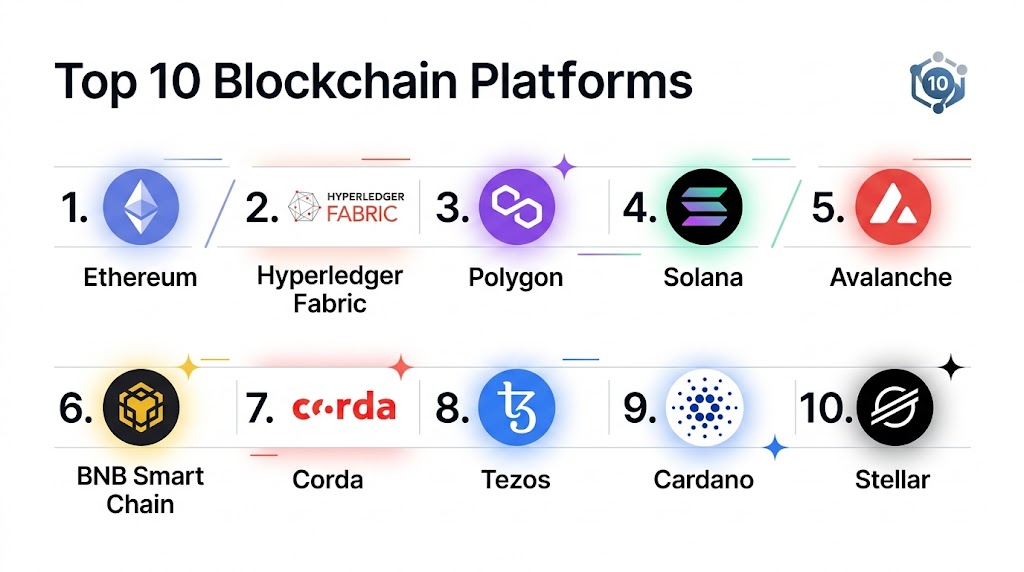
Top 10 Blockchain Platforms
1- Ethereum
Short description: Ethereum is the most widely adopted smart contract blockchain platform and powers a large portion of decentralized finance, NFTs, decentralized applications, and Web3 ecosystems.
Key Features
- Smart contract support
- Large decentralized application ecosystem
- Extensive developer tooling
- Layer 2 scalability ecosystems
- Decentralized finance infrastructure
- NFT and tokenization support
- Enterprise blockchain compatibility
Pros
- Largest smart contract ecosystem
- Strong developer community
- Broad enterprise and Web3 adoption
Cons
- Network congestion during high activity
- Transaction fees can fluctuate
- Complex scalability architecture
Platforms / Deployment
- Cloud / Hybrid / Self-hosted
Security & Compliance
Supports cryptographic transaction validation, decentralized consensus, and enterprise-grade smart contract security practices.
Integrations & Ecosystem
Ethereum integrates with decentralized finance, Web3 infrastructure, and enterprise blockchain systems.
- Web3 wallets
- DeFi protocols
- NFT marketplaces
- Layer 2 ecosystems
- Enterprise blockchain tooling
Support & Community
Massive global developer ecosystem with strong documentation and enterprise adoption.
2- Hyperledger Fabric
Short description: Hyperledger Fabric is an enterprise-focused blockchain framework designed for secure, permissioned, and scalable business networks.
Key Features
- Permissioned blockchain architecture
- Modular consensus framework
- Enterprise governance controls
- Private transaction channels
- Smart contract support
- Scalable enterprise deployment
- Identity management integration
Pros
- Strong enterprise governance
- Good privacy controls
- Flexible modular architecture
Cons
- Less suitable for public decentralized ecosystems
- Complex enterprise deployment
- Smaller public developer ecosystem
Platforms / Deployment
- Cloud / Hybrid / Self-hosted
Security & Compliance
Supports identity controls, private transactions, access governance, and enterprise security protections.
Integrations & Ecosystem
Hyperledger Fabric integrates with enterprise systems and business process automation environments.
- Kubernetes
- Enterprise ERP systems
- Cloud infrastructure
- Identity management systems
- Supply chain applications
Support & Community
Strong enterprise and open-source ecosystem with broad industry collaboration.
3- Solana
Short description: Solana is a high-performance blockchain platform focused on scalable decentralized applications, digital assets, and low-latency transaction processing.
Key Features
- High transaction throughput
- Low transaction costs
- Smart contract support
- DeFi ecosystem compatibility
- NFT infrastructure
- Scalable blockchain architecture
- Fast settlement capabilities
Pros
- Excellent transaction performance
- Lower operational costs
- Growing developer ecosystem
Cons
- Network stability concerns in past deployments
- More centralized validator structure
- Rapid ecosystem evolution complexity
Platforms / Deployment
- Cloud / Self-hosted
Security & Compliance
Supports cryptographic validation, decentralized consensus, and secure smart contract execution.
Integrations & Ecosystem
Solana integrates with decentralized finance and digital asset ecosystems.
- Web3 wallets
- NFT platforms
- DeFi protocols
- AI blockchain systems
- Decentralized exchanges
Support & Community
Rapidly growing developer and decentralized application ecosystem.
4- Polygon
Short description: Polygon is a scalable blockchain ecosystem designed to improve Ethereum interoperability and transaction efficiency for decentralized applications.
Key Features
- Ethereum compatibility
- Layer 2 scaling support
- Smart contract deployment
- Cross-chain interoperability
- Fast transaction processing
- Web3 infrastructure support
- Developer-friendly tooling
Pros
- Strong Ethereum integration
- Lower transaction costs
- Good scalability ecosystem
Cons
- Dependency on Ethereum ecosystem
- Complex multi-chain architecture
- Rapidly evolving infrastructure
Platforms / Deployment
- Cloud / Hybrid
Security & Compliance
Supports smart contract security and decentralized transaction validation mechanisms.
Integrations & Ecosystem
Polygon integrates deeply with Ethereum-based decentralized systems.
- Ethereum tools
- DeFi ecosystems
- NFT platforms
- Web3 applications
- Cross-chain infrastructure
Support & Community
Large Web3 ecosystem with active developer participation and enterprise experimentation.
5- Avalanche
Short description: Avalanche is a scalable blockchain platform focused on enterprise applications, decentralized finance, and customizable blockchain deployments.
Key Features
- High-speed transaction processing
- Custom blockchain creation
- Smart contract compatibility
- Enterprise deployment support
- Subnet architecture
- Decentralized finance integration
- Energy-efficient consensus
Pros
- Strong scalability
- Flexible enterprise deployment
- Efficient consensus mechanism
Cons
- Smaller ecosystem than Ethereum
- Complex subnet management
- Rapid infrastructure evolution
Platforms / Deployment
- Cloud / Hybrid / Self-hosted
Security & Compliance
Supports secure consensus, smart contract protections, and decentralized governance mechanisms.
Integrations & Ecosystem
Avalanche integrates with decentralized finance and enterprise blockchain systems.
- DeFi protocols
- Web3 applications
- Cloud infrastructure
- Enterprise blockchain environments
- NFT systems
Support & Community
Growing enterprise and decentralized finance ecosystem with active developer adoption.
6- Corda
Short description: Corda is a blockchain-inspired distributed ledger platform designed for regulated enterprise and financial industry collaboration.
Key Features
- Permissioned distributed ledger
- Financial industry workflows
- Privacy-focused transaction design
- Smart contract automation
- Enterprise identity management
- Secure business collaboration
- Regulatory-focused architecture
Pros
- Strong financial industry orientation
- Good privacy controls
- Enterprise governance support
Cons
- Limited public blockchain capabilities
- Smaller developer ecosystem
- Enterprise-focused complexity
Platforms / Deployment
- Cloud / Hybrid / Self-hosted
Security & Compliance
Supports secure identity management, transaction privacy, and enterprise governance protections.
Integrations & Ecosystem
Corda integrates with financial systems and enterprise workflow environments.
- Banking infrastructure
- Enterprise ERP systems
- Identity management systems
- Regulatory compliance platforms
- Financial analytics environments
Support & Community
Strong enterprise support ecosystem within financial services industries.
7- Binance Smart Chain BNB Chain
Short description: BNB Chain is a blockchain ecosystem designed for decentralized applications, digital assets, and scalable smart contract operations.
Key Features
- Smart contract functionality
- DeFi ecosystem support
- NFT infrastructure
- Low transaction costs
- Cross-chain compatibility
- Scalable decentralized applications
- Fast transaction processing
Pros
- Strong decentralized finance ecosystem
- Cost-efficient operations
- Broad developer adoption
Cons
- Governance centralization concerns
- Competitive ecosystem pressures
- Rapidly changing infrastructure
Platforms / Deployment
- Cloud / Self-hosted
Security & Compliance
Supports decentralized consensus and smart contract security protections.
Integrations & Ecosystem
BNB Chain integrates with decentralized applications and digital asset systems.
- Web3 wallets
- DeFi protocols
- NFT systems
- Cross-chain bridges
- Blockchain analytics platforms
Support & Community
Large global developer and decentralized finance community.
8- Polkadot
Short description: Polkadot is a blockchain interoperability platform designed to connect multiple blockchains and decentralized ecosystems.
Key Features
- Cross-chain interoperability
- Shared blockchain security
- Custom parachain architecture
- Decentralized governance
- Smart contract support
- Scalable blockchain networking
- Multi-chain ecosystem support
Pros
- Strong interoperability capabilities
- Flexible blockchain architecture
- Advanced governance model
Cons
- Complex architecture
- Smaller mainstream adoption
- Higher learning curve
Platforms / Deployment
- Cloud / Hybrid / Self-hosted
Security & Compliance
Supports decentralized consensus and secure cross-chain communication protections.
Integrations & Ecosystem
Polkadot integrates with multi-chain and decentralized infrastructure ecosystems.
- Cross-chain platforms
- Web3 infrastructure
- Smart contract systems
- Decentralized applications
- Blockchain interoperability networks
Support & Community
Strong technical community focused on interoperability innovation.
9- Hedera
Short description: Hedera is a distributed ledger platform focused on enterprise-grade scalability, governance, and high-performance decentralized applications.
Key Features
- Hashgraph consensus technology
- Enterprise governance council
- High transaction throughput
- Low-latency settlement
- Smart contract support
- Tokenization infrastructure
- Sustainable network architecture
Pros
- Strong enterprise governance
- High transaction efficiency
- Energy-efficient architecture
Cons
- More centralized governance model
- Smaller decentralized ecosystem
- Limited mainstream Web3 adoption
Platforms / Deployment
- Cloud / Hybrid
Security & Compliance
Supports secure distributed consensus and enterprise governance protections.
Integrations & Ecosystem
Hedera integrates with enterprise blockchain and digital asset systems.
- Enterprise applications
- Digital identity systems
- Tokenization platforms
- Cloud infrastructure
- Decentralized applications
Support & Community
Growing enterprise ecosystem with strong corporate participation.
10- Algorand
Short description: Algorand is a blockchain platform designed for scalable decentralized finance, digital assets, and enterprise blockchain deployments.
Key Features
- Pure proof-of-stake consensus
- Smart contract support
- Fast transaction finality
- Tokenization infrastructure
- Enterprise blockchain compatibility
- Scalable decentralized applications
- Energy-efficient operations
Pros
- Strong transaction efficiency
- Sustainable architecture
- Good enterprise scalability
Cons
- Smaller ecosystem visibility
- Competitive blockchain landscape
- Limited mainstream adoption compared to Ethereum
Platforms / Deployment
- Cloud / Hybrid / Self-hosted
Security & Compliance
Supports decentralized consensus, smart contract protections, and secure transaction validation.
Integrations & Ecosystem
Algorand integrates with decentralized finance and enterprise digital asset environments.
- DeFi ecosystems
- Digital asset systems
- Enterprise blockchain platforms
- Web3 applications
- Cloud infrastructure
Support & Community
Growing blockchain developer ecosystem with strong sustainability positioning.
Comparison Table
| Tool Name | Best For | Platform(s) Supported | Deployment | Standout Feature | Public Rating |
|---|---|---|---|---|---|
| Ethereum | Smart contracts and Web3 | Cloud / Hybrid | Hybrid | Largest decentralized ecosystem | N/A |
| Hyperledger Fabric | Enterprise blockchain | Cloud / Self-hosted | Hybrid | Permissioned governance | N/A |
| Solana | High-performance DeFi | Cloud / Self-hosted | Cloud | Fast transaction throughput | N/A |
| Polygon | Ethereum scalability | Cloud / Hybrid | Hybrid | Layer 2 scaling ecosystem | N/A |
| Avalanche | Custom blockchain deployments | Cloud / Hybrid | Hybrid | Subnet architecture | N/A |
| Corda | Financial collaboration | Cloud / Hybrid | Hybrid | Enterprise privacy controls | N/A |
| BNB Chain | Decentralized applications | Cloud / Self-hosted | Cloud | Low transaction costs | N/A |
| Polkadot | Cross-chain interoperability | Cloud / Hybrid | Hybrid | Multi-chain ecosystem | N/A |
| Hedera | Enterprise distributed ledger | Cloud / Hybrid | Hybrid | Hashgraph consensus | N/A |
| Algorand | Sustainable blockchain | Cloud / Hybrid | Hybrid | Pure proof-of-stake design | N/A |
Evaluation & Scoring of Blockchain Platforms
| Tool Name | Core 25% | Ease 15% | Integrations 15% | Security 10% | Performance 10% | Support 10% | Value 15% | Weighted Total |
|---|---|---|---|---|---|---|---|---|
| Ethereum | 10 | 7 | 10 | 9 | 7 | 10 | 8 | 8.9 |
| Hyperledger Fabric | 9 | 7 | 8 | 9 | 8 | 8 | 7 | 8.1 |
| Solana | 9 | 8 | 8 | 7 | 10 | 8 | 9 | 8.5 |
| Polygon | 8 | 8 | 9 | 8 | 8 | 8 | 9 | 8.3 |
| Avalanche | 8 | 7 | 8 | 8 | 9 | 8 | 8 | 8.0 |
| Corda | 8 | 7 | 7 | 9 | 8 | 8 | 7 | 7.8 |
| BNB Chain | 8 | 8 | 8 | 7 | 9 | 8 | 9 | 8.1 |
| Polkadot | 9 | 6 | 8 | 8 | 8 | 7 | 8 | 7.9 |
| Hedera | 8 | 8 | 7 | 8 | 9 | 8 | 8 | 8.0 |
| Algorand | 8 | 8 | 7 | 8 | 8 | 7 | 8 | 7.8 |
These scores are comparative evaluations designed to help organizations understand relative strengths across blockchain ecosystems. Some platforms prioritize enterprise governance and regulated deployments, while others focus on decentralized finance, scalability, or interoperability. Organizations should align platform selection with application goals, governance needs, and infrastructure strategy.
Which Blockchain Platform Is Right for You?
Solo / Freelancer
Independent developers and Web3 creators may benefit from Ethereum, Polygon, or Solana because of their large ecosystems and broad developer tooling support.
SMB
Small and medium-sized businesses building decentralized applications or tokenization systems may prefer Polygon, Avalanche, or BNB Chain for scalability and lower operational costs.
Mid-Market
Mid-market organizations requiring stronger governance and enterprise scalability should evaluate Avalanche, Hyperledger Fabric, or Algorand.
Enterprise
Large enterprises handling regulated workflows and secure collaboration should prioritize Hyperledger Fabric, Corda, Hedera, or enterprise-oriented blockchain ecosystems.
Budget vs Premium
Public blockchain ecosystems can reduce infrastructure costs but may introduce operational complexity and governance trade-offs. Enterprise blockchain platforms generally provide stronger privacy and governance capabilities.
Feature Depth vs Ease of Use
Developer-focused decentralized platforms offer greater flexibility and innovation speed, while enterprise blockchain frameworks prioritize governance, compliance, and operational stability.
Integrations & Scalability
Organizations with large AI, analytics, or cloud-native infrastructures should prioritize platforms with mature APIs, orchestration support, and interoperability capabilities.
Security & Compliance Needs
Regulated industries should focus on governance controls, transaction privacy, identity management, and auditability before selecting a blockchain platform.
Frequently Asked Questions FAQs
1- What is a blockchain platform?
A blockchain platform is a distributed digital infrastructure that allows organizations to build decentralized applications, smart contracts, and secure transaction systems.
2- Why are blockchain platforms important?
Blockchain platforms improve transparency, reduce reliance on centralized intermediaries, and enable secure distributed collaboration.
3- Which industries use blockchain the most?
Financial services, supply chain, healthcare, logistics, digital identity, gaming, and decentralized finance are major blockchain adopters.
4- What is a smart contract?
A smart contract is a self-executing digital agreement that automatically performs actions when predefined conditions are met.
5- Are blockchain platforms secure?
Most blockchain platforms use cryptographic verification and distributed consensus mechanisms to improve security, although implementation quality still matters.
6- What is the difference between public and private blockchains?
Public blockchains are open decentralized networks, while private blockchains restrict participation to approved organizations or users.
7- Can blockchain platforms support AI systems?
Yes. Many organizations combine blockchain with AI for decentralized automation, data integrity, and secure collaboration workflows.
8- Which blockchain platform is best for enterprises?
Enterprise requirements vary, but Hyperledger Fabric, Corda, and Hedera are often selected for governance and regulated industry deployments.
9- Is blockchain only used for cryptocurrency?
No. Blockchain is widely used for supply chain management, identity verification, tokenization, healthcare analytics, and enterprise automation.
10- What should organizations evaluate before choosing a blockchain platform?
Organizations should evaluate scalability, governance, interoperability, smart contract capabilities, developer ecosystem, security architecture, and operational complexity.
Conclusion
Blockchain Platforms are becoming foundational technologies for decentralized applications, secure digital collaboration, tokenization, and enterprise automation strategies. As organizations increasingly require transparent, scalable, and distributed infrastructure systems, blockchain ecosystems continue evolving beyond cryptocurrency use cases into enterprise operations, AI collaboration, supply chain tracking, and digital identity management. Platforms such as Ethereum, Hyperledger Fabric, Solana, Polygon, and Avalanche provide strong foundations for decentralized innovation, while enterprise-oriented solutions like Corda and Hedera focus more heavily on governance, compliance, and regulated collaboration environments. The ideal blockchain platform depends heavily on organizational priorities including scalability, decentralization, interoperability, governance, and deployment complexity. Startups and Web3 developers may prioritize ecosystem innovation and developer flexibility, while enterprises often focus more on operational stability, governance controls, and compliance readiness. Before selecting a platform, organizations should benchmark scalability, validate integrations, assess governance models, and carefully evaluate long-term operational requirements for decentralized infrastructure deployments.