Introduction
Finding the right place to publish your work online can feel surprisingly overwhelming. Whether you are a independent writer sharing your first essay, a developer trying to contribute to technical discussions, or a small business owner trying to get your services noticed, the open internet offers endless choices—yet remarkably few clear directions.
Most creators quickly run into the same frustrating wall. You search for places to publish your work for free, only to encounter outdated directory lists, dead links, websites filled with low-quality spam, or platforms with hidden rules that reject your submission without explanation. Hours that should have been spent writing, editing, or building your project end up wasted on manual research and endless account registration forms.
The core challenge isn’t a lack of websites; it’s a lack of clarity. With thousands of digital corners available, how do you identify platforms that actually fit your content type, welcome your audience, and maintain honest moderation standards?
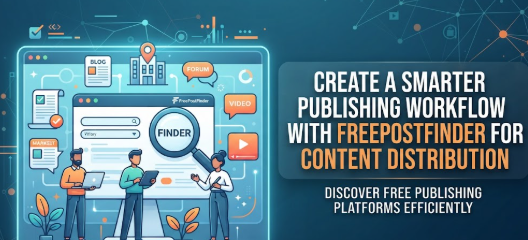
This is where structured platform discovery becomes essential. Tools like FreePostFinder have emerged to solve this exact research bottleneck, acting as a curated content publishing platform finder that helps creators, businesses, and marketers search, compare, and evaluate distribution channels before hitting “submit.”
What Are Free Posting Sites?
At their core, free posting sites are online spaces that allow creators, businesses, and users to publish content without requiring paid subscriptions or expensive hosting infrastructure. These platforms host everything from long-form essays and industry guides to localized business profiles, technical questions, visual media, and community discussions.
When people talk about free content publishing platforms, they are usually referring to a broad spectrum of digital ecosystems, including:
- Open publishing networks where independent writers host articles and thought leadership pieces.
- Community message boards and forums structured around specific niches or industries.
- Business discovery directories that allow localized business profiles.
- Media sharing channels built specifically for audio, video, or visual presentations.
How Free Posting Sites Differ from Owning Your Own Website
Publishing on a third-party platform serves a fundamentally different purpose than running your own website. On your own domain, you have total control over design, monetization, and technical architecture—but you start with zero audience. You have to build every drop of web traffic from scratch.
Third-party publishing sites, on the other hand, offer built-in communities, established site architecture, and existing readership channels. They give your writing an immediate space to be discovered, read, and discussed.
Important Realization: “Free” does not automatically mean “useful.” A free platform with no active readers, zero moderation, or an ecosystem choked with automated spam offers almost no real value to a creator. Platform relevance and environment quality matter far more than price.
Why Finding the Right Publishing Platform Matters
It is tempting to grab a piece of content and paste it onto every site with an active submit button. However, blind distribution almost always backfires. Choosing the wrong venue wastes time and can damage your reputation, while choosing the right platform gives your content long-term visibility.
Here are the primary factors you need to consider before choosing where to publish:
1. Audience Relevance
If you write a detailed tutorial on configuring database servers, publishing it on a general lifestyle blogging hub will yield little engagement. The people reading that site aren’t looking for technical code snippets. Placing your work where interested readers already hang out ensures your content is actually read and appreciated.
2. Platform Moderation and Quality
A platform’s quality is defined by what its administrators allow. Websites with strict guidelines, clear content checks, and active moderation tend to host thoughtful, high-value discussions. Conversely, unmoderated sites quickly turn into digital dumping grounds, where genuine posts get buried under automated promotions.
3. Registration and Verification Requirements
Some platforms allow instant guest submissions, while others require phone verification, detailed user profiles, or manual editor approvals. Knowing these entry steps upfront prevents wasted effort on sites whose requirements you cannot meet.
4. Content Formats and Longevity
Different platforms treat content differently. Forums excel at immediate, back-and-forth conversations; long-form article sites excel at evergreen educational guides; media platforms focus on visual communication. Understanding how long a post remains visible—and how easily users can find it months later—helps you pick the right format for your goals.
What Is FreePostFinder?
FreePostFinder is an organized directory and research platform designed to simplify how creators discover, filter, and compare free public posting platforms.
Instead of forcing users to manually search through outdated forum threads or sketchy link lists, FreePostFinder aggregates diverse publishing avenues into a structured, searchable catalog. It was built to solve the time-consuming research phase that every writer, developer, and business encounters when trying to expand their online footprint.
By categorizing platforms by niche, media type, account requirements, and submission guidelines, FreePostFinder acts as a centralized research hub. It doesn’t publish content for you; rather, it gives you the clear, organized information you need to decide where your work belongs before you begin writing.
Types of Free Publishing Platforms You Can Discover
Because distribution needs vary so wildly, publishing channels generally fall into several distinct categories. Understanding these distinctions helps you target the right channel for your specific project.
Free Article Posting Sites
These platforms cater to long-form, structured writing such as educational guides, opinion pieces, industry analysis, and step-by-step tutorials. They are designed for readability, offering clean typography and formatting options like headers, blockquotes, and code snippets.
- Best for: Thought leadership, deep-dive industry guides, independent journalists, and educators.
Free Blog Posting Sites
Blog platforms allow users to establish an ongoing publishing presence, complete with author profiles, content categories, and subscriber options. They bridge the gap between individual articles and a fully custom website.
- Best for: Writers wanting a personal column, hobbyists building a content portfolio, and startups sharing company updates.
Free Business Listing Sites
Business directories allow companies to publish fundamental information—such as contact details, service descriptions, physical locations, and website links—within public indexes.
- Best for: Local service providers, brick-and-mortar stores, agencies, and B2B companies looking to ensure consistent public address listings across the web.
Free Forum Posting Sites
Forums and message boards center around dynamic community discussions. Rather than publishing static broadcast pieces, forum users contribute to ongoing conversations, ask technical questions, or offer expert solutions.
- Best for: Developers, niche enthusiasts, product researchers, and anyone seeking interactive community feedback.
Note: Forums require participation, not promotion. Dropping self-serving links into a community board without adding real value usually results in a quick ban.
Free Video Posting Sites
Video platforms host visual media, screen recordings, live broadcasts, and presentations. They are essential for content that relies on visual demonstration rather than text.
- Best for: Video creators, educators hosting video tutorials, product teams demoing software, and visual storytellers.
Other Free Content Publishing Platforms
Beyond traditional text and video, the modern publishing space includes:
- Document and Presentation Hubs: For sharing whitepapers, PDF guides, and slide decks.
- Code Repositories and Snippet Boards: For developers sharing open-source scripts and technical solutions.
- Newsletter and Story Portals: For serial fiction writers, episodic curators, and community updates.
- Event Listing Sites: For organizing local workshops, webinars, and public meetups.
How to Choose the Right Free Posting Site (Step-by-Step)
To avoid account bans, low engagement, or wasted effort, run every potential publishing destination through this eight-point evaluation checklist:
- Content Format Compatibility: Does the site natively support your format (e.g., Markdown, embedded images, code highlighting)?
- Audience Alignment: Are the active members actually interested in your topic, or is the audience too broad?
- Publishing & Link Rules: Does the platform allow self-referential links, or does it enforce strict no-promotion rules?
- Registration Complexity: Is sign-up instant, or does it require manual account verification or sponsor invites?
- Moderation Quality: Are posts reviewed by real humans or robust automated software, or is the site completely unmonitored?
- Platform Health: Was the last legitimate post published today, or has the site been abandoned for months?
- Community Tone: Are user comments constructive and helpful, or toxic and argumentative?
- Risk & Safety: Does the site push aggressive pop-up ads, sketchy downloads, or manipulative redirects?
Step-by-Step Guide to Finding and Using Publishing Platforms
Finding and publishing on a new platform should be an organized, repeatable process. Here is how to handle distribution efficiently from start to finish:
Step 1: Define What You Want to Achieve
Are you trying to build a professional portfolio, help users solve a technical problem, promote a local business location, or share a personal story? Your primary goal dictates your choice of platform.
Step 2: Identify Your Ideal Reader
Write down who needs this information most. Is it a senior software engineer, a local homeowner, a freelance designer, or a casual reader?
Step 3: Pick the Relevant Platform Category
Narrow your search to the right vertical: an article network for long-form essays, a forum for technical Q&A, or a business index for local service details.
Step 4: Search for Active Platforms
Use curated directories like FreePostFinder to quickly build a list of candidate sites, rather than manually hunting through raw search engine results.
Step 5: Check Account Requirements
Note what each platform requires to start publishing: basic email verification, phone confirmation, or a complete profile bio.
Step 6: Thoroughly Read the Community Guidelines
Before creating a draft, read the site’s rules regarding self-promotion, disclosure, external links, and content formatting. Every platform has distinct boundaries.
Step 7: Compare Your Options
Select two or three top platforms based on ease of use, moderation quality, and audience activity.
Step 8: Prepare Unique, High-Quality Content
Draft fresh content tailored specifically to the chosen platform’s audience and formatting style. Avoid copying and pasting identical text across multiple destinations.
Step 9: Publish Responsibly
Submit your content cleanly. Double-check formatting, fix broken images, ensure links work properly, and respect all community guidelines.
Step 10: Monitor and Engage
After publishing, stick around. Respond politely to comments, answer follow-up questions, and update your information if details change over time.
How FreePostFinder Makes Platform Discovery Easier
Searching for suitable posting sites manually often feels like a full-time job. You end up opening dozens of browser tabs, signing up for defunct platforms, and running into hidden submission rules at every turn.
Instead of guessing platform policies, users can use FreePostFinder to:
- Filter Options Quickly: Instantly narrow down venues by content category, account requirements, and submission formats.
- Identify Publishing Rules Upfront: Check moderation standards, link guidelines, and verification rules before spending time registering.
- Evaluate Platform Risks: Spot low-quality or neglected platforms early, keeping your brand associated only with clean, well-maintained sites.
- Discover Niche Avenues: Uncover smaller, highly specialized communities that rarely appear on generic top-10 listicles.
By organizing platform metadata, FreePostFinder shifts your focus away from tedious internet searching and back onto what matters most: creating great content.
How to Use FreePostFinder for Different Content Goals
Different digital creators have drastically different distribution strategies. Here is how various users can leverage a platform finder effectively:
For Bloggers
Bloggers often need outlets to republish modified articles, write guest perspectives, or share complementary guides. Using filtering tools helps bloggers identify active article platforms that allow clean author bios and attribution.
For Independent Writers
Writers looking to showcase their portfolio can locate platforms with strong typography, clean layout options, and editorial curation. This ensures their personal essays or technical guides appear in a professional setting.
For Content Marketers
Marketers require clear visibility into platform policies to avoid accidental rule breaches. A discovery engine lets marketers identify relevant industry outlets that welcome educational guest contributions without risking spam flags.
For Small Businesses
Business owners can discover industry-specific and regional business indexes to keep their service descriptions, contact details, and office hours uniform across the web.
For Software Developers
Developers can find technical forums, open-source boards, and specialized Q&A spaces where sharing code snippets, troubleshooting solutions, and technical walk-throughs adds genuine value to the community.
For Video Creators
Visual storytellers can discover alternative video-hosting sites, presentation hubs, and media networks to expand the reach of their visual tutorials and slide decks beyond major video platforms.
Real-Life Scenarios: From Problem to Solution
To see how platform research works in practice, let’s walk through five realistic scenarios across different industries.
Scenario 1: The New Tech Blogger
- The Problem: Alex wrote five detailed tutorials on building lightweight WebAssembly apps, but his newly launched personal blog receives virtually no web traffic.
- Research Process: Using a platform directory, Alex filters for developer-focused posting sites that support technical Markdown formatting and code blocks.
- Selected Platform Type: A developer-centric community article platform.
- Responsible Approach: Alex publishes a full, standalone tutorial directly on the community platform. He includes clear code examples and adds a simple author bio referencing his personal technical blog for readers wanting more detailed guides.
Scenario 2: The Local Plumbing Company
- The Problem: A regional plumbing service wants homeowners in their metro area to easily find their emergency contact details, opening hours, and service regions online.
- Research Process: The owner uses a structured directory finder to identify regional business listing portals that verify local contact information.
- Selected Platform Type: Verified business listing directories and regional trade databases.
- Responsible Approach: The business owner creates consistent profiles across three relevant directories, ensuring that the company name, phone number, address, and service list match identically everywhere.
Scenario 3: The Open-Source Developer
- The Problem: A programmer created a fast, open-source data parsing library and needs technical feedback on its performance.
- Research Process: The developer searches for active forum posting sites that specialize in low-level programming and library architecture.
- Selected Platform Type: A technical software architecture forum.
- Responsible Approach: The developer writes a post explaining why they built the parser, shares benchmark tests, and invites open community feedback, actively responding to technical critiques in the thread.
Scenario 4: The B2B Content Marketer
- The Problem: A SaaS company produced an in-depth research report on remote workplace ergonomics and wants industry professionals to read it.
- Research Process: The marketing specialist uses a platform finder to search for professional publishing channels and business document-sharing portals.
- Selected Platform Type: A professional publishing site and presentation archive.
- Responsible Approach: The marketer converts the research data into an easy-to-read executive summary article on the publishing platform, attaching the full visual slide deck for easy online viewing.
Scenario 5: The DIY Video Educator
- The Problem: A woodworker records detailed video tutorials on traditional timber framing but struggles to reach beginner woodworkers on hyper-competitive video hubs.
- Research Process: The creator searches for community video portals and visual learning networks geared toward DIY crafts.
- Selected Platform Type: Specialized craft video platforms and community woodworking boards.
- Responsible Approach: The creator uploads short, focused woodworking tips to the craft video site, adding thoughtful text descriptions and answering questions from beginners in the comments.
Common Mistakes to Avoid When Using Free Posting Sites
Even with the best tools, it is easy to make mistakes that cost you time or hurt your credibility. Avoid these frequent traps:
- Duplicate Content Distribution: Copying and pasting the exact same article onto ten different sites creates duplicate content issues and makes your brand look lazy. Always tailor your writing to suit the specific audience of each site.
- Link-Centric Spamming: Treating community platforms as mere backlink targets is the fastest way to get banned. Your primary goal should always be delivering useful information directly within the post itself.
- Ignoring Community Rules: Every platform operates under distinct rules regarding promotional content, external links, and author bios. Skimming past these guidelines usually leads to silent post deletion or account suspension.
- Automated Mass Submission: Using automated software tools to blast low-quality posts across hundreds of unvetted sites creates digital noise, damages your professional reputation, and offers zero long-term value.
- Selecting Irrelevant Destinations: Placing an auto-repair guide on an enterprise software forum confuses readers and reflects poorly on your business. Relevance always trumps raw site volume.
Comparative Reference Tables
Table 1: Overview of Free Publishing Platform Types
| Platform Category | Ideal Content Types | Primary Audience / Users | Core Purpose & Value |
| Article Posting Sites | Long-form guides, tutorials, essays | Readers, researchers, industry peers | Sharing detailed, educational knowledge |
| Blog Posting Sites | Opinion columns, updates, personal stories | Subscribers, casual readers, followers | Building an ongoing brand presence |
| Business Directory Sites | Company details, address, services | Local customers, B2B buyers | Providing verified public company details |
| Forum Posting Sites | Q&A threads, discussions, feedback | Niche hobbyists, developers, specialists | Engaging in collaborative conversations |
| Video Posting Sites | Video guides, demonstrations, vlogs | Visual learners, general video audience | Presenting visual and audio content |
| Document/Slide Platforms | Whitepapers, PDFs, slide decks | Executives, students, researchers | Sharing structured reference materials |
Table 2: How to Evaluate a Free Posting Site Before Submitting
| Evaluation Factor | What to Inspect | Why It Matters |
| Audience Alignment | Recent comments, thread topics, user activity | Ensures your topic interests active readers. |
| Publishing Rules | Guidelines on links, promos, author bios | Prevents unexpected post rejection or bans. |
| Moderation Quality | Presence of spam, low-effort posts, active admins | Protects your content from low-quality surroundings. |
| Account Setup | Email check, phone verification, approval times | Helps you plan registration time efficiently. |
| Content Formatting | Support for headers, images, code blocks, embeds | Ensures your content displays cleanly. |
| Platform Health | Regular updates, recent user posts, fast load times | Confirms the platform is actively maintained. |
| Platform Risk | Intrusive ads, suspicious redirects, paywalls | Keeps your personal brand safe and reputable. |
User Scenarios
To demonstrate how structured platform evaluation works in real-world situations, consider these two user experiences:
Example Experience 1: A Tech Writer Finding the Right Outlet
The Initial Challenge: Marcus, an independent technical writer, spent months writing comprehensive guides on cloud security. When he tried sharing them on generic article sites, his posts were buried under low-quality, promotional spam.
The Research Process: Instead of posting blindly, Marcus used an organized platform finder to filter specifically for developer-oriented publishing networks that feature human moderation and code block support.
The Outcome: He identified two focused technical communities with clear guest contributor policies. By writing unique tutorials specifically formatted for those platforms, his work gained meaningful comments and readership within the developer community.
Example Experience 2: A Local Bakery Expanding Public Profiles
The Initial Challenge: A neighborhood bakery opened a second location but struggled to maintain updated hours, addresses, and phone numbers across various public online directories.
The Research Process: The owner utilized a structured catalog to locate regional business directories, filtering for platforms that provide free business verification.
The Outcome: The bakery systematically updated its information across four core local directories, ensuring that neighborhood customers always found accurate store hours and contact details.
Key Benefits of Using a Platform Discovery Tool
Using a dedicated platform finder like FreePostFinder transforms how you handle content distribution:
- Saves Countless Hours: Eliminates manual searching and prevents dead-end registrations on inactive websites.
- Clarifies Rules Upfront: Displays registration steps, moderation requirements, and submission rules before you write.
- Encourages Responsible Distribution: Focuses your attention on quality and community relevance rather than mass submission.
- Helps Compare Channels Side-by-Side: Allows you to weigh factors like audience size, media support, and site health across multiple venues.
- Reduces Risk: Keeps your content off low-quality, spam-heavy platforms that could harm your brand’s reputation.
- Uncovers Hidden Opportunities: Connects you with specialized niche platforms that traditional search engines often overlook.
Frequently Asked Questions
1. What are free posting sites?
Free posting sites are digital platforms that allow users, writers, businesses, and creators to publish articles, discussions, business profiles, or media without paying hosting fees.
2. Where can I publish content for free online?
You can publish content across a wide variety of channels depending on your medium, including open article sites, blogging platforms, local business indexes, community forums, and media-hosting portals.
3. What makes a free article posting site high quality?
A quality article site features active moderation, clean formatting options, clear community guidelines, an engaged reader base, and an environment free of automated spam.
4. Are free blog posting sites suitable for absolute beginners?
Yes. Free blogging platforms are ideal for beginners because they remove technical barriers like server configuration and web hosting, letting writers focus entirely on honing their craft.
5. What are free business listing sites used for?
Business listing sites allow companies to post essential profile information—such as physical addresses, phone numbers, website links, and hours of operation—to help local customers find accurate service details.
6. How do forum posting sites differ from traditional article platforms?
Forums are built for multi-way community discussions and Q&A threads, whereas article sites are designed for structured, long-form broadcast reading.
7. Should I publish the exact same article across multiple websites?
No. Copying and pasting identical text across multiple websites creates duplicate content issues and looks spammy. It is always better to draft unique versions tailored to each platform’s distinct audience.
8. How do I evaluate if a publishing platform is right for my content?
Check the site’s active audience interest, reading environment, moderation strictness, registration steps, supported media formats, and community rules before submitting your work.
9. Are all free posting sites safe to use?
No. Some unmoderated sites carry intrusive pop-up ads, broken links, or security risks. Always evaluate a platform’s overall site health and quality before creating an account.
10. How does FreePostFinder help creators find publishing platforms?
FreePostFinder aggregates and categorizes content publishing opportunities into a clean, searchable directory, letting users filter options by content type, rules, and account requirements without manual web searches.
Conclusion
The open internet provides endless space to share your work, but publishing blindly rarely yields good results. The true goal of content distribution is never to post everywhere—it is to post in the right places, for the right reasons, and with full respect for the community you are joining.
Whether you are sharing technical expertise, publishing personal essays, maintaining local business details, or releasing video tutorials, prioritizing relevance over sheer volume will always produce better results. Taking time to evaluate a platform’s rules, audience interest, and moderation quality keeps your work sitting alongside high-value content.
Tools like FreePostFinder simplify this evaluation process, taking the headaches and manual guesswork out of platform research. By approaching distribution with clean intent, unique content, and structured research, you can build a meaningful, long-lasting online presence—one well-placed post at a time.