Introduction
Pathology Laboratory Information Systems (LIS) are specialized healthcare software platforms designed to manage laboratory workflows, specimen tracking, test processing, reporting, and compliance. These systems act as the operational backbone of pathology labs, ensuring that patient samples move efficiently from collection to diagnosis.
Modern LIS platforms are patient-centric systems that manage clinical data, test orders, results, and quality control while integrating with hospital systems like EHR, PACS, and billing platforms.
With increasing diagnostic complexity, digital pathology adoption, and regulatory requirements, LIS platforms now incorporate AI-driven workflows, automation, cybersecurity, and zero-trust access controls to ensure accuracy, efficiency, and compliance.
Common use cases include:
- Specimen tracking and lifecycle management
- Pathology reporting and diagnostics
- Lab workflow automation and scheduling
- Billing and compliance management
- Integration with hospital systems (EHR/PACS)
Key evaluation criteria:
- Workflow automation and specimen tracking
- Integration with analyzers and healthcare systems
- Reporting and diagnostic tools
- Security and compliance capabilities
- Scalability for high-volume labs
- Ease of use for lab staff
- Customization and configurability
- Deployment model (cloud/on-premise)
Best for: Hospitals, pathology labs, diagnostic centers, and reference laboratories handling clinical testing.
Not ideal for: Small clinics with minimal lab operations or non-clinical research labs (better suited for LIMS).
Key Trends in Pathology Laboratory Information Systems
- Cloud-native LIS adoption: Faster deployment and scalability
- AI-assisted diagnostics: Automated validation and reporting
- Digital pathology integration: Slide imaging and analysis workflows
- Zero trust security models: Strong identity and access control
- Interoperability focus: Integration with EHR, PACS, and instruments
- Automation of lab workflows: Reduced manual errors
- Real-time analytics: Operational insights and lab performance metrics
- Mobile and remote access: Access results anywhere
- Regulatory compliance automation: Built-in audit trails and reporting
- SaaS delivery models: Continuous updates and lower maintenance
How We Evaluated Pathology LIS (Methodology)
- Assessed market adoption and vendor reputation
- Evaluated pathology workflow depth (AP/CP support)
- Reviewed integration with instruments and hospital systems
- Analyzed security and compliance capabilities
- Measured performance and scalability
- Compared AI and automation features
- Evaluated ease of use for lab staff
- Considered deployment flexibility
- Reviewed support and training resources
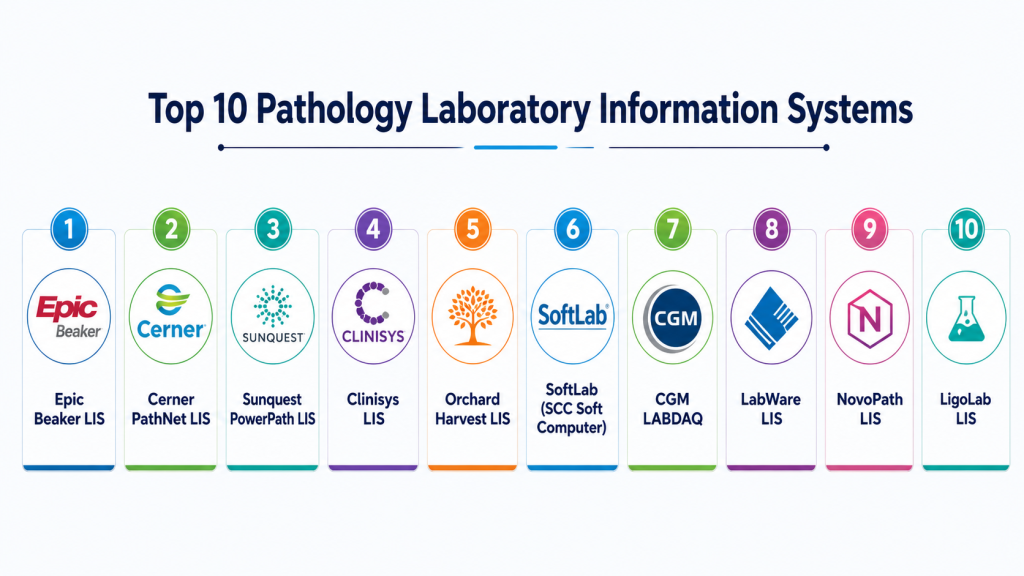
Top 10 Pathology Laboratory Information Systems
#1 — Epic Beaker (Anatomic Pathology)
Short description: Epic Beaker is a comprehensive LIS platform integrated within the Epic healthcare ecosystem. It supports both clinical and anatomic pathology workflows. Designed for large healthcare systems, it ensures seamless patient data flow across departments. The system provides strong reporting and specimen tracking capabilities. It is highly scalable and reliable. Ideal for hospitals already using Epic infrastructure.
Key Features
- Integrated pathology workflows
- Specimen tracking
- Reporting tools
- EHR integration
- Decision support
- Workflow automation
Pros
- Seamless Epic integration
- Highly scalable
Cons
- Requires Epic ecosystem
- Expensive
Platforms / Deployment
Web
Cloud / On-premise / Hybrid
Security & Compliance
SSO, MFA, RBAC, encryption
Supports HIPAA and enterprise compliance frameworks
Integrations & Ecosystem
Deep integration with Epic systems ensures unified workflows.
- EHR
- PACS
- Billing systems
- APIs
Support & Community
Strong enterprise support with extensive training resources.
#2 — Cerner PathNet
Short description: Cerner PathNet is a widely used LIS designed for hospital laboratories. It supports high-volume clinical workflows and integrates with Cerner EHR. Known for reliability and scalability, it enables efficient lab operations. It is suitable for large healthcare networks. It offers automation and reporting capabilities.
Key Features
- Workflow automation
- Specimen tracking
- Reporting tools
- EHR integration
- Billing support
- Analytics
Pros
- Strong integration with Cerner
- Reliable performance
Cons
- Complex implementation
- Requires training
Platforms / Deployment
Web
Cloud / Hybrid
Security & Compliance
MFA, encryption, RBAC
Supports healthcare compliance frameworks
Integrations & Ecosystem
Cerner ecosystem integration ensures seamless operations.
- EHR
- PACS
- APIs
Support & Community
Enterprise-level support with global presence.
#3 — Sunquest PowerPath
Short description: Sunquest PowerPath is a pathology-focused LIS widely used in academic and reference labs. It provides advanced anatomic pathology workflows and reporting capabilities. The platform supports high-volume operations. Known for its depth in pathology processes. Suitable for large labs and hospitals.
Key Features
- Advanced AP workflows
- Synoptic reporting
- Specimen tracking
- Analyzer integration
- Custom templates
- Workflow automation
Pros
- Strong pathology features
- High-volume support
Cons
- Complex UI
- Expensive
Platforms / Deployment
Web
Cloud / On-premise
Security & Compliance
RBAC, encryption
Supports enterprise compliance standards
Integrations & Ecosystem
Integrates with healthcare and lab systems.
- EHR
- PACS
- Instruments
- APIs
Support & Community
Strong enterprise support and legacy adoption.
#4 — Clinisys (Sunquest / WinPath / PowerPath)
Short description: Clinisys provides a unified LIS platform combining multiple legacy systems. It supports clinical, pathology, and public health workflows. Known for strong compliance and interoperability. Suitable for large healthcare systems and public labs.
Key Features
- Unified LIS platform
- Compliance tools
- Workflow automation
- Reporting
- Integration support
- Multi-site capabilities
Pros
- Strong compliance features
- Broad functionality
Cons
- Complex implementation
- Requires training
Platforms / Deployment
Web
Cloud / Hybrid
Security & Compliance
MFA, encryption, audit logs
Supports regulatory standards
Integrations & Ecosystem
Clinisys supports wide interoperability across systems.
- EHR
- Instruments
- APIs
Support & Community
Strong enterprise support with global reach.
#5 — Orchard Harvest LIS
Short description: Orchard Harvest is a flexible LIS platform designed for independent labs and diagnostic centers. It offers configurable workflows and reporting tools. Known for ease of use and faster implementation. Suitable for SMB and mid-market labs.
Key Features
- Configurable workflows
- Instrument connectivity
- Reporting tools
- Billing integration
- Multi-site support
- Dashboards
Pros
- Easy to implement
- Flexible configuration
Cons
- Limited enterprise depth
- Moderate scalability
Platforms / Deployment
Web
Cloud / Hybrid
Security & Compliance
Encryption, RBAC
Not publicly stated certifications
Integrations & Ecosystem
Supports integration with lab and healthcare systems.
- Instruments
- EHR
- APIs
Support & Community
Good vendor support and onboarding.
#6 — SoftLab (SCC Soft Computer)
Short description: SoftLab is a robust LIS platform designed for hospital laboratories. It supports automation, analyzer integration, and reporting. Known for reliability and performance. Suitable for mid to large healthcare organizations.
Key Features
- Workflow automation
- Analyzer integration
- Sample tracking
- Reporting tools
- Quality control
- Data management
Pros
- Reliable performance
- Strong automation
Cons
- UI may feel outdated
- Complex setup
Platforms / Deployment
Web / Windows
Cloud / On-premise
Security & Compliance
Encryption, RBAC
Supports healthcare compliance frameworks
Integrations & Ecosystem
Integrates with hospital systems and instruments.
- EHR
- PACS
- APIs
Support & Community
Moderate to strong support.
#7 — CGM LABDAQ
Short description: CGM LABDAQ is a cost-effective LIS solution for small to mid-sized labs. It provides core pathology workflows, billing, and reporting features. Known for simplicity and affordability. Suitable for growing labs.
Key Features
- Workflow management
- Billing and claims
- Analyzer connectivity
- Reporting tools
- Test menu configuration
- Compliance tools
Pros
- Affordable
- Easy deployment
Cons
- Limited scalability
- Basic UI
Platforms / Deployment
Web / Desktop
Cloud / On-premise
Security & Compliance
Encryption, MFA
Not publicly stated certifications
Integrations & Ecosystem
Supports integration with lab tools and systems.
- Instruments
- EHR
- APIs
Support & Community
Basic support with documentation.
#8 — LabWare LIS
Short description: LabWare LIS is a highly configurable platform used in regulated laboratory environments. It supports pathology, research, and compliance workflows. Known for flexibility and scalability. Suitable for complex labs.
Key Features
- Configurable workflows
- Compliance management
- Reporting and analytics
- Instrument integration
- Data management
- Multi-site support
Pros
- Highly flexible
- Strong compliance features
Cons
- Requires expertise
- Longer implementation
Platforms / Deployment
Web
Cloud / On-premise
Security & Compliance
RBAC, audit logs, encryption
Supports regulatory standards
Integrations & Ecosystem
Strong integration capabilities for complex labs.
- EHR
- Instruments
- APIs
Support & Community
Strong vendor support and enterprise adoption.
#9 — NovoPath LIS
Short description: NovoPath is a cloud-native LIS designed for anatomic and molecular pathology workflows. It offers fast reporting and strong digital pathology integration. Known for modern architecture and usability. Suitable for growing labs.
Key Features
- Cloud-native design
- Digital pathology integration
- Reporting tools
- Workflow automation
- Analytics
- Integration support
Pros
- Modern interface
- AI-ready workflows
Cons
- Newer platform
- Limited enterprise reach
Platforms / Deployment
Web
Cloud
Security & Compliance
Encryption, MFA
Not publicly stated certifications
Integrations & Ecosystem
Supports modern integrations and APIs.
- EHR
- Imaging systems
- APIs
Support & Community
Growing support ecosystem.
#10 — LigoLab LIS
Short description: LigoLab offers an integrated LIS platform with workflow automation and revenue cycle management. It is designed for high-volume labs and pathology groups. Known for automation and operational efficiency. Suitable for scaling organizations.
Key Features
- Workflow automation
- Revenue cycle integration
- Specimen tracking
- Reporting tools
- Analytics
- Multi-site support
Pros
- Strong automation
- Integrated billing
Cons
- Complex setup
- Requires training
Platforms / Deployment
Web
Cloud / Hybrid
Security & Compliance
RBAC, encryption
Supports compliance frameworks
Integrations & Ecosystem
Supports integration with healthcare systems.
- EHR
- Billing systems
- APIs
Support & Community
Enterprise support with onboarding assistance.
Comparison Table
| Tool Name | Best For | Platform(s) Supported | Deployment | Standout Feature | Public Rating |
|---|---|---|---|---|---|
| Epic Beaker | Enterprise hospitals | Web | Hybrid | EHR integration | N/A |
| Cerner PathNet | Large hospitals | Web | Hybrid | Workflow automation | N/A |
| Sunquest PowerPath | Academic labs | Web | Hybrid | AP workflows | N/A |
| Clinisys | Public health labs | Web | Hybrid | Compliance | N/A |
| Orchard Harvest | SMB labs | Web | Hybrid | Flexibility | N/A |
| SoftLab | Hospital labs | Web, Windows | Hybrid | Automation | N/A |
| CGM LABDAQ | Small labs | Web, Desktop | Hybrid | Cost efficiency | N/A |
| LabWare LIS | Regulated labs | Web | Hybrid | Configurability | N/A |
| NovoPath | Modern labs | Web | Cloud | Digital pathology | N/A |
| LigoLab | High-volume labs | Web | Hybrid | Automation + billing | N/A |
Evaluation & Scoring of Pathology LIS
| Tool Name | Core | Ease | Integrations | Security | Performance | Support | Value | Weighted Total |
|---|---|---|---|---|---|---|---|---|
| Epic Beaker | 10 | 7 | 10 | 9 | 9 | 9 | 7 | 8.9 |
| Cerner PathNet | 9 | 7 | 9 | 9 | 9 | 8 | 7 | 8.5 |
| Sunquest PowerPath | 9 | 7 | 9 | 9 | 9 | 8 | 7 | 8.5 |
| Clinisys | 9 | 7 | 9 | 9 | 9 | 8 | 7 | 8.5 |
| Orchard Harvest | 8 | 8 | 8 | 8 | 8 | 7 | 8 | 8.0 |
| SoftLab | 8 | 7 | 8 | 8 | 8 | 7 | 8 | 7.9 |
| CGM LABDAQ | 7 | 8 | 7 | 7 | 7 | 7 | 8 | 7.5 |
| LabWare LIS | 9 | 6 | 9 | 9 | 9 | 8 | 7 | 8.3 |
| NovoPath | 8 | 8 | 8 | 8 | 8 | 7 | 8 | 8.0 |
| LigoLab | 9 | 7 | 9 | 8 | 9 | 8 | 7 | 8.4 |
How to interpret scores:
- Enterprise platforms score high in features and integrations
- Cloud-native tools score better in usability and value
- Open/configurable systems excel in flexibility but require expertise
- Always prioritize workflow fit over total score
Which Pathology LIS Is Right for You?
Solo / Small Labs
CGM LABDAQ or Orchard Harvest offer affordability and ease of use.
SMB
NovoPath and RamSoft-style cloud systems provide flexibility and modern features.
Mid-Market
SoftLab and LigoLab balance automation and scalability.
Enterprise
Epic Beaker, Cerner PathNet, and Sunquest PowerPath provide deep integration and compliance.
Budget vs Premium
Budget: CGM LABDAQ, Orchard
Premium: Epic, Cerner, Clinisys
Feature Depth vs Ease of Use
Feature-rich: Epic, LabWare
User-friendly: NovoPath, Orchard
Integrations & Scalability
Best: Epic, Cerner, LabWare
Moderate: NovoPath, CGM
Security & Compliance Needs
High compliance: Epic, Clinisys, LabWare
Moderate: SMB-focused tools
Frequently Asked Questions (FAQs)
1. What is a Pathology LIS?
A Pathology LIS is software that manages laboratory workflows, including specimen tracking, testing, and reporting. It helps labs process patient samples efficiently. It integrates with healthcare systems. It ensures accurate and timely diagnostics. It is essential for modern pathology labs.
2. How is LIS different from LIMS?
LIS is patient-centric and used in clinical labs, while LIMS is sample-centric and used in research or industrial labs. LIS focuses on diagnostics. LIMS focuses on batch processing. Both share similar features. Their use cases differ significantly.
3. What are the benefits of LIS?
LIS improves efficiency, reduces errors, and automates workflows. It enables better tracking of specimens. It enhances reporting accuracy. It supports compliance. It improves patient outcomes.
4. Is LIS secure?
Yes, LIS systems include encryption, access control, and audit logs. Enterprise systems offer strong compliance. Security depends on configuration. Regular audits are required. Data protection is critical.
5. Can LIS integrate with EHR systems?
Yes, LIS integrates with EHR, PACS, and HIS systems. Integration improves workflows. It ensures unified patient data. APIs enable connectivity. Interoperability is essential.
6. What is cloud LIS?
Cloud LIS is hosted on cloud infrastructure. It allows remote access and scalability. It reduces infrastructure costs. It is ideal for modern labs. Requires reliable internet.
7. How long does LIS implementation take?
Implementation varies from weeks to months. Complexity depends on lab size. Integration and training take time. Planning is essential. Proper setup ensures success.
8. What should you consider when choosing LIS?
Consider workflow, integration, security, scalability, and cost. Ease of use is important. Vendor support matters. Compliance is critical. Always test before selection.
9. Are LIS systems expensive?
Costs vary depending on features and scale. Enterprise systems are more expensive. Cloud solutions reduce upfront costs. Pricing depends on usage. Evaluate ROI.
10. Is AI used in LIS?
Yes, AI is used for automation, reporting, and analytics. It improves efficiency. AI adoption is growing. It supports diagnostics. It enhances decision-making.
Conclusion
Pathology Laboratory Information Systems (LIS) are essential for managing modern laboratory operations, enabling efficient workflows, accurate diagnostics, and regulatory compliance. With increasing demand for digital pathology and integrated healthcare systems, LIS platforms are evolving with cloud-native architectures, AI-driven automation, and stronger cybersecurity frameworks. Enterprise solutions like Epic Beaker, Cerner PathNet, and Sunquest PowerPath offer deep integration and scalability, while newer cloud-based platforms like NovoPath and LigoLab provide flexibility and faster deployment. The best LIS depends on your laboratory size, workflow complexity, and integration requirements. Instead of choosing purely based on features, organizations should shortlist a few platforms, run pilot implementations, and validate performance, usability, and security in real-world environments. A well-selected LIS can significantly improve lab efficiency, reduce errors, and enhance patient care outcomes.