Introduction
Debt Collection Software helps lenders, financial institutions, and collection agencies manage overdue payments, automate recovery workflows, and improve collection efficiency. These platforms streamline the entire collections lifecycle—from early reminders to delinquency management and legal escalation—using automation, analytics, and communication tools.
These systems are critical because debt recovery requires timely follow-ups, compliance with regulations, customer engagement, and risk prioritization. Manual collection processes are inefficient and prone to errors, while modern software enables smarter and faster collections. Common use cases include payment reminders, delinquency tracking, field collections, dispute management, and reporting.
Buyers should evaluate automation capabilities, omnichannel communication, AI-driven prioritization, compliance tools, integrations, scalability, reporting, borrower experience, deployment model, and security features.
Best for: Banks, NBFCs, fintech lenders, collection agencies, telecom companies, and enterprises managing receivables or delinquent accounts.
Not ideal for: Very small businesses with minimal overdue accounts or organizations relying on basic accounting tools.
Key Trends in Debt Collection Software
- AI-driven collections prioritization improving recovery rates
- Digital-first collections strategies using SMS, email, and apps
- Cloud-native platforms replacing legacy collection systems
- Predictive analytics for delinquency risk
- Self-service payment portals improving customer experience
- Automation of follow-ups and workflows reducing manual work
- Compliance automation ensuring regulatory adherence
- Integration with LOS and CRM systems for unified operations
- Field collection mobility solutions for on-ground agents
- Real-time dashboards and reporting for performance tracking
How We Selected These Tools
- Strong adoption across financial institutions and collection agencies
- End-to-end debt collection lifecycle support
- Automation of workflows and communication
- Integration with lending, CRM, and payment systems
- Scalability for high-volume collections
- Availability of cloud-based deployment
- Compliance and audit capabilities
- Usability for collection teams
- Vendor ecosystem and extensibility
- Fit across SMB, mid-market, and enterprise use cases
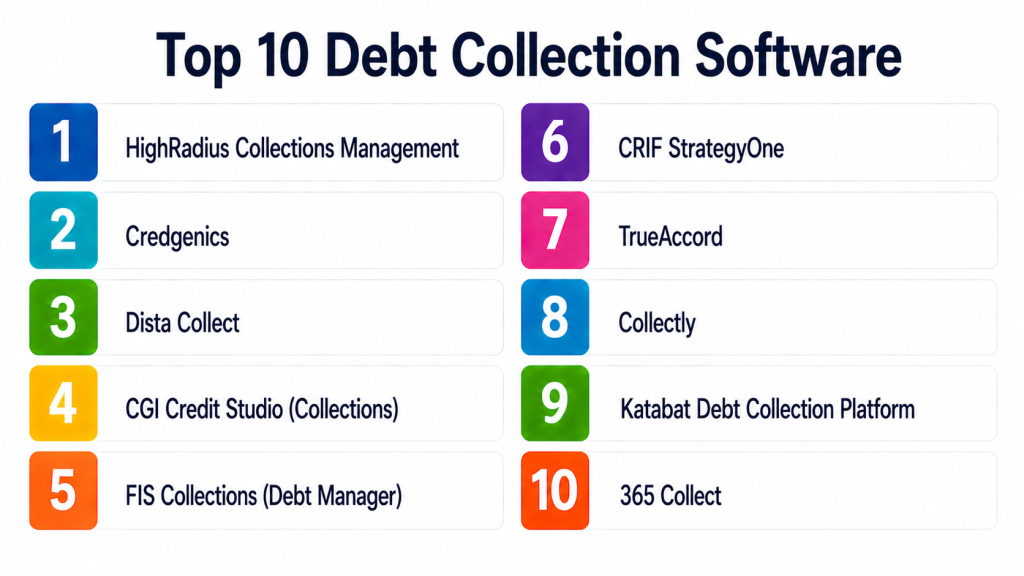
Top 10 Debt Collection Software
#1 — HighRadius Collections Management
Short description: HighRadius is an AI-driven collections platform that helps enterprises automate receivables and improve collection efficiency. It is widely used by large organizations.
Key Features
- AI-driven collections prioritization
- Automated workflows
- Payment tracking
- Analytics dashboards
- Integration APIs
Pros
- Strong AI capabilities
- Improves recovery rates
- Scalable
- Enterprise-ready
Cons
- Enterprise-focused
- Pricing varies
- Implementation effort
- Requires configuration
Platforms / Deployment
Web
Cloud
Security & Compliance
Not publicly stated
Integrations & Ecosystem
HighRadius integrates with ERP, CRM, and financial systems.
- ERP systems
- CRM tools
- Payment platforms
- Analytics systems
Support & Community
Enterprise support with onboarding services.
#2 — Credgenics
Short description: Credgenics is a digital collections platform focused on automating recovery workflows and improving customer engagement through digital channels.
Key Features
- Digital collections automation
- Omnichannel communication
- Workflow management
- Analytics dashboards
- Integration APIs
Pros
- Strong digital capabilities
- Easy to use
- Scalable
- Improves borrower engagement
Cons
- Integration setup required
- Pricing varies
- Feature depth varies
- Growing ecosystem
Platforms / Deployment
Web
Cloud
Security & Compliance
Not publicly stated
Integrations & Ecosystem
Credgenics integrates with lending and CRM systems.
- CRM tools
- Lending platforms
- Payment systems
- Analytics tools
Support & Community
Support available with onboarding resources.
#3 — Dista Collect
Short description: Dista Collect focuses on field collections and agent management, enabling organizations to track and optimize on-ground recovery operations.
Key Features
- Field collections management
- Agent tracking
- Route optimization
- Workflow automation
- Reporting dashboards
Pros
- Strong field collection features
- Improves agent productivity
- Easy to use
- Mobile support
Cons
- Limited enterprise features
- Integration needs
- Pricing varies
- Niche focus
Platforms / Deployment
Web / Mobile
Cloud
Security & Compliance
Not publicly stated
Integrations & Ecosystem
Dista integrates with collection and CRM systems.
- CRM tools
- Data platforms
- Analytics systems
Support & Community
Support available with onboarding.
#4 — CGI Credit Studio (Collections)
Short description: CGI Credit Studio provides enterprise-grade collections management with automation and analytics for large financial institutions.
Key Features
- Collections workflow automation
- Risk segmentation
- Analytics dashboards
- Integration APIs
- Compliance tools
Pros
- Enterprise-ready
- Strong analytics
- Scalable
- Reliable
Cons
- Complex implementation
- Pricing varies
- Enterprise-focused
- Requires expertise
Platforms / Deployment
Web
Cloud / Hybrid
Security & Compliance
Not publicly stated
Integrations & Ecosystem
CGI integrates with banking and lending systems.
- Core banking systems
- CRM tools
- Analytics platforms
Support & Community
Enterprise support available.
#5 — FIS Collections (Debt Manager)
Short description: FIS provides a collections platform designed for banks and financial institutions to manage delinquency and recovery processes.
Key Features
- Collections management
- Workflow automation
- Risk assessment
- Reporting tools
- Integration APIs
Pros
- Strong banking integration
- Scalable
- Reliable
- Compliance-focused
Cons
- Enterprise complexity
- Pricing varies
- Implementation effort
- Customization required
Platforms / Deployment
Web
Cloud / On-prem
Security & Compliance
Not publicly stated
Integrations & Ecosystem
FIS integrates with banking and financial systems.
- Core banking systems
- CRM tools
- Data platforms
Support & Community
Enterprise support with global presence.
#6 — CRIF StrategyOne
Short description: CRIF StrategyOne provides decision management and collections optimization using analytics and risk modeling.
Key Features
- Decision engine
- Risk segmentation
- Analytics dashboards
- Workflow automation
- Integration APIs
Pros
- Strong analytics
- Improves decision-making
- Scalable
- Flexible
Cons
- Requires expertise
- Pricing varies
- Integration complexity
- Enterprise focus
Platforms / Deployment
Web
Cloud
Security & Compliance
Not publicly stated
Integrations & Ecosystem
CRIF integrates with financial systems.
- Credit bureaus
- CRM tools
- Analytics platforms
Support & Community
Support available with analytics focus.
#7 — TrueAccord
Short description: TrueAccord is a digital-first collections platform focused on customer-friendly debt recovery using machine learning.
Key Features
- AI-driven communication
- Digital collections workflows
- Payment portals
- Analytics dashboards
- Compliance tools
Pros
- Customer-centric approach
- Strong AI capabilities
- Improves engagement
- Scalable
Cons
- Focused on digital collections
- Limited enterprise customization
- Pricing varies
- Integration needs
Platforms / Deployment
Web
Cloud
Security & Compliance
Not publicly stated
Integrations & Ecosystem
TrueAccord integrates with financial platforms.
- Payment systems
- CRM tools
- Data platforms
Support & Community
Support available with digital focus.
#8 — Collectly
Short description: Collectly is a healthcare-focused collections platform designed to improve patient payment recovery through automation and engagement.
Key Features
- Payment automation
- Patient engagement
- Analytics dashboards
- Workflow management
- Reporting tools
Pros
- Strong healthcare focus
- Easy to use
- Improves collections
- Good user experience
Cons
- Limited outside healthcare
- Integration needs
- Pricing varies
- Niche use case
Platforms / Deployment
Web
Cloud
Security & Compliance
Not publicly stated
Integrations & Ecosystem
Collectly integrates with healthcare systems.
- Billing systems
- CRM tools
- Payment platforms
Support & Community
Support available with onboarding.
#9 — Katabat Debt Collection Platform
Short description: Katabat provides omnichannel collections and recovery management with automation and analytics.
Key Features
- Omnichannel communication
- Workflow automation
- Risk segmentation
- Analytics dashboards
- Integration APIs
Pros
- Strong communication tools
- Flexible workflows
- Scalable
- Enterprise-ready
Cons
- Implementation effort
- Pricing varies
- Requires configuration
- Integration complexity
Platforms / Deployment
Web
Cloud
Security & Compliance
Not publicly stated
Integrations & Ecosystem
Katabat integrates with financial and CRM systems.
- CRM tools
- Data platforms
- Analytics tools
Support & Community
Enterprise support available.
#10 — 365 Collect
Short description: 365 Collect is a cloud-based collections platform designed for SMBs and enterprises with automation and workflow management.
Key Features
- Automated collections
- Payment tracking
- Workflow management
- Reporting dashboards
- Integration APIs
Pros
- Easy to use
- Affordable
- Flexible
- Scalable
Cons
- Limited enterprise depth
- Integration limitations
- Smaller ecosystem
- Feature depth varies
Platforms / Deployment
Web
Cloud
Security & Compliance
Not publicly stated
Integrations & Ecosystem
365 Collect integrates with business systems.
- CRM tools
- Payment platforms
- Data systems
Support & Community
Support available with onboarding assistance.
Comparison Table
| Tool Name | Best For | Platform(s) Supported | Deployment | Standout Feature | Public Rating |
|---|---|---|---|---|---|
| HighRadius | Enterprises | Web | Cloud | AI collections | N/A |
| Credgenics | Digital lenders | Web | Cloud | Omnichannel collections | N/A |
| Dista | Field teams | Web/Mobile | Cloud | Field collection management | N/A |
| CGI | Banks | Web | Cloud/Hybrid | Risk analytics | N/A |
| FIS | Financial institutions | Web | Cloud/On-prem | Banking integration | N/A |
| CRIF | Analytics-driven | Web | Cloud | Decision engine | N/A |
| TrueAccord | Digital recovery | Web | Cloud | AI communication | N/A |
| Collectly | Healthcare | Web | Cloud | Patient collections | N/A |
| Katabat | Enterprise | Web | Cloud | Omnichannel workflows | N/A |
| 365 Collect | SMB | Web | Cloud | Simplicity | N/A |
Evaluation & Scoring
| Tool | Core | Ease | Integrations | Security | Performance | Support | Value | Total |
|---|---|---|---|---|---|---|---|---|
| HighRadius | 9 | 7.5 | 8.5 | 8 | 8.5 | 8 | 7 | 8.2 |
| Credgenics | 8.5 | 8 | 8 | 7.5 | 8 | 7.5 | 8 | 8.0 |
| Dista | 7.5 | 8.5 | 7.5 | 7.5 | 8 | 7.5 | 8 | 7.9 |
| CGI | 8.5 | 7 | 8 | 8 | 8.5 | 8 | 7 | 8.0 |
| FIS | 9 | 7 | 8 | 8 | 8.5 | 8 | 7 | 8.1 |
| CRIF | 8.5 | 7.5 | 8.5 | 8 | 8.5 | 8 | 7.5 | 8.1 |
| TrueAccord | 8 | 8.5 | 7.5 | 7.5 | 8 | 7.5 | 8 | 8.0 |
| Collectly | 7.5 | 8.5 | 7 | 7.5 | 8 | 7.5 | 8 | 7.8 |
| Katabat | 8.5 | 7.5 | 8 | 8 | 8.5 | 8 | 7.5 | 8.1 |
| 365 Collect | 7.5 | 8.5 | 7.5 | 7.5 | 8 | 7.5 | 8.5 | 7.9 |
Scores are comparative and highlight strengths. Enterprise tools excel in scalability, while modern digital tools perform better in usability and engagement.
Which Debt Collection Software Is Right for You?
Solo / Freelancer
Basic accounting tools may be sufficient.
SMB
Choose 365 Collect or Dista Collect for ease of use and affordability.
Mid-Market
Consider Credgenics, TrueAccord, or CRIF for scalability.
Enterprise
Use HighRadius, FIS, or CGI Credit Studio for full-scale operations.
Budget vs Premium
Budget tools focus on usability, while premium tools provide AI and analytics.
Feature Depth vs Ease of Use
Simple tools prioritize usability, while enterprise tools offer deeper control.
Integrations & Scalability
Ensure integration with CRM, LOS, and payment systems.
Security & Compliance Needs
Verify regulatory compliance and audit features before selection.
Frequently Asked Questions
1. What is debt collection software?
It is software that helps businesses manage overdue payments and recovery processes.
2. Why is it important?
It improves recovery rates and reduces manual effort.
3. Who uses it?
Banks, lenders, collection agencies, and enterprises.
4. What features matter most?
Automation, communication, analytics, and compliance.
5. Are these platforms cloud-based?
Most modern platforms are cloud-based.
6. Can they automate collections?
Yes, most platforms automate reminders and workflows.
7. How long does implementation take?
It varies depending on complexity.
8. Do they integrate with other systems?
Yes, including CRM and payment systems.
9. Are they secure?
Security varies by vendor.
10. What are alternatives?
Manual processes or spreadsheets.
Conclusion
Debt collection software plays a vital role in improving recovery efficiency and reducing operational costs. It enables automation, better communication, and smarter decision-making. Enterprise tools like HighRadius, FIS, and CGI provide strong capabilities for large organizations. Meanwhile, platforms like Credgenics, TrueAccord, and 365 Collect offer flexible and user-friendly solutions. The right choice depends on collection volume, complexity, and compliance needs. Organizations should evaluate automation, integrations, and scalability before selecting a platform. A pilot implementation can help validate performance and usability. Ultimately, the best solution aligns with your business goals and improves collection outcomes.