Introduction
Fraud Detection Platforms are advanced software systems designed to identify, prevent, and respond to fraudulent activities across digital transactions, user accounts, and financial systems. These platforms combine machine learning, behavioral analytics, rule engines, and real-time monitoring to detect suspicious behavior and minimize financial loss.
As digital ecosystems expand—especially in fintech, e-commerce, and SaaS—fraudsters are becoming more sophisticated. Businesses now require intelligent, automated systems that can analyze large volumes of data in real time while maintaining a seamless user experience. Fraud detection is no longer just about blocking threats—it’s about balancing security with customer trust and operational efficiency.
Common Use Cases
- Payment fraud detection for online transactions
- Account takeover prevention
- Identity verification and onboarding fraud checks
- Banking transaction monitoring
- Insurance and claims fraud detection
What Buyers Should Evaluate
- Real-time detection and response speed
- Machine learning accuracy and adaptability
- False positive rates
- Integration capabilities (APIs, SDKs)
- Scalability for growing transaction volumes
- Custom rule engine flexibility
- Reporting and analytics depth
- Compliance and regulatory readiness
Best for: Fintech companies, e-commerce platforms, banks, SaaS providers, and enterprises managing high transaction volumes or sensitive user data.
Not ideal for: Very small businesses with minimal online transactions or low fraud exposure, where basic payment gateway protections may be sufficient.
Key Trends in Fraud Detection Platforms
- Widespread use of AI and machine learning models for predictive fraud detection
- Behavioral biometrics replacing static authentication methods
- Real-time decision engines with near-instant risk scoring
- Graph-based fraud detection to uncover hidden fraud networks
- Integration with identity verification and KYC/KYB workflows
- Growth of low-code/no-code rule management systems
- API-first and cloud-native architectures
- Focus on explainable AI for regulatory compliance
- Automation of fraud workflows and case management
- Cross-channel fraud detection across web, mobile, and APIs
How We Selected These Tools (Methodology)
- Strong adoption across fintech, banking, and e-commerce sectors
- Proven ability to detect and prevent fraud effectively
- Depth of AI/ML and behavioral analytics capabilities
- Performance and reliability under high transaction loads
- Security readiness and enterprise-grade architecture
- Integration flexibility with APIs and third-party systems
- Suitability across SMB, mid-market, and enterprise segments
- Product innovation and long-term scalability
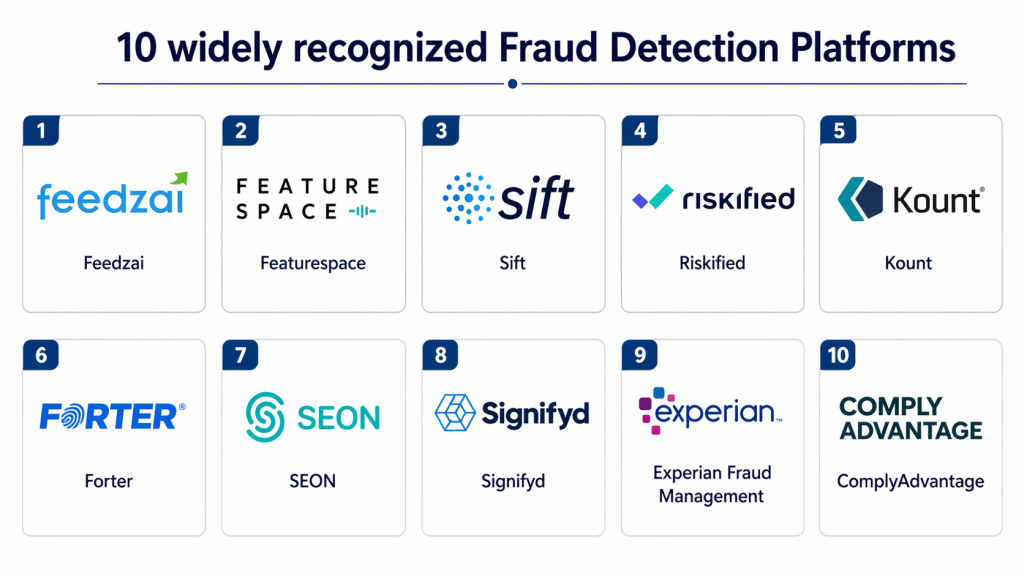
Top 10 Fraud Detection Platforms Tools
#1 — Stripe Radar
Short description: A fraud prevention solution built into Stripe that uses machine learning trained on global transaction data to block fraudulent payments in real time.
Key Features
- AI-powered fraud detection
- Real-time risk scoring
- Custom rule engine
- Adaptive machine learning models
- Global fraud intelligence network
- Payment-integrated protection
Pros
- Seamless integration with Stripe
- Strong real-time detection capabilities
Cons
- Limited to Stripe ecosystem
- Customization may require technical setup
Platforms / Deployment
Cloud
Security & Compliance
Encryption, RBAC, audit logs (other details not publicly stated)
Integrations & Ecosystem
Integrated deeply within Stripe’s ecosystem and APIs.
- Payment workflows
- Webhooks
- Third-party integrations
Support & Community
Comprehensive documentation and enterprise support options.
#2 — Sift
Short description: A digital trust platform designed to prevent fraud across e-commerce, fintech, and online marketplaces.
Key Features
- Machine learning fraud detection
- Behavioral analytics
- Account takeover prevention
- Chargeback reduction
- Real-time decision engine
- Global fraud intelligence
Pros
- Strong behavioral insights
- Scales well with growth
Cons
- Requires tuning for best performance
- Pricing may increase with usage
Platforms / Deployment
Cloud
Security & Compliance
Not publicly stated
Integrations & Ecosystem
API-first platform enabling flexible integrations.
- E-commerce systems
- Payment gateways
- CRM platforms
Support & Community
Enterprise-grade onboarding and support.
#3 — Riskified
Short description: A fraud detection platform focused on e-commerce with chargeback protection and automated decisioning.
Key Features
- AI-based fraud detection
- Chargeback guarantee model
- Real-time transaction analysis
- Automated order approval
- Fraud analytics dashboard
Pros
- Reduces financial risk
- Easy to implement
Cons
- Limited to e-commerce use cases
- Pricing based on transaction volume
Platforms / Deployment
Cloud
Security & Compliance
Not publicly stated
Integrations & Ecosystem
- E-commerce platforms
- Payment processors
- APIs for customization
Support & Community
Strong enterprise support.
#4 — Kount
Short description: Fraud prevention platform combining identity verification with transaction monitoring.
Key Features
- Identity-based fraud detection
- Device fingerprinting
- AI-driven risk scoring
- Omnichannel fraud protection
- Chargeback prevention
Pros
- Strong identity intelligence
- Multi-channel coverage
Cons
- Setup complexity
- Requires tuning
Platforms / Deployment
Cloud
Security & Compliance
Not publicly stated
Integrations & Ecosystem
- Payment systems
- E-commerce tools
- APIs and SDKs
Support & Community
Enterprise support and documentation.
#5 — Forter
Short description: Real-time fraud prevention platform focused on identity intelligence and high approval rates.
Key Features
- Identity-based fraud detection
- Real-time decision engine
- Behavioral analytics
- Chargeback protection
- AI-driven risk scoring
Pros
- High approval rates
- Low friction for users
Cons
- Premium pricing
- Enterprise-focused
Platforms / Deployment
Cloud
Security & Compliance
Not publicly stated
Integrations & Ecosystem
- E-commerce platforms
- Payment systems
- APIs
Support & Community
Dedicated enterprise support.
#6 — Featurespace
Short description: Behavioral analytics platform used in banking for adaptive fraud detection.
Key Features
- Behavioral analytics models
- Adaptive machine learning
- Real-time monitoring
- Transaction risk scoring
- Financial crime detection
Pros
- Strong banking use case
- Adaptive detection
Cons
- Complex deployment
- Enterprise-focused
Platforms / Deployment
Cloud / Hybrid
Security & Compliance
Not publicly stated
Integrations & Ecosystem
- Banking systems
- APIs
- Data platforms
Support & Community
Enterprise-grade support.
#7 — Feedzai
Short description: AI-driven fraud detection platform for financial institutions and payment systems.
Key Features
- Machine learning models
- Real-time decision engine
- Behavioral biometrics
- Risk scoring
- Transaction monitoring
Pros
- Highly scalable
- Strong financial use cases
Cons
- Implementation complexity
- Higher cost
Platforms / Deployment
Cloud / Hybrid
Security & Compliance
Not publicly stated
Integrations & Ecosystem
- Banking systems
- Payment platforms
- APIs
Support & Community
Strong enterprise support.
#8 — SEON
Short description: Fraud detection platform focused on digital businesses with data enrichment and flexible rules.
Key Features
- Email and phone verification
- Social data enrichment
- Device fingerprinting
- Custom rule engine
- Real-time scoring
Pros
- Easy to use
- Flexible configuration
Cons
- Limited enterprise capabilities
- Requires tuning
Platforms / Deployment
Cloud
Security & Compliance
Not publicly stated
Integrations & Ecosystem
- APIs
- Payment systems
- CRM tools
Support & Community
Strong SMB support.
#9 — Signifyd
Short description: E-commerce fraud prevention platform offering financial guarantees and automated approvals.
Key Features
- Chargeback protection
- AI-based fraud detection
- Real-time approvals
- Order intelligence
- Global fraud network
Pros
- Financial protection model
- Easy integration
Cons
- Focused on e-commerce
- Pricing tied to volume
Platforms / Deployment
Cloud
Security & Compliance
Not publicly stated
Integrations & Ecosystem
- E-commerce platforms
- Payment systems
- APIs
Support & Community
Comprehensive support.
#10 — Experian Fraud Management
Short description: Enterprise fraud detection platform combining identity verification, analytics, and risk scoring.
Key Features
- Identity verification
- Fraud risk scoring
- Data analytics
- Compliance tools
- Transaction monitoring
Pros
- Strong data intelligence
- Enterprise-ready
Cons
- Complex setup
- Higher cost
Platforms / Deployment
Cloud / Hybrid
Security & Compliance
Not publicly stated
Integrations & Ecosystem
- Banking systems
- APIs
- Identity databases
Support & Community
Enterprise consulting and support.
Comparison Table (Top 10)
| Tool Name | Best For | Platform(s) Supported | Deployment | Standout Feature | Public Rating |
|---|---|---|---|---|---|
| Stripe Radar | Stripe users | Web | Cloud | Payment-integrated fraud detection | N/A |
| Sift | E-commerce | Web | Cloud | Behavioral analytics | N/A |
| Riskified | Retail | Web | Cloud | Chargeback guarantee | N/A |
| Kount | Multi-channel fraud | Web | Cloud | Identity trust scoring | N/A |
| Forter | Enterprise retail | Web | Cloud | Real-time approvals | N/A |
| Featurespace | Banking | Web | Cloud/Hybrid | Behavioral AI | N/A |
| Feedzai | Financial institutions | Web | Cloud/Hybrid | AI decision engine | N/A |
| SEON | SMBs | Web | Cloud | Data enrichment | N/A |
| Signifyd | E-commerce | Web | Cloud | Financial protection | N/A |
| Experian | Enterprise | Web | Cloud/Hybrid | Identity intelligence | N/A |
Evaluation & Scoring of Fraud Detection Platforms
| Tool Name | Core (25%) | Ease (15%) | Integrations (15%) | Security (10%) | Performance (10%) | Support (10%) | Value (15%) | Weighted Total |
|---|---|---|---|---|---|---|---|---|
| Stripe Radar | 8 | 9 | 7 | 7 | 9 | 8 | 8 | 8.1 |
| Sift | 9 | 7 | 8 | 7 | 9 | 8 | 7 | 8.0 |
| Riskified | 8 | 8 | 7 | 7 | 8 | 8 | 7 | 7.8 |
| Kount | 8 | 7 | 8 | 7 | 8 | 7 | 7 | 7.7 |
| Forter | 9 | 7 | 7 | 7 | 9 | 8 | 7 | 8.0 |
| Featurespace | 9 | 6 | 7 | 7 | 9 | 7 | 6 | 7.6 |
| Feedzai | 9 | 6 | 8 | 8 | 9 | 8 | 6 | 8.0 |
| SEON | 7 | 9 | 7 | 6 | 8 | 7 | 8 | 7.6 |
| Signifyd | 8 | 8 | 7 | 7 | 8 | 8 | 7 | 7.8 |
| Experian | 9 | 6 | 8 | 8 | 9 | 8 | 6 | 8.1 |
How to interpret scores:
These scores are comparative benchmarks designed to help evaluate trade-offs between platforms. A higher score reflects better overall balance, but priorities vary depending on business needs. Some tools excel in enterprise security, while others focus on usability and affordability.
Which Fraud Detection Platforms Tool Is Right for You?
Solo / Freelancer
Stripe Radar or SEON provide simple and cost-effective fraud protection.
SMB
SEON, Sift, and Signifyd offer a strong balance of features and usability.
Mid-Market
Kount, Riskified, and Forter deliver scalability with manageable complexity.
Enterprise
Feedzai, Featurespace, and Experian offer deep analytics and compliance readiness.
Budget vs Premium
- Budget: SEON, Stripe Radar
- Premium: Feedzai, Experian
Feature Depth vs Ease of Use
- Easy: Stripe Radar, SEON
- Advanced: Feedzai, Featurespace
Integrations & Scalability
Choose API-first platforms like Sift or Feedzai.
Security & Compliance Needs
Enterprises should prioritize tools like Experian or Feedzai.
Frequently Asked Questions (FAQs)
What is a fraud detection platform?
A system that identifies suspicious activity using data analysis, rules, and machine learning to prevent fraud.
How do fraud detection tools work?
They analyze user behavior, transaction data, and risk signals to detect anomalies and block fraudulent actions.
Are these tools suitable for small businesses?
Yes, some platforms are designed specifically for SMBs with simple setup and pricing.
How long does implementation take?
It ranges from a few days to several weeks depending on system complexity.
Do these tools reduce chargebacks?
Yes, many platforms focus on preventing fraud and minimizing chargebacks.
Are fraud detection platforms scalable?
Most modern platforms are designed to scale with business growth and increasing transaction volumes.
What integrations are typically supported?
Common integrations include payment gateways, APIs, CRMs, and banking systems.
What are common mistakes when choosing a tool?
Ignoring integration complexity, scalability, and false positives.
Can I switch platforms later?
Yes, but it requires careful planning for migration and integration.
Do these tools support real-time detection?
Yes, most platforms provide real-time fraud detection and decisioning.
Conclusion
Fraud Detection Platforms play a critical role in protecting modern digital businesses from financial and reputational risks. Choosing the right solution requires a clear understanding of your transaction volume, fraud exposure, and integration needs. Some platforms prioritize ease of use for growing businesses, while others focus on deep analytics and enterprise-grade capabilities. Instead of looking for a single “best” tool, focus on the one that aligns with your operational goals and risk tolerance. Start by shortlisting a few options, test them with real scenarios, and evaluate performance before making a final decision.