Introduction
Service Catalog Platforms help organizations centralize, standardize, automate, and manage IT services, business requests, workflows, approvals, and self-service operations through unified service delivery systems. These platforms improve operational efficiency, streamline request fulfillment, reduce manual support workloads, strengthen governance, and provide consistent employee and customer service experiences across enterprise environments.
As businesses increasingly manage hybrid infrastructure, cloud services, SaaS applications, distributed workforces, and multi-department service operations, spreadsheets, email-based requests, and disconnected workflows are no longer sufficient. Modern Service Catalog platforms now combine workflow automation, AI-powered assistance, approval orchestration, ITSM integration, analytics, low-code automation, and cloud-native scalability to support intelligent enterprise service operations.
Real-world use cases include:
- IT service request management
- Employee onboarding and access provisioning
- HR and facilities request workflows
- Software and hardware request automation
- Enterprise self-service operations
Buyers evaluating Service Catalog Platforms should focus on:
- Workflow automation and orchestration capabilities
- ITSM, ERP, HR, and cloud integration support
- Self-service portal functionality
- Approval management and governance controls
- Scalability for enterprise service operations
- Security and compliance capabilities
- Analytics and operational reporting visibility
- Low-code and customization flexibility
- Multi-department service support
- Ease of deployment and employee usability
Best for: Enterprise IT teams, HR operations, financial services organizations, healthcare providers, telecom companies, educational institutions, and large enterprises with complex service workflows.
Not ideal for: Very small businesses with minimal workflow complexity and low service request volume.
Key Trends in Service Catalog Platforms
- AI-powered service automation becoming standard
- Self-service adoption increasing rapidly
- Workflow orchestration improving operational efficiency
- Low-code service automation expanding significantly
- Cloud-native service catalogs improving scalability
- Multi-department service delivery becoming strategic priority
- AI-powered request routing improving responsiveness
- Employee experience automation growing rapidly
- Predictive analytics improving service visibility
- Integrated governance workflows strengthening compliance
How We Selected These Tools Methodology
- Adoption across enterprise service operations
- Workflow automation and catalog capability depth
- ITSM, ERP, HR, and cloud integration support
- Scalability for enterprise service ecosystems
- Security and compliance functionality
- Workflow orchestration and analytics support
- Self-service and governance capabilities
- Cloud-native deployment flexibility
- Ease of deployment and operational usability
- Balance between enterprise and SMB service platforms
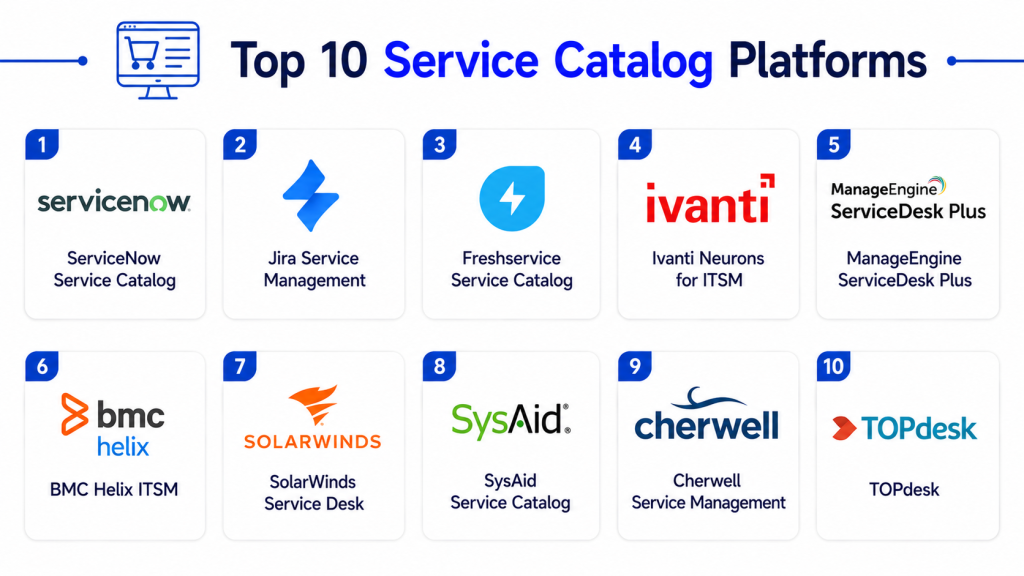
Top 10 Service Catalog Platforms
1- ServiceNow Service Catalog
Short description:
ServiceNow Service Catalog provides enterprise-grade workflow automation supporting IT services, employee requests, approvals, provisioning, and self-service operations.
Key Features
- Enterprise workflow automation
- Self-service request portals
- Approval orchestration workflows
- ITSM integration support
- AI-powered request routing
- Analytics dashboards
- Operational KPI visibility
Pros
- Strong enterprise workflow capabilities
- Excellent scalability for large organizations
- Reliable governance and automation support
Cons
- Enterprise deployment complexity
- Premium enterprise pricing
- Advanced customization may require expertise
Platforms / Deployment
- Web / Mobile
- Cloud
Security & Compliance
Supports RBAC, MFA, encryption, audit logging, and governance workflows.
Integrations & Ecosystem
- ServiceNow ecosystem
- APIs
- HR systems
- Cloud platforms
- Enterprise applications
Support & Community
Large enterprise workflow ecosystem.
2- Jira Service Management
Short description:
Jira Service Management provides service catalog workflows supporting IT operations, employee requests, approvals, and DevOps-aligned service automation.
Key Features
- Service request automation
- Approval management workflows
- Self-service portals
- Workflow orchestration support
- Incident and request visibility
- Analytics dashboards
- Operational KPI reporting
Pros
- Strong ITSM and DevOps integration
- Good workflow flexibility
- Reliable operational scalability
Cons
- User interface complexity for non-technical users
- Advanced customization may require expertise
- Governance workflows may require configuration
Platforms / Deployment
- Web / Mobile
- Cloud / Hybrid
Security & Compliance
Supports RBAC, MFA, encryption, audit logging, and governance workflows.
Integrations & Ecosystem
- Atlassian ecosystem
- APIs
- Collaboration platforms
- Monitoring systems
Support & Community
Large DevOps and ITSM ecosystem.
3- Freshservice
Short description:
Freshservice provides cloud-native service catalog workflows supporting IT service automation, employee requests, workflow management, and self-service operations.
Key Features
- Service catalog automation
- Employee self-service support
- Workflow orchestration capabilities
- Approval management workflows
- AI-powered ticket routing
- Analytics dashboards
- Operational KPI visibility
Pros
- Strong ease-of-use capabilities
- Good SMB and mid-market usability
- Reliable cloud-native flexibility
Cons
- Advanced enterprise governance limited
- Large-scale customization varies
- Complex workflows may require expertise
Platforms / Deployment
- Web / Mobile
- Cloud
Security & Compliance
Supports RBAC, encryption, secure APIs, and governance workflows.
Integrations & Ecosystem
- Freshworks ecosystem
- APIs
- Collaboration tools
- Cloud services
Support & Community
Large SMB SaaS ecosystem.
4- Ivanti Neurons for ITSM
Short description:
Ivanti Neurons for ITSM provides service catalog workflows supporting automation, asset management, approvals, and enterprise service delivery operations.
Key Features
- Service request automation
- Workflow orchestration support
- Asset-aware service workflows
- Approval management capabilities
- Self-service portal visibility
- Analytics dashboards
- Operational KPI tracking
Pros
- Strong ITSM automation support
- Good asset management integration
- Reliable enterprise scalability
Cons
- Enterprise implementation complexity
- Advanced customization may require expertise
- Premium operational pricing
Platforms / Deployment
- Web
- Cloud
Security & Compliance
Supports RBAC, encryption, audit logging, and governance workflows.
Integrations & Ecosystem
- ITSM systems
- APIs
- Endpoint management tools
- Enterprise platforms
Support & Community
Strong enterprise IT ecosystem.
5- BMC Helix Digital Workplace
Short description:
BMC Helix Digital Workplace provides AI-powered service catalog workflows supporting employee self-service, IT automation, and enterprise workflow orchestration.
Key Features
- AI-powered service requests
- Employee self-service workflows
- Workflow automation support
- Approval orchestration capabilities
- Knowledge management integration
- Analytics dashboards
- Operational KPI visibility
Pros
- Strong enterprise workflow automation
- Excellent employee experience support
- Reliable operational scalability
Cons
- Enterprise deployment complexity
- Premium enterprise pricing
- Advanced configuration may require expertise
Platforms / Deployment
- Web / Mobile
- Cloud
Security & Compliance
Supports RBAC, MFA, encryption, audit logging, and governance workflows.
Integrations & Ecosystem
- BMC ecosystem
- APIs
- ITSM platforms
- Enterprise systems
Support & Community
Large enterprise IT ecosystem.
6- ManageEngine ServiceDesk Plus
Short description:
ManageEngine ServiceDesk Plus provides service catalog workflows supporting IT service automation, approvals, asset management, and support operations.
Key Features
- Service request workflows
- Approval automation support
- Asset management integration
- Workflow orchestration capabilities
- Self-service support portals
- Analytics dashboards
- Operational KPI reporting
Pros
- Strong value for SMB and mid-market organizations
- Good operational flexibility
- Reliable integrated IT workflows
Cons
- Advanced enterprise analytics limited
- Large-scale customization varies
- Complex automation workflows may require expertise
Platforms / Deployment
- Web / Mobile
- Cloud / On-Premises
Security & Compliance
Supports RBAC, encryption, secure APIs, and governance workflows.
Integrations & Ecosystem
- ManageEngine ecosystem
- APIs
- Monitoring platforms
- Enterprise tools
Support & Community
Large IT operations ecosystem.
7- SolarWinds Service Desk
Short description:
SolarWinds Service Desk provides cloud-native service catalog workflows supporting IT requests, automation, asset management, and operational service delivery.
Key Features
- Service request automation
- Workflow orchestration support
- Asset-aware service workflows
- Self-service support capabilities
- Analytics dashboards
- Approval workflows
- Operational KPI visibility
Pros
- Strong operational simplicity
- Good cloud-native usability
- Reliable service automation support
Cons
- Advanced enterprise customization limited
- Complex workflows may require configuration
- Governance capabilities vary by deployment
Platforms / Deployment
- Web
- Cloud
Security & Compliance
Supports RBAC, encryption, audit logging, and governance workflows.
Integrations & Ecosystem
- APIs
- Monitoring tools
- IT systems
- Collaboration platforms
Support & Community
Growing ITSM ecosystem.
8- TOPdesk
Short description:
TOPdesk provides service catalog workflows supporting IT service management, request automation, self-service operations, and enterprise support workflows.
Key Features
- Service automation workflows
- Employee self-service portals
- Workflow orchestration support
- Approval management capabilities
- Knowledge base integration
- Analytics dashboards
- Operational KPI reporting
Pros
- Strong ease-of-use capabilities
- Good workflow flexibility
- Reliable operational support visibility
Cons
- Advanced enterprise automation limited
- Enterprise customization varies
- Smaller ecosystem compared to larger vendors
Platforms / Deployment
- Web
- Cloud / On-Premises
Security & Compliance
Supports RBAC, encryption, secure APIs, and governance workflows.
Integrations & Ecosystem
- APIs
- ITSM systems
- Collaboration platforms
- Enterprise tools
Support & Community
Growing enterprise service ecosystem.
9- SysAid
Short description:
SysAid provides AI-powered service catalog workflows supporting service automation, ticket management, approvals, and IT support operations.
Key Features
- AI-powered service automation
- Approval workflow management
- Self-service support operations
- Workflow orchestration capabilities
- Ticket and request visibility
- Analytics dashboards
- Operational KPI tracking
Pros
- Strong automation capabilities
- Good SMB and mid-market usability
- Reliable integrated IT support workflows
Cons
- Advanced enterprise customization varies
- Large-scale governance capabilities limited
- Complex operational environments may require expertise
Platforms / Deployment
- Web
- Cloud / On-Premises
Security & Compliance
Supports RBAC, encryption, audit logging, and governance workflows.
Integrations & Ecosystem
- IT systems
- APIs
- Monitoring platforms
- Enterprise applications
Support & Community
Growing IT support ecosystem.
10- HaloITSM
Short description:
HaloITSM provides enterprise service catalog workflows supporting IT service management, workflow automation, approvals, and self-service operations.
Key Features
- Service catalog automation
- Workflow orchestration support
- Approval management workflows
- Self-service support portals
- Knowledge management integration
- Analytics dashboards
- Operational KPI visibility
Pros
- Strong workflow flexibility
- Good enterprise ITSM capabilities
- Reliable cloud-native support
Cons
- Smaller ecosystem compared to larger ITSM vendors
- Enterprise customization varies
- Advanced integrations may require expertise
Platforms / Deployment
- Web
- Cloud / On-Premises
Security & Compliance
Supports RBAC, encryption, secure APIs, and governance workflows.
Integrations & Ecosystem
- APIs
- ITSM systems
- Collaboration platforms
- Enterprise applications
Support & Community
Growing ITSM ecosystem.
Comparison Table
| Tool Name | Best For | Platforms Supported | Deployment | Standout Feature | Public Rating |
|---|---|---|---|---|---|
| ServiceNow Service Catalog | Enterprise workflow automation | Web, Mobile | Cloud | Deep enterprise service orchestration | N/A |
| Jira Service Management | ITSM and DevOps workflows | Web, Mobile | Hybrid | DevOps-aligned service automation | N/A |
| Freshservice | SMB and mid-market service operations | Web, Mobile | Cloud | Ease-of-use and automation | N/A |
| Ivanti Neurons for ITSM | Asset-aware service delivery | Web | Cloud | Integrated IT operations workflows | N/A |
| BMC Helix Digital Workplace | Employee self-service operations | Web, Mobile | Cloud | AI-powered service experiences | N/A |
| ManageEngine ServiceDesk Plus | Cost-effective IT service automation | Web, Mobile | Hybrid | Integrated IT management workflows | N/A |
| SolarWinds Service Desk | Cloud-native service management | Web | Cloud | Operational simplicity | N/A |
| TOPdesk | Flexible service workflows | Web | Hybrid | User-friendly service automation | N/A |
| SysAid | AI-powered service operations | Web | Hybrid | Integrated service and support workflows | N/A |
| HaloITSM | Enterprise ITSM workflows | Web | Hybrid | Flexible workflow orchestration | N/A |
Evaluation & Scoring of Service Catalog Platforms
| Tool Name | Core 25% | Ease 15% | Integrations 15% | Security 10% | Performance 10% | Support 10% | Value 15% | Weighted Total |
|---|---|---|---|---|---|---|---|---|
| ServiceNow Service Catalog | 9.8 | 8.2 | 9.6 | 9.6 | 9.5 | 9.3 | 8.3 | 9.4 |
| Jira Service Management | 9.4 | 8.4 | 9.3 | 9.3 | 9.2 | 9.0 | 8.7 | 9.1 |
| Freshservice | 9.1 | 9.0 | 8.9 | 9.0 | 9.0 | 8.9 | 9.0 | 9.0 |
| Ivanti Neurons for ITSM | 9.3 | 8.3 | 9.1 | 9.2 | 9.2 | 8.9 | 8.6 | 9.0 |
| BMC Helix Digital Workplace | 9.5 | 8.2 | 9.3 | 9.4 | 9.3 | 9.1 | 8.4 | 9.1 |
| ManageEngine ServiceDesk Plus | 9.0 | 8.8 | 8.8 | 8.9 | 8.9 | 8.8 | 9.0 | 8.9 |
| SolarWinds Service Desk | 8.9 | 8.8 | 8.7 | 8.8 | 8.8 | 8.7 | 8.9 | 8.8 |
| TOPdesk | 8.9 | 8.7 | 8.7 | 8.8 | 8.8 | 8.7 | 8.8 | 8.8 |
| SysAid | 8.9 | 8.6 | 8.7 | 8.8 | 8.8 | 8.7 | 8.8 | 8.8 |
| HaloITSM | 9.0 | 8.5 | 8.8 | 8.9 | 8.9 | 8.8 | 8.7 | 8.9 |
Which Service Catalog Platform Is Right for You?
Small and Mid-Sized Businesses
Best suited: Freshservice, ManageEngine ServiceDesk Plus
These provide operational simplicity and strong workflow automation capabilities.
SMB IT and Service Teams
Best suited: SolarWinds Service Desk, SysAid
These balance automation and operational flexibility.
Mid-Market Enterprise Operations
Best suited: Jira Service Management, HaloITSM, TOPdesk
These provide stronger workflow orchestration and ITSM capabilities.
Large Enterprise Service Ecosystems
Best suited: ServiceNow Service Catalog, BMC Helix Digital Workplace, Ivanti Neurons for ITSM
These offer enterprise scalability, advanced governance, and deep workflow automation capabilities.
Budget vs Premium
Budget-friendly: Freshservice, ManageEngine ServiceDesk Plus
Premium enterprise: ServiceNow Service Catalog, BMC Helix Digital Workplace
Feature Depth vs Ease of Use
Deep enterprise functionality: ServiceNow Service Catalog, Ivanti Neurons for ITSM
Ease of use: Freshservice, SolarWinds Service Desk
Integrations & Scalability
Best integrations: ServiceNow Service Catalog, Jira Service Management, BMC Helix Digital Workplace
Best scalability: ServiceNow Service Catalog, Jira Service Management
Security & Compliance Needs
Organizations should prioritize systems supporting RBAC, MFA, encryption, audit logging, secure APIs, workflow governance, employee data protection, and enterprise compliance controls.
Frequently Asked Questions
1. What are Service Catalog Platforms?
They are platforms that centralize service requests, approvals, workflow automation, and self-service operations across enterprise environments.
2. Why are service catalog platforms important?
They improve operational efficiency, reduce manual support work, strengthen governance, and enhance employee service experiences.
3. Can these platforms integrate with ITSM and HR systems?
Yes, most service catalog platforms integrate with ITSM tools, HR systems, cloud platforms, APIs, and enterprise applications.
4. What analytics capabilities are common?
Service request analytics, workflow visibility, operational KPIs, SLA reporting, automation metrics, and service delivery dashboards are commonly supported.
5. Are cloud-native service catalog platforms common?
Yes, cloud-native platforms are increasingly common because they improve scalability and operational accessibility.
6. What security features are important?
RBAC, MFA, encryption, audit logging, secure APIs, workflow governance, employee data protection, and enterprise compliance controls are critical.
7. Which industries use service catalog platforms most?
Healthcare, telecom, financial services, education, SaaS, manufacturing, and enterprise technology organizations heavily rely on these systems.
8. Can service catalog platforms support non-IT workflows?
Yes, many modern platforms support HR requests, facilities management, procurement approvals, onboarding workflows, and enterprise business operations.
9. What are common implementation challenges?
Workflow redesign, approval alignment, integration complexity, governance configuration, automation setup, and employee adoption are common deployment challenges.
10. How should organizations choose a service catalog platform?
Organizations should evaluate workflow automation, integrations, scalability, analytics visibility, governance controls, self-service functionality, and long-term operational strategy.
Conclusion
Service Catalog Platforms have become essential infrastructure for organizations managing increasingly complex service delivery operations, workflow automation requirements, and enterprise self-service experiences. Modern platforms now combine AI-powered automation, workflow orchestration, approval governance, analytics, low-code configuration, and cloud-native scalability to support intelligent enterprise operations and improve employee productivity. Enterprise solutions such as ServiceNow Service Catalog, BMC Helix Digital Workplace, and Jira Service Management provide deep workflow automation and advanced governance capabilities, while platforms like Freshservice, ManageEngine ServiceDesk Plus, and SolarWinds Service Desk offer flexible and accessible workflows for evolving service operations teams. The best solution ultimately depends on operational complexity, integration priorities, governance requirements, organizational scale, and long-term service management strategy. A structured evaluation process combined with pilot deployments and workflow validation can significantly improve operational efficiency, service delivery consistency, employee satisfaction, governance visibility, and long-term enterprise scalability.