Introduction
Pipeline Integrity Management Software helps oil and gas operators monitor, inspect, maintain, and protect pipeline infrastructure across transmission, distribution, gathering, and midstream operations. These platforms are designed to manage corrosion analysis, leak detection, risk assessment, regulatory compliance, geospatial monitoring, inspection workflows, and predictive maintenance across critical energy infrastructure networks.
As energy infrastructure becomes more digitally connected and regulatory scrutiny increases, operators can no longer rely on fragmented spreadsheets or manual inspection processes. Modern Pipeline Integrity Management platforms now combine AI-driven analytics, GIS visualization, digital twins, IoT sensors, inline inspection data, predictive maintenance, drone monitoring, and cloud-native operational intelligence to improve pipeline reliability and reduce operational risk.
Real-world use cases include:
- Pipeline corrosion monitoring and analysis
- Leak detection and operational alerts
- Regulatory compliance and reporting
- Risk assessment and integrity scoring
- GIS-based pipeline asset visualization
Buyers evaluating Pipeline Integrity Management Software should focus on:
- GIS and geospatial monitoring capabilities
- Inline inspection and SCADA integration support
- Leak detection and predictive analytics
- Regulatory compliance workflows
- Pipeline risk modeling and integrity scoring
- Cloud deployment and scalability
- Mobile inspection and field operations support
- Cybersecurity and governance controls
- Digital twin and IoT integration capabilities
- Reporting and operational visibility tools
Best for: Pipeline operators, oil and gas companies, utilities, midstream operators, transmission infrastructure providers, integrity engineers, and enterprise energy organizations managing pipeline infrastructure.
Not ideal for: Small organizations requiring only lightweight asset tracking or maintenance scheduling without advanced pipeline analytics, GIS integration, or compliance workflows.
Key Trends in Pipeline Integrity Management Software
- AI-driven leak detection improving operational safety
- GIS visualization becoming central to pipeline monitoring
- Cloud-native integrity management platforms replacing legacy systems
- Digital twins improving infrastructure intelligence
- IoT sensor integrations increasing operational visibility
- Drone inspections expanding remote monitoring capabilities
- Predictive maintenance reducing operational downtime
- Real-time corrosion analytics improving asset reliability
- Cybersecurity becoming critical for pipeline infrastructure
- Regulatory reporting automation reducing compliance complexity
How We Selected These Tools (Methodology)
- Adoption across oil and gas pipeline operations
- Pipeline analytics and integrity workflow depth
- GIS and SCADA integration capabilities
- Leak detection and predictive maintenance support
- Compliance and inspection management functionality
- Scalability for enterprise infrastructure operations
- Security and governance capabilities
- Cloud deployment and resilience support
- Operational reporting and visualization tools
- Balance between enterprise, GIS-centric, and modern cloud-native solutions
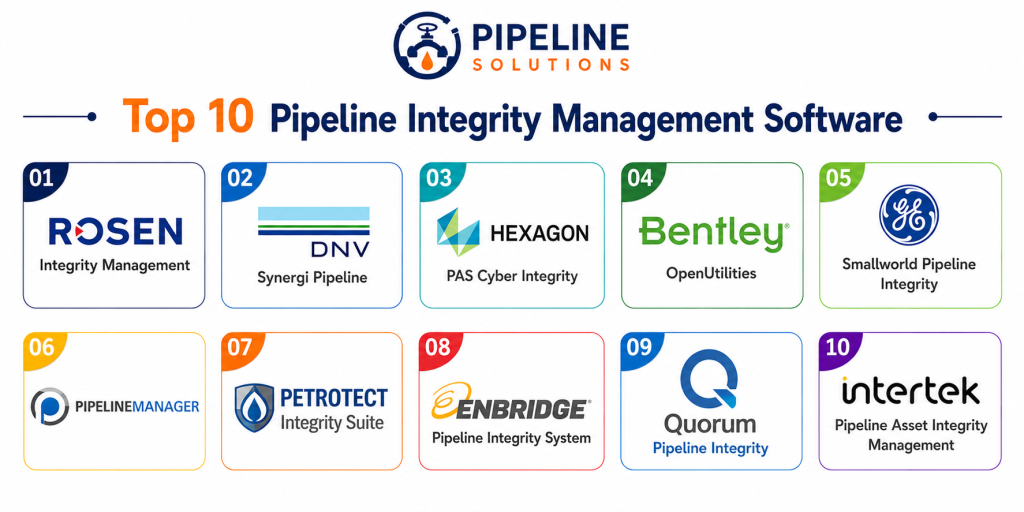
Top 10 Pipeline Integrity Management Software
1- ROSEN Integrity Solutions
Short description:
ROSEN Integrity Solutions provides advanced pipeline integrity management, risk analysis, inspection analytics, and operational intelligence for transmission and midstream pipeline environments.
Key Features
- Pipeline risk assessment
- Corrosion monitoring analytics
- Inline inspection data management
- GIS-based infrastructure visualization
- Predictive maintenance workflows
- Integrity scoring dashboards
- Regulatory reporting automation
Pros
- Strong pipeline-specific analytics capabilities
- Excellent inspection intelligence support
- Reliable enterprise scalability
Cons
- Enterprise deployment complexity
- Premium pricing structure
- Requires integrity engineering expertise
Platforms / Deployment
- Web
- Cloud / Hybrid
Security & Compliance
Supports RBAC, MFA, encryption, audit logging, and operational governance controls.
Integrations & Ecosystem
Integrates with GIS platforms, SCADA systems, inline inspection tools, IoT infrastructure, and operational analytics systems.
- APIs
- GIS platforms
- SCADA systems
- Inspection tools
- IoT infrastructure
Support & Community
Strong global pipeline integrity ecosystem.
2- DNV Synergi Pipeline
Short description:
DNV Synergi Pipeline provides pipeline integrity analytics, risk management, and operational modeling workflows for oil, gas, and utility pipeline operators.
Key Features
- Pipeline integrity analytics
- Leak detection workflows
- Risk modeling tools
- GIS integration support
- Corrosion analysis
- Regulatory compliance reporting
- Operational forecasting analytics
Pros
- Strong engineering and risk modeling capabilities
- Reliable operational analytics
- Good regulatory compliance support
Cons
- Requires technical expertise
- Enterprise deployment complexity
- Premium implementation costs
Platforms / Deployment
- Windows / Web
- Cloud / Hybrid
Security & Compliance
Supports secure authentication, encryption, RBAC, and governance controls.
Integrations & Ecosystem
- GIS systems
- APIs
- Inspection tools
- Operational analytics platforms
Support & Community
Large global engineering and energy infrastructure ecosystem.
3- GE Digital Pipeline Integrity
Short description:
GE Digital Pipeline Integrity provides operational monitoring, predictive maintenance, and pipeline analytics for critical energy infrastructure environments.
Key Features
- Real-time pipeline monitoring
- Predictive maintenance analytics
- Leak detection intelligence
- SCADA integrations
- Operational dashboards
- Corrosion analytics workflows
- AI-driven operational forecasting
Pros
- Strong industrial analytics capabilities
- Good enterprise scalability
- Reliable operational visibility
Cons
- Enterprise-focused deployment complexity
- Premium pricing structure
- Requires operational expertise
Platforms / Deployment
- Web
- Cloud / Hybrid
Security & Compliance
Supports secure APIs, RBAC, encryption, and operational governance workflows.
Integrations & Ecosystem
- SCADA systems
- APIs
- GIS platforms
- IoT infrastructure
Support & Community
Strong industrial and energy infrastructure ecosystem.
4- Hexagon PAS Cyber Integrity
Short description:
Hexagon PAS Cyber Integrity combines industrial asset management, cybersecurity workflows, and operational integrity analytics for pipeline environments.
Key Features
- Asset integrity management
- Industrial cybersecurity analytics
- Configuration monitoring workflows
- Compliance reporting support
- Operational dashboards
- Risk assessment tools
- Infrastructure monitoring analytics
Pros
- Strong industrial cybersecurity capabilities
- Reliable operational governance support
- Good infrastructure visibility
Cons
- More cybersecurity-focused complexity
- Enterprise deployment requirements
- Requires industrial operations expertise
Platforms / Deployment
- Web
- Cloud / Hybrid
Security & Compliance
Supports RBAC, MFA, encryption, audit logging, and industrial governance controls.
Integrations & Ecosystem
- SCADA systems
- APIs
- Industrial control systems
- Operational analytics platforms
Support & Community
Strong industrial cybersecurity ecosystem.
5- Bentley OpenUtilities
Short description:
Bentley OpenUtilities provides geospatial utility and pipeline infrastructure management with operational analytics and engineering workflows.
Key Features
- GIS-based pipeline visualization
- Infrastructure asset management
- Operational analytics dashboards
- Engineering workflow management
- Risk analysis support
- Inspection management workflows
- Digital twin capabilities
Pros
- Strong GIS and engineering functionality
- Excellent infrastructure visualization
- Reliable operational modeling support
Cons
- Engineering-focused complexity
- Requires GIS expertise
- Enterprise implementation requirements
Platforms / Deployment
- Windows / Web
- Cloud / Hybrid
Security & Compliance
Supports secure authentication, encryption, RBAC, and governance workflows.
Integrations & Ecosystem
- GIS systems
- Engineering tools
- APIs
- Asset management platforms
Support & Community
Large infrastructure engineering ecosystem.
6- Honeywell Forge Pipeline Management
Short description:
Honeywell Forge Pipeline Management provides real-time pipeline monitoring, operational intelligence, and performance analytics for oil and gas operators.
Key Features
- Real-time operational monitoring
- Leak detection workflows
- Predictive analytics support
- SCADA integrations
- Operational dashboards
- Pipeline optimization analytics
- Asset reliability monitoring
Pros
- Strong operational monitoring capabilities
- Reliable industrial scalability
- Good real-time visibility support
Cons
- Enterprise deployment complexity
- Premium licensing structure
- Requires industrial infrastructure expertise
Platforms / Deployment
- Web
- Cloud / Hybrid
Security & Compliance
Supports MFA, RBAC, encryption, and operational governance controls.
Integrations & Ecosystem
- SCADA systems
- APIs
- Operational analytics tools
- IoT platforms
Support & Community
Strong industrial automation ecosystem.
7- Atmos Pipeline Integrity Management
Short description:
Atmos Pipeline Integrity Management supports risk assessment, inspection tracking, and compliance workflows for pipeline infrastructure operations.
Key Features
- Pipeline inspection management
- Risk assessment workflows
- Corrosion monitoring support
- GIS integrations
- Compliance reporting dashboards
- Operational analytics tools
- Integrity scoring workflows
Pros
- Strong integrity management specialization
- Good compliance workflow support
- Reliable operational visibility
Cons
- Smaller ecosystem than enterprise vendors
- Limited advanced AI analytics
- Requires pipeline operations expertise
Platforms / Deployment
- Web
- Cloud
Security & Compliance
Supports encrypted communications and operational governance controls.
Integrations & Ecosystem
- GIS systems
- APIs
- Inspection platforms
- Operational reporting tools
Support & Community
Growing pipeline integrity ecosystem.
8- SAP Asset Intelligence Network
Short description:
SAP Asset Intelligence Network provides asset monitoring, maintenance intelligence, and operational collaboration for pipeline and industrial infrastructure environments.
Key Features
- Asset intelligence dashboards
- Maintenance analytics workflows
- Pipeline operational visibility
- Collaboration and reporting tools
- IoT integrations
- Predictive maintenance support
- Compliance management workflows
Pros
- Strong SAP ecosystem integration
- Reliable enterprise operational visibility
- Good scalability support
Cons
- Best suited for SAP environments
- Complex enterprise deployment
- Premium implementation costs
Platforms / Deployment
- Web
- Cloud
Security & Compliance
Supports secure authentication, RBAC, encryption, and governance controls.
Integrations & Ecosystem
- SAP ecosystem
- APIs
- IoT systems
- Asset management platforms
Support & Community
Large SAP enterprise ecosystem.
9- ESRI ArcGIS Pipeline Referencing
Short description:
ESRI ArcGIS Pipeline Referencing provides GIS-centric pipeline visualization, route management, and geospatial integrity workflows for energy infrastructure operators.
Key Features
- GIS-based pipeline mapping
- Geospatial asset visualization
- Route management workflows
- Inspection tracking support
- Operational analytics dashboards
- Infrastructure intelligence tools
- Spatial reporting capabilities
Pros
- Strong geospatial analytics capabilities
- Excellent infrastructure visualization
- Good GIS ecosystem integration
Cons
- GIS-focused specialization
- Limited deep operational maintenance workflows
- Requires GIS expertise
Platforms / Deployment
- Web / Windows
- Cloud / Hybrid
Security & Compliance
Supports encryption, RBAC, and governance workflows.
Integrations & Ecosystem
- ArcGIS ecosystem
- APIs
- Operational analytics platforms
- Infrastructure tools
Support & Community
Large global GIS ecosystem.
10- PipeSense
Short description:
PipeSense provides cloud-based pipeline monitoring, leak detection, and operational analytics for modern energy infrastructure environments.
Key Features
- Real-time pipeline monitoring
- Leak detection analytics
- Operational dashboards
- IoT sensor integrations
- Predictive maintenance support
- Alerting and notification workflows
- Infrastructure visibility tools
Pros
- Modern cloud-native architecture
- Good real-time operational visibility
- Easier deployment workflows
Cons
- Smaller ecosystem than enterprise vendors
- Limited advanced engineering workflows
- Enterprise customization varies
Platforms / Deployment
- Web
- Cloud
Security & Compliance
Supports encrypted communications, RBAC, and governance controls.
Integrations & Ecosystem
- APIs
- IoT systems
- Operational analytics platforms
- Infrastructure monitoring tools
Support & Community
Growing modern pipeline analytics ecosystem.
Comparison Table
| Tool Name | Best For | Platforms Supported | Deployment | Standout Feature | Public Rating |
|---|---|---|---|---|---|
| ROSEN Integrity Solutions | Enterprise pipeline integrity | Web | Hybrid | Advanced inspection analytics | N/A |
| DNV Synergi Pipeline | Pipeline risk modeling | Windows, Web | Hybrid | Engineering-grade integrity analytics | N/A |
| GE Digital Pipeline Integrity | Industrial pipeline monitoring | Web | Hybrid | Predictive maintenance analytics | N/A |
| Hexagon PAS Cyber Integrity | Industrial cybersecurity | Web | Hybrid | OT cybersecurity integration | N/A |
| Bentley OpenUtilities | GIS infrastructure management | Windows, Web | Hybrid | Digital twin infrastructure visibility | N/A |
| Honeywell Forge Pipeline Management | Real-time operations | Web | Hybrid | Operational monitoring intelligence | N/A |
| Atmos Pipeline Integrity Management | Compliance workflows | Web | Cloud | Integrity scoring support | N/A |
| SAP Asset Intelligence Network | Enterprise asset intelligence | Web | Cloud | SAP ecosystem integration | N/A |
| ESRI ArcGIS Pipeline Referencing | GIS pipeline visualization | Windows, Web | Hybrid | Geospatial route management | N/A |
| PipeSense | Cloud-native monitoring | Web | Cloud | Real-time leak detection | N/A |
Evaluation & Scoring of Pipeline Integrity Management Software
| Tool Name | Core 25% | Ease 15% | Integrations 15% | Security 10% | Performance 10% | Support 10% | Value 15% | Weighted Total |
|---|---|---|---|---|---|---|---|---|
| ROSEN Integrity Solutions | 9.5 | 7.8 | 9.2 | 9.4 | 9.4 | 9.2 | 8.0 | 9.0 |
| DNV Synergi Pipeline | 9.3 | 7.6 | 9.0 | 9.2 | 9.2 | 9.0 | 8.0 | 8.8 |
| GE Digital Pipeline Integrity | 9.1 | 7.9 | 9.0 | 9.2 | 9.1 | 9.0 | 8.1 | 8.7 |
| Hexagon PAS Cyber Integrity | 8.9 | 7.5 | 8.9 | 9.5 | 9.0 | 8.8 | 7.9 | 8.6 |
| Bentley OpenUtilities | 9.0 | 7.7 | 9.1 | 9.0 | 9.0 | 8.9 | 8.1 | 8.7 |
| Honeywell Forge Pipeline Management | 9.0 | 7.8 | 8.9 | 9.1 | 9.1 | 8.9 | 8.1 | 8.7 |
| Atmos Pipeline Integrity Management | 8.5 | 8.3 | 8.4 | 8.7 | 8.6 | 8.5 | 8.6 | 8.5 |
| SAP Asset Intelligence Network | 8.9 | 7.8 | 9.2 | 9.2 | 9.0 | 8.9 | 8.0 | 8.7 |
| ESRI ArcGIS Pipeline Referencing | 8.8 | 7.9 | 9.3 | 8.9 | 8.8 | 8.8 | 8.2 | 8.7 |
| PipeSense | 8.4 | 8.5 | 8.3 | 8.7 | 8.6 | 8.4 | 8.8 | 8.5 |
These scores are comparative and intended to help organizations evaluate Pipeline Integrity Management Software based on operational functionality, GIS capabilities, integrations, predictive maintenance support, cybersecurity, scalability, and long-term infrastructure reliability.
Which Pipeline Integrity Management Software Is Right for You?
Small Pipeline Operators
Best suited: PipeSense, Atmos Pipeline Integrity Management
These provide easier deployment and modern operational visibility workflows.
SMB Energy Infrastructure Companies
Best suited: Honeywell Forge Pipeline Management, ESRI ArcGIS Pipeline Referencing
These balance operational monitoring and geospatial visibility capabilities.
Mid-Market Pipeline Operations
Best suited: Bentley OpenUtilities, GE Digital Pipeline Integrity
These provide stronger operational analytics and infrastructure management workflows.
Large Enterprise Pipeline Networks
Best suited: ROSEN Integrity Solutions, DNV Synergi Pipeline, SAP Asset Intelligence Network
These offer enterprise scalability, advanced integrity analytics, and compliance management capabilities.
Budget vs Premium
Budget-friendly: PipeSense, Atmos Pipeline Integrity Management
Premium enterprise: ROSEN Integrity Solutions, DNV Synergi Pipeline
Feature Depth vs Ease of Use
Deep enterprise functionality: ROSEN, DNV Synergi
Ease of use: PipeSense, Atmos Pipeline Integrity Management
Integrations & Scalability
Best integrations: SAP Asset Intelligence Network, ESRI ArcGIS, ROSEN
Best scalability: ROSEN Integrity Solutions, GE Digital Pipeline Integrity
Security & Compliance Needs
Pipeline operators managing critical infrastructure should prioritize systems supporting RBAC, MFA, encryption, audit logging, SCADA security integration, and operational governance controls.
Frequently Asked Questions
1. What is Pipeline Integrity Management Software?
It is software used to monitor, inspect, analyze, and manage pipeline infrastructure integrity and operational reliability.
2. Why is pipeline integrity management important?
It helps reduce leak risks, improve operational safety, support compliance, and extend pipeline infrastructure lifespan.
3. Can these platforms integrate with GIS systems?
Yes, GIS integration is a core capability of most modern pipeline integrity management platforms.
4. What analytics capabilities are common?
Leak detection, corrosion analysis, predictive maintenance, integrity scoring, and operational forecasting are commonly supported.
5. Are cloud-based integrity management platforms common?
Yes, cloud-native pipeline monitoring systems are increasingly common because they improve scalability and operational visibility.
6. What security features are important?
RBAC, MFA, encryption, secure APIs, audit logging, and SCADA security controls are critical for pipeline infrastructure protection.
7. Which industries use pipeline integrity software most?
Oil and gas companies, utilities, transmission operators, and infrastructure providers heavily rely on these systems.
8. Can these platforms support drone inspections?
Yes, many modern systems support drone-based inspections and remote infrastructure monitoring workflows.
9. What are common implementation challenges?
GIS integration, operational customization, inspection data migration, and SCADA connectivity are common deployment challenges.
10. How should organizations choose a pipeline integrity platform?
Organizations should evaluate scalability, GIS functionality, predictive analytics, cybersecurity, compliance workflows, and long-term infrastructure strategy.
Conclusion
Pipeline Integrity Management Software has become essential infrastructure for energy organizations managing increasingly complex pipeline networks and regulatory requirements. Modern platforms now combine AI-driven leak detection, predictive maintenance, GIS visualization, digital twins, SCADA integrations, operational analytics, and cloud-native scalability to support intelligent infrastructure operations. Enterprise solutions such as ROSEN Integrity Solutions, DNV Synergi Pipeline, and GE Digital Pipeline Integrity provide deep operational functionality and advanced integrity analytics, while platforms like PipeSense and Atmos Pipeline Integrity Management offer modern and flexible workflows for evolving pipeline operations. The best solution ultimately depends on operational scale, infrastructure complexity, integration priorities, cybersecurity requirements, and long-term asset reliability goals. A structured evaluation process combined with pilot deployments and operational workflow validation can significantly improve infrastructure safety, operational efficiency, and long-term pipeline resilience.