Introduction
Civic Engagement Platforms are digital solutions designed to help governments, municipalities, public agencies, nonprofits, and community organizations communicate and collaborate with citizens more effectively. These platforms enable public participation, feedback collection, surveys, community discussions, participatory budgeting, issue reporting, and transparent decision-making processes.
As governments continue digital transformation initiatives, citizen expectations for transparency, accessibility, and real-time communication have increased significantly. Traditional public meetings and paper-based engagement processes are no longer enough to support modern communities. Today’s civic engagement platforms integrate mobile access, GIS mapping, AI-driven analytics, multilingual communication, digital forums, and workflow automation to improve citizen participation and trust in public institutions.
Real-world use cases include:
- Public consultations and citizen feedback collection
- Participatory budgeting initiatives
- Community issue and service request reporting
- Smart city citizen engagement programs
- Policy discussions and digital town halls
Buyers evaluating Civic Engagement Platforms should focus on:
- Citizen communication capabilities
- Survey and feedback collection tools
- Mobile accessibility and usability
- Workflow automation and moderation features
- Reporting and sentiment analytics
- Multilingual support
- GIS and mapping integrations
- Security and privacy protections
- Scalability for large populations
- Integration with municipal systems and CRMs
Best for: Municipal governments, smart city programs, public agencies, nonprofits, universities, housing authorities, and community organizations seeking to improve citizen participation and public communication.
Not ideal for: Organizations that only need basic social media communication or simple ticketing systems without structured citizen engagement workflows.
Key Trends in Civic Engagement Platforms
- AI-driven sentiment analysis helping governments understand citizen feedback faster
- Mobile-first citizen engagement becoming essential for public participation
- GIS-based issue reporting improving local service management
- Digital town halls and hybrid participation models replacing traditional meetings
- Multilingual engagement tools increasing accessibility for diverse populations
- Participatory budgeting platforms becoming more common in municipalities
- Integration with CRM and municipal service platforms improving workflow efficiency
- Real-time analytics dashboards helping agencies track engagement performance
- Increased focus on accessibility compliance and inclusive digital experiences
- Automation of moderation, notifications, and citizen communication workflows
How We Selected These Tools (Methodology)
- Adoption across governments and public-sector organizations
- Citizen engagement and communication depth
- Survey, consultation, and collaboration capabilities
- Scalability for municipalities and large communities
- Mobile and accessibility support
- Integration flexibility with government systems
- Reporting and analytics capabilities
- Security and privacy readiness
- Workflow automation and moderation tools
- Vendor support and implementation ecosystem
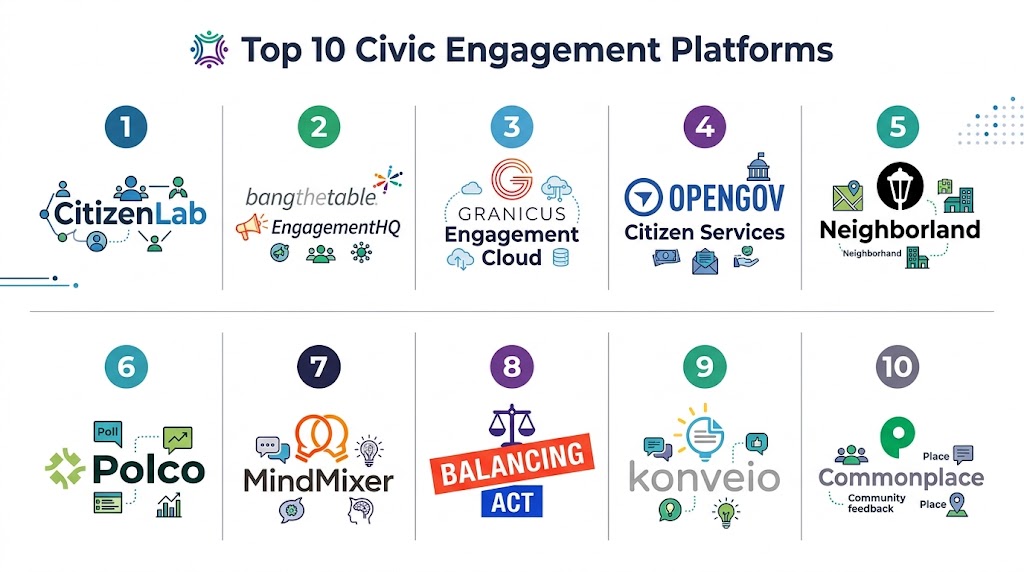
Top 10 Civic Engagement Platforms
1- Granicus EngagementHQ
Short description:
EngagementHQ by Granicus is a widely adopted civic participation platform designed for municipalities and public agencies managing citizen engagement and community feedback programs.
Key Features
- Online public consultations
- Citizen surveys and polls
- Participatory budgeting tools
- Discussion forums
- GIS-based project mapping
- Engagement analytics dashboards
- Multilingual communication support
Pros
- Strong government adoption
- Excellent engagement workflows
- User-friendly interface
Cons
- Premium pricing for advanced modules
- Some customization limitations
- Large deployments may require configuration support
Platforms / Deployment
- Web / Mobile
- Cloud
Security & Compliance
Supports RBAC, MFA, encryption, audit logging, and accessibility compliance features.
Integrations & Ecosystem
Integrates with municipal websites, CRM platforms, GIS systems, and communication tools.
- GIS integrations
- CRM systems
- Municipal portals
- APIs
- Notification tools
Support & Community
Strong public-sector support ecosystem with implementation and onboarding assistance.
2- Bang the Table
Short description:
Bang the Table is a digital community engagement platform focused on improving public participation, online consultations, and transparent communication between governments and citizens.
Key Features
- Online discussion forums
- Citizen feedback collection
- Community engagement campaigns
- Interactive surveys
- Moderation workflows
- Public consultation dashboards
- Reporting and analytics
Pros
- Strong consultation features
- Easy citizen participation workflows
- Good moderation capabilities
Cons
- Limited deep workflow automation
- Primarily engagement-focused
- Smaller integration ecosystem
Platforms / Deployment
- Web / Mobile
- Cloud
Security & Compliance
Supports secure authentication, encryption, and access management features.
Integrations & Ecosystem
Integrates with CRM systems, municipal websites, and communication platforms.
- APIs
- CRM integrations
- Email systems
- Government portals
Support & Community
Strong onboarding and public-sector engagement expertise.
3- CitizenLab
Short description:
CitizenLab is a modern civic engagement platform designed for participatory democracy, citizen feedback, and digital community collaboration.
Key Features
- Participatory budgeting tools
- Citizen idea collection
- Community voting systems
- Public consultation workflows
- GIS mapping support
- Analytics dashboards
- Mobile accessibility
Pros
- Modern user interface
- Strong participatory budgeting features
- Good citizen collaboration tools
Cons
- Limited advanced government workflow features
- Smaller enterprise ecosystem
- Some customization constraints
Platforms / Deployment
- Web / Mobile
- Cloud
Security & Compliance
Supports encryption, RBAC, GDPR-focused controls, and audit tracking.
Integrations & Ecosystem
Integrates with municipal systems, APIs, and public communication platforms.
- APIs
- GIS tools
- Government websites
- Notification systems
Support & Community
Growing global community with strong smart-city adoption.
4- OpenGov Citizen Services
Short description:
OpenGov Citizen Services helps municipalities manage citizen communication, issue reporting, and service request workflows within a modern cloud platform.
Key Features
- Citizen issue reporting
- Digital request management
- Workflow automation
- Public dashboards
- Communication tracking
- Service request analytics
- Mobile reporting tools
Pros
- Strong transparency features
- Easy-to-use citizen interface
- Good municipal workflow integration
Cons
- Less focused on deep public consultation
- Premium modules increase cost
- Smaller global footprint
Platforms / Deployment
- Web / Mobile
- Cloud
Security & Compliance
Supports secure authentication, encryption, and audit logging capabilities.
Integrations & Ecosystem
Integrates with municipal ERP systems, GIS platforms, and reporting tools.
- ERP integrations
- GIS systems
- APIs
- Reporting platforms
Support & Community
Strong municipal onboarding and implementation support.
5- Neighborland
Short description:
Neighborland is a community engagement platform focused on local collaboration, neighborhood participation, and public project discussions.
Key Features
- Community discussion tools
- Public idea submission
- Citizen collaboration workflows
- Project engagement pages
- Event participation management
- Voting and polling features
- Public communication tools
Pros
- Community-friendly interface
- Strong local participation focus
- Good collaboration experience
Cons
- Less suitable for complex government workflows
- Limited enterprise integrations
- Smaller analytics depth
Platforms / Deployment
- Web / Mobile
- Cloud
Security & Compliance
Supports basic enterprise security and encrypted communication.
Integrations & Ecosystem
- APIs
- Municipal websites
- Communication tools
- CRM systems
Support & Community
Strong support for local governments and community engagement initiatives.
6- SeeClickFix
Short description:
SeeClickFix is a civic issue reporting platform that enables citizens to report infrastructure and community problems directly to local governments.
Key Features
- Citizen issue reporting
- GIS-based service requests
- Mobile reporting tools
- Workflow routing automation
- Real-time status updates
- Community notifications
- Analytics dashboards
Pros
- Excellent issue reporting workflow
- Strong mobile usability
- Good GIS integration
Cons
- Focused primarily on issue reporting
- Limited broader engagement tools
- Requires municipal workflow setup
Platforms / Deployment
- Web / Android / iOS
- Cloud
Security & Compliance
Supports secure authentication and encrypted communication features.
Integrations & Ecosystem
Integrates with GIS platforms, municipal systems, and public service tools.
- GIS systems
- Municipal ERP platforms
- APIs
- Notification systems
Support & Community
Strong municipal user community and onboarding support.
7- Polco
Short description:
Polco is a civic engagement and community polling platform designed to help governments gather verified citizen feedback and improve public decision-making.
Key Features
- Community polling tools
- Survey management
- Sentiment analytics
- Citizen participation dashboards
- Data visualization
- Resident verification features
- Reporting tools
Pros
- Strong analytics capabilities
- Verified resident participation
- Easy survey management
Cons
- Limited complex workflow automation
- Smaller enterprise ecosystem
- More survey-focused than operational engagement
Platforms / Deployment
- Web / Mobile
- Cloud
Security & Compliance
Supports encryption, secure authentication, and data privacy controls.
Integrations & Ecosystem
- APIs
- CRM systems
- Reporting tools
- Communication platforms
Support & Community
Strong support focused on public-sector engagement programs.
8- Balancing Act
Short description:
Balancing Act specializes in participatory budgeting and financial transparency tools for municipalities and public-sector organizations.
Key Features
- Participatory budgeting simulations
- Public financial planning tools
- Citizen voting systems
- Scenario modeling
- Budget visualization dashboards
- Community engagement workflows
- Reporting analytics
Pros
- Strong budgeting engagement tools
- Easy public participation
- Good transparency support
Cons
- Specialized budgeting focus
- Limited broader engagement features
- Smaller integration ecosystem
Platforms / Deployment
- Web
- Cloud
Security & Compliance
Supports secure authentication and encrypted communications.
Integrations & Ecosystem
- Budgeting systems
- Municipal portals
- APIs
- Reporting platforms
Support & Community
Focused public-sector support and budgeting expertise.
9- Commonplace
Short description:
Commonplace is a digital engagement platform designed for urban planning, infrastructure consultation, and community participation projects.
Key Features
- Interactive consultation tools
- GIS-based project mapping
- Community feedback collection
- Public surveys
- Analytics dashboards
- Planning consultation workflows
- Mobile accessibility
Pros
- Excellent urban planning focus
- Strong mapping capabilities
- Good citizen usability
Cons
- More planning-focused than operational engagement
- Limited workflow automation depth
- Smaller enterprise ecosystem
Platforms / Deployment
- Web / Mobile
- Cloud
Security & Compliance
Supports encrypted communication and access management controls.
Integrations & Ecosystem
- GIS systems
- Planning tools
- APIs
- Communication platforms
Support & Community
Strong support for urban planning and smart city initiatives.
10- Decidim
Short description:
Decidim is an open-source participatory democracy platform used by governments and communities for digital civic participation and transparent governance initiatives.
Key Features
- Open-source engagement framework
- Participatory democracy tools
- Community voting systems
- Citizen proposal management
- Discussion forums
- Transparency dashboards
- Workflow extensibility
Pros
- Open-source flexibility
- Strong transparency focus
- Highly customizable
Cons
- Requires technical expertise
- Enterprise support varies
- Complex customization for large deployments
Platforms / Deployment
- Web / Mobile
- Self-hosted / Cloud
Security & Compliance
Varies depending on implementation and infrastructure setup.
Integrations & Ecosystem
- APIs
- Municipal systems
- Authentication platforms
- GIS integrations
Support & Community
Strong global open-source civic technology community.
Comparison Table
| Tool Name | Best For | Platforms Supported | Deployment | Standout Feature | Public Rating |
|---|---|---|---|---|---|
| EngagementHQ | Public consultations | Web, Mobile | Cloud | Government engagement workflows | N/A |
| Bang the Table | Community participation | Web, Mobile | Cloud | Digital consultations | N/A |
| CitizenLab | Participatory democracy | Web, Mobile | Cloud | Citizen collaboration tools | N/A |
| OpenGov Citizen Services | Service request management | Web, Mobile | Cloud | Municipal workflow integration | N/A |
| Neighborland | Local community engagement | Web, Mobile | Cloud | Neighborhood collaboration | N/A |
| SeeClickFix | Civic issue reporting | Web, Mobile | Cloud | GIS-based issue reporting | N/A |
| Polco | Citizen surveys | Web, Mobile | Cloud | Verified resident polling | N/A |
| Balancing Act | Participatory budgeting | Web | Cloud | Budget simulation tools | N/A |
| Commonplace | Urban planning engagement | Web, Mobile | Cloud | Planning consultations | N/A |
| Decidim | Open-source democracy | Web, Mobile | Self-hosted | Transparent participation | N/A |
Evaluation & Scoring of Civic Engagement Platforms
| Tool Name | Core 25% | Ease 15% | Integrations 15% | Security 10% | Performance 10% | Support 10% | Value 15% | Weighted Total |
|---|---|---|---|---|---|---|---|---|
| EngagementHQ | 9.4 | 8.8 | 9.0 | 9.1 | 9.0 | 9.2 | 8.2 | 8.9 |
| Bang the Table | 8.9 | 8.7 | 8.4 | 8.7 | 8.6 | 8.8 | 8.5 | 8.6 |
| CitizenLab | 8.8 | 9.0 | 8.5 | 8.8 | 8.7 | 8.7 | 8.8 | 8.7 |
| OpenGov | 8.9 | 8.8 | 8.7 | 8.8 | 8.8 | 8.9 | 8.3 | 8.7 |
| Neighborland | 8.2 | 8.9 | 7.9 | 8.2 | 8.3 | 8.4 | 8.8 | 8.3 |
| SeeClickFix | 8.8 | 9.1 | 8.8 | 8.6 | 8.8 | 8.8 | 8.5 | 8.7 |
| Polco | 8.5 | 8.8 | 8.0 | 8.5 | 8.4 | 8.6 | 8.7 | 8.4 |
| Balancing Act | 8.3 | 8.7 | 7.8 | 8.3 | 8.2 | 8.4 | 8.9 | 8.3 |
| Commonplace | 8.6 | 8.7 | 8.2 | 8.4 | 8.5 | 8.6 | 8.5 | 8.4 |
| Decidim | 8.7 | 7.8 | 8.4 | 8.0 | 8.2 | 8.1 | 9.2 | 8.3 |
These scores are comparative and help organizations evaluate platforms based on citizen engagement depth, usability, scalability, integrations, analytics, security, and operational value. Enterprise platforms generally lead in governance and scalability, while open-source platforms offer stronger flexibility and cost advantages.
Which Civic Engagement Platform Is Right for You?
Solo / Small Community Organizations
Best suited: Neighborland, Decidim
These platforms provide accessible engagement tools and lower operational costs for smaller community programs.
SMB / Municipal Programs
Best suited: CitizenLab, Polco, SeeClickFix
These balance usability, citizen participation, and practical municipal workflows.
Mid-Market Governments
Best suited: EngagementHQ, OpenGov, Commonplace
These provide stronger analytics, integrations, and operational scalability.
Enterprise / Smart City Programs
Best suited: Granicus EngagementHQ, OpenGov, Decidim
These offer enterprise-grade scalability, integrations, and large-scale citizen participation capabilities.
Budget vs Premium
Budget-friendly: Decidim, Neighborland
Premium enterprise: EngagementHQ, OpenGov
Feature Depth vs Ease of Use
Deep functionality: EngagementHQ, OpenGov
Ease of use: CitizenLab, Polco
Integrations & Scalability
Best integrations: OpenGov, EngagementHQ, SeeClickFix
Best scalability: EngagementHQ, Decidim
Security & Compliance Needs
Public-sector organizations should prioritize platforms supporting RBAC, encryption, audit logs, accessibility standards, and secure citizen data management.
Frequently Asked Questions
1. What is a Civic Engagement Platform?
It is a digital platform that helps governments and organizations communicate with citizens, collect feedback, and improve public participation.
2. Why are these platforms important?
They improve transparency, increase citizen participation, and help governments make better-informed decisions based on community input.
3. Can these platforms support participatory budgeting?
Yes, many platforms include participatory budgeting features allowing citizens to vote on spending priorities and projects.
4. Are mobile-friendly features important?
Yes, mobile accessibility is critical because many citizens engage primarily through smartphones and tablets.
5. Do these platforms support GIS mapping?
Many civic engagement platforms integrate GIS tools for project visualization and location-based issue reporting.
6. What security features are important?
Encryption, RBAC, MFA, audit logging, and secure citizen identity management are essential for protecting public data.
7. Are open-source civic platforms reliable?
Yes, platforms like Decidim are widely used globally and provide flexibility, though they may require technical expertise.
8. What are common implementation challenges?
Citizen adoption, moderation management, integration with legacy systems, and multilingual accessibility are common challenges.
9. How long does implementation take?
Implementation timelines vary from a few weeks for small deployments to several months for enterprise municipal programs.
10. How should governments choose a platform?
Governments should evaluate engagement depth, scalability, integrations, accessibility, reporting capabilities, and long-term operational requirements.
Conclusion
Civic Engagement Platforms have become essential tools for governments and public organizations seeking to improve transparency, communication, and citizen participation in the digital era. Modern platforms now combine community collaboration tools, participatory budgeting, GIS-based engagement, AI-driven analytics, and mobile-first communication capabilities to create more connected and responsive communities. Enterprise solutions such as EngagementHQ and OpenGov provide deep workflow integration and scalability, while platforms like CitizenLab and Decidim focus on participatory democracy and open collaboration. The best solution depends on organizational size, engagement goals, integration requirements, and budget priorities. A structured evaluation process combined with pilot programs and citizen usability testing can significantly improve adoption rates and long-term engagement success.