Introduction
Social Services Case Management Systems are digital platforms used by government agencies, NGOs, healthcare-linked social programs, and community organizations to manage client cases, deliver support services, and coordinate multi-agency care. These systems help social workers track individuals and families, document assessments, manage service plans, and ensure that vulnerable populations receive timely and structured support.
In today’s social welfare ecosystem, challenges like housing instability, unemployment, mental health issues, child welfare, and aging populations require coordinated, data-driven, and transparent service delivery. Traditional paper-based or siloed systems often lead to inefficiencies, duplication, and missed interventions. Modern case management platforms solve these problems through automation, centralized data, analytics, and integrated service workflows.
Real-world use cases include:
- Child welfare and family protection services
- Housing assistance and homelessness prevention programs
- Public health and behavioral health case coordination
- Employment and rehabilitation programs
- Disability and elder care support management
Buyers evaluating these systems should focus on:
- Client intake and assessment workflows
- Case documentation and notes management
- Multi-agency collaboration capabilities
- Workflow automation and task tracking
- Reporting and outcome measurement
- Data privacy and compliance controls
- Integration with healthcare, justice, and welfare systems
- Mobile accessibility for field workers
- Scalability for large caseload environments
- Citizen service and self-service portals
Best for: Government social service departments, public welfare agencies, healthcare-social care integrated programs, NGOs, and nonprofit organizations managing structured casework and client support services.
Not ideal for: Small teams with simple CRM needs or organizations that do not manage structured client cases requiring long-term tracking and multi-step service coordination.
Key Trends in Social Services Case Management Systems
- AI-assisted risk scoring for identifying high-need individuals early
- Cloud-based platforms replacing fragmented legacy systems
- Integrated multi-agency data sharing for coordinated care delivery
- Mobile-first case management for field social workers
- Predictive analytics for homelessness, child welfare, and health risks
- Automation of eligibility checks, benefits allocation, and case routing
- Increased focus on data privacy and regulatory compliance
- Citizen self-service portals for applications and service tracking
- Integration with healthcare and justice systems for holistic support
- Real-time dashboards for caseload monitoring and outcome tracking
How We Selected These Tools (Methodology)
- Adoption in government and social service agencies
- Depth of case management and workflow capabilities
- Support for multi-program and multi-client management
- Security, privacy, and compliance readiness
- Integration with public sector systems and databases
- Scalability for high caseload environments
- Reporting and analytics capabilities
- Mobile and field service usability
- Vendor support and implementation maturity
- Flexibility for both nonprofit and government use cases
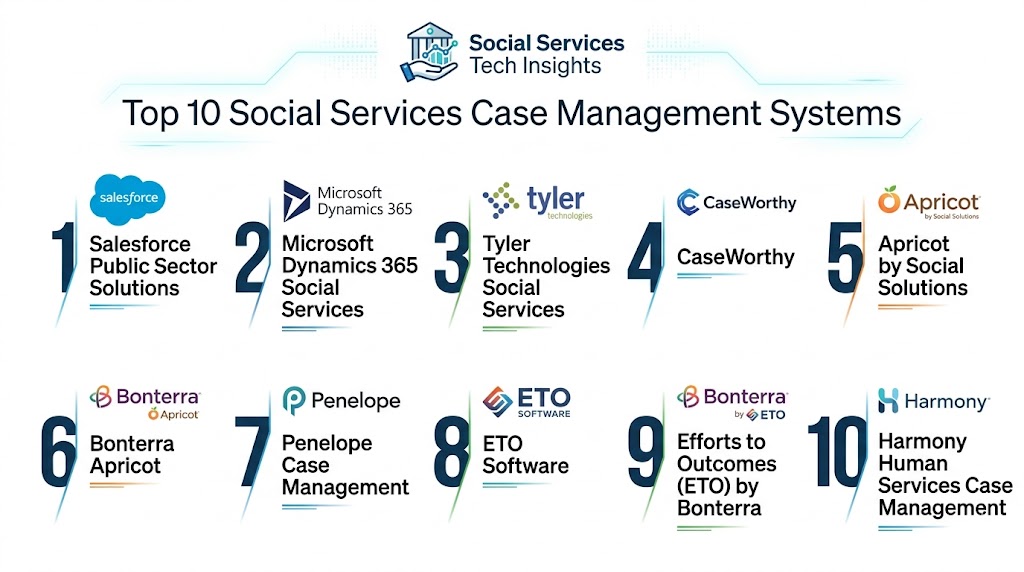
Top 10 Social Services Case Management Systems
1- Salesforce Nonprofit Cloud (Social Case Management)
Short description:
Salesforce Nonprofit Cloud is widely used by social service organizations for managing client cases, programs, and service delivery workflows. It provides a flexible CRM-based foundation adapted for case management and citizen support programs.
Key Features
- Case intake and management workflows
- Program enrollment tracking
- Client relationship management
- Care plan and service coordination
- Automated task routing
- Reporting dashboards
- Citizen engagement portals
Pros
- Highly customizable platform
- Strong ecosystem and scalability
- Excellent workflow automation
Cons
- Requires configuration expertise
- Can become expensive at scale
- Complex initial setup
Platforms / Deployment
- Web / Mobile
- Cloud
Security & Compliance
Supports encryption, MFA, RBAC, audit logs, and enterprise-grade identity management features.
Integrations & Ecosystem
Integrates with government systems, ERP platforms, healthcare applications, and third-party data tools.
- APIs and AppExchange tools
- Healthcare systems
- ERP integrations
- Payment systems
- Data analytics platforms
Support & Community
Large global ecosystem with extensive documentation, implementation partners, and nonprofit-focused support.
2- Microsoft Dynamics 365 Social Care Management
Short description:
Microsoft Dynamics 365 supports social service agencies with case tracking, citizen engagement, and service coordination through a configurable enterprise platform.
Key Features
- Case management workflows
- Eligibility and intake processing
- Service planning tools
- Workflow automation
- Reporting and analytics
- Citizen engagement portals
- Document management
Pros
- Strong Microsoft ecosystem integration
- Scalable enterprise architecture
- AI-driven insights capabilities
Cons
- Complex customization
- Licensing costs can be high
- Requires technical expertise
Platforms / Deployment
- Web / Mobile
- Cloud / Hybrid
Security & Compliance
Enterprise-grade security including encryption, MFA, RBAC, and compliance frameworks.
Integrations & Ecosystem
Integrates deeply with Microsoft 365, Azure services, and third-party government systems.
- Power Platform
- Azure services
- ERP systems
- Data warehouses
- External APIs
Support & Community
Strong enterprise support and global partner ecosystem.
3- Apricot Social Services Case Management
Short description:
Apricot is a widely used nonprofit and social services case management platform designed for client tracking, reporting, and service delivery coordination.
Key Features
- Client intake forms
- Case documentation
- Outcome tracking
- Service planning
- Grant and program management
- Reporting dashboards
- Compliance tracking
Pros
- Easy-to-use interface
- Strong nonprofit focus
- Good reporting tools
Cons
- Limited deep customization
- UI may feel basic for advanced users
- Not ideal for large government systems
Platforms / Deployment
- Web
- Cloud
Security & Compliance
Supports role-based access, encryption, and audit tracking.
Integrations & Ecosystem
- API integrations
- CRM systems
- Reporting tools
- Data export systems
Support & Community
Strong nonprofit support and onboarding assistance.
4- Bonterra Case Management (Social Solutions)
Short description:
Bonterra Case Management is designed for nonprofits and social programs to manage clients, outcomes, and service delivery across multiple programs.
Key Features
- Client tracking system
- Case workflow management
- Program outcome measurement
- Service coordination tools
- Reporting dashboards
- Fund tracking
- Data collection forms
Pros
- Strong nonprofit ecosystem
- Good program reporting
- Easy adoption
Cons
- Limited enterprise complexity
- UI customization constraints
- Integration depth varies
Platforms / Deployment
- Web
- Cloud
Security & Compliance
Includes encryption, access controls, and audit capabilities.
Integrations & Ecosystem
- CRM tools
- Payment systems
- Reporting platforms
- External APIs
Support & Community
Strong nonprofit-focused support with training resources.
5- Casebook Social Services Platform
Short description:
Casebook is a modern cloud-based platform designed specifically for social services agencies managing complex case workflows.
Key Features
- Case lifecycle management
- Multi-program support
- Service tracking
- Risk assessment tools
- Workflow automation
- Mobile access
- Reporting tools
Pros
- Built specifically for social services
- Strong workflow flexibility
- Good usability for caseworkers
Cons
- Smaller ecosystem than enterprise vendors
- Limited global presence
- Some advanced features require customization
Platforms / Deployment
- Web / Mobile
- Cloud
Security & Compliance
Supports encryption, RBAC, audit logging, and compliance controls.
Integrations & Ecosystem
- Government databases
- Health systems
- Data platforms
- APIs
Support & Community
Growing support ecosystem with focused implementation assistance.
6- Civica Social Care Case Management
Short description:
Civica provides social care and public sector case management systems widely used in government welfare and community service programs.
Key Features
- Social care case tracking
- Assessment and planning tools
- Service coordination
- Financial assistance tracking
- Citizen engagement portals
- Workflow automation
- Reporting dashboards
Pros
- Strong government adoption
- Good compliance alignment
- Flexible deployment
Cons
- Regional adoption focus
- UI modernization needed
- Complex configuration
Platforms / Deployment
- Web
- Cloud / Hybrid
Security & Compliance
Supports secure authentication, RBAC, encryption, and audit logs.
Integrations & Ecosystem
- Government ERP systems
- Healthcare systems
- Payment gateways
- Data platforms
Support & Community
Strong public sector implementation support.
7- Penelope Case Management (Athena Software)
Short description:
Penelope is a widely used case management system for social services, counseling, and nonprofit agencies focusing on structured client care.
Key Features
- Client intake and tracking
- Case notes and documentation
- Scheduling tools
- Outcome tracking
- Service planning
- Reporting dashboards
- Workflow automation
Pros
- User-friendly design
- Strong documentation features
- Good for counseling-based services
Cons
- Limited large-scale government capability
- Fewer advanced integrations
- Customization limitations
Platforms / Deployment
- Web
- Cloud
Security & Compliance
Supports encryption, access control, and audit logs.
Integrations & Ecosystem
- Healthcare systems
- CRM tools
- Reporting platforms
- API integrations
Support & Community
Good customer support and onboarding assistance.
8- ETO (Efforts to Outcomes)
Short description:
ETO is a case management platform designed for human services organizations focused on outcomes tracking and program effectiveness.
Key Features
- Outcome tracking system
- Case management workflows
- Service delivery tracking
- Reporting dashboards
- Client data management
- Program evaluation tools
- Automation features
Pros
- Strong outcome measurement focus
- Good nonprofit alignment
- Flexible reporting
Cons
- Learning curve for new users
- Limited enterprise scalability
- UI complexity in some modules
Platforms / Deployment
- Web
- Cloud
Security & Compliance
Includes role-based access, encryption, and audit tracking.
Integrations & Ecosystem
- Data analytics platforms
- CRM systems
- Government databases
- APIs
Support & Community
Solid nonprofit-focused support structure.
9- Social Work Case Management System (Generic Government Platforms)
Short description:
Many governments use custom-built or semi-configured platforms tailored for social welfare programs and citizen service delivery.
Key Features
- Case intake and eligibility checks
- Service delivery tracking
- Multi-agency coordination
- Program management
- Reporting tools
- Document management
- Workflow automation
Pros
- Highly customizable
- Government-specific alignment
- Scalable for national programs
Cons
- High implementation cost
- Long deployment cycles
- Requires strong technical teams
Platforms / Deployment
- Web
- Cloud / On-premise
Security & Compliance
Varies based on government implementation standards.
Integrations & Ecosystem
- National databases
- ERP systems
- Healthcare systems
- Identity systems
Support & Community
Depends on government or vendor implementation partner.
10- Open Source Social Case Management Platforms
Short description:
Open-source platforms are used by NGOs and smaller agencies for flexible, cost-effective case management implementations.
Key Features
- Custom case workflows
- Basic client tracking
- Service documentation
- Reporting tools
- Modular architecture
- API extensibility
- Data management tools
Pros
- Low cost
- Highly customizable
- Flexible architecture
Cons
- Requires technical maintenance
- Limited vendor support
- Security depends on implementation
Platforms / Deployment
- Web
- Self-hosted / Cloud
Security & Compliance
Varies based on deployment configuration and infrastructure setup.
Integrations & Ecosystem
- APIs
- CRM systems
- Databases
- External reporting tools
Support & Community
Community-driven or third-party support dependent on implementation.
Comparison Table
| Tool Name | Best For | Platforms Supported | Deployment | Standout Feature | Public Rating |
|---|---|---|---|---|---|
| Salesforce Nonprofit Cloud | Flexible social programs | Web, Mobile | Cloud | Highly customizable workflows | N/A |
| Microsoft Dynamics 365 | Enterprise agencies | Web, Mobile | Cloud/Hybrid | Microsoft ecosystem integration | N/A |
| Apricot | Nonprofits | Web | Cloud | Simple case tracking | N/A |
| Bonterra | NGOs | Web | Cloud | Program outcome tracking | N/A |
| Casebook | Social services agencies | Web, Mobile | Cloud | Purpose-built case workflows | N/A |
| Civica | Government social care | Web | Cloud/Hybrid | Public sector focus | N/A |
| Penelope | Counseling agencies | Web | Cloud | Strong documentation tools | N/A |
| ETO | Outcome-focused programs | Web | Cloud | Impact measurement tools | N/A |
| Government platforms | National programs | Web | Hybrid | Full customization | N/A |
| Open-source tools | Small NGOs | Web | Self-hosted | Cost efficiency | N/A |
Evaluation & Scoring of Social Services Case Management Systems
| Tool Name | Core 25% | Ease 15% | Integrations 15% | Security 10% | Performance 10% | Support 10% | Value 15% | Weighted Total |
|---|---|---|---|---|---|---|---|---|
| Salesforce | 9.5 | 8.5 | 9.6 | 9.4 | 9.3 | 9.5 | 8.0 | 8.9 |
| Microsoft Dynamics | 9.4 | 8.2 | 9.5 | 9.5 | 9.4 | 9.3 | 8.2 | 8.8 |
| Apricot | 8.6 | 8.8 | 8.4 | 8.5 | 8.3 | 8.6 | 9.0 | 8.5 |
| Bonterra | 8.7 | 8.7 | 8.5 | 8.4 | 8.4 | 8.5 | 8.8 | 8.5 |
| Casebook | 8.8 | 8.3 | 8.6 | 8.7 | 8.5 | 8.4 | 8.6 | 8.5 |
| Civica | 8.5 | 7.9 | 8.3 | 8.6 | 8.4 | 8.6 | 8.2 | 8.3 |
| Penelope | 8.3 | 8.8 | 8.1 | 8.4 | 8.2 | 8.5 | 8.7 | 8.3 |
| ETO | 8.4 | 8.2 | 8.3 | 8.4 | 8.3 | 8.4 | 8.5 | 8.3 |
| Government systems | 9.0 | 7.0 | 8.7 | 8.8 | 8.9 | 8.2 | 8.0 | 8.4 |
| Open-source | 7.8 | 7.6 | 7.9 | 7.0 | 7.8 | 7.2 | 9.2 | 7.7 |
Which Social Services Case Management System Is Right for You?
Solo / Small NGOs
Best suited: Apricot, Penelope, open-source systems
These offer simplicity, lower cost, and easier onboarding for small teams.
SMB / Regional Organizations
Best suited: Bonterra, Casebook, Civica
These balance usability, reporting, and multi-program management.
Mid-Market Government Agencies
Best suited: Microsoft Dynamics, Casebook, Civica
These offer stronger integration and workflow automation capabilities.
Enterprise / National Programs
Best suited: Salesforce, Microsoft Dynamics, Government platforms
These provide scalability, compliance, and cross-agency coordination.
Budget vs Premium
Budget-friendly: Open-source, Apricot
Premium: Salesforce, Microsoft, enterprise government systems
Feature Depth vs Ease of Use
Deep capability: Salesforce, Dynamics
Ease of use: Apricot, Penelope
Integrations & Scalability
Best integration ecosystems: Salesforce, Microsoft, Civica
Best scalability: Salesforce, Government systems
Security & Compliance Needs
All government-grade tools must support RBAC, encryption, MFA, and audit logs. Enterprise systems provide the strongest compliance frameworks.
Frequently Asked Questions
1. What is social services case management software?
It is a digital system used by social workers to manage client cases, track services, and coordinate support programs.
2. Why do social service agencies need these systems?
They improve coordination, reduce paperwork, and ensure clients receive consistent and timely support services.
3. Can these systems manage multiple programs?
Yes, most platforms support multiple programs such as housing, child welfare, healthcare, and employment support.
4. Are these systems cloud-based?
Most modern systems are cloud-based, though some governments still use hybrid or on-premise deployments.
5. What integrations are important?
Common integrations include ERP systems, healthcare platforms, payment gateways, identity systems, and government databases.
6. How long does implementation take?
It can range from a few months for small systems to over a year for large government deployments.
7. Are open-source systems reliable?
They are flexible and cost-effective but require strong technical teams for maintenance and security.
8. What security features are essential?
RBAC, encryption, MFA, audit logging, and secure data storage are essential for protecting sensitive client data.
9. What are common challenges?
Data migration, staff training, and integration with legacy systems are common challenges.
10. How should organizations choose a system?
They should evaluate scalability, usability, integrations, compliance needs, and long-term operational costs.
Conclusion
Social Services Case Management Systems play a critical role in helping governments, NGOs, and nonprofit organizations deliver structured and effective support to individuals and families in need. These platforms centralize case data, improve coordination, and enable better outcomes through automation and analytics. Enterprise platforms like Salesforce and Microsoft Dynamics offer strong scalability and integration capabilities, while nonprofit-focused systems like Apricot and Bonterra provide simpler, more accessible solutions. Open-source tools remain important for organizations with limited budgets but require strong technical expertise. The best solution depends on organizational size, program complexity, integration requirements, and long-term service goals. A careful evaluation and pilot testing approach ensures better alignment with operational needs and improves service delivery outcomes over time.