Introduction
API Aggregators are platforms that combine multiple APIs, services, and data sources into a unified integration layer, making it easier for developers and enterprises to connect applications, automate workflows, and access external services through a single platform. Instead of integrating separately with dozens of providers, organizations can use an API aggregator to simplify connectivity, orchestration, authentication, monitoring, and scaling.
Modern API aggregators are increasingly important in fintech, ecommerce, SaaS, logistics, communications, AI, and enterprise automation ecosystems. Businesses use them to reduce integration complexity, accelerate product launches, improve developer productivity, and manage external dependencies more efficiently.
Real-world use cases include:
- Unified payment integrations
- Multi-channel communication APIs
- Financial data aggregation
- Ecommerce marketplace integrations
- SaaS workflow automation
Evaluation Criteria for Buyers
Organizations evaluating API Aggregators should consider:
- Breadth of API ecosystem support
- Developer experience and SDK quality
- API reliability and uptime
- Authentication and security controls
- Workflow orchestration capabilities
- Scalability and performance
- Monitoring and analytics features
- Pricing flexibility
- Integration management tools
- Enterprise governance support
Best for: SaaS companies, fintech platforms, ecommerce businesses, enterprise IT teams, developers, startups, and organizations managing large multi-service integration ecosystems.
Not ideal for: Organizations with only one or two static integrations or businesses that prefer fully custom direct integrations.
Key Trends in API Aggregators
- AI-powered workflow orchestration is becoming more common.
- Unified API models are reducing integration complexity across industries.
- Embedded finance and payment aggregation demand is increasing rapidly.
- Real-time API observability and monitoring are becoming core requirements.
- No-code and low-code integration workflows are expanding.
- Multi-cloud API orchestration is becoming more important for enterprises.
- API governance and security controls are becoming stronger differentiators.
- Event-driven architectures are improving integration responsiveness.
- Industry-specific API aggregators are growing in popularity.
- API monetization and marketplace ecosystems continue to expand.
How We Selected These Tools
The following API Aggregators were selected based on market adoption, developer ecosystem strength, integration flexibility, and enterprise scalability.
- Broad API ecosystem coverage
- Developer tooling and SDK quality
- Workflow automation capabilities
- API reliability and scalability
- Enterprise integration readiness
- Security and governance capabilities
- Monitoring and observability features
- API management flexibility
- Community adoption and ecosystem maturity
- Long-term platform viability
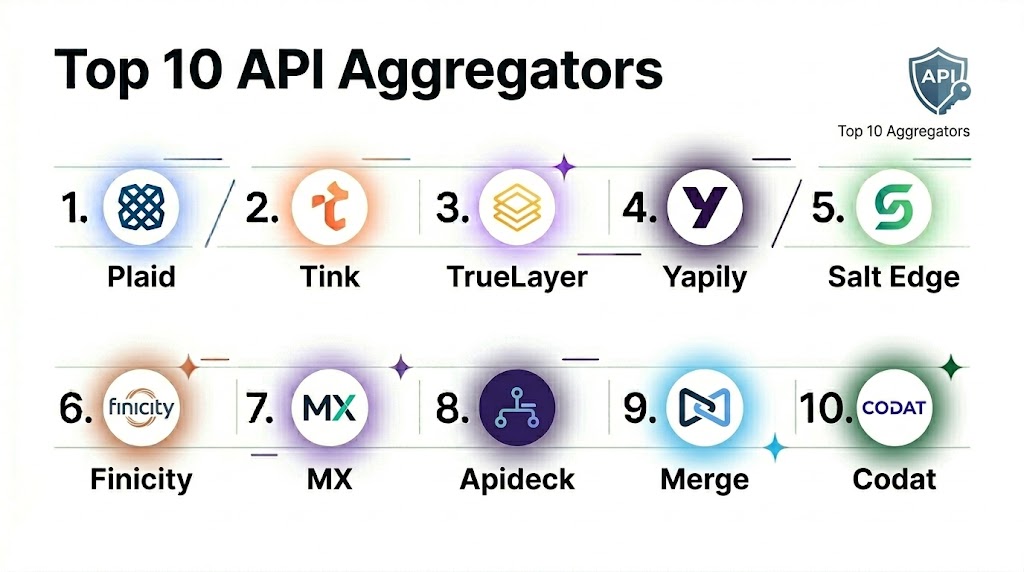
Top 10 API Aggregators
1- RapidAPI
Short description: RapidAPI is one of the largest API marketplaces and aggregation platforms, helping developers discover, manage, connect, and monetize APIs through a centralized ecosystem.
Key Features
- Large API marketplace
- Unified API management
- API discovery tools
- Subscription and monetization support
- API analytics
- Developer SDKs
- Usage monitoring
Pros
- Massive API ecosystem
- Strong developer accessibility
- Flexible API monetization support
Cons
- API quality varies by provider
- Complex pricing across APIs
- Some APIs have inconsistent documentation
Platforms / Deployment
- Cloud
Security & Compliance
Supports API authentication, access management, and monitoring protections.
Integrations & Ecosystem
RapidAPI integrates with developer platforms and cloud-native application ecosystems.
- SaaS applications
- Cloud services
- Developer SDKs
- API management tools
- Automation platforms
Support & Community
Large global developer ecosystem with extensive API marketplace activity.
2- MuleSoft Anypoint Platform
Short description: MuleSoft Anypoint Platform provides enterprise-grade API aggregation, integration, and orchestration infrastructure for complex business systems and SaaS ecosystems.
Key Features
- API aggregation
- Enterprise integration workflows
- API lifecycle management
- Workflow orchestration
- Data transformation tools
- Hybrid deployment support
- Governance and monitoring
Pros
- Strong enterprise integration capabilities
- Broad SaaS connectivity
- Advanced governance features
Cons
- Enterprise complexity
- Premium pricing structure
- Requires integration expertise
Platforms / Deployment
- Cloud / Hybrid / Self-hosted
Security & Compliance
Supports RBAC, encryption, API governance, monitoring, and enterprise operational protections.
Integrations & Ecosystem
MuleSoft integrates with enterprise applications and cloud ecosystems.
- Salesforce
- SAP
- Oracle
- Workday
- Cloud infrastructure
Support & Community
Strong enterprise support ecosystem with large integration partner network.
3- Zapier
Short description: Zapier is a workflow automation and API aggregation platform that connects thousands of applications through low-code automation workflows.
Key Features
- Workflow automation
- Multi-app integrations
- Trigger-based orchestration
- Low-code automation
- API connectors
- SaaS ecosystem support
- Business workflow automation
Pros
- Extremely easy to use
- Massive SaaS integration ecosystem
- Strong no-code capabilities
Cons
- Limited deep enterprise customization
- Complex workflows can become difficult to manage
- High-volume automation costs can scale quickly
Platforms / Deployment
- Cloud
Security & Compliance
Supports authentication workflows and operational access protections.
Integrations & Ecosystem
Zapier integrates with thousands of SaaS applications and productivity tools.
- Slack
- Gmail
- HubSpot
- Shopify
- Google Workspace
Support & Community
Large no-code automation community with extensive onboarding resources.
4- Apideck
Short description: Apideck provides unified APIs that simplify integrations across HR, CRM, accounting, ecommerce, and communication platforms.
Key Features
- Unified API architecture
- SaaS integration aggregation
- API normalization
- Multi-platform connectors
- Developer SDKs
- Authentication management
- Integration orchestration
Pros
- Reduces integration complexity
- Strong unified API design
- Good developer usability
Cons
- Connector depth varies by ecosystem
- Enterprise governance features are evolving
- Custom edge-case integrations may require additional work
Platforms / Deployment
- Cloud
Security & Compliance
Supports API authentication and secure integration workflows.
Integrations & Ecosystem
Apideck integrates with business SaaS ecosystems and cloud applications.
- CRM platforms
- HR systems
- Ecommerce platforms
- Accounting software
- Communication APIs
Support & Community
Growing developer ecosystem focused on unified API integration workflows.
5- Merge
Short description: Merge provides unified APIs for HR, CRM, accounting, ATS, ticketing, and productivity software integrations.
Key Features
- Unified integration APIs
- HR and CRM aggregation
- Accounting platform support
- ATS integrations
- API normalization
- OAuth authentication support
- Developer-friendly APIs
Pros
- Strong SaaS integration focus
- Simplified developer experience
- Good enterprise application support
Cons
- Primarily SaaS-focused ecosystem
- Limited low-level customization
- Pricing scales with usage
Platforms / Deployment
- Cloud
Security & Compliance
Supports authentication management and operational integration protections.
Integrations & Ecosystem
Merge integrates with business SaaS ecosystems and enterprise applications.
- Salesforce
- HubSpot
- QuickBooks
- BambooHR
- Zendesk
Support & Community
Strong startup and SaaS ecosystem adoption with good developer onboarding.
6- Tray.io
Short description: Tray.io is an enterprise automation and API integration platform focused on workflow orchestration and scalable business automation.
Key Features
- API orchestration
- Workflow automation
- Low-code integration builder
- Enterprise automation
- API management
- Multi-system connectivity
- Event-driven workflows
Pros
- Strong enterprise workflow flexibility
- Advanced orchestration capabilities
- Good scalability support
Cons
- Enterprise learning curve
- Premium pricing
- Requires workflow architecture planning
Platforms / Deployment
- Cloud
Security & Compliance
Supports governance controls, authentication workflows, and operational monitoring protections.
Integrations & Ecosystem
Tray.io integrates with enterprise SaaS and automation ecosystems.
- CRM systems
- ERP platforms
- Marketing tools
- Customer support systems
- Analytics platforms
Support & Community
Strong enterprise automation support ecosystem with implementation resources.
7- Kong Konnect
Short description: Kong Konnect provides API gateway, API aggregation, service mesh, and enterprise API management capabilities for cloud-native systems.
Key Features
- API gateway management
- API aggregation
- Service mesh support
- Cloud-native scalability
- API security controls
- Traffic management
- Developer portal capabilities
Pros
- Strong API management depth
- Good cloud-native architecture
- Enterprise scalability
Cons
- Requires infrastructure expertise
- Advanced deployments can become complex
- Enterprise-focused operational model
Platforms / Deployment
- Cloud / Hybrid / Self-hosted
Security & Compliance
Supports authentication, API security policies, RBAC, and operational governance controls.
Integrations & Ecosystem
Kong integrates with Kubernetes and cloud-native API ecosystems.
- Kubernetes
- Cloud infrastructure
- Microservices
- DevOps pipelines
- Enterprise APIs
Support & Community
Large API management community with strong enterprise and open-source ecosystem.
8- Workato
Short description: Workato provides enterprise automation and API orchestration infrastructure for business process automation and SaaS integration workflows.
Key Features
- Enterprise workflow automation
- API orchestration
- Low-code automation
- AI-assisted workflow building
- SaaS integration support
- Event-driven automation
- Enterprise governance workflows
Pros
- Strong enterprise automation capabilities
- Good AI-assisted workflow tooling
- Broad SaaS ecosystem support
Cons
- Enterprise-oriented pricing
- Workflow complexity at scale
- Requires operational governance planning
Platforms / Deployment
- Cloud
Security & Compliance
Supports authentication controls, workflow governance, and operational monitoring protections.
Integrations & Ecosystem
Workato integrates with enterprise SaaS and business systems.
- Salesforce
- SAP
- ServiceNow
- Slack
- Oracle
Support & Community
Strong enterprise automation ecosystem with extensive integration support resources.
9- Boomi
Short description: Boomi provides cloud-native API integration, aggregation, and workflow automation infrastructure for enterprise digital transformation projects.
Key Features
- API integration platform
- Workflow orchestration
- Data synchronization
- Cloud-native architecture
- API management
- Enterprise connectivity
- Automation workflows
Pros
- Strong enterprise integration ecosystem
- Broad application compatibility
- Good scalability support
Cons
- Enterprise deployment complexity
- Premium pricing structure
- Advanced integrations require planning
Platforms / Deployment
- Cloud / Hybrid
Security & Compliance
Supports governance controls, encryption, authentication workflows, and enterprise operational protections.
Integrations & Ecosystem
Boomi integrates with enterprise systems and SaaS ecosystems.
- SAP
- Oracle
- Salesforce
- NetSuite
- Cloud infrastructure
Support & Community
Strong enterprise integration ecosystem with broad implementation support.
10- Nango
Short description: Nango provides developer-focused unified APIs and integration infrastructure designed for SaaS applications and product teams.
Key Features
- Unified API infrastructure
- OAuth connection management
- Integration orchestration
- SaaS application connectors
- API normalization
- Developer SDKs
- Authentication workflows
Pros
- Strong developer-focused usability
- Good integration normalization
- Simplifies SaaS connectivity
Cons
- Smaller ecosystem maturity
- Enterprise governance still evolving
- Connector depth varies across services
Platforms / Deployment
- Cloud
Security & Compliance
Supports authentication workflows and secure API connectivity protections.
Integrations & Ecosystem
Nango integrates with modern SaaS and cloud application ecosystems.
- CRM systems
- Productivity applications
- Accounting platforms
- Developer APIs
- SaaS ecosystems
Support & Community
Growing developer-focused ecosystem with strong documentation and onboarding support.
Comparison Table
| Tool Name | Best For | Platform(s) Supported | Deployment | Standout Feature | Public Rating |
|---|---|---|---|---|---|
| RapidAPI | API discovery and marketplace | Cloud | Cloud | Massive API ecosystem | N/A |
| MuleSoft Anypoint Platform | Enterprise API orchestration | Cloud / Hybrid | Hybrid | Enterprise integration depth | N/A |
| Zapier | No-code automation | Cloud | Cloud | Massive SaaS workflow support | N/A |
| Apideck | Unified SaaS integrations | Cloud | Cloud | API normalization | N/A |
| Merge | Unified HR and CRM APIs | Cloud | Cloud | SaaS integration simplification | N/A |
| Tray.io | Enterprise automation workflows | Cloud | Cloud | Advanced orchestration | N/A |
| Kong Konnect | API gateway management | Cloud / Hybrid | Hybrid | Cloud-native API control | N/A |
| Workato | Enterprise automation | Cloud | Cloud | AI-assisted workflow building | N/A |
| Boomi | Enterprise integration platform | Cloud / Hybrid | Hybrid | Broad enterprise connectivity | N/A |
| Nango | Developer integration infrastructure | Cloud | Cloud | OAuth and integration management | N/A |
Evaluation & Scoring of API Aggregators
| Tool Name | Core 25% | Ease 15% | Integrations 15% | Security 10% | Performance 10% | Support 10% | Value 15% | Weighted Total |
|---|---|---|---|---|---|---|---|---|
| RapidAPI | 9 | 8 | 10 | 8 | 8 | 8 | 8 | 8.6 |
| MuleSoft Anypoint Platform | 10 | 6 | 10 | 9 | 9 | 9 | 6 | 8.5 |
| Zapier | 8 | 10 | 9 | 7 | 8 | 8 | 8 | 8.4 |
| Apideck | 8 | 8 | 8 | 8 | 8 | 7 | 8 | 7.9 |
| Merge | 8 | 8 | 8 | 8 | 8 | 8 | 8 | 8.0 |
| Tray.io | 9 | 7 | 9 | 8 | 8 | 8 | 7 | 8.0 |
| Kong Konnect | 9 | 6 | 9 | 9 | 9 | 8 | 7 | 8.1 |
| Workato | 9 | 8 | 9 | 8 | 8 | 8 | 7 | 8.2 |
| Boomi | 9 | 7 | 9 | 8 | 8 | 8 | 7 | 8.0 |
| Nango | 7 | 8 | 7 | 7 | 7 | 7 | 8 | 7.3 |
These scores are comparative evaluations intended to help organizations understand differences across API aggregation ecosystems. Some platforms focus on enterprise governance and orchestration, while others prioritize developer simplicity, no-code automation, or SaaS integration normalization.
Which API Aggregator Is Right for You?
Solo / Freelancer
Independent developers and small SaaS builders may benefit most from Zapier, RapidAPI, Apideck, or Nango because of their simplicity and developer-friendly workflows.
SMB
Small and medium-sized businesses should evaluate Merge, Tray.io, or Workato for scalable workflow automation and SaaS integration support.
Mid-Market
Mid-market organizations requiring orchestration and integration governance should prioritize Boomi, Tray.io, or Kong Konnect.
Enterprise
Large enterprises should evaluate MuleSoft Anypoint Platform, Workato, Kong Konnect, or Boomi for governance, scalability, and hybrid infrastructure support.
Budget vs Premium
No-code API aggregators reduce development overhead but usage-based pricing can scale rapidly. Enterprise integration platforms provide stronger governance and orchestration at higher operational cost.
Feature Depth vs Ease of Use
Simpler platforms prioritize onboarding and rapid workflow creation, while enterprise API management systems offer stronger scalability, observability, and governance.
Integrations & Scalability
Organizations with large SaaS ecosystems or high transaction volumes should prioritize platforms with strong API orchestration, monitoring, and workflow automation support.
Security & Compliance Needs
Enterprises should focus on authentication controls, API governance, observability, RBAC, encryption, and auditability before selecting an API aggregator.
Frequently Asked Questions FAQs
1- What is an API Aggregator?
An API Aggregator combines multiple APIs and services into a unified platform to simplify integration management and workflow orchestration.
2- Why are API aggregators important?
They reduce development complexity, improve scalability, simplify integrations, and accelerate product development across multiple systems.
3- What industries use API aggregators the most?
Fintech, ecommerce, SaaS, logistics, communications, healthcare, and enterprise IT are major adopters.
4- What is a unified API?
A unified API standardizes integrations across multiple providers using a consistent data model and connection workflow.
5- Can API aggregators support no-code workflows?
Yes. Several platforms provide low-code or no-code automation capabilities for non-technical teams.
6- Are API aggregators secure?
Leading platforms support authentication controls, encryption, API governance, monitoring, and operational protections for secure integrations.
7- What is the difference between API management and API aggregation?
API management focuses on controlling APIs, while API aggregation combines and orchestrates multiple APIs into a unified integration layer.
8- Can API aggregators integrate with enterprise systems?
Yes. Enterprise-focused platforms integrate with ERP systems, CRM platforms, cloud infrastructure, and SaaS applications.
9- What should organizations evaluate before selecting an API aggregator?
Organizations should evaluate integration coverage, scalability, workflow automation, governance controls, observability, and pricing structure.
10- Which API aggregator is best for enterprises?
MuleSoft, Workato, Boomi, and Kong Konnect are commonly evaluated for enterprise integration and orchestration workflows.
Conclusion
API Aggregators are becoming essential infrastructure for modern software ecosystems, enterprise automation, embedded services, and multi-platform application development. As organizations increasingly rely on external APIs, SaaS ecosystems, cloud infrastructure, and workflow automation, integration complexity continues to grow rapidly. Platforms such as RapidAPI, Zapier, Merge, and Apideck simplify developer connectivity and unified integrations, while enterprise-oriented solutions like MuleSoft Anypoint Platform, Kong Konnect, Workato, and Boomi focus more heavily on orchestration, governance, scalability, and operational reliability. The best platform depends heavily on organizational scale, integration complexity, developer expertise, and governance requirements. Startups and SaaS builders may prioritize speed and simplicity, while enterprises often focus more on security, observability, hybrid deployments, and workflow orchestration. Before selecting an API aggregator, organizations should benchmark integration performance, validate connector coverage, assess workflow scalability, and carefully evaluate long-term operational and governance requirements for their API ecosystem.
I like the simple explanation of features, pros, and limitations