Introduction
Hospital Bed Management Systems help hospitals, healthcare networks, emergency departments, clinics, and healthcare operations teams manage patient admissions, bed allocation, discharge coordination, occupancy monitoring, patient flow optimization, and real-time hospital capacity visibility. These platforms improve operational efficiency, patient experience, staff coordination, and hospital resource utilization across healthcare environments.
As hospitals face increasing patient volumes, staffing shortages, emergency care demands, and operational complexity, manual bed tracking and spreadsheet-based coordination are no longer sufficient. Modern hospital bed management systems now combine AI-driven patient flow analytics, real-time occupancy dashboards, predictive capacity planning, mobile coordination tools, EHR integrations, workflow automation, and operational intelligence to support smarter healthcare operations.
Real-world use cases include:
- Emergency department bed allocation
- ICU and inpatient occupancy management
- Patient admission and discharge coordination
- Real-time hospital capacity monitoring
- Patient flow and resource optimization
Buyers evaluating Hospital Bed Management Systems should focus on:
- Real-time bed tracking and occupancy visibility
- EHR and HIS integration capabilities
- Patient flow and discharge coordination functionality
- Predictive analytics and capacity planning support
- Mobile accessibility for hospital staff
- Scalability for multi-site healthcare operations
- Security and healthcare compliance functionality
- Workflow automation and alerting capabilities
- Operational reporting and analytics support
- Ease of deployment and staff usability
Best for: Hospitals, healthcare systems, emergency care centers, specialty clinics, academic medical centers, and enterprise healthcare operations teams.
Not ideal for: Small clinics with limited inpatient capacity or organizations without centralized patient flow management requirements.
Key Trends in Hospital Bed Management Systems
- AI-driven patient flow optimization improving occupancy efficiency
- Real-time operational dashboards becoming standard
- Predictive analytics improving discharge planning
- Cloud-native hospital operations platforms increasing scalability
- Mobile-first healthcare workflows improving staff coordination
- Integration with EHR and RTLS systems expanding rapidly
- Automated patient placement reducing manual coordination
- Smart hospital initiatives increasing operational intelligence adoption
- Capacity management analytics improving emergency response readiness
- IoT-enabled room monitoring improving healthcare visibility
How We Selected These Tools Methodology
- Adoption across healthcare and hospital ecosystems
- Bed management and patient flow capability depth
- Integration with EHRs and hospital systems
- Scalability for enterprise healthcare operations
- Security and compliance functionality
- Operational reporting and analytics support
- Workflow automation and alerting capabilities
- Cloud and hybrid deployment flexibility
- Ease of deployment and healthcare usability
- Balance between enterprise healthcare and operational management solutions
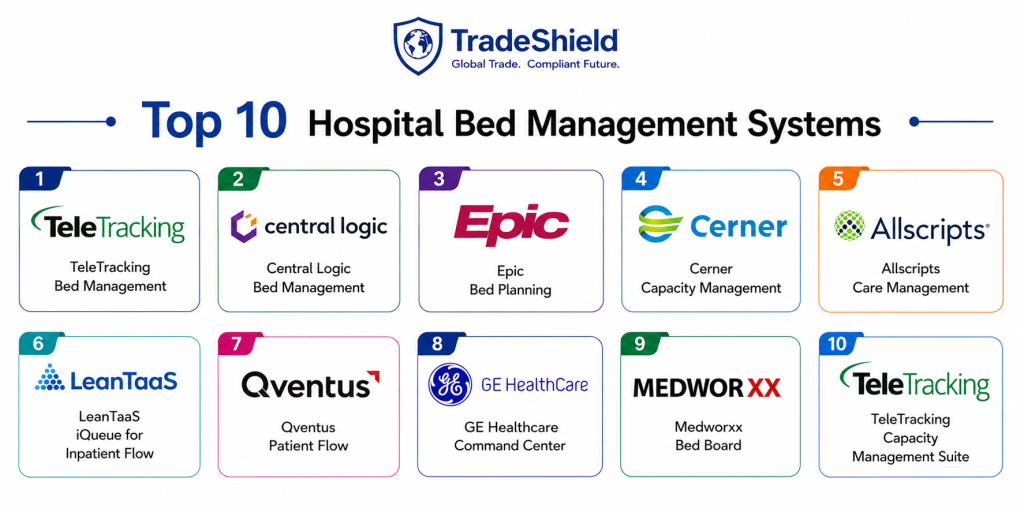
Top 10 Hospital Bed Management Systems
1- TeleTracking
Short description:
TeleTracking is one of the leading hospital operations and bed management platforms providing real-time patient flow visibility, bed allocation workflows, and capacity management analytics.
Key Features
- Real-time bed tracking
- Patient flow optimization workflows
- Capacity and occupancy analytics
- Discharge coordination support
- Workflow automation capabilities
- Operational KPI dashboards
- Mobile coordination tools
Pros
- Strong enterprise hospital operations support
- Excellent patient flow visibility
- Reliable scalability for large healthcare systems
Cons
- Enterprise deployment complexity
- Premium implementation pricing
- Advanced integrations may require expertise
Platforms / Deployment
- Web / Mobile
- Cloud / Hybrid
Security & Compliance
Supports RBAC, MFA, encryption, audit logging, and healthcare governance workflows.
Integrations & Ecosystem
- EHR systems
- HIS platforms
- RTLS systems
- APIs
- Healthcare analytics environments
Support & Community
Strong enterprise healthcare ecosystem.
2- Central Logic
Short description:
Central Logic provides hospital patient flow and transfer center management workflows supporting bed allocation, care coordination, and operational visibility.
Key Features
- Patient placement workflows
- Bed occupancy monitoring
- Transfer center coordination
- Capacity management analytics
- Workflow automation support
- Operational reporting dashboards
- Mobile healthcare workflows
Pros
- Strong patient transfer management support
- Good operational coordination capabilities
- Reliable healthcare workflow flexibility
Cons
- Enterprise implementation requirements
- Advanced customization complexity
- Premium operational pricing
Platforms / Deployment
- Web / Mobile
- Cloud
Security & Compliance
Supports RBAC, encryption, secure APIs, and governance workflows.
Integrations & Ecosystem
- EHR systems
- APIs
- Hospital operations platforms
- Analytics systems
Support & Community
Strong healthcare operations ecosystem.
3- Epic Bed Planning
Short description:
Epic Bed Planning provides integrated bed management and patient flow workflows within the Epic healthcare ecosystem.
Key Features
- Bed occupancy management
- Admission and discharge coordination
- Real-time patient visibility
- Operational analytics support
- Workflow automation capabilities
- Mobile healthcare coordination
- Capacity planning dashboards
Pros
- Strong Epic ecosystem integration
- Excellent patient workflow visibility
- Reliable operational coordination support
Cons
- Best optimized for Epic environments
- Enterprise implementation complexity
- Premium healthcare infrastructure pricing
Platforms / Deployment
- Web / Mobile
- Hybrid
Security & Compliance
Supports MFA, RBAC, encryption, audit logging, and governance workflows.
Integrations & Ecosystem
- Epic EHR
- APIs
- Healthcare analytics platforms
- Hospital systems
Support & Community
Large healthcare provider ecosystem.
4- Cerner Capacity Management
Short description:
Cerner Capacity Management provides real-time hospital capacity and bed management workflows supporting patient throughput optimization.
Key Features
- Bed occupancy monitoring
- Patient throughput analytics
- Operational workflow automation
- Real-time hospital visibility
- Admission and discharge support
- Capacity management dashboards
- Healthcare reporting tools
Pros
- Strong healthcare operational analytics
- Good EHR integration capabilities
- Reliable patient flow visibility support
Cons
- Enterprise deployment complexity
- Best optimized for Oracle Health ecosystems
- Advanced customization may require expertise
Platforms / Deployment
- Web / Mobile
- Cloud / Hybrid
Security & Compliance
Supports RBAC, encryption, secure APIs, and healthcare governance workflows.
Integrations & Ecosystem
- Cerner EHR
- APIs
- Hospital systems
- Healthcare analytics environments
Support & Community
Strong enterprise healthcare ecosystem.
5- LeanTaaS iQueue for Inpatient Flow
Short description:
LeanTaaS iQueue for Inpatient Flow uses AI-driven analytics to optimize hospital bed utilization, patient throughput, and operational capacity planning.
Key Features
- AI-driven bed optimization
- Predictive discharge analytics
- Capacity forecasting workflows
- Real-time occupancy visibility
- Workflow automation support
- Operational KPI dashboards
- Healthcare analytics tools
Pros
- Strong AI-driven operational intelligence
- Excellent predictive analytics capabilities
- Reliable patient flow optimization support
Cons
- Enterprise analytics implementation complexity
- Premium AI platform pricing
- Advanced integrations may require expertise
Platforms / Deployment
- Web
- Cloud
Security & Compliance
Supports RBAC, encryption, audit logging, and governance workflows.
Integrations & Ecosystem
- EHR systems
- APIs
- Healthcare analytics platforms
- Operational environments
Support & Community
Growing healthcare AI ecosystem.
6- Allscripts Sunrise Patient Flow
Short description:
Allscripts Sunrise Patient Flow provides healthcare operations and bed coordination workflows supporting patient placement and hospital throughput management.
Key Features
- Patient placement workflows
- Bed occupancy tracking
- Capacity management support
- Workflow automation capabilities
- Operational analytics dashboards
- Mobile healthcare coordination
- Admission and discharge monitoring
Pros
- Strong patient coordination support
- Good healthcare workflow flexibility
- Reliable operational visibility capabilities
Cons
- Enterprise deployment requirements
- Advanced customization complexity
- Premium operational pricing
Platforms / Deployment
- Web / Mobile
- Cloud / Hybrid
Security & Compliance
Supports RBAC, encryption, secure APIs, and governance workflows.
Integrations & Ecosystem
- Allscripts environments
- APIs
- Hospital systems
- Healthcare analytics tools
Support & Community
Strong healthcare IT ecosystem.
7- Qventus Patient Flow Automation
Short description:
Qventus provides AI-powered patient flow and operational automation workflows designed to optimize hospital capacity and reduce bottlenecks.
Key Features
- AI-driven workflow automation
- Patient flow optimization
- Predictive operational analytics
- Bed turnover management
- Capacity planning support
- Operational KPI dashboards
- Staff coordination workflows
Pros
- Strong AI-powered automation support
- Good operational optimization capabilities
- Reliable patient throughput visibility
Cons
- Enterprise implementation complexity
- Premium AI-driven operational pricing
- Advanced integrations may require expertise
Platforms / Deployment
- Web
- Cloud
Security & Compliance
Supports RBAC, encryption, audit logging, and governance workflows.
Integrations & Ecosystem
- EHR systems
- APIs
- Healthcare operations platforms
- Analytics environments
Support & Community
Growing healthcare AI ecosystem.
8- Care Logistics Patient Flow
Short description:
Care Logistics Patient Flow provides hospital throughput management and patient coordination workflows supporting bed management and operational visibility.
Key Features
- Bed management workflows
- Patient throughput optimization
- Operational analytics support
- Workflow orchestration capabilities
- Capacity monitoring dashboards
- Healthcare reporting tools
- Staff coordination visibility
Pros
- Strong operational throughput support
- Good hospital coordination workflows
- Reliable occupancy visibility capabilities
Cons
- Enterprise deployment complexity
- Advanced customization varies
- Premium operational pricing
Platforms / Deployment
- Web
- Cloud / Hybrid
Security & Compliance
Supports encryption, RBAC, secure APIs, and governance workflows.
Integrations & Ecosystem
- Hospital systems
- APIs
- Healthcare analytics platforms
- EHR environments
Support & Community
Strong hospital operations ecosystem.
9- Patient Flow Systems PFS
Short description:
Patient Flow Systems provides bed management and hospital capacity coordination workflows supporting healthcare operational efficiency.
Key Features
- Real-time bed visibility
- Admission and discharge coordination
- Workflow automation support
- Capacity management dashboards
- Operational KPI monitoring
- Staff coordination workflows
- Healthcare reporting analytics
Pros
- Strong hospital visibility support
- Good operational workflow flexibility
- Reliable healthcare coordination capabilities
Cons
- Smaller enterprise ecosystem
- Advanced analytics capabilities vary
- Enterprise integrations may require expertise
Platforms / Deployment
- Web
- Cloud
Security & Compliance
Supports RBAC, encryption, audit logging, and governance workflows.
Integrations & Ecosystem
- APIs
- Hospital systems
- EHR platforms
- Operational environments
Support & Community
Growing healthcare operations ecosystem.
10- Sonitor BLUfusion Patient Flow
Short description:
Sonitor BLUfusion Patient Flow combines RTLS technology and operational analytics to improve bed visibility, patient tracking, and hospital workflow coordination.
Key Features
- RTLS-enabled patient tracking
- Real-time bed visibility
- Workflow automation capabilities
- Capacity monitoring dashboards
- Staff coordination workflows
- Operational KPI analytics
- Mobile healthcare visibility tools
Pros
- Strong RTLS integration support
- Good real-time operational visibility
- Reliable healthcare workflow coordination
Cons
- RTLS infrastructure requirements
- Enterprise implementation complexity
- Premium hardware deployment pricing
Platforms / Deployment
- Web / Mobile
- Cloud / Hybrid
Security & Compliance
Supports RBAC, encryption, secure APIs, and governance workflows.
Integrations & Ecosystem
- RTLS systems
- APIs
- EHR systems
- Healthcare analytics environments
Support & Community
Growing smart hospital ecosystem.
Comparison Table
| Tool Name | Best For | Platforms Supported | Deployment | Standout Feature | Public Rating |
|---|---|---|---|---|---|
| TeleTracking | Enterprise patient flow operations | Web, Mobile | Hybrid | Real-time operational visibility | N/A |
| Central Logic | Patient transfer coordination | Web, Mobile | Cloud | Transfer center management | N/A |
| Epic Bed Planning | Epic-integrated bed management | Web, Mobile | Hybrid | Native Epic workflows | N/A |
| Cerner Capacity Management | Hospital throughput optimization | Web, Mobile | Hybrid | Capacity management analytics | N/A |
| LeanTaaS iQueue for Inpatient Flow | AI-driven bed optimization | Web | Cloud | Predictive operational analytics | N/A |
| Allscripts Sunrise Patient Flow | Healthcare workflow coordination | Web, Mobile | Hybrid | Operational patient flow support | N/A |
| Qventus Patient Flow Automation | AI workflow automation | Web | Cloud | Intelligent patient throughput workflows | N/A |
| Care Logistics Patient Flow | Hospital throughput management | Web | Hybrid | Workflow-driven occupancy management | N/A |
| Patient Flow Systems PFS | Operational bed coordination | Web | Cloud | Real-time occupancy visibility | N/A |
| Sonitor BLUfusion Patient Flow | RTLS-enabled hospital visibility | Web, Mobile | Hybrid | RTLS patient tracking | N/A |
Evaluation & Scoring of Hospital Bed Management Systems
| Tool Name | Core 25% | Ease 15% | Integrations 15% | Security 10% | Performance 10% | Support 10% | Value 15% | Weighted Total |
|---|---|---|---|---|---|---|---|---|
| TeleTracking | 9.7 | 8.1 | 9.5 | 9.4 | 9.5 | 9.3 | 8.2 | 9.2 |
| Central Logic | 9.2 | 8.4 | 9.1 | 9.1 | 9.2 | 9.0 | 8.5 | 8.9 |
| Epic Bed Planning | 9.4 | 8.0 | 9.5 | 9.3 | 9.4 | 9.2 | 8.2 | 9.1 |
| Cerner Capacity Management | 9.3 | 8.1 | 9.3 | 9.2 | 9.3 | 9.1 | 8.3 | 9.0 |
| LeanTaaS iQueue for Inpatient Flow | 9.4 | 8.3 | 9.0 | 9.1 | 9.4 | 9.0 | 8.5 | 9.0 |
| Allscripts Sunrise Patient Flow | 9.0 | 8.3 | 8.9 | 9.0 | 9.0 | 8.9 | 8.6 | 8.8 |
| Qventus Patient Flow Automation | 9.2 | 8.4 | 8.9 | 9.0 | 9.2 | 8.9 | 8.6 | 8.9 |
| Care Logistics Patient Flow | 8.9 | 8.3 | 8.8 | 8.9 | 8.9 | 8.8 | 8.6 | 8.7 |
| Patient Flow Systems PFS | 8.7 | 8.5 | 8.6 | 8.8 | 8.7 | 8.6 | 8.8 | 8.6 |
| Sonitor BLUfusion Patient Flow | 9.0 | 8.2 | 8.9 | 9.0 | 9.0 | 8.8 | 8.5 | 8.8 |
These scores are comparative and intended to help organizations evaluate Hospital Bed Management Systems based on patient flow optimization, integrations, scalability, operational visibility, automation capabilities, and long-term healthcare operations value.
Which Hospital Bed Management System Is Right for You?
Small and Mid-Sized Hospitals
Best suited: Patient Flow Systems PFS, Care Logistics Patient Flow
These provide flexible operational coordination and easier deployment.
SMB Healthcare Operations
Best suited: Central Logic, Allscripts Sunrise Patient Flow
These balance patient flow visibility and operational flexibility.
Mid-Market Healthcare Networks
Best suited: LeanTaaS iQueue for Inpatient Flow, Qventus Patient Flow Automation
These provide stronger AI-driven optimization and predictive analytics capabilities.
Large Enterprise Healthcare Systems
Best suited: TeleTracking, Epic Bed Planning, Cerner Capacity Management
These offer enterprise scalability, advanced operational governance, and deep healthcare workflow intelligence.
Budget vs Premium
Budget-friendly: Patient Flow Systems PFS, Care Logistics Patient Flow
Premium enterprise: TeleTracking, Epic Bed Planning
Feature Depth vs Ease of Use
Deep enterprise functionality: TeleTracking, Cerner Capacity Management
Ease of use: Central Logic, Patient Flow Systems PFS
Integrations & Scalability
Best integrations: Epic Bed Planning, TeleTracking, Cerner Capacity Management
Best scalability: TeleTracking, LeanTaaS iQueue for Inpatient Flow
Security & Compliance Needs
Healthcare organizations should prioritize systems supporting RBAC, MFA, encryption, audit logging, secure APIs, HIPAA-aligned workflows, and comprehensive healthcare governance controls.
Frequently Asked Questions
1. What are Hospital Bed Management Systems?
They are healthcare operational platforms used to manage bed occupancy, patient admissions, discharge coordination, and hospital capacity workflows.
2. Why are hospital bed management systems important?
They improve patient flow, reduce wait times, optimize resource utilization, and improve operational efficiency across hospitals.
3. Can these systems integrate with EHR platforms?
Yes, most hospital bed management systems integrate with EHRs, hospital information systems, RTLS platforms, and analytics environments.
4. What analytics capabilities are common?
Occupancy dashboards, patient throughput analytics, discharge forecasting, operational KPI tracking, and capacity planning reports are commonly supported.
5. Are cloud-based bed management systems common?
Yes, cloud-native hospital operations systems are increasingly common because they improve scalability and operational accessibility.
6. What security features are important?
RBAC, MFA, encryption, audit logging, secure APIs, and HIPAA-aligned governance workflows are critical for healthcare operations.
7. Which healthcare organizations use bed management systems most?
Hospitals, academic medical centers, emergency departments, specialty clinics, healthcare networks, and large healthcare systems heavily rely on these systems.
8. Can these platforms support AI-driven patient flow optimization?
Yes, many modern hospital bed management platforms include predictive analytics, AI-driven capacity planning, and workflow automation capabilities.
9. What are common implementation challenges?
EHR integration, staff training, operational workflow redesign, RTLS deployment, and data normalization are common implementation challenges.
10. How should organizations choose a hospital bed management platform?
Organizations should evaluate patient flow capabilities, integrations, scalability, security, operational analytics, and long-term healthcare operations strategy.
Conclusion
Hospital Bed Management Systems have become essential infrastructure for modern healthcare operations managing increasing patient demand and operational complexity. Modern platforms now combine AI-driven analytics, workflow automation, real-time occupancy visibility, predictive planning, cloud collaboration, and operational intelligence to support intelligent patient flow operations and improve hospital efficiency. Enterprise solutions such as TeleTracking, Epic Bed Planning, and Cerner Capacity Management provide deep operational functionality and advanced healthcare workflow intelligence, while platforms like Central Logic and Patient Flow Systems PFS offer flexible and accessible workflows for evolving healthcare environments. The best solution ultimately depends on hospital scale, integration priorities, operational complexity, patient throughput requirements, and long-term healthcare operations strategy. A structured evaluation process combined with pilot deployments and workflow validation can significantly improve patient experience, occupancy optimization, operational efficiency, and long-term healthcare system resilience.