Introduction
Materials Informatics Platforms help research organizations, chemical companies, pharmaceutical manufacturers, semiconductor firms, energy companies, and advanced manufacturing teams accelerate material discovery, optimization, and analysis using AI, machine learning, simulation, and data-driven workflows. These platforms combine computational science, laboratory data, predictive modeling, and materials databases to improve R&D efficiency and reduce experimental costs.
As industries increasingly rely on advanced materials for batteries, semiconductors, pharmaceuticals, polymers, aerospace, and sustainable manufacturing, traditional trial-and-error research methods are becoming too slow and expensive. Modern materials informatics platforms now combine AI-assisted discovery, high-throughput simulation, digital twins, cloud collaboration, laboratory automation, and predictive analytics to optimize innovation workflows and accelerate commercialization.
Real-world use cases include:
- Battery material discovery and optimization
- Polymer and chemical formulation analysis
- Semiconductor material research
- Pharmaceutical compound development
- Sustainable material and alloy optimization
Buyers evaluating Materials Informatics Platforms should focus on:
- AI and machine learning modeling capabilities
- Materials database and data management support
- Simulation and computational chemistry functionality
- Cloud scalability and collaboration workflows
- Laboratory integration and automation support
- Predictive modeling accuracy
- Security and IP protection capabilities
- Integration with scientific and engineering systems
- Workflow automation and analytics
- Support for high-performance computing environments
Best for: Materials science organizations, semiconductor manufacturers, battery research teams, chemical manufacturers, pharmaceutical companies, industrial R&D groups, and enterprise innovation organizations managing advanced material research workflows.
Not ideal for: Small organizations requiring only basic spreadsheet-based research tracking without advanced AI modeling, simulation, or materials analytics capabilities.
Key Trends in Materials Informatics Platforms
- AI-driven material discovery accelerating research timelines
- Generative AI improving molecular and material design workflows
- Cloud-native R&D collaboration replacing isolated research environments
- High-throughput simulation expanding rapidly
- Digital twins improving material lifecycle analysis
- Laboratory automation integrations increasing operational efficiency
- Sustainability-focused material optimization becoming critical
- Quantum computing research influencing simulation workflows
- Unified scientific data platforms replacing fragmented datasets
- Cybersecurity becoming essential for intellectual property protection
How We Selected These Tools (Methodology)
- Adoption across materials science and industrial R&D sectors
- AI and predictive modeling depth
- Simulation and computational chemistry functionality
- Laboratory and scientific system integrations
- Scalability for enterprise research environments
- Security and governance capabilities
- Cloud deployment and collaboration support
- Workflow automation and analytics functionality
- Data interoperability and scientific database support
- Balance between enterprise, AI-focused, and scientific research solutions
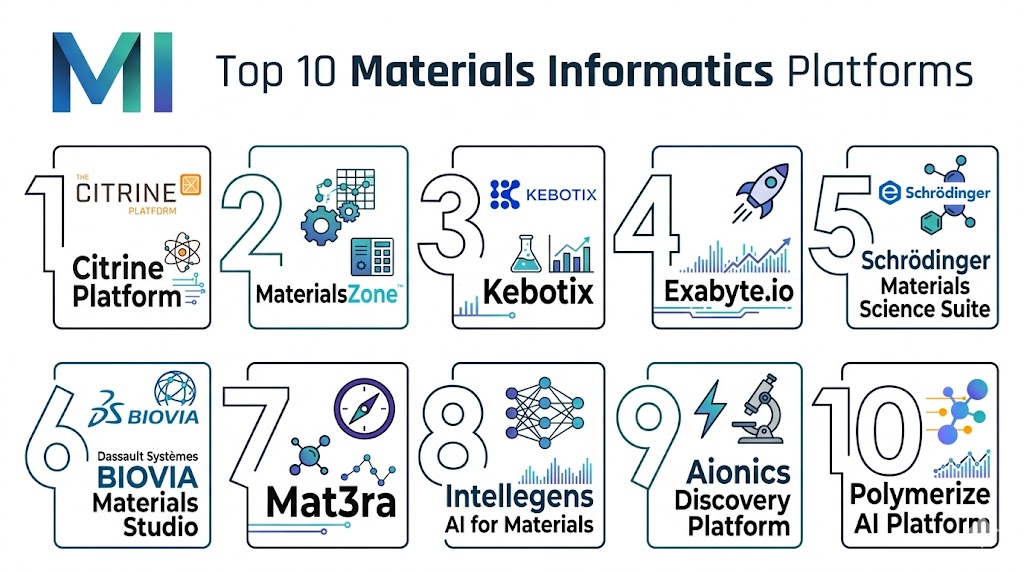
Top 10 Materials Informatics Platforms
1- Citrine Platform
Short description:
Citrine Platform is one of the leading AI-driven materials informatics platforms designed for material discovery, optimization, and industrial R&D acceleration across manufacturing and advanced materials industries.
Key Features
- AI-assisted material discovery
- Predictive modeling workflows
- Scientific data management
- Experiment optimization analytics
- Laboratory workflow integration
- Cloud-based research collaboration
- High-throughput simulation support
Pros
- Strong AI-driven research capabilities
- Excellent enterprise scalability
- Reliable predictive modeling support
Cons
- Premium enterprise pricing
- Requires data science expertise
- Complex enterprise onboarding workflows
Platforms / Deployment
- Web
- Cloud
Security & Compliance
Supports RBAC, MFA, encryption, audit logging, and governance workflows.
Integrations & Ecosystem
Integrates with laboratory systems, scientific databases, simulation tools, APIs, and enterprise R&D platforms.
- APIs
- Laboratory systems
- Simulation platforms
- Scientific databases
- HPC environments
Support & Community
Large enterprise materials science ecosystem.
2- Materials Studio
Short description:
Materials Studio provides molecular modeling, simulation, and computational materials science workflows for advanced scientific research environments.
Key Features
- Molecular and material simulation
- Computational chemistry workflows
- Visualization and modeling tools
- Quantum mechanics analysis
- Material property prediction
- High-performance computing support
- Scientific workflow automation
Pros
- Strong scientific simulation capabilities
- Excellent computational chemistry support
- Reliable advanced modeling workflows
Cons
- Requires advanced scientific expertise
- Enterprise licensing complexity
- Steep learning curve for new users
Platforms / Deployment
- Windows / Linux
- Self-hosted / Hybrid
Security & Compliance
Supports secure authentication, encryption, and governance workflows.
Integrations & Ecosystem
- Scientific databases
- APIs
- HPC systems
- Simulation platforms
Support & Community
Strong scientific and research ecosystem.
3- Exabyte Platform
Short description:
Exabyte Platform provides cloud-native materials modeling and computational materials science workflows focused on collaborative scientific research.
Key Features
- Cloud-based materials simulation
- Collaborative research workflows
- Computational materials modeling
- AI-assisted material analysis
- Workflow automation support
- High-throughput simulation capabilities
- Scientific visualization tools
Pros
- Strong cloud-native usability
- Good collaborative research workflows
- Reliable scalability support
Cons
- Smaller ecosystem than major enterprise vendors
- Advanced customization may vary
- Requires scientific modeling expertise
Platforms / Deployment
- Web
- Cloud
Security & Compliance
Supports encryption, RBAC, secure APIs, and governance workflows.
Integrations & Ecosystem
- APIs
- HPC systems
- Scientific databases
- Modeling tools
Support & Community
Growing materials science ecosystem.
4- Schrödinger Materials Science Suite
Short description:
Schrödinger Materials Science Suite provides AI-driven molecular simulation and materials modeling workflows for industrial and pharmaceutical research.
Key Features
- Molecular simulation workflows
- AI-assisted material optimization
- Quantum chemistry analysis
- Material property prediction
- Scientific visualization support
- Workflow automation capabilities
- HPC integration support
Pros
- Strong AI-driven modeling capabilities
- Excellent scientific simulation workflows
- Reliable enterprise research support
Cons
- Premium enterprise licensing
- Requires advanced computational expertise
- Complex deployment workflows
Platforms / Deployment
- Windows / Linux
- Cloud / Hybrid
Security & Compliance
Supports secure APIs, encryption, RBAC, and governance controls.
Integrations & Ecosystem
- Scientific databases
- APIs
- HPC environments
- Laboratory systems
Support & Community
Large scientific computing ecosystem.
5- Aionics
Short description:
Aionics focuses on AI-driven battery materials discovery and optimization workflows for energy storage research and advanced manufacturing environments.
Key Features
- Battery material optimization
- AI-assisted formulation analysis
- Predictive material modeling
- Workflow automation support
- Experimental data analytics
- Sustainability-focused optimization
- Cloud-based research collaboration
Pros
- Strong battery research specialization
- Good AI-driven optimization workflows
- Reliable sustainability analysis support
Cons
- More specialized than broader materials platforms
- Smaller ecosystem than enterprise vendors
- Limited general-purpose material workflows
Platforms / Deployment
- Web
- Cloud
Security & Compliance
Supports secure operational workflows and governance controls.
Integrations & Ecosystem
- APIs
- Battery research systems
- Scientific databases
- Analytics platforms
Support & Community
Growing battery materials ecosystem.
6- Kebotix
Short description:
Kebotix provides AI-powered material discovery and autonomous research workflows designed for advanced industrial and scientific R&D environments.
Key Features
- Autonomous research workflows
- AI-driven material discovery
- Predictive analytics support
- Laboratory automation integrations
- Scientific workflow orchestration
- Cloud collaboration capabilities
- High-throughput experimentation support
Pros
- Strong AI automation capabilities
- Good research acceleration workflows
- Reliable predictive modeling support
Cons
- Enterprise deployment complexity
- Advanced workflows require expertise
- Smaller ecosystem than larger vendors
Platforms / Deployment
- Web
- Cloud
Security & Compliance
Supports secure authentication, encryption, and governance workflows.
Integrations & Ecosystem
- APIs
- Laboratory automation tools
- Scientific systems
- HPC environments
Support & Community
Growing AI-driven research ecosystem.
7- NanoMine
Short description:
NanoMine provides materials informatics workflows focused on polymer nanocomposites, scientific data sharing, and collaborative materials research.
Key Features
- Materials database management
- Scientific data visualization
- Polymer nanocomposite analysis
- Collaborative research workflows
- Predictive modeling support
- AI-assisted analytics capabilities
- Scientific reporting tools
Pros
- Strong academic research support
- Good collaborative data workflows
- Reliable materials analytics capabilities
Cons
- More research-focused than enterprise industrial workflows
- Smaller ecosystem
- Limited industrial operational integrations
Platforms / Deployment
- Web
- Cloud
Security & Compliance
Supports secure operational workflows and governance controls.
Integrations & Ecosystem
- APIs
- Scientific databases
- Research systems
- Visualization platforms
Support & Community
Strong academic materials science ecosystem.
8- Dassault BIOVIA
Short description:
Dassault BIOVIA provides scientific data management, materials modeling, and collaborative R&D workflows for industrial and scientific organizations.
Key Features
- Scientific data management
- Materials modeling workflows
- Collaborative R&D support
- AI-assisted analytics
- Workflow automation capabilities
- Regulatory and compliance tracking
- Visualization and reporting tools
Pros
- Strong enterprise scientific workflows
- Reliable collaboration functionality
- Good industrial scalability support
Cons
- Enterprise deployment complexity
- Premium licensing structure
- Requires scientific administration expertise
Platforms / Deployment
- Web / Windows
- Cloud / Hybrid
Security & Compliance
Supports RBAC, encryption, MFA, and governance workflows.
Integrations & Ecosystem
- Scientific databases
- APIs
- Laboratory systems
- Simulation platforms
Support & Community
Large scientific and industrial ecosystem.
9- Granta MI
Short description:
Granta MI provides materials information management, engineering material databases, and material intelligence workflows for manufacturing organizations.
Key Features
- Materials database management
- Material selection analytics
- Engineering simulation support
- Sustainability analysis tools
- Compliance and reporting workflows
- Operational dashboards
- Workflow automation support
Pros
- Strong engineering materials management
- Excellent manufacturing workflows
- Reliable material intelligence capabilities
Cons
- Less AI-focused than newer platforms
- Enterprise implementation complexity
- Premium licensing costs
Platforms / Deployment
- Windows / Web
- Cloud / Hybrid
Security & Compliance
Supports secure authentication, encryption, RBAC, and governance workflows.
Integrations & Ecosystem
- CAD systems
- Simulation tools
- APIs
- Manufacturing platforms
Support & Community
Strong engineering and manufacturing ecosystem.
10- Polymer Genome
Short description:
Polymer Genome provides AI-driven polymer informatics workflows focused on polymer property prediction and advanced materials research.
Key Features
- Polymer property prediction
- AI-assisted material modeling
- Scientific database workflows
- Predictive analytics support
- Material optimization tools
- Research collaboration capabilities
- Visualization dashboards
Pros
- Strong polymer specialization
- Good predictive modeling workflows
- Reliable AI-assisted analysis support
Cons
- More specialized than broad enterprise platforms
- Smaller ecosystem
- Limited industrial workflow integrations
Platforms / Deployment
- Web
- Cloud
Security & Compliance
Supports secure operational workflows and governance controls.
Integrations & Ecosystem
- APIs
- Scientific databases
- Research systems
- Analytics platforms
Support & Community
Growing polymer informatics ecosystem.
Comparison Table
| Tool Name | Best For | Platforms Supported | Deployment | Standout Feature | Public Rating |
|---|---|---|---|---|---|
| Citrine Platform | Enterprise AI-driven materials discovery | Web | Cloud | Predictive materials AI | N/A |
| Materials Studio | Computational materials science | Windows, Linux | Hybrid | Molecular simulation depth | N/A |
| Exabyte Platform | Cloud-native materials modeling | Web | Cloud | Collaborative simulation workflows | N/A |
| Schrödinger Materials Science Suite | AI molecular simulation | Windows, Linux | Hybrid | Quantum chemistry workflows | N/A |
| Aionics | Battery materials optimization | Web | Cloud | AI-driven battery research | N/A |
| Kebotix | Autonomous materials discovery | Web | Cloud | AI research automation | N/A |
| NanoMine | Academic materials research | Web | Cloud | Polymer nanocomposite analytics | N/A |
| Dassault BIOVIA | Enterprise scientific collaboration | Web, Windows | Hybrid | Scientific workflow management | N/A |
| Granta MI | Engineering materials intelligence | Windows, Web | Hybrid | Manufacturing material databases | N/A |
| Polymer Genome | Polymer informatics | Web | Cloud | Polymer property prediction | N/A |
Evaluation & Scoring of Materials Informatics Platforms
| Tool Name | Core 25% | Ease 15% | Integrations 15% | Security 10% | Performance 10% | Support 10% | Value 15% | Weighted Total |
|---|---|---|---|---|---|---|---|---|
| Citrine Platform | 9.5 | 8.3 | 9.2 | 9.2 | 9.3 | 9.1 | 8.1 | 9.0 |
| Materials Studio | 9.3 | 7.5 | 9.0 | 9.0 | 9.4 | 9.0 | 7.9 | 8.8 |
| Exabyte Platform | 8.9 | 8.5 | 8.8 | 8.8 | 8.9 | 8.7 | 8.6 | 8.7 |
| Schrödinger Materials Science Suite | 9.2 | 7.8 | 9.0 | 9.1 | 9.2 | 9.0 | 8.0 | 8.8 |
| Aionics | 8.8 | 8.4 | 8.5 | 8.7 | 8.8 | 8.5 | 8.7 | 8.6 |
| Kebotix | 9.0 | 8.0 | 8.7 | 8.8 | 9.0 | 8.7 | 8.4 | 8.7 |
| NanoMine | 8.5 | 8.6 | 8.3 | 8.6 | 8.5 | 8.5 | 8.8 | 8.5 |
| Dassault BIOVIA | 9.1 | 7.9 | 9.1 | 9.2 | 9.0 | 9.0 | 8.1 | 8.8 |
| Granta MI | 8.9 | 8.0 | 9.0 | 9.0 | 8.9 | 8.8 | 8.2 | 8.7 |
| Polymer Genome | 8.6 | 8.5 | 8.2 | 8.5 | 8.6 | 8.4 | 8.8 | 8.5 |
These scores are comparative and intended to help organizations evaluate Materials Informatics Platforms based on AI modeling capabilities, simulation depth, integrations, scalability, security, predictive analytics, and long-term research value.
Which Materials Informatics Platform Is Right for You?
Small Research Teams
Best suited: Polymer Genome, NanoMine
These provide easier research workflows and strong scientific collaboration support.
SMB Industrial and Research Organizations
Best suited: Exabyte Platform, Aionics
These balance AI-driven analytics and operational flexibility.
Mid-Market Manufacturing and Scientific Companies
Best suited: Granta MI, Dassault BIOVIA
These provide stronger enterprise research coordination and material intelligence workflows.
Large Enterprise R&D Operations
Best suited: Citrine Platform, Materials Studio, Schrödinger Materials Science Suite
These offer enterprise scalability, advanced simulation capabilities, and deep AI-assisted materials intelligence.
Budget vs Premium
Budget-friendly: NanoMine, Exabyte Platform
Premium enterprise: Citrine Platform, Materials Studio
Feature Depth vs Ease of Use
Deep enterprise functionality: Materials Studio, Schrödinger Materials Science Suite
Ease of use: Exabyte Platform, Aionics
Integrations & Scalability
Best integrations: Dassault BIOVIA, Citrine Platform, Granta MI
Best scalability: Citrine Platform, Materials Studio
Security & Compliance Needs
Organizations managing sensitive research and intellectual property should prioritize systems supporting RBAC, MFA, encryption, audit logging, and secure scientific collaboration workflows.
Frequently Asked Questions
1. What are Materials Informatics Platforms?
They are AI-driven platforms used to accelerate material discovery, simulation, optimization, and scientific research workflows.
2. Why are materials informatics platforms important?
They improve research efficiency, reduce experimentation costs, accelerate innovation, and support predictive material analysis.
3. Can these platforms integrate with laboratory systems?
Yes, many modern materials informatics platforms integrate with laboratory systems, simulation tools, and scientific databases.
4. What analytics capabilities are common?
Predictive modeling, material optimization, AI-assisted simulation, molecular analysis, and workflow automation are commonly supported.
5. Are cloud-based materials informatics platforms common?
Yes, cloud-native research collaboration and simulation platforms are increasingly common because they improve scalability and teamwork.
6. What security features are important?
RBAC, MFA, encryption, secure APIs, and audit logging are critical for protecting scientific intellectual property and research data.
7. Which industries use materials informatics platforms most?
Chemical manufacturing, semiconductors, battery research, pharmaceuticals, aerospace, and advanced manufacturing organizations heavily rely on these platforms.
8. Can these platforms support AI-assisted material discovery?
Yes, many modern platforms now include AI-driven predictive modeling and autonomous research workflows.
9. What are common implementation challenges?
Scientific data integration, model validation, user training, workflow customization, and large-scale simulation management are common challenges.
10. How should organizations choose a materials informatics platform?
Organizations should evaluate AI capabilities, simulation depth, integrations, scalability, security, and long-term R&D strategy.
Conclusion
Materials Informatics Platforms have become essential infrastructure for organizations managing increasingly complex scientific and industrial research workflows. Modern platforms now combine AI-assisted discovery, predictive analytics, digital twins, cloud collaboration, simulation workflows, and laboratory automation to support intelligent material innovation. Enterprise solutions such as Citrine Platform, Materials Studio, and Schrödinger Materials Science Suite provide deep operational functionality and advanced scientific intelligence, while platforms like Exabyte Platform and Aionics offer flexible and highly accessible workflows for evolving research environments. The best solution ultimately depends on research scale, simulation complexity, integration priorities, AI requirements, and long-term innovation strategy. A structured evaluation process combined with pilot deployments and workflow validation can significantly improve R&D efficiency, material discovery speed, and long-term scientific competitiveness.