Introduction
Cloud Cost Allocation Tools help organizations track, categorize, distribute, and optimize cloud spending across teams, departments, projects, applications, and business units. These platforms provide visibility into cloud resource consumption, tagging accuracy, budgeting, chargeback and showback workflows, Kubernetes cost analytics, and multi-cloud financial governance.
As organizations increasingly adopt hybrid cloud, Kubernetes, AI workloads, serverless architectures, and distributed DevOps environments, cloud financial management has become a critical operational priority. Modern cloud cost allocation tools now combine FinOps workflows, AI-driven optimization, automated tagging governance, forecasting analytics, and real-time reporting to help businesses improve financial accountability and reduce cloud waste.
Real-world use cases include:
- Department-level cloud chargeback
- Multi-cloud spend visibility
- Kubernetes cost allocation
- Resource tagging governance
- Budget forecasting and optimization
Evaluation Criteria for Buyers
Organizations evaluating Cloud Cost Allocation Tools should consider:
- Cost allocation accuracy
- Multi-cloud support
- Tagging and governance workflows
- Kubernetes and container visibility
- Reporting and dashboard quality
- Automation and AI-driven analytics
- Integration ecosystem
- Scalability across cloud environments
- Compliance and governance capabilities
- Ease of deployment and usability
Best for: Enterprises, SaaS providers, fintech companies, telecom operators, DevOps teams, healthcare organizations, managed service providers, and cloud-native businesses.
Not ideal for: Organizations with limited cloud infrastructure or businesses relying solely on native cloud billing consoles without advanced governance requirements.
Key Trends in Cloud Cost Allocation Tools
- AI-driven cloud optimization is becoming more advanced.
- Kubernetes cost visibility is rapidly expanding.
- Real-time cloud financial analytics are becoming standard.
- Sustainability and carbon-aware cloud analytics are emerging.
- Multi-cloud governance is improving significantly.
- Automated tagging enforcement is becoming more common.
- FinOps automation workflows are increasing.
- Integration with ERP and observability platforms is expanding.
- Cloud anomaly detection is improving forecasting accuracy.
- Engineering-focused financial visibility is gaining importance.
How We Selected These Tools
The following Cloud Cost Allocation Tools were selected based on financial governance capabilities, cloud-native visibility, integration maturity, and operational effectiveness.
- Strong cost allocation workflows
- Multi-cloud visibility support
- Enterprise and SMB adoption
- Kubernetes and container analytics
- Reporting and forecasting quality
- Automation and governance support
- Integration ecosystem maturity
- Scalability across distributed environments
- Operational usability and reliability
- Long-term FinOps relevance
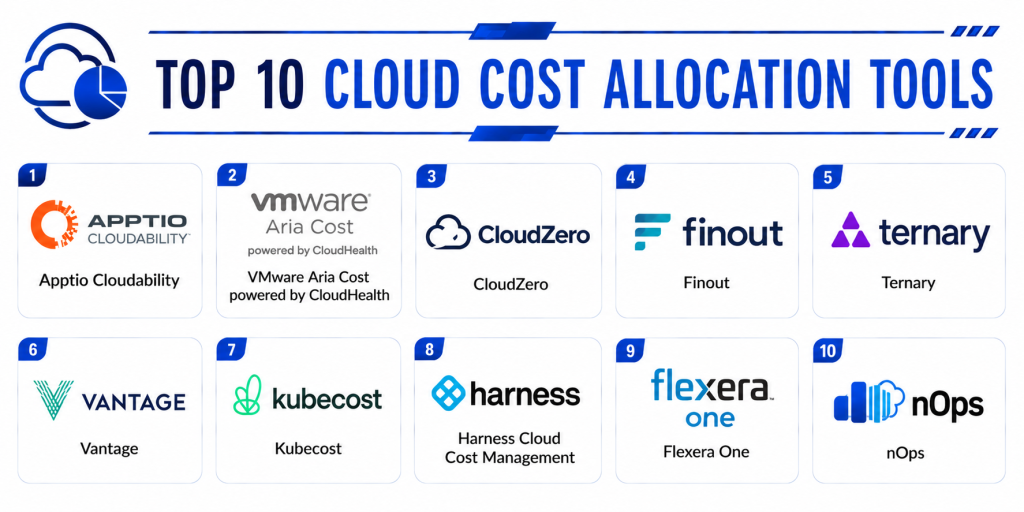
Top 10 Cloud Cost Allocation Tools
1- Apptio Cloudability
Short description: Apptio Cloudability provides enterprise-grade cloud financial management and cost allocation capabilities with advanced reporting, forecasting, and governance workflows.
Key Features
- Multi-cloud cost allocation
- Chargeback and showback workflows
- Kubernetes cost analytics
- Budget forecasting
- AI-driven optimization insights
- Resource utilization tracking
- Financial governance dashboards
Pros
- Strong enterprise FinOps capabilities
- Broad cloud optimization support
- Excellent reporting visibility
Cons
- Enterprise deployment complexity
- Premium pricing structure
- Advanced customization requires expertise
Platforms / Deployment
- Cloud
Security & Compliance
Supports RBAC, governance workflows, audit logging, and operational compliance protections.
Integrations & Ecosystem
Cloudability integrates with enterprise cloud and financial ecosystems.
- AWS
- Azure
- Google Cloud
- Kubernetes
- ERP systems
Support & Community
Strong enterprise FinOps ecosystem with implementation-focused support.
2- VMware Tanzu CloudHealth
Short description: CloudHealth provides multi-cloud financial governance and cloud cost allocation capabilities for enterprise infrastructure environments.
Key Features
- Multi-cloud cost visibility
- Cost allocation workflows
- Budget forecasting
- Resource optimization
- Governance automation
- Compliance analytics
- Kubernetes visibility
Pros
- Strong multi-cloud support
- Good governance capabilities
- Broad optimization workflows
Cons
- Enterprise operational complexity
- Advanced deployment planning required
- Premium enterprise positioning
Platforms / Deployment
- Cloud
Security & Compliance
Supports governance workflows, operational monitoring, audit visibility, and RBAC protections.
Integrations & Ecosystem
CloudHealth integrates with enterprise cloud ecosystems.
- AWS
- Azure
- Google Cloud
- Kubernetes
- ITSM systems
Support & Community
Strong cloud operations ecosystem with onboarding-focused support.
3- Flexera One
Short description: Flexera One combines cloud cost allocation, SaaS spend governance, and operational financial visibility across hybrid cloud environments.
Key Features
- Cloud spend allocation
- SaaS visibility analytics
- Governance dashboards
- Budget forecasting
- Vendor management
- Cost optimization workflows
- Resource tracking
Pros
- Strong SaaS governance support
- Broad cloud visibility
- Good operational analytics
Cons
- Enterprise deployment planning required
- Advanced customization varies
- Premium capabilities depend on tier
Platforms / Deployment
- Cloud
Security & Compliance
Supports governance workflows, RBAC, audit reporting, and operational protections.
Integrations & Ecosystem
Flexera integrates with enterprise financial and cloud ecosystems.
- Cloud providers
- ERP systems
- SaaS platforms
- ITSM environments
- Asset management systems
Support & Community
Strong enterprise ecosystem with operational onboarding resources.
4- Kubecost
Short description: Kubecost provides Kubernetes-focused cloud cost allocation and optimization capabilities for containerized infrastructure environments.
Key Features
- Kubernetes cost allocation
- Namespace visibility
- Multi-cluster analytics
- Resource optimization
- Cost forecasting
- Cloud spend tracking
- Financial reporting dashboards
Pros
- Strong Kubernetes visibility
- Good cloud-native analytics
- Broad container ecosystem compatibility
Cons
- Primarily Kubernetes-focused
- Enterprise governance depth varies
- Large deployments require operational tuning
Platforms / Deployment
- Cloud / Kubernetes / Self-hosted
Security & Compliance
Supports governance workflows, RBAC, and operational monitoring protections.
Integrations & Ecosystem
Kubecost integrates with cloud-native ecosystems.
- Kubernetes
- Prometheus
- AWS
- Azure
- Google Cloud
Support & Community
Strong cloud-native ecosystem with active developer support.
5- CloudZero
Short description: CloudZero provides real-time cloud financial visibility and cost allocation analytics for engineering, finance, and DevOps teams.
Key Features
- Real-time cost allocation
- Engineering cost visibility
- Budget forecasting
- Kubernetes analytics
- Operational dashboards
- Resource allocation insights
- Financial reporting
Pros
- Strong engineering-focused visibility
- Good real-time analytics
- Broad cloud-native workflows
Cons
- Enterprise customization varies
- Advanced reporting requires tuning
- Smaller ecosystem than larger competitors
Platforms / Deployment
- Cloud
Security & Compliance
Supports governance workflows, RBAC, operational monitoring, and audit protections.
Integrations & Ecosystem
CloudZero integrates with cloud and DevOps ecosystems.
- AWS
- Kubernetes
- Datadog
- Snowflake
- Financial reporting systems
Support & Community
Growing FinOps ecosystem with onboarding-focused support.
6- Finout
Short description: Finout provides cloud cost observability and allocation capabilities across cloud providers, Kubernetes environments, and SaaS infrastructure.
Key Features
- Multi-cloud allocation analytics
- Kubernetes visibility
- Cost observability workflows
- SaaS cost tracking
- Budget forecasting
- Operational dashboards
- Resource allocation reporting
Pros
- Strong observability capabilities
- Broad cloud-native support
- Good SaaS tracking workflows
Cons
- Enterprise governance customization varies
- Smaller ecosystem maturity
- Advanced analytics require tuning
Platforms / Deployment
- Cloud
Security & Compliance
Supports governance workflows, operational monitoring, RBAC, and audit visibility.
Integrations & Ecosystem
Finout integrates with cloud and observability ecosystems.
- AWS
- Azure
- Google Cloud
- Kubernetes
- Observability platforms
Support & Community
Growing FinOps ecosystem with onboarding-focused support resources.
7- Spot by NetApp
Short description: Spot by NetApp provides automated cloud optimization and cost allocation capabilities for cloud infrastructure and Kubernetes environments.
Key Features
- Cloud cost allocation
- Automated rightsizing
- Resource optimization
- Budget analytics
- Kubernetes visibility
- AI-driven recommendations
- Resource utilization monitoring
Pros
- Strong automation workflows
- Good Kubernetes support
- Broad cloud optimization capabilities
Cons
- Primarily optimization-focused
- Advanced governance workflows vary
- Enterprise customization requires planning
Platforms / Deployment
- Cloud
Security & Compliance
Supports governance workflows, operational monitoring, RBAC, and audit visibility protections.
Integrations & Ecosystem
Spot integrates with enterprise cloud ecosystems.
- AWS
- Azure
- Google Cloud
- Kubernetes
- Monitoring platforms
Support & Community
Strong cloud optimization ecosystem with onboarding-focused support.
8- Harness Cloud Cost Management
Short description: Harness Cloud Cost Management provides engineering-focused cloud allocation and Kubernetes financial visibility for DevOps environments.
Key Features
- Kubernetes cost allocation
- Cloud spend analytics
- Cost anomaly detection
- Budget forecasting
- Resource optimization
- Chargeback workflows
- Engineering dashboards
Pros
- Strong engineering workflows
- Good Kubernetes analytics
- Broad cloud-native support
Cons
- Enterprise governance depth varies
- Large-scale tuning required
- Advanced financial customization varies
Platforms / Deployment
- Cloud
Security & Compliance
Supports governance workflows, operational monitoring, RBAC, and audit visibility protections.
Integrations & Ecosystem
Harness integrates with DevOps and cloud ecosystems.
- Kubernetes
- AWS
- Azure
- CI/CD systems
- Observability platforms
Support & Community
Strong cloud-native ecosystem with onboarding-focused support.
9- Densify
Short description: Densify provides AI-driven cloud optimization and financial allocation capabilities for enterprise hybrid cloud environments.
Key Features
- AI-driven optimization
- Cloud resource analytics
- Cost allocation visibility
- Resource rightsizing
- Forecasting dashboards
- Multi-cloud governance
- Utilization reporting
Pros
- Strong AI-driven analytics
- Broad infrastructure visibility
- Good optimization support
Cons
- Enterprise operational complexity
- Advanced configuration requires expertise
- Premium enterprise positioning
Platforms / Deployment
- Cloud / Hybrid
Security & Compliance
Supports governance workflows, operational analytics, RBAC, and audit protections.
Integrations & Ecosystem
Densify integrates with cloud and infrastructure ecosystems.
- AWS
- Azure
- VMware
- Kubernetes
- Monitoring systems
Support & Community
Strong enterprise cloud ecosystem with implementation-focused support.
10- ProsperOps
Short description: ProsperOps provides AWS-focused cloud financial optimization and cost allocation workflows with automated savings management capabilities.
Key Features
- AWS cost allocation
- Savings optimization
- Automated governance
- Resource optimization
- Budget analytics
- Forecasting dashboards
- Operational reporting
Pros
- Strong AWS optimization workflows
- Good automation capabilities
- Broad savings management support
Cons
- AWS-focused deployment
- Multi-cloud support limited
- Advanced governance varies
Platforms / Deployment
- Cloud
Security & Compliance
Supports governance workflows, RBAC, operational monitoring, and audit visibility protections.
Integrations & Ecosystem
ProsperOps integrates with AWS ecosystems.
- AWS
- Financial reporting tools
- Monitoring platforms
- Governance environments
- Optimization systems
Support & Community
Strong AWS optimization ecosystem with onboarding support resources.
Comparison Table
| Tool Name | Best For | Platform(s) Supported | Deployment | Standout Feature | Public Rating |
|---|---|---|---|---|---|
| Apptio Cloudability | Enterprise cost governance | Cloud | Cloud | Multi-cloud financial analytics | N/A |
| VMware Tanzu CloudHealth | Multi-cloud allocation visibility | Cloud | Cloud | Governance-driven cloud analytics | N/A |
| Flexera One | SaaS and cloud allocation | Cloud | Cloud | SaaS financial visibility | N/A |
| Kubecost | Kubernetes allocation | Kubernetes / Cloud | Hybrid | Namespace-level analytics | N/A |
| CloudZero | Real-time cloud analytics | Cloud | Cloud | Engineering-focused visibility | N/A |
| Finout | Cloud observability | Cloud | Cloud | Unified cost observability | N/A |
| Spot by NetApp | Automated optimization | Cloud | Cloud | AI-driven resource optimization | N/A |
| Harness Cloud Cost Management | Engineering cloud governance | Cloud | Cloud | Kubernetes financial analytics | N/A |
| Densify | AI-driven cloud optimization | Cloud / Hybrid | Hybrid | AI-powered rightsizing | N/A |
| ProsperOps | AWS savings optimization | Cloud | Cloud | Automated AWS governance | N/A |
Evaluation & Scoring of Cloud Cost Allocation Tools
| Tool Name | Core 25% | Ease 15% | Integrations 15% | Security 10% | Performance 10% | Support 10% | Value 15% | Weighted Total |
|---|---|---|---|---|---|---|---|---|
| Apptio Cloudability | 10 | 7 | 10 | 9 | 9 | 9 | 7 | 8.8 |
| VMware Tanzu CloudHealth | 9 | 7 | 9 | 8 | 9 | 8 | 7 | 8.1 |
| Flexera One | 9 | 8 | 8 | 8 | 8 | 8 | 8 | 8.2 |
| Kubecost | 9 | 8 | 8 | 8 | 8 | 8 | 8 | 8.2 |
| CloudZero | 8 | 8 | 8 | 8 | 8 | 7 | 8 | 7.9 |
| Finout | 8 | 8 | 7 | 8 | 8 | 7 | 8 | 7.8 |
| Spot by NetApp | 8 | 8 | 8 | 8 | 8 | 8 | 8 | 8.0 |
| Harness Cloud Cost Management | 8 | 8 | 8 | 8 | 8 | 7 | 8 | 7.9 |
| Densify | 8 | 7 | 8 | 8 | 8 | 8 | 7 | 7.7 |
| ProsperOps | 8 | 8 | 7 | 8 | 8 | 7 | 8 | 7.8 |
These scores are comparative evaluations intended to help organizations understand differences across cloud cost allocation ecosystems. Some platforms focus heavily on enterprise governance and forecasting, while others prioritize Kubernetes visibility, engineering analytics, or AI-driven optimization.
Which Cloud Cost Allocation Tool Is Right for You?
Solo / Freelancer
Independent developers and smaller organizations may benefit most from Kubecost or ProsperOps because of simpler deployment and focused optimization workflows.
SMB
Small and medium-sized businesses should evaluate CloudZero, Finout, or Spot by NetApp for scalable cloud visibility and operational simplicity.
Mid-Market
Mid-market organizations should prioritize Flexera One, Harness Cloud Cost Management, or Densify depending on governance and optimization requirements.
Enterprise
Large enterprises, SaaS providers, telecom operators, and healthcare organizations should evaluate Apptio Cloudability or VMware Tanzu CloudHealth for advanced financial governance and multi-cloud visibility.
Budget vs Premium
Lightweight allocation tools simplify cloud financial visibility quickly, while enterprise-grade ecosystems provide deeper governance, automation, forecasting, and optimization capabilities at higher investment levels.
Feature Depth vs Ease of Use
Simpler platforms focus on rapid onboarding and cloud spend reporting, while enterprise systems provide stronger automation, chargeback orchestration, governance workflows, and predictive analytics.
Integrations & Scalability
Organizations with hybrid infrastructure and Kubernetes environments should prioritize platforms with strong ERP, observability, cloud-native, and ITSM integrations.
Security & Compliance Needs
Businesses should prioritize governance workflows, operational auditability, RBAC support, financial transparency, and resource allocation visibility before selecting a cloud cost allocation platform.
Frequently Asked Questions FAQs
1- What are Cloud Cost Allocation Tools?
Cloud Cost Allocation Tools help organizations track and distribute cloud spending across teams, projects, applications, and departments.
2- Why are cloud cost allocation platforms important?
They improve financial accountability, optimize cloud utilization, and help organizations control cloud spending.
3- Which industries use cloud cost allocation tools most?
SaaS providers, fintech companies, healthcare organizations, telecom providers, and enterprise cloud operations are major adopters.
4- Can cloud cost allocation tools optimize Kubernetes costs?
Yes. Many platforms provide namespace-level visibility, Kubernetes analytics, and container optimization workflows.
5- What is chargeback and showback in cloud financial management?
Chargeback allocates actual cloud costs to departments, while showback provides visibility into spending without direct billing.
6- Are cloud cost allocation tools cloud-based?
Most modern platforms use cloud-native deployment models for scalability and operational visibility.
7- What should organizations evaluate before selecting a cloud cost allocation platform?
Organizations should evaluate allocation accuracy, integrations, forecasting capabilities, governance workflows, and scalability.
8- Can these tools integrate with ERP and observability systems?
Yes. Most enterprise cloud allocation tools integrate with ERP systems, observability platforms, ITSM tools, and cloud providers.
9- Are AI-driven optimization features common in cloud allocation tools?
Yes. Many modern platforms use AI-driven analytics for anomaly detection, forecasting, and resource optimization.
10- Which cloud cost allocation platform is best for enterprise deployments?
Apptio Cloudability, VMware Tanzu CloudHealth, and Flexera One are commonly evaluated for enterprise-scale cloud financial governance.
Conclusion
Cloud Cost Allocation Tools have become essential for organizations managing increasingly complex cloud infrastructure, Kubernetes environments, SaaS ecosystems, and multi-cloud operations. Modern cloud financial management platforms provide centralized visibility into cloud spending, resource allocation, budgeting, forecasting, and optimization while helping organizations improve accountability and reduce unnecessary cloud costs. Platforms such as Apptio Cloudability, VMware Tanzu CloudHealth, and Flexera One provide advanced enterprise-grade governance and financial analytics capabilities, while solutions like Kubecost, CloudZero, and Harness Cloud Cost Management focus more heavily on Kubernetes visibility, engineering analytics, and cloud-native operational workflows. The ideal platform depends heavily on organizational size, cloud maturity, governance requirements, and infrastructure complexity. Smaller organizations may prioritize ease of deployment and operational simplicity, while enterprises often focus more on automation, forecasting accuracy, multi-cloud governance, and large-scale visibility. Before selecting a cloud cost allocation platform, organizations should benchmark reporting capabilities, validate cloud and ERP integrations, review governance workflows, and carefully evaluate long-term scalability for evolving cloud financial management requirements.
It would be valuable to know how these platforms support cost allocation across multi cloud environments with consistent visibility.