Introduction
Drone Flight Planning Software helps organizations plan, automate, monitor, and optimize drone operations for aerial mapping, surveying, inspections, agriculture, construction, public safety, and logistics. These platforms allow operators to create flight paths, manage missions, analyze telemetry, monitor airspace, and process aerial imagery efficiently.
As commercial drone adoption continues expanding across industries, organizations require more advanced operational control, automation, compliance management, and real-time analytics capabilities. Manual drone operations are no longer scalable for enterprise workflows. Modern drone flight planning platforms now integrate AI-assisted route optimization, GIS mapping, satellite imagery, digital twins, IoT sensors, cloud collaboration, and automated compliance checks to improve operational efficiency and safety.
Real-world use cases include:
- Infrastructure and utility inspections
- Agricultural crop monitoring and spraying
- Construction site surveying and mapping
- Public safety and disaster response operations
- Logistics and industrial asset monitoring
Buyers evaluating Drone Flight Planning Software should focus on:
- Flight automation and waypoint planning
- Real-time telemetry and monitoring
- GIS and mapping integration capabilities
- Airspace compliance and safety management
- Drone fleet management support
- AI-assisted route optimization
- Cloud collaboration and data synchronization
- Mobile accessibility for field operations
- Image processing and analytics integration
- Security and operational governance features
Best for: Surveying companies, construction firms, utilities, agriculture businesses, government agencies, public safety organizations, logistics providers, and enterprises operating commercial drone fleets.
Not ideal for: Hobby users or organizations requiring only simple manual drone control without advanced mission planning, analytics, or fleet management workflows.
Key Trends in Drone Flight Planning Software
- AI-powered autonomous flight planning improving operational efficiency
- Real-time airspace intelligence integration enhancing flight safety
- Drone fleet management becoming central to enterprise operations
- Cloud-native mission planning improving collaboration across teams
- GIS and digital twin integrations expanding infrastructure use cases
- AI-assisted object detection improving inspection automation
- BVLOS operational support growing for enterprise drone deployments
- Integration with IoT and sensor networks enabling live monitoring
- Automated compliance and regulatory workflows reducing operational risk
- Edge computing and onboard AI improving real-time drone analytics
How We Selected These Tools (Methodology)
- Adoption across commercial drone industries
- Depth of mission planning and automation capabilities
- GIS and mapping integration support
- Real-time telemetry and monitoring functionality
- Fleet management and scalability features
- Airspace compliance and safety capabilities
- Mobile usability and field operation support
- Integration ecosystem and API flexibility
- Security and operational governance readiness
- Balance between enterprise, cloud-native, and field-focused solutions
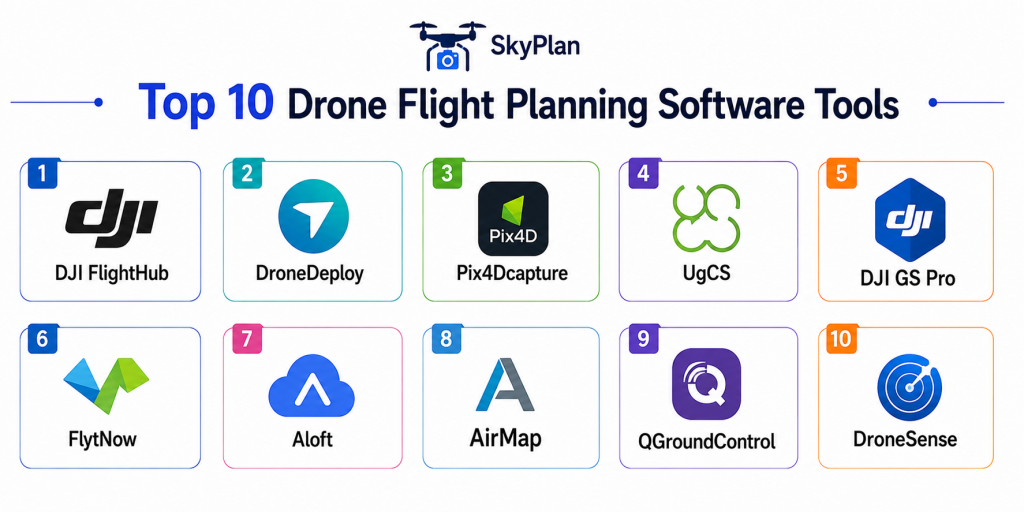
Top 10 Drone Flight Planning Software Tools
1- DJI FlightHub 2
Short description:
DJI FlightHub 2 is a cloud-based drone fleet management and mission planning platform designed for enterprise drone operations, inspections, and emergency response workflows.
Key Features
- Centralized drone fleet management
- Automated flight mission planning
- Real-time telemetry monitoring
- GIS-based mapping support
- Live operational dashboards
- Multi-drone coordination
- Cloud mission synchronization
Pros
- Strong DJI ecosystem integration
- Excellent operational visibility
- Good enterprise scalability
Cons
- Best suited for DJI hardware
- Premium enterprise pricing
- Limited flexibility outside DJI ecosystem
Platforms / Deployment
- Web / Android / iOS
- Cloud
Security & Compliance
Supports encrypted communication, RBAC, MFA, and enterprise authentication controls.
Integrations & Ecosystem
Integrates with DJI drones, GIS systems, cloud storage, and analytics platforms.
- DJI ecosystem
- GIS platforms
- APIs
- Cloud services
- Mapping tools
Support & Community
Large enterprise drone ecosystem with strong global support resources.
2- DroneDeploy
Short description:
DroneDeploy is a leading drone mapping and flight planning platform widely used for construction, agriculture, infrastructure inspections, and surveying operations.
Key Features
- Automated flight planning
- Aerial mapping workflows
- Real-time flight monitoring
- AI-powered image analytics
- 3D modeling support
- Inspection workflows
- Cloud-based collaboration
Pros
- Easy-to-use interface
- Excellent mapping capabilities
- Strong analytics ecosystem
Cons
- Premium subscription costs
- Some advanced features require higher-tier plans
- Cloud dependency for many workflows
Platforms / Deployment
- Web / Android / iOS
- Cloud
Security & Compliance
Supports encryption, secure authentication, and enterprise access management.
Integrations & Ecosystem
- GIS systems
- BIM platforms
- Cloud storage
- APIs
- Construction tools
Support & Community
Strong enterprise drone and construction industry support ecosystem.
3- Pix4Dcapture
Short description:
Pix4Dcapture is a drone flight planning application focused on aerial mapping, photogrammetry, and geospatial data collection.
Key Features
- Automated waypoint missions
- Terrain-aware flight planning
- GIS mapping integration
- Drone photogrammetry workflows
- Offline mission planning
- Image capture optimization
- Multi-drone compatibility
Pros
- Strong mapping workflows
- Good photogrammetry integration
- Flexible drone compatibility
Cons
- Requires Pix4D ecosystem for full workflows
- Some advanced processing features cost extra
- UI can be complex for beginners
Platforms / Deployment
- Android / iOS
- Cloud / Self-hosted
Security & Compliance
Supports secure data transfer and enterprise authentication controls.
Integrations & Ecosystem
- Pix4D ecosystem
- GIS systems
- APIs
- Drone hardware integrations
Support & Community
Strong geospatial and surveying community adoption.
4- UgCS
Short description:
UgCS is an advanced drone mission planning platform designed for industrial inspections, surveying, and complex enterprise drone operations.
Key Features
- Advanced waypoint planning
- Terrain-following flights
- Multi-drone mission support
- GIS integration
- LiDAR mission planning
- Offline operations support
- Automated inspections
Pros
- Excellent advanced mission planning
- Supports multiple drone brands
- Strong industrial inspection workflows
Cons
- Steeper learning curve
- Complex advanced configurations
- Higher enterprise licensing costs
Platforms / Deployment
- Windows / macOS / Linux
- Self-hosted / Hybrid
Security & Compliance
Supports secure authentication and enterprise operational controls.
Integrations & Ecosystem
- GIS systems
- LiDAR tools
- APIs
- Drone hardware ecosystems
Support & Community
Strong enterprise and surveying-focused support ecosystem.
5- DJI Terra
Short description:
DJI Terra combines drone mission planning with aerial mapping and 3D reconstruction capabilities for enterprise drone operations.
Key Features
- Flight planning workflows
- 2D and 3D mapping
- Real-time mission visualization
- LiDAR data processing
- Terrain reconstruction
- GIS export support
- AI-assisted modeling tools
Pros
- Excellent DJI hardware integration
- Strong mapping capabilities
- Good 3D visualization workflows
Cons
- Primarily optimized for DJI drones
- Requires high-performance hardware
- Premium pricing model
Platforms / Deployment
- Windows
- Self-hosted
Security & Compliance
Supports secure authentication and encrypted operational workflows.
Integrations & Ecosystem
- DJI ecosystem
- GIS systems
- Mapping platforms
- APIs
Support & Community
Strong enterprise drone and mapping ecosystem support.
6- Skyward by Verizon
Short description:
Skyward provides enterprise drone operation management with mission planning, airspace intelligence, and compliance workflows.
Key Features
- Airspace intelligence tools
- Fleet management workflows
- Flight logging and compliance
- Mission planning dashboards
- Real-time telemetry
- Pilot management tools
- Regulatory workflow automation
Pros
- Strong compliance capabilities
- Excellent operational governance
- Good enterprise visibility
Cons
- Less advanced mapping workflows
- Enterprise-focused complexity
- Smaller ecosystem than DJI platforms
Platforms / Deployment
- Web / Mobile
- Cloud
Security & Compliance
Supports RBAC, encryption, audit logging, and enterprise governance controls.
Integrations & Ecosystem
- Airspace systems
- APIs
- Drone hardware integrations
- GIS platforms
Support & Community
Strong enterprise operational support and telecom-backed infrastructure.
7- Litchi
Short description:
Litchi is a popular mission planning application focused on waypoint automation and autonomous drone flight control.
Key Features
- Waypoint mission planning
- Autonomous flight support
- Orbit and tracking modes
- VR drone control support
- Cloud mission synchronization
- Mobile mission editing
- Camera control workflows
Pros
- Easy mission planning
- Affordable pricing
- Good autonomous workflows
Cons
- Less enterprise functionality
- Limited advanced analytics
- Primarily DJI-focused
Platforms / Deployment
- Android / iOS / Web
- Cloud
Security & Compliance
Supports secure cloud synchronization and authentication controls.
Integrations & Ecosystem
- DJI drones
- Cloud storage
- APIs
- Mobile tools
Support & Community
Large commercial and enthusiast drone community adoption.
8- Autel Sky
Short description:
Autel Sky provides mission planning and drone fleet management workflows for Autel Robotics enterprise drone operations.
Key Features
- Flight mission planning
- Real-time telemetry
- Fleet coordination
- GIS mapping support
- Airspace awareness
- Mobile flight control
- Data synchronization
Pros
- Strong Autel hardware support
- Good mobile usability
- Competitive enterprise workflows
Cons
- Smaller ecosystem compared to DJI
- Limited third-party integrations
- Less mature analytics ecosystem
Platforms / Deployment
- Android / iOS / Web
- Cloud
Security & Compliance
Supports secure communication and enterprise authentication controls.
Integrations & Ecosystem
- Autel drones
- GIS systems
- APIs
- Cloud services
Support & Community
Growing enterprise drone support ecosystem.
9- PrecisionHawk Flight
Short description:
PrecisionHawk Flight focuses on industrial drone mission planning, aerial analytics, and enterprise inspection operations.
Key Features
- Automated mission planning
- Industrial inspection workflows
- Geospatial analytics support
- Flight telemetry monitoring
- AI-assisted analytics
- Asset monitoring tools
- Cloud reporting dashboards
Pros
- Strong industrial inspection focus
- Good analytics workflows
- Enterprise operational visibility
Cons
- Enterprise-focused pricing
- Complex advanced workflows
- Smaller global ecosystem
Platforms / Deployment
- Web / Mobile
- Cloud
Security & Compliance
Supports secure authentication, encryption, and enterprise operational controls.
Integrations & Ecosystem
- GIS systems
- APIs
- Asset management tools
- Analytics platforms
Support & Community
Strong industrial drone operations support ecosystem.
10- FlytNow
Short description:
FlytNow is a cloud-based autonomous drone operation platform focused on fleet automation and remote mission management.
Key Features
- Autonomous drone mission planning
- Fleet management dashboards
- Cloud-based mission control
- Real-time telemetry monitoring
- BVLOS operational support
- AI-assisted automation
- Remote operations management
Pros
- Strong autonomous operation focus
- Cloud-native architecture
- Good scalability for fleets
Cons
- Requires compatible hardware ecosystems
- Advanced workflows need configuration
- Smaller ecosystem compared to larger vendors
Platforms / Deployment
- Web
- Cloud
Security & Compliance
Supports encrypted communication, RBAC, and secure API management.
Integrations & Ecosystem
- APIs
- GIS systems
- Cloud platforms
- Drone hardware integrations
Support & Community
Growing enterprise drone automation ecosystem.
Comparison Table
| Tool Name | Best For | Platforms Supported | Deployment | Standout Feature | Public Rating |
|---|---|---|---|---|---|
| DJI FlightHub 2 | Enterprise fleet operations | Web, Mobile | Cloud | Centralized drone management | N/A |
| DroneDeploy | Drone mapping | Web, Mobile | Cloud | AI aerial analytics | N/A |
| Pix4Dcapture | Photogrammetry missions | Android, iOS | Hybrid | Terrain-aware mapping | N/A |
| UgCS | Advanced industrial planning | Windows, macOS | Self-hosted | Multi-drone operations | N/A |
| DJI Terra | 3D mapping workflows | Windows | Self-hosted | 3D reconstruction | N/A |
| Skyward | Compliance management | Web, Mobile | Cloud | Airspace intelligence | N/A |
| Litchi | Autonomous waypoint missions | Android, iOS | Cloud | Easy automation | N/A |
| Autel Sky | Autel fleet planning | Mobile, Web | Cloud | Enterprise Autel workflows | N/A |
| PrecisionHawk Flight | Industrial inspections | Web, Mobile | Cloud | Asset monitoring | N/A |
| FlytNow | Autonomous fleet operations | Web | Cloud | Remote fleet automation | N/A |
Evaluation & Scoring of Drone Flight Planning Software
| Tool Name | Core 25% | Ease 15% | Integrations 15% | Security 10% | Performance 10% | Support 10% | Value 15% | Weighted Total |
|---|---|---|---|---|---|---|---|---|
| DJI FlightHub 2 | 9.5 | 8.7 | 9.0 | 9.0 | 9.4 | 9.3 | 8.0 | 9.0 |
| DroneDeploy | 9.2 | 9.0 | 8.8 | 8.8 | 9.2 | 9.1 | 8.3 | 8.9 |
| Pix4Dcapture | 8.9 | 8.3 | 8.7 | 8.5 | 8.8 | 8.7 | 8.6 | 8.7 |
| UgCS | 9.3 | 7.6 | 8.9 | 8.8 | 9.2 | 8.9 | 8.1 | 8.7 |
| DJI Terra | 9.1 | 8.2 | 8.8 | 8.7 | 9.0 | 8.9 | 8.0 | 8.6 |
| Skyward | 8.8 | 8.1 | 8.7 | 9.1 | 8.8 | 8.8 | 8.2 | 8.6 |
| Litchi | 8.0 | 9.1 | 7.8 | 8.0 | 8.4 | 8.3 | 9.2 | 8.4 |
| Autel Sky | 8.5 | 8.4 | 8.1 | 8.5 | 8.5 | 8.3 | 8.6 | 8.4 |
| PrecisionHawk Flight | 8.9 | 7.9 | 8.5 | 8.8 | 8.9 | 8.6 | 8.0 | 8.5 |
| FlytNow | 8.8 | 8.0 | 8.4 | 8.7 | 8.8 | 8.5 | 8.4 | 8.5 |
These scores are comparative and designed to help organizations evaluate drone flight planning platforms based on automation, scalability, GIS integration, usability, analytics, operational governance, and long-term fleet management value.
Which Drone Flight Planning Software Is Right for You?
Solo / Small Drone Operators
Best suited: Litchi, Pix4Dcapture
These provide affordable and accessible mission planning capabilities for smaller operations.
SMB / Surveying Teams
Best suited: DroneDeploy, Pix4Dcapture, Autel Sky
These balance usability, mapping workflows, and operational efficiency.
Mid-Market Enterprises
Best suited: UgCS, DJI Terra, PrecisionHawk Flight
These provide stronger industrial workflows and advanced operational capabilities.
Enterprise / Government Programs
Best suited: DJI FlightHub 2, Skyward, FlytNow
These offer advanced fleet management, compliance, scalability, and operational governance.
Budget vs Premium
Budget-friendly: Litchi, Pix4Dcapture
Premium enterprise: DJI FlightHub 2, UgCS, Skyward
Feature Depth vs Ease of Use
Deep operational capability: UgCS, FlightHub 2
Ease of use: DroneDeploy, Litchi
Integrations & Scalability
Best integrations: DJI FlightHub 2, DroneDeploy, UgCS
Best scalability: FlightHub 2, FlytNow
Security & Compliance Needs
Organizations operating commercial or government drone fleets should prioritize platforms supporting RBAC, MFA, encrypted telemetry, secure APIs, and operational audit logging.
Frequently Asked Questions
1. What is Drone Flight Planning Software?
It is software used to automate drone missions, create flight paths, monitor operations, and manage aerial data collection workflows.
2. Why is drone flight planning important?
It improves operational safety, efficiency, compliance, and mission accuracy while reducing manual pilot workload.
3. Can these platforms integrate with GIS systems?
Yes, most enterprise drone platforms integrate with GIS and mapping systems for spatial analysis and visualization.
4. Are cloud-based drone platforms common?
Yes, cloud-native drone management platforms are increasingly common because they improve collaboration and fleet scalability.
5. What security features are essential?
Encryption, RBAC, secure APIs, MFA, and operational audit logging are important for enterprise drone operations.
6. Do these platforms support autonomous flights?
Many modern platforms support autonomous waypoint missions and AI-assisted flight automation.
7. What industries use drone planning software most?
Construction, agriculture, utilities, defense, logistics, infrastructure inspections, public safety, and environmental monitoring heavily rely on these platforms.
8. What are common implementation challenges?
Regulatory compliance, pilot training, integration complexity, and managing large drone fleets are common challenges.
9. Can these tools support real-time telemetry?
Yes, many platforms provide real-time telemetry, flight monitoring, and operational dashboards.
10. How should organizations choose a platform?
Organizations should evaluate automation capabilities, scalability, integrations, compliance workflows, usability, and operational requirements.
Conclusion
Drone Flight Planning Software has become essential operational infrastructure for enterprises, governments, and industrial organizations managing modern drone operations at scale. Today’s platforms combine autonomous mission planning, AI-assisted analytics, GIS integration, fleet management, real-time telemetry, and cloud collaboration to support increasingly advanced aerial workflows. Enterprise solutions such as DJI FlightHub 2, DroneDeploy, and UgCS provide strong scalability and operational governance capabilities, while platforms like Litchi and Pix4Dcapture offer accessible workflows for smaller teams and specialized mapping operations. The best platform ultimately depends on operational scale, hardware ecosystem compatibility, integration requirements, compliance needs, and long-term automation goals. A structured evaluation process combined with pilot testing and operational workflow validation can significantly improve deployment success and long-term operational efficiency.