Introduction
Court e-Filing Systems help courts, legal professionals, government agencies, law firms, and judicial organizations electronically submit, manage, review, track, and process legal filings and court documents through secure digital workflows. These systems reduce manual paperwork, improve case processing efficiency, support remote legal operations, and streamline judicial administration across modern court environments.
Modern court e-Filing platforms now include cloud-native document management, AI-assisted document review, workflow automation, digital signatures, online payment processing, secure attorney portals, case tracking, and interoperability with court management systems. As judicial systems continue modernizing operations, scalable and secure e-Filing systems have become essential for improving transparency, accessibility, compliance, and operational efficiency.
Real-world use cases include:
- Electronic court document submission
- Case filing and tracking workflows
- Online attorney and litigant portals
- Judicial document review and approvals
- Court fee payment processing
Evaluation criteria for buyers include:
- Filing workflow efficiency
- Case tracking and document management
- Security and compliance controls
- Integration ecosystem
- Digital signature support
- Online payment functionality
- Scalability and reliability
- User experience and accessibility
- Mobile and remote access
- Workflow automation capabilities
Best for: Courts, judicial systems, law firms, attorneys, public sector agencies, legal service providers, and government legal departments.
Not ideal for: Small organizations with limited filing requirements where basic document-sharing systems may be sufficient.
Key Trends in Court e-Filing Systems
- Cloud-native e-Filing deployments are improving accessibility and scalability.
- AI-assisted document validation is reducing filing errors and administrative workload.
- Mobile-friendly filing portals are improving remote legal operations.
- Integrated payment gateways are streamlining court fee collection workflows.
- Automated workflow routing is improving judicial processing efficiency.
- Digital signatures and secure authentication are becoming operational standards.
- Interoperability with case management systems is expanding rapidly.
- Self-service litigant portals are improving citizen accessibility.
- Cybersecurity and legal compliance protections are becoming procurement priorities.
- Analytics dashboards are improving operational visibility for court administrators.
How We Selected These Tools
The tools in this list were selected using judicial and operational evaluation criteria:
- Market adoption and judicial visibility
- Filing and document management functionality
- Workflow automation capabilities
- Security posture indicators
- User accessibility and usability
- Integration ecosystem maturity
- Scalability and operational reliability
- Payment processing support
- Case tracking functionality
- Overall value across judicial operations
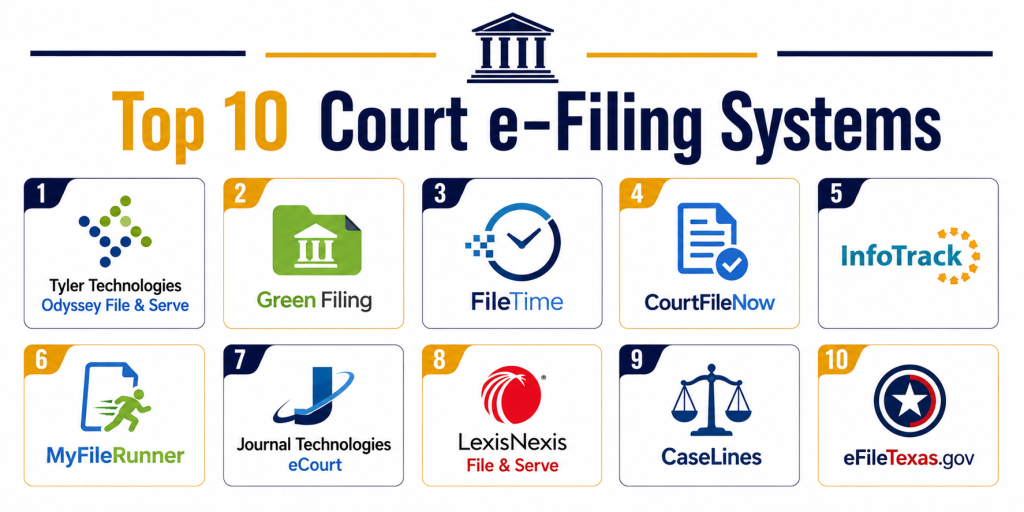
Top 10 Court e-Filing Systems
1- Tyler Technologies Odyssey File & Serve
Short Description:
Odyssey File & Serve is one of the most widely used court e-Filing systems for state courts, judicial systems, and legal organizations requiring scalable filing and case management workflows.
Key Features
- Electronic document filing
- Case tracking workflows
- Attorney portals
- Digital signature support
- Payment processing
- Workflow automation
- Court management integrations
Pros
- Strong judicial ecosystem support
- Reliable enterprise scalability
- Good operational visibility
Cons
- Enterprise deployment complexity
- Premium implementation costs
- Requires onboarding and training
Platforms / Deployment
- Web / Mobile
- Cloud / Hybrid
Security & Compliance
- Secure authentication workflows
- Audit logging
- Role-based permissions
- Legal workflow security protections
Integrations & Ecosystem
Tyler Technologies integrates with judicial and legal ecosystems.
- Court management systems
- Payment gateways
- Attorney portals
- Document management systems
- API support
Support & Community
The vendor provides onboarding assistance, implementation consulting, and enterprise support services.
2- Green Filing
Short Description:
Green Filing provides cloud-based e-Filing services for attorneys, legal professionals, and courts requiring streamlined filing workflows and operational accessibility.
Key Features
- Electronic court filing
- Case tracking
- Attorney dashboard
- Payment workflows
- Filing notifications
- Document uploads
- Workflow automation
Pros
- Good usability for attorneys
- Simple filing workflows
- Strong accessibility
Cons
- Enterprise-scale customization is limited
- Advanced analytics are moderate
- Broader judicial integrations may require support
Platforms / Deployment
- Web
- Cloud
Security & Compliance
- Secure authentication support
- Access management controls
- Audit tracking
- Not publicly stated for broader certifications
Integrations & Ecosystem
Green Filing integrates with court filing ecosystems.
- Payment systems
- Court filing networks
- Legal workflow tools
- Document platforms
- API support
Support & Community
Green Filing offers onboarding resources, filing support, and customer assistance.
3- FileTime
Short Description:
FileTime provides electronic filing and court workflow management capabilities for attorneys, law firms, and judicial organizations.
Key Features
- Electronic filing
- Case management support
- Filing notifications
- Online payments
- Secure document uploads
- Workflow automation
- Attorney portals
Pros
- Good operational simplicity
- Flexible filing workflows
- Reliable document submission capabilities
Cons
- Enterprise analytics are limited
- Advanced integrations may require support
- Broader scalability depends on deployment scope
Platforms / Deployment
- Web
- Cloud
Security & Compliance
- Secure authentication workflows
- Audit capabilities
- Access controls
- Legal operational protections
Integrations & Ecosystem
FileTime integrates with legal workflow systems.
- Payment gateways
- Court systems
- Legal software platforms
- Document management tools
- API support
Support & Community
The vendor provides onboarding assistance, implementation guidance, and customer support services.
4- CourtFileNow
Short Description:
CourtFileNow provides online filing workflows for attorneys and legal organizations seeking simplified court submission and case tracking capabilities.
Key Features
- Electronic filing workflows
- Filing notifications
- Case tracking
- Online payment support
- Attorney dashboards
- Secure uploads
- Operational reporting
Pros
- Easy operational usability
- Good accessibility for smaller firms
- Simple filing experience
Cons
- Enterprise-scale functionality is moderate
- Advanced analytics capabilities are limited
- Larger integrations may require support
Platforms / Deployment
- Web
- Cloud
Security & Compliance
- Secure authentication support
- Access management controls
- Audit tracking
- Not publicly stated for broader certifications
Integrations & Ecosystem
CourtFileNow integrates with court and legal ecosystems.
- Court filing systems
- Payment platforms
- Legal workflows
- Document systems
- API support
Support & Community
CourtFileNow offers onboarding support, filing assistance, and customer services.
5- InfoTrack
Short Description:
InfoTrack provides legal workflow automation and e-Filing services for law firms, courts, and legal service providers.
Key Features
- Electronic filing
- Workflow automation
- Document management
- Court search tools
- Payment integrations
- Attorney collaboration
- Filing notifications
Pros
- Strong legal workflow automation
- Good integration ecosystem
- Reliable filing workflows
Cons
- Premium advanced features
- Enterprise customization complexity
- Some integrations require setup support
Platforms / Deployment
- Web
- Cloud
Security & Compliance
- Secure authentication workflows
- Audit logging
- Role-based permissions
- Legal workflow security protections
Integrations & Ecosystem
InfoTrack integrates with legal practice management ecosystems.
- Practice management systems
- Court filing systems
- Payment gateways
- Document automation platforms
- API support
Support & Community
InfoTrack provides onboarding assistance, implementation support, and operational customer services.
6- MyFileRunner
Short Description:
MyFileRunner provides attorney-focused e-Filing services and legal workflow support for courts and legal professionals.
Key Features
- Court filing workflows
- Attorney portals
- Filing notifications
- Secure document submission
- Workflow management
- Payment processing
- Case tracking
Pros
- Good filing accessibility
- Reliable attorney workflows
- Simple operational setup
Cons
- Enterprise scalability is moderate
- Advanced analytics are limited
- Broader integrations may require support
Platforms / Deployment
- Web
- Cloud
Security & Compliance
- Secure authentication workflows
- Access management controls
- Audit capabilities
- Not publicly stated for broader certifications
Integrations & Ecosystem
MyFileRunner integrates with legal filing workflows.
- Court systems
- Payment platforms
- Legal management systems
- Document workflows
- API support
Support & Community
The vendor offers onboarding assistance, implementation guidance, and filing support services.
7- Journal Technologies eCourt
Short Description:
eCourt provides enterprise judicial workflow automation and electronic filing capabilities for courts and government legal organizations.
Key Features
- Electronic filing
- Case management integration
- Judicial workflow automation
- Attorney portals
- Payment processing
- Operational reporting
- Document management
Pros
- Strong enterprise judicial functionality
- Good operational automation
- Reliable scalability
Cons
- Enterprise deployment complexity
- Premium implementation costs
- Requires operational onboarding
Platforms / Deployment
- Web
- Cloud / Hybrid
Security & Compliance
- Secure authentication workflows
- Audit tracking
- Role-based permissions
- Judicial workflow protections
Integrations & Ecosystem
Journal Technologies integrates with judicial ecosystems.
- Court management systems
- Payment gateways
- Attorney portals
- Document management tools
- API support
Support & Community
The vendor provides onboarding support, implementation consulting, and enterprise customer services.
8- LexisNexis File & Serve
Short Description:
LexisNexis File & Serve provides electronic filing and legal workflow management for courts, attorneys, and legal service providers.
Key Features
- Electronic filing
- Attorney collaboration
- Workflow automation
- Case tracking
- Payment workflows
- Filing notifications
- Document management
Pros
- Strong legal ecosystem presence
- Reliable operational workflows
- Good attorney accessibility
Cons
- Enterprise pricing may increase costs
- Some advanced workflows require training
- Integrations may vary by jurisdiction
Platforms / Deployment
- Web
- Cloud
Security & Compliance
- Secure authentication support
- Audit logging
- Access management controls
- Legal operational protections
Integrations & Ecosystem
LexisNexis integrates with legal and judicial systems.
- Legal research platforms
- Court systems
- Payment gateways
- Document workflows
- API support
Support & Community
LexisNexis offers onboarding services, implementation assistance, and customer support programs.
9- CaseLines
Short Description:
CaseLines provides cloud-based evidence and document management workflows for courts and legal organizations managing digital hearings and electronic filings.
Key Features
- Digital evidence management
- Electronic document workflows
- Case collaboration
- Secure uploads
- Courtroom presentation tools
- Workflow automation
- Online access portals
Pros
- Strong digital hearing workflows
- Good evidence organization
- Reliable cloud accessibility
Cons
- Broader filing capabilities may vary
- Enterprise integrations may require support
- Advanced analytics are moderate
Platforms / Deployment
- Web
- Cloud
Security & Compliance
- Secure authentication workflows
- Audit capabilities
- Access controls
- Legal workflow protections
Integrations & Ecosystem
CaseLines integrates with judicial document workflows.
- Court management systems
- Legal collaboration tools
- Document management platforms
- Video hearing systems
- API support
Support & Community
CaseLines provides onboarding assistance, implementation support, and operational customer services.
10- eFileTexas.gov
Short Description:
eFileTexas.gov provides statewide electronic filing capabilities for attorneys, courts, and legal organizations operating across Texas judicial systems.
Key Features
- Statewide electronic filing
- Court submission workflows
- Online payment support
- Filing notifications
- Attorney portals
- Case tracking
- Operational reporting
Pros
- Strong statewide accessibility
- Reliable filing workflows
- Good operational standardization
Cons
- Jurisdiction-specific workflows
- Advanced analytics capabilities are limited
- Broader integrations vary by court
Platforms / Deployment
- Web
- Cloud
Security & Compliance
- Secure authentication support
- Access management controls
- Audit tracking
- Judicial workflow protections
Integrations & Ecosystem
eFileTexas.gov integrates with Texas judicial filing ecosystems.
- Court systems
- Payment gateways
- Legal workflow tools
- Attorney platforms
- API support
Support & Community
The platform provides onboarding assistance, filing guidance, and customer support resources.
Comparison Table
| Tool Name | Best For | Platforms Supported | Deployment | Standout Feature | Public Rating |
|---|---|---|---|---|---|
| Tyler Technologies Odyssey File & Serve | Enterprise courts | Web, Mobile | Cloud / Hybrid | Judicial ecosystem integrations | N/A |
| Green Filing | Attorney-focused filing | Web | Cloud | Filing accessibility | N/A |
| FileTime | Legal workflow simplicity | Web | Cloud | Reliable filing workflows | N/A |
| CourtFileNow | Small and mid-sized legal teams | Web | Cloud | Easy operational usability | N/A |
| InfoTrack | Legal workflow automation | Web | Cloud | Practice management integrations | N/A |
| MyFileRunner | Attorney filing services | Web | Cloud | Filing workflow simplicity | N/A |
| Journal Technologies eCourt | Enterprise judicial operations | Web | Cloud / Hybrid | Workflow automation | N/A |
| LexisNexis File & Serve | Legal ecosystem integration | Web | Cloud | Attorney collaboration | N/A |
| CaseLines | Digital hearings and evidence | Web | Cloud | Digital courtroom workflows | N/A |
| eFileTexas.gov | Statewide court filing | Web | Cloud | Standardized statewide access | N/A |
Evaluation & Scoring of Court e-Filing Systems
| Tool Name | Core 25% | Ease 15% | Integrations 15% | Security 10% | Performance 10% | Support 10% | Value 15% | Weighted Total |
|---|---|---|---|---|---|---|---|---|
| Tyler Technologies Odyssey File & Serve | 9 | 7 | 9 | 9 | 9 | 8 | 7 | 8.4 |
| Green Filing | 7 | 8 | 7 | 7 | 8 | 7 | 8 | 7.5 |
| FileTime | 7 | 8 | 7 | 7 | 7 | 7 | 8 | 7.3 |
| CourtFileNow | 7 | 8 | 6 | 7 | 7 | 7 | 8 | 7.2 |
| InfoTrack | 8 | 8 | 8 | 8 | 8 | 8 | 7 | 7.9 |
| MyFileRunner | 7 | 8 | 7 | 7 | 7 | 7 | 8 | 7.3 |
| Journal Technologies eCourt | 9 | 7 | 8 | 9 | 9 | 8 | 7 | 8.2 |
| LexisNexis File & Serve | 8 | 8 | 8 | 8 | 8 | 8 | 7 | 7.9 |
| CaseLines | 8 | 8 | 7 | 8 | 8 | 7 | 7 | 7.7 |
| eFileTexas.gov | 7 | 8 | 7 | 7 | 8 | 7 | 8 | 7.5 |
These scores are comparative and intended to help judicial organizations evaluate systems based on operational priorities. Enterprise-focused platforms generally score higher for scalability and interoperability, while lightweight systems may provide easier deployment and operational accessibility.
Which Court e-Filing System Is Right for You?
Solo / Freelancer
Small law firms and independent attorneys may benefit from Green Filing, FileTime, or MyFileRunner because of operational simplicity and accessibility.
SMB
Mid-sized legal practices often benefit from InfoTrack or LexisNexis File & Serve because of workflow automation and broader legal ecosystem integrations.
Mid-Market
Regional courts and larger legal organizations may prefer Journal Technologies eCourt or CaseLines for stronger workflow coordination and operational visibility.
Enterprise
Large judicial systems and statewide court operations typically require Tyler Technologies Odyssey File & Serve because of enterprise scalability and interoperability.
Budget vs Premium
Budget-focused organizations often prioritize filing simplicity and accessibility, while enterprise judicial systems focus on interoperability, automation, and operational scalability.
Feature Depth vs Ease of Use
Some platforms emphasize enterprise judicial automation and integrations, while others focus on streamlined filing workflows and attorney usability.
Integrations & Scalability
Organizations expecting operational growth should prioritize court management integrations, payment systems, document workflows, and API ecosystems.
Security & Compliance Needs
Judicial organizations should prioritize secure authentication, audit logging, access management controls, operational transparency, and legal workflow protections.
Frequently Asked Questions
1. What is a Court e-Filing System?
A Court e-Filing System allows attorneys, courts, and legal organizations to electronically submit, manage, review, and track court documents and filings.
2. Which organizations commonly use these systems?
Courts, law firms, government agencies, legal departments, attorneys, and judicial organizations commonly use e-Filing platforms.
3. Why are digital filing systems important?
Digital filing systems improve operational efficiency, reduce paperwork, streamline judicial workflows, and support remote legal operations.
4. What integrations are important for e-Filing systems?
Important integrations include court management systems, payment gateways, legal workflow platforms, document management tools, and attorney portals.
5. What security features should buyers prioritize?
Organizations should evaluate secure authentication, audit logging, access controls, digital signatures, and legal workflow security protections.
6. Are cloud-native court filing systems becoming common?
Yes. Cloud-native deployments are increasingly adopted because they improve accessibility, scalability, operational flexibility, and disaster recovery.
7. Can e-Filing systems support online payment processing?
Yes. Many modern e-Filing systems integrate payment gateways for court fees and legal filing transactions.
8. What are common mistakes when selecting e-Filing systems?
Common mistakes include overlooking integration requirements, underestimating scalability needs, and selecting systems without strong workflow automation.
9. Can these systems support remote legal operations?
Yes. Most modern platforms support remote filing, digital collaboration, secure document access, and online case tracking.
10. How long does implementation usually take?
Implementation timelines depend on court size, integration requirements, operational workflows, and training needs.
Conclusion
Court e-Filing Systems have become essential digital infrastructure for modern judicial operations, legal organizations, and government agencies seeking operational efficiency, accessibility, and scalable legal workflow management. Today’s platforms combine cloud-native accessibility, workflow automation, secure document management, digital signatures, online payments, and interoperability into centralized judicial ecosystems. The right platform depends heavily on court size, filing complexity, operational workflows, and long-term modernization goals. Smaller legal organizations may prioritize ease of use and filing accessibility, while enterprise judicial systems often require advanced automation, interoperability, and large-scale operational coordination capabilities. Buyers should carefully evaluate integration ecosystems, operational scalability, workflow automation, user accessibility, and security protections before selecting a platform. Rather than focusing only on filing submission capabilities, organizations should shortlist systems that align with long-term judicial modernization strategies, legal workflow requirements, and operational transparency goals.
Streaming interrupted. Waiting for the complete message…
Court e-Filing Systems