Introduction
Event Venue Management Tools help organizations manage venue bookings, event scheduling, customer coordination, resource allocation, billing, and operational workflows from a centralized platform. These tools are widely used by conference centers, hotels, banquet halls, stadiums, convention centers, coworking spaces, wedding venues, and entertainment facilities to streamline event operations and improve customer experiences.
Modern venue management platforms now include online booking systems, interactive floor planning, CRM integrations, automated invoicing, resource scheduling, mobile event coordination, and analytics dashboards. As hybrid and large-scale events continue to evolve, venues increasingly require centralized systems that improve operational efficiency, reduce scheduling conflicts, and support real-time collaboration between sales, operations, and event management teams.
Real-world use cases include:
- Venue booking and scheduling
- Event planning and coordination
- Resource and staff allocation
- Client communication and CRM workflows
- Billing, invoicing, and contract management
Evaluation criteria for buyers include:
- Booking and scheduling functionality
- Floor planning and space management
- CRM and communication capabilities
- Billing and invoicing support
- Integration ecosystem
- Scalability across multiple venues
- Mobile accessibility
- Reporting and analytics
- Workflow automation
- Security and access controls
Best for: Conference centers, hotels, event venues, convention halls, banquet facilities, entertainment venues, universities, and organizations managing frequent events or reservations.
Not ideal for: Small venues with minimal event operations where spreadsheets or basic calendar tools may be sufficient.
Key Trends in Event Venue Management Tools
- AI-assisted scheduling is helping reduce booking conflicts and operational inefficiencies.
- Cloud-native venue management platforms are improving remote coordination and scalability.
- Interactive floor planning and 3D venue visualization tools are becoming more common.
- Hybrid event support is expanding across venue management ecosystems.
- CRM and marketing automation integrations are improving client engagement workflows.
- Mobile-first event coordination tools are supporting on-site operational teams.
- Real-time analytics dashboards are improving venue utilization visibility.
- Workflow automation is reducing manual administrative tasks.
- API-driven integrations are expanding interoperability with ticketing and hospitality systems.
- Self-service booking portals are improving customer convenience and reducing operational overhead.
How We Selected These Tools
The tools in this list were selected using practical operational and buyer-focused evaluation criteria:
- Market adoption and industry visibility
- Venue booking and scheduling depth
- Resource allocation and operational management capabilities
- CRM and billing functionality
- Integration ecosystem maturity
- Mobile accessibility and usability
- Scalability across venues and events
- Workflow automation features
- Security posture indicators
- Overall value for SMB and enterprise deployments
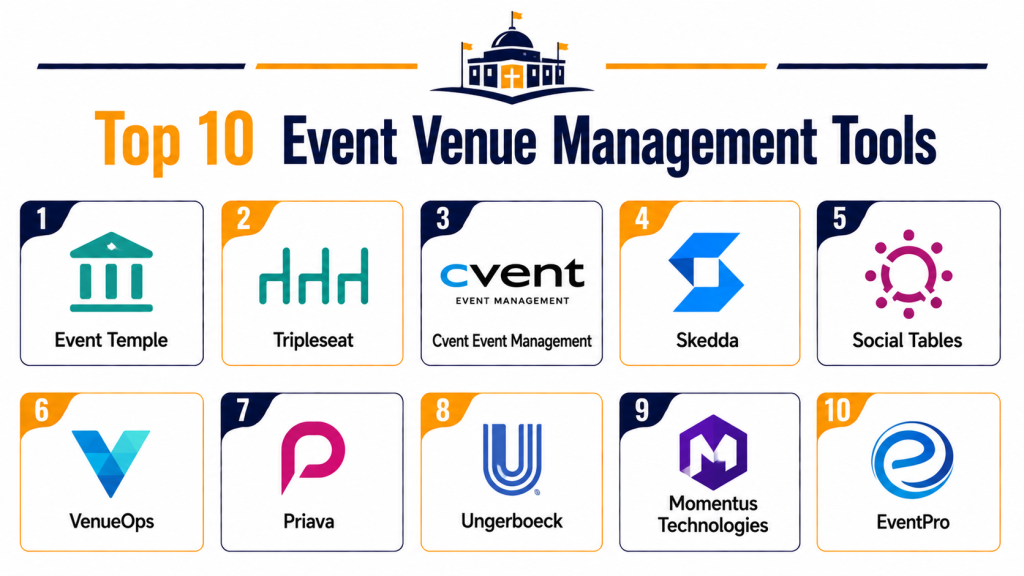
Top 10 Event Venue Management Tools
1- Cvent Event Diagramming
Short Description:
Cvent Event Diagramming is a venue planning and event management platform designed for conferences, hotels, convention centers, and large event spaces. It focuses heavily on event visualization, scheduling, and operational coordination.
Key Features
- Interactive floor planning
- Venue diagramming tools
- Event scheduling
- Resource management
- CRM integrations
- Real-time collaboration
- Reporting dashboards
Pros
- Excellent floor planning capabilities
- Strong enterprise scalability
- Good collaboration workflows
Cons
- Premium pricing structure
- Requires onboarding for advanced workflows
- Smaller venues may find it feature-heavy
Platforms / Deployment
- Web
- Cloud
Security & Compliance
- Role-based permissions
- Secure authentication workflows
- Enterprise access controls
- Not publicly stated for broader certifications
Integrations & Ecosystem
Cvent integrates with hospitality, CRM, and event technology platforms.
- CRM systems
- Hospitality platforms
- Registration systems
- Ticketing integrations
- API support
Support & Community
Cvent provides onboarding assistance, enterprise implementation services, technical documentation, and customer support programs.
2- Event Temple
Short Description:
Event Temple is a cloud-based venue management platform designed for hotels, wedding venues, conference centers, and hospitality businesses. It combines booking management, CRM, and operational coordination tools.
Key Features
- Venue booking management
- CRM workflows
- Proposal and contract management
- Billing and invoicing
- Calendar scheduling
- Reporting dashboards
- Team collaboration tools
Pros
- User-friendly interface
- Strong hospitality workflows
- Good CRM functionality
Cons
- Advanced customizations may require support
- Some integrations require configuration
- Enterprise analytics are limited
Platforms / Deployment
- Web / Mobile
- Cloud
Security & Compliance
- Secure authentication
- Access controls
- Role-based permissions
- Not publicly stated for broader certifications
Integrations & Ecosystem
Event Temple integrates with hospitality and event management ecosystems.
- Hotel PMS integrations
- CRM systems
- Payment gateways
- Calendar tools
- API connectivity
Support & Community
The platform offers onboarding, training resources, implementation support, and customer assistance.
3- Tripleseat
Short Description:
Tripleseat is a popular sales and event management platform for restaurants, hotels, banquet halls, and event venues. It focuses on simplifying bookings, communication, and operational coordination.
Key Features
- Event booking workflows
- Lead and inquiry management
- Proposal generation
- Event scheduling
- Billing support
- CRM functionality
- Reporting tools
Pros
- Strong hospitality focus
- Good sales management workflows
- Easy-to-use interface
Cons
- Advanced analytics are limited
- Larger enterprise workflows may require customization
- Some integrations require additional setup
Platforms / Deployment
- Web / Mobile
- Cloud
Security & Compliance
- Role-based access controls
- Secure authentication workflows
- Access management
- Not publicly stated for broader certifications
Integrations & Ecosystem
Tripleseat integrates with hospitality and payment systems.
- Restaurant systems
- CRM integrations
- Payment platforms
- Calendar integrations
- Marketing tools
Support & Community
Tripleseat provides onboarding services, implementation guidance, and customer support resources.
4- Ungerboeck
Short Description:
Ungerboeck is an enterprise venue and event management platform widely used by convention centers, stadiums, arenas, and performing arts venues.
Key Features
- Enterprise venue scheduling
- Resource management
- Financial management
- Event planning workflows
- CRM functionality
- Contract management
- Reporting and analytics
Pros
- Strong enterprise capabilities
- Excellent resource management
- Scalable for large venues
Cons
- Complex implementation process
- Requires dedicated training
- Higher cost for smaller venues
Platforms / Deployment
- Web
- Cloud / Hybrid
Security & Compliance
- Enterprise authentication support
- Role-based permissions
- Audit controls
- Not publicly stated for broader certifications
Integrations & Ecosystem
Ungerboeck supports integrations across enterprise event operations.
- ERP systems
- CRM platforms
- Ticketing systems
- Financial tools
- API support
Support & Community
The vendor provides enterprise onboarding, implementation consulting, and technical customer support.
5- Skedda
Short Description:
Skedda is a booking and scheduling platform designed for coworking spaces, meeting rooms, studios, and event facilities requiring flexible reservation management.
Key Features
- Online booking system
- Space scheduling
- Self-service reservations
- Access control integrations
- Mobile booking
- Payment support
- Usage analytics
Pros
- Easy setup and deployment
- Good self-service booking experience
- Affordable for SMB environments
Cons
- Limited enterprise event management features
- Advanced venue workflows are minimal
- Complex event operations may require additional tools
Platforms / Deployment
- Web / iOS / Android
- Cloud
Security & Compliance
- MFA support
- Secure authentication
- Access controls
- Not publicly stated for broader certifications
Integrations & Ecosystem
Skedda integrates with workplace and scheduling systems.
- Calendar integrations
- Payment gateways
- Access control systems
- API connectivity
- Workplace tools
Support & Community
Skedda provides onboarding assistance, documentation, and customer support services.
6- Priava
Short Description:
Priava is a cloud-based venue and event management platform designed for conference centers, universities, and hospitality venues managing complex bookings.
Key Features
- Venue scheduling
- Event planning workflows
- CRM functionality
- Contract management
- Resource allocation
- Reporting dashboards
- Multi-venue management
Pros
- Good multi-venue coordination
- Strong operational visibility
- Cloud-native deployment
Cons
- Smaller ecosystem than larger vendors
- Enterprise customizations may require consulting
- Learning curve for administrators
Platforms / Deployment
- Web
- Cloud
Security & Compliance
- Secure authentication workflows
- Access management controls
- Role-based permissions
- Not publicly stated for broader certifications
Integrations & Ecosystem
Priava integrates with hospitality and operational systems.
- CRM integrations
- Payment systems
- Calendar platforms
- Financial tools
- API support
Support & Community
Priava offers onboarding services, implementation support, and technical customer assistance.
7- VenueOps
Short Description:
VenueOps is an event venue management platform focused on stadiums, arenas, conference centers, and entertainment venues requiring operational coordination and booking management.
Key Features
- Event scheduling
- Resource management
- CRM workflows
- Financial tracking
- Operational coordination
- Reporting analytics
- Multi-event management
Pros
- Strong large venue workflows
- Good operational coordination
- Enterprise scalability
Cons
- Complex setup for smaller organizations
- Requires onboarding and training
- Premium enterprise pricing
Platforms / Deployment
- Web
- Cloud
Security & Compliance
- Enterprise authentication support
- Access controls
- Secure administration workflows
- Not publicly stated for broader certifications
Integrations & Ecosystem
VenueOps integrates with enterprise event and venue systems.
- Ticketing systems
- CRM platforms
- Financial systems
- Calendar integrations
- API support
Support & Community
VenueOps provides onboarding assistance, implementation consulting, and enterprise customer support.
8- Social Tables
Short Description:
Social Tables focuses on event diagramming, seating layouts, and collaborative venue planning for hotels, conference centers, and event planners.
Key Features
- Event diagramming
- Seating arrangements
- Collaborative planning
- Interactive floor plans
- Guest management
- Venue visualization
- Event workflows
Pros
- Excellent visual planning tools
- Strong collaboration capabilities
- Easy-to-use floor planning interface
Cons
- Limited full-suite venue management capabilities
- Advanced financial workflows are minimal
- Often used alongside broader event systems
Platforms / Deployment
- Web
- Cloud
Security & Compliance
- Secure authentication support
- Access management
- Data protection controls
- Not publicly stated for broader certifications
Integrations & Ecosystem
Social Tables integrates with event and hospitality management systems.
- Hospitality platforms
- CRM systems
- Event planning tools
- Collaboration systems
- API support
Support & Community
The platform provides onboarding support, documentation resources, and customer assistance.
9- EventPro
Short Description:
EventPro is a venue and event management solution designed for conferences, universities, and corporate event operations requiring scheduling and operational coordination.
Key Features
- Venue scheduling
- Registration workflows
- Resource management
- Billing and invoicing
- Reporting dashboards
- CRM workflows
- Multi-event coordination
Pros
- Good event coordination functionality
- Flexible operational workflows
- Suitable for educational environments
Cons
- Interface may feel traditional
- Enterprise analytics are limited
- Advanced integrations may require support
Platforms / Deployment
- Web / Windows
- Cloud / Hybrid
Security & Compliance
- Role-based permissions
- Secure authentication
- Access management
- Not publicly stated for broader certifications
Integrations & Ecosystem
EventPro integrates with event operations and scheduling systems.
- Financial systems
- Registration platforms
- Calendar integrations
- CRM systems
- API connectivity
Support & Community
EventPro provides onboarding assistance, implementation services, and technical support resources.
10- ivvy Venue Management
Short Description:
ivvy Venue Management is a cloud-based platform focused on venue booking, event operations, hospitality coordination, and client management workflows.
Key Features
- Venue booking management
- CRM functionality
- Proposal generation
- Billing and contracts
- Calendar scheduling
- Event coordination
- Reporting dashboards
Pros
- Strong hospitality workflows
- Good booking management
- Cloud-based accessibility
Cons
- Smaller ecosystem than enterprise vendors
- Advanced customization may require support
- Some integrations are limited
Platforms / Deployment
- Web / Mobile
- Cloud
Security & Compliance
- Secure authentication support
- Access controls
- Role-based permissions
- Not publicly stated for broader certifications
Integrations & Ecosystem
ivvy integrates with hospitality and operational management systems.
- Payment gateways
- CRM systems
- Financial platforms
- Calendar systems
- API support
Support & Community
The vendor provides onboarding resources, implementation assistance, and customer support services.
Comparison Table
| Tool Name | Best For | Platforms Supported | Deployment | Standout Feature | Public Rating |
|---|---|---|---|---|---|
| Cvent Event Diagramming | Enterprise event venues | Web | Cloud | Interactive floor planning | N/A |
| Event Temple | Hospitality venues | Web, Mobile | Cloud | CRM and booking workflows | N/A |
| Tripleseat | Restaurants and banquet venues | Web, Mobile | Cloud | Sales and inquiry management | N/A |
| Ungerboeck | Convention centers and arenas | Web | Cloud / Hybrid | Enterprise resource management | N/A |
| Skedda | Flexible reservation spaces | Web, iOS, Android | Cloud | Self-service booking | N/A |
| Priava | Multi-venue operations | Web | Cloud | Venue scheduling | N/A |
| VenueOps | Stadiums and entertainment venues | Web | Cloud | Operational coordination | N/A |
| Social Tables | Collaborative venue planning | Web | Cloud | Event diagramming | N/A |
| EventPro | Universities and conferences | Web, Windows | Cloud / Hybrid | Event coordination | N/A |
| ivvy Venue Management | Hospitality event operations | Web, Mobile | Cloud | Booking and contracts | N/A |
Evaluation & Scoring of Event Venue Management Tools
| Tool Name | Core 25% | Ease 15% | Integrations 15% | Security 10% | Performance 10% | Support 10% | Value 15% | Weighted Total |
|---|---|---|---|---|---|---|---|---|
| Cvent Event Diagramming | 9 | 8 | 8 | 8 | 8 | 8 | 7 | 8.0 |
| Event Temple | 8 | 9 | 7 | 7 | 8 | 8 | 8 | 8.0 |
| Tripleseat | 8 | 9 | 7 | 7 | 8 | 8 | 8 | 8.0 |
| Ungerboeck | 9 | 7 | 9 | 8 | 9 | 8 | 7 | 8.2 |
| Skedda | 7 | 9 | 7 | 7 | 8 | 8 | 9 | 7.9 |
| Priava | 8 | 8 | 7 | 7 | 8 | 7 | 8 | 7.7 |
| VenueOps | 9 | 7 | 8 | 8 | 8 | 8 | 7 | 8.0 |
| Social Tables | 8 | 9 | 7 | 7 | 8 | 8 | 8 | 8.0 |
| EventPro | 8 | 7 | 7 | 7 | 8 | 7 | 8 | 7.5 |
| ivvy Venue Management | 8 | 8 | 7 | 7 | 8 | 7 | 8 | 7.7 |
These scores are comparative and designed to help organizations evaluate tools based on operational priorities. Enterprise-focused platforms generally score higher in scalability and integrations, while SMB-focused tools often provide better usability and affordability.
Which Event Venue Management Tool Is Right for You?
Solo / Freelancer
Small event spaces and coworking venues often benefit from Skedda or ivvy Venue Management because of their simplicity and lower operational complexity.
SMB
Growing venues and hospitality businesses may prefer Event Temple, Tripleseat, or Social Tables for balanced booking management and client coordination.
Mid-Market
Mid-sized conference centers and multi-location venues often benefit from Priava or VenueOps due to stronger operational planning capabilities.
Enterprise
Large convention centers, stadiums, and entertainment venues typically require enterprise-grade solutions like Ungerboeck or Cvent Event Diagramming.
Budget vs Premium
Budget-focused venues often prioritize ease of deployment and operational simplicity, while premium enterprise venues focus on scalability and resource management depth.
Feature Depth vs Ease of Use
Some platforms focus heavily on operational complexity and enterprise workflows, while others prioritize simple scheduling and collaborative event planning.
Integrations & Scalability
Organizations expecting growth should prioritize API connectivity, CRM integrations, ticketing workflows, and financial system compatibility.
Security & Compliance Needs
Venues handling customer data and payment workflows should prioritize secure authentication, role-based permissions, and operational access controls.
Frequently Asked Questions
1. What are Event Venue Management Tools?
Event Venue Management Tools help organizations manage venue bookings, scheduling, client communication, contracts, billing, and operational coordination from a centralized platform.
2. Which industries commonly use these platforms?
Hotels, conference centers, universities, wedding venues, stadiums, banquet halls, coworking spaces, and entertainment facilities commonly use venue management tools.
3. Can these platforms support multi-venue operations?
Yes. Many enterprise platforms support centralized scheduling and management for multiple venues and event spaces.
4. Do these tools support floor planning and seating layouts?
Many modern platforms include interactive floor planning, event diagramming, and seating arrangement capabilities.
5. What integrations are important for venue management systems?
Important integrations include CRM systems, ticketing platforms, payment gateways, hospitality systems, calendars, and financial software.
6. How long does implementation usually take?
Implementation timelines depend on venue complexity, operational workflows, integrations, and onboarding requirements.
7. What security features should buyers prioritize?
Organizations should evaluate secure authentication, role-based permissions, audit controls, and access management capabilities.
8. Are mobile apps important for venue operations?
Yes. Mobile accessibility helps event teams coordinate bookings, schedules, staff communication, and operational workflows in real time.
9. What are common mistakes when selecting Event Venue Management Tools?
Common mistakes include underestimating operational complexity, ignoring integration requirements, and selecting enterprise systems that exceed venue needs.
10. Can small venues benefit from these platforms?
Yes. Smaller venues can improve scheduling, customer communication, and booking efficiency using lightweight venue management platforms.
Conclusion
Event Venue Management Tools have become essential operational platforms for organizations managing modern event spaces, hospitality environments, and large-scale venues. Today’s solutions combine scheduling, CRM workflows, billing, floor planning, resource coordination, and analytics into centralized systems that improve operational efficiency and customer experiences. The best platform depends heavily on venue size, operational complexity, event volume, and integration requirements. Smaller venues may prioritize usability and affordability, while enterprise operators often require advanced resource management, scalability, and multi-venue coordination capabilities. Buyers should carefully evaluate scheduling functionality, integrations, reporting, security controls, and workflow automation before making a final decision. Rather than focusing only on booking management, organizations should shortlist tools that align with long-term operational goals, customer experience strategies, and future expansion plans.