Introduction
Digital Proofing Tools help creative, marketing, design, video, print, packaging, content, and agency teams review work online, collect feedback, manage versions, and approve final assets. Instead of sending files through email threads or chat messages, teams use proofing platforms to place comments directly on designs, videos, PDFs, web pages, documents, images, and campaign assets.
These tools are important because creative approval often involves many stakeholders. Designers, copywriters, marketers, clients, legal teams, brand managers, and executives may all need to review the same asset before launch. A digital proofing platform keeps comments, revisions, approvals, and version history organized in one place.
Real-world use cases include:
- Reviewing designs, ads, videos, PDFs, and campaign assets
- Collecting client feedback without long email chains
- Managing approvals for marketing, legal, and brand teams
- Comparing versions and tracking requested changes
- Reducing missed comments and duplicate feedback
- Creating a clear final approval record before publishing
Buyer evaluation criteria should include:
- File type support
- Annotation and markup tools
- Version comparison
- Approval workflow flexibility
- External reviewer experience
- Comment resolution and task tracking
- Integrations with project management and storage tools
- Security, permissions, and audit trails
- Ease of use for non-technical stakeholders
- Pricing, scalability, and support quality
Best for: Creative teams, marketing teams, agencies, design studios, video teams, brand teams, legal review teams, packaging teams, content teams, and organizations that need structured feedback and approvals.
Not ideal for: Very small teams with simple review needs, solo creators who only need occasional feedback, or businesses that already manage approvals effectively through a basic project management system.
Key Trends in Digital Proofing Tools
- Video proofing is becoming essential: Teams increasingly need frame-specific comments, timestamps, playback controls, and version comparison for video assets.
- Multi-format review is now expected: Buyers want to review PDFs, images, videos, web pages, HTML files, documents, packaging files, and creative assets in one tool.
- Approval audit trails matter more: Teams need a clear record of who reviewed, requested changes, and approved final content.
- External reviewer experience is critical: Clients, executives, and legal reviewers should be able to comment without complicated onboarding.
- Creative operations teams need workflow control: Proofing is now part of a broader creative production process with deadlines, roles, and approval stages.
- Version comparison saves review time: Teams want to compare new versions against old ones and confirm whether feedback was addressed.
- Integrations are becoming more important: Proofing tools must connect with project management, DAM, cloud storage, design, and marketing tools.
- Compliance-heavy teams need locked approvals: Regulated industries need controlled review steps, approval records, and secure file access.
- Centralized feedback reduces rework: Teams are moving away from scattered email comments, screenshots, and chat feedback.
- AI-assisted review support is emerging: Some workflows may include automated summaries, comment grouping, and review prioritization.
How We Selected These Tools
The tools in this list were selected using practical buyer-focused evaluation logic:
- Strong recognition in online proofing, creative review, digital approval, or visual collaboration
- Ability to support comments, annotations, versioning, and approvals
- Fit across agencies, creative teams, marketing teams, enterprise brands, and production teams
- Practical support for common creative file types such as images, PDFs, videos, documents, and web assets
- Ease of use for internal users, clients, reviewers, and non-technical stakeholders
- Workflow depth for approval stages, reviewer roles, deadlines, and audit trails
- Integration strength with project management, DAM, file storage, and creative operations tools
- Reporting and visibility for review status, overdue approvals, and project progress
- Security and administration features such as permissions, reviewer access, and audit logs
- Overall value based on usability, review accuracy, scalability, workflow control, and support
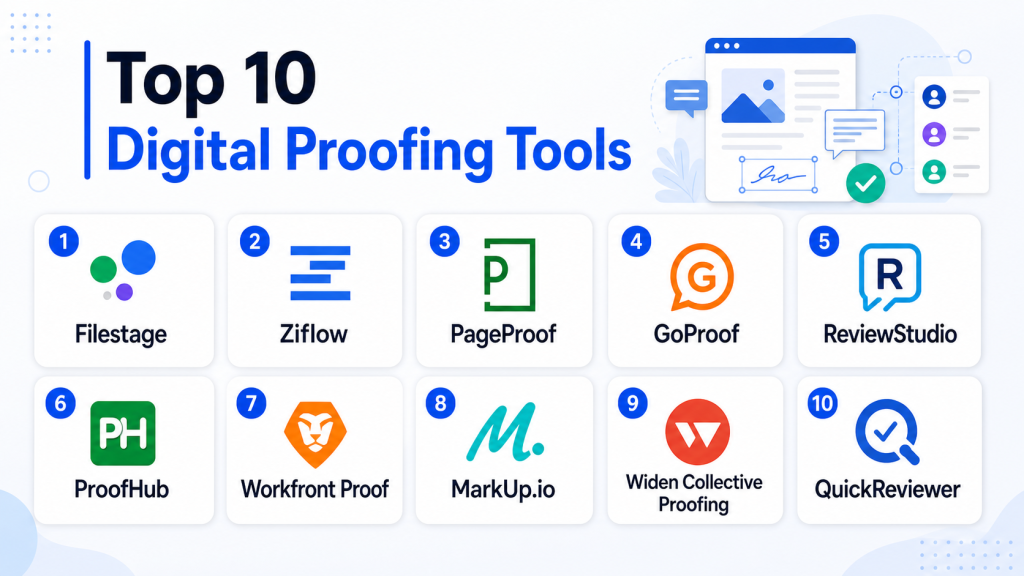
Top 10 Digital Proofing Tools
#1 — Filestage
Short description: Filestage is a digital proofing and approval platform built for teams that review videos, images, documents, PDFs, websites, and marketing assets. It helps stakeholders leave comments directly on files, compare versions, and approve work in a structured workflow. It is especially useful for agencies, marketing teams, and creative teams that need clear review stages.
Key Features
- Online proofing for videos, images, PDFs, and documents
- Commenting and annotation tools
- Version comparison and review history
- Approval workflows and reviewer roles
- External reviewer links
- Review status tracking
- Team collaboration and deadline management
Pros
- Strong proofing experience across many file types
- Easy for external clients and stakeholders to review
- Good approval tracking and version history
Cons
- Not a full creative project management suite
- Pricing should be reviewed by review volume and users
- Teams may still need a separate task management platform
Platforms / Deployment
Cloud
Web-based platform
Security & Compliance
Security features may include reviewer permissions, access controls, file protection, and approval history. Buyers should validate SSO, audit trails, encryption, retention, and compliance needs directly.
Integrations & Ecosystem
Filestage fits creative review, agency approval, marketing production, video review, and campaign feedback workflows. It is often used alongside project management and file storage tools.
- Project management tools
- Cloud storage systems
- Creative workflows
- Agency-client approval processes
- Marketing production workflows
- File review workflows
Support & Community
Filestage provides documentation, onboarding resources, product support, workflow guidance, and customer success options. Support depth may vary by plan.
#2 — Ziflow
Short description: Ziflow is an online proofing platform designed for creative teams, agencies, brands, and enterprise marketing teams. It supports review and approval workflows for many creative asset types, including video, documents, images, web content, and rich media. Ziflow is especially useful for teams that need advanced workflow automation and approval control.
Key Features
- Online proofing for multiple file formats
- Markup and annotation tools
- Automated review and approval workflows
- Version comparison
- Reviewer groups and approval stages
- Creative collaboration dashboards
- Audit trails and approval records
Pros
- Strong workflow automation for creative approvals
- Suitable for agencies and enterprise teams
- Good for complex multi-stakeholder reviews
Cons
- May be more advanced than small teams need
- Setup can require workflow planning
- Reviewers may need onboarding for advanced workflows
Platforms / Deployment
Cloud
Web-based platform
Security & Compliance
Security and compliance capabilities should be verified directly. Buyers should validate SSO, permissions, audit logs, encryption, data retention, and role-based access.
Integrations & Ecosystem
Ziflow fits creative operations workflows where review automation, approval stages, and audit trails are important. It works well with tools used by marketing and creative production teams.
- Project management platforms
- DAM systems
- Cloud storage tools
- Creative workflows
- Marketing operations tools
- Collaboration systems
Support & Community
Ziflow provides documentation, onboarding assistance, customer support, workflow resources, and implementation guidance. Support level may vary by package.
#3 — PageProof
Short description: PageProof is an online proofing and approval tool focused on secure creative review workflows. It supports proofs for documents, designs, videos, emails, web content, and packaging files. PageProof is especially useful for teams that need structured approvals, proof security, and clear reviewer accountability.
Key Features
- Online proofing and annotations
- Secure review workflows
- Version control and comparison
- Approval routing and reviewer roles
- Support for many creative file types
- Proof audit trail
- Team and external reviewer collaboration
Pros
- Strong focus on secure proofing
- Useful for creative, packaging, and marketing teams
- Good approval history and workflow visibility
Cons
- May require setup for complex approval routes
- Interface fit should be tested by reviewers
- Pricing should be evaluated by team and proof volume
Platforms / Deployment
Cloud
Web-based platform
Security & Compliance
Security is a key focus, but buyers should still validate SSO, encryption, audit logs, reviewer permissions, retention, and compliance requirements directly.
Integrations & Ecosystem
PageProof fits creative review, packaging approval, document review, and marketing compliance workflows. It is useful when approval security and reviewer accountability are important.
- Creative workflows
- Project management tools
- File storage systems
- Packaging review workflows
- Marketing approval processes
- Collaboration tools
Support & Community
PageProof provides documentation, onboarding resources, product support, and workflow guidance. Support depth may vary by plan.
#4 — GoProof
Short description: GoProof is a proofing and creative collaboration platform designed to help teams review, comment on, and approve creative work. It is especially useful for teams using Adobe Creative Cloud workflows because it supports creative review directly around design production. GoProof is practical for agencies, designers, and marketing teams managing visual content reviews.
Key Features
- Online proofing and commenting
- Creative review workflows
- Adobe workflow support
- Approval tracking
- Version control
- Client and stakeholder collaboration
- Design review management
Pros
- Useful for creative teams working with design assets
- Good fit for agency-client approval workflows
- Helps reduce feedback scattered across email
Cons
- File format and workflow depth should be validated
- May not be as broad as larger enterprise proofing suites
- Best value depends on creative tool alignment
Platforms / Deployment
Cloud
Web-based platform
Creative tool integration availability may vary
Security & Compliance
Security and compliance details should be verified directly. Buyers should validate permissions, reviewer access, encryption, audit history, and data handling requirements.
Integrations & Ecosystem
GoProof fits design review, creative collaboration, and agency proofing workflows. It is especially relevant for teams that need proofing connected with design production.
- Adobe Creative Cloud workflows
- Design review processes
- Agency-client collaboration
- Marketing approval workflows
- File sharing workflows
- Creative production systems
Support & Community
GoProof provides support resources, onboarding guidance, documentation, and customer assistance. Support level may vary by plan.
#5 — ReviewStudio
Short description: ReviewStudio is an online proofing and review platform for creative teams that need to comment on videos, images, PDFs, documents, web pages, and other digital assets. It supports visual annotations, version review, and collaborative feedback. ReviewStudio is useful for agencies, education teams, production teams, and creative departments.
Key Features
- Visual proofing and annotation
- Video review with time-based comments
- PDF, image, and document review
- Version tracking
- Approval and review workflows
- External reviewer access
- Project-based feedback organization
Pros
- Strong support for visual and video feedback
- Useful for creative production and education workflows
- Easy to centralize comments and revisions
Cons
- Project management features may be lighter than full PM tools
- Advanced enterprise governance should be validated
- Teams may need integrations for broader workflow management
Platforms / Deployment
Cloud
Web-based platform
Security & Compliance
Security and compliance details should be verified directly. Buyers should validate access controls, reviewer permissions, encryption, retention, and audit history.
Integrations & Ecosystem
ReviewStudio fits creative review, video production, design feedback, and educational critique workflows. It can be paired with task management and storage platforms.
- Creative production workflows
- Video review processes
- File storage tools
- Project management workflows
- Client review processes
- Design collaboration
Support & Community
ReviewStudio provides documentation, support resources, onboarding assistance, and product guidance. Support depth may vary by plan.
#6 — ProofHub
Short description: ProofHub is a project management and team collaboration platform with built-in proofing features. It helps teams manage tasks, files, discussions, timelines, and feedback in one workspace. ProofHub is useful for teams that want project management and proofing together rather than using separate tools.
Key Features
- Task and project management
- Online proofing and file comments
- Discussions and collaboration
- Time tracking and project reports
- File sharing and organization
- Calendar and milestone tracking
- Team roles and permissions
Pros
- Combines project management with proofing
- Useful for small and mid-sized teams
- Good for teams wanting fewer tools
Cons
- Proofing may not be as deep as dedicated proofing platforms
- Advanced creative approval workflows should be validated
- Interface preferences may vary by team
Platforms / Deployment
Cloud
Web-based platform
Mobile apps available
Security & Compliance
Security features may include user roles, permissions, and access controls. Buyers should validate encryption, audit logs, retention, and compliance needs directly.
Integrations & Ecosystem
ProofHub fits project management, creative collaboration, review workflows, and team communication. It is useful when proofing needs to stay close to project tasks.
- File storage workflows
- Team collaboration
- Project management workflows
- Creative feedback processes
- Client collaboration
- Reporting dashboards
Support & Community
ProofHub provides documentation, help resources, onboarding support, and customer assistance. Support level may vary by plan.
#7 — Workfront Proof
Short description: Workfront Proof is associated with Adobe Workfront’s creative review and approval workflows. It helps enterprise marketing and creative teams manage proofing as part of larger work management processes. It is especially useful for organizations already using Adobe Workfront for project planning, resource management, and approvals.
Key Features
- Proofing and annotation workflows
- Review and approval stages
- Version tracking
- Stakeholder feedback collection
- Integration with work management workflows
- Enterprise review visibility
- Approval records and workflow tracking
Pros
- Strong fit for Adobe Workfront users
- Useful for enterprise creative approval workflows
- Connects proofing with broader project management
Cons
- Best value depends on Adobe Workfront adoption
- May be too advanced for small teams
- Implementation can require enterprise workflow planning
Platforms / Deployment
Cloud
Web-based platform
Adobe Workfront ecosystem
Security & Compliance
Enterprise security controls may be available through the broader Adobe Workfront environment. Buyers should validate SSO, permissions, encryption, audit logs, access control, and compliance requirements directly.
Integrations & Ecosystem
Workfront Proof fits enterprise marketing operations where review and approval are part of larger campaign, resource, and project workflows.
- Adobe Workfront
- Adobe Creative Cloud workflows
- Enterprise marketing operations
- DAM workflows
- Approval workflows
- Reporting systems
Support & Community
Support is generally tied to Adobe Workfront resources, documentation, implementation partners, and enterprise support options. Support level may vary by contract.
#8 — MarkUp.io
Short description: MarkUp.io is a visual feedback platform that allows teams to collect comments directly on websites, images, PDFs, and creative files. It is useful for designers, marketers, web teams, agencies, and developers who need fast visual feedback without complicated review setup. MarkUp.io is especially practical for website and design feedback workflows.
Key Features
- Visual comments on websites and files
- Web page feedback collection
- Image and PDF annotation support
- Shareable review links
- Comment resolution workflows
- Simple reviewer experience
- Collaboration for design and web teams
Pros
- Very easy for visual feedback
- Strong for website review and design comments
- Useful for agencies and web teams
Cons
- Not a full approval workflow platform
- Advanced versioning and audit trails may be limited
- Best for lightweight feedback rather than complex compliance review
Platforms / Deployment
Cloud
Web-based platform
Security & Compliance
Security and compliance details should be verified directly. Buyers should validate access controls, permissions, link sharing rules, data handling, and retention.
Integrations & Ecosystem
MarkUp.io fits web design review, landing page feedback, creative comments, and agency collaboration. It is often used with project management and design tools.
- Website review workflows
- Design feedback workflows
- Agency-client collaboration
- File review processes
- Project management tools
- Web development workflows
Support & Community
MarkUp.io provides documentation, support resources, onboarding help, and product guidance. Support depth may vary by plan.
#9 — Widen Collective Proofing
Short description: Widen Collective Proofing refers to proofing workflows associated with Widen, now part of Acquia DAM. It supports teams that need asset review, feedback, and approval connected with digital asset management. It is especially useful for organizations that want proofing tied to a central asset library and brand governance process.
Key Features
- Asset proofing workflows
- Review and approval tracking
- DAM-connected asset management
- Version and asset control
- Metadata and content organization
- Brand governance support
- Marketing and creative collaboration
Pros
- Useful when proofing is connected with DAM workflows
- Good fit for brand and marketing asset governance
- Helps keep approved assets organized after review
Cons
- Product packaging and naming should be verified directly
- Best value depends on DAM adoption
- May not be ideal as a standalone proofing tool
Platforms / Deployment
Cloud
Web-based platform
DAM-connected workflow
Security & Compliance
Security and compliance details should be verified directly with the current Acquia DAM environment. Buyers should validate SSO, permissions, audit logs, encryption, approval history, and retention.
Integrations & Ecosystem
This proofing workflow fits teams that use DAM as the source of truth for marketing and creative assets.
- DAM workflows
- Creative review processes
- Marketing asset approval
- Brand governance
- Content operations
- Asset distribution workflows
Support & Community
Support is typically connected to the broader DAM vendor support model. Buyers should validate onboarding, documentation, customer success, and implementation support directly.
#10 — QuickReviewer
Short description: QuickReviewer is an online proofing and review tool for creative teams, agencies, designers, and marketers who need feedback on videos, images, PDFs, HTML, and other creative assets. It helps teams collect comments, manage versions, and speed up approval cycles. QuickReviewer is useful for teams that want practical proofing without heavy enterprise complexity.
Key Features
- Online proofing and annotation
- Video, image, PDF, and HTML review support
- Version control
- Comment tracking and resolution
- Review links for external stakeholders
- Approval workflow support
- Team collaboration tools
Pros
- Practical for agencies and creative teams
- Supports multiple creative formats
- Helps reduce email-based feedback confusion
Cons
- Enterprise workflow depth should be validated
- Integration ecosystem may be more limited than larger platforms
- Advanced reporting needs should be reviewed
Platforms / Deployment
Cloud
Web-based platform
Security & Compliance
Security and compliance details should be verified directly. Buyers should validate permissions, reviewer access, encryption, file handling, retention, and approval records.
Integrations & Ecosystem
QuickReviewer fits agency review workflows, marketing proofing, video approval, design feedback, and client collaboration.
- Creative proofing workflows
- Agency-client review processes
- Video feedback workflows
- Design review
- Marketing approvals
- File sharing systems
Support & Community
QuickReviewer provides support resources, onboarding assistance, documentation, and customer help. Support level may vary by plan.
Comparison Table
| Tool Name | Best For | Platform(s) Supported | Deployment | Standout Feature | Public Rating |
|---|---|---|---|---|---|
| Filestage | Marketing and agency approvals | Web-based | Cloud | Multi-format proofing and approval tracking | N/A |
| Ziflow | Enterprise creative approval workflows | Web-based | Cloud | Advanced review automation and audit trails | N/A |
| PageProof | Secure creative proofing | Web-based | Cloud | Secure review and approval routing | N/A |
| GoProof | Design and Adobe-centered proofing | Web-based | Cloud | Creative review around design workflows | N/A |
| ReviewStudio | Visual and video feedback | Web-based | Cloud | Time-based video and visual annotations | N/A |
| ProofHub | Project management with proofing | Web-based, mobile apps | Cloud | Tasks plus proofing in one workspace | N/A |
| Workfront Proof | Enterprise Adobe Workfront users | Web-based | Cloud | Proofing connected with work management | N/A |
| MarkUp.io | Website and lightweight visual feedback | Web-based | Cloud | Simple website and file comments | N/A |
| Widen Collective Proofing | DAM-connected proofing workflows | Web-based | Cloud | Proofing tied to asset management | N/A |
| QuickReviewer | Agencies and creative teams | Web-based | Cloud | Multi-format review with version control | N/A |
Evaluation & Scoring of Digital Proofing Tools
| Tool Name | Core (25%) | Ease (15%) | Integrations (15%) | Security (10%) | Performance (10%) | Support (10%) | Value (15%) | Weighted Total (0–10) |
|---|---|---|---|---|---|---|---|---|
| Filestage | 9 | 9 | 8 | 8 | 8 | 8 | 8 | 8.40 |
| Ziflow | 10 | 8 | 9 | 9 | 8 | 8 | 7 | 8.55 |
| PageProof | 9 | 8 | 8 | 9 | 8 | 8 | 8 | 8.40 |
| GoProof | 8 | 8 | 8 | 7 | 8 | 8 | 8 | 7.85 |
| ReviewStudio | 8 | 9 | 7 | 7 | 8 | 8 | 8 | 7.95 |
| ProofHub | 8 | 8 | 7 | 8 | 8 | 8 | 9 | 8.00 |
| Workfront Proof | 9 | 7 | 10 | 9 | 9 | 9 | 7 | 8.60 |
| MarkUp.io | 7 | 10 | 7 | 7 | 8 | 8 | 9 | 7.95 |
| Widen Collective Proofing | 8 | 7 | 8 | 8 | 8 | 8 | 7 | 7.60 |
| QuickReviewer | 8 | 8 | 7 | 7 | 8 | 8 | 8 | 7.75 |
These scores are comparative and should be used as a shortlist guide. Dedicated proofing platforms usually score higher for annotations, approvals, versioning, and reviewer workflows. Enterprise-connected tools score higher when proofing must integrate with broader work management or DAM systems. Lightweight feedback tools score higher in ease of use and value but may lack advanced approval governance. The best choice depends on file types, reviewer complexity, approval requirements, integrations, and budget.
Which Digital Proofing Tool Is Right for You?
Solo / Freelancer
Solo designers, video editors, copywriters, and freelancers usually need simple visual feedback and external review links. MarkUp.io, ReviewStudio, QuickReviewer, or Filestage can be practical depending on file type. If you mainly review websites or landing pages, MarkUp.io is simple and fast. If you review videos, PDFs, or design files often, Filestage or ReviewStudio may be stronger.
SMB
SMBs should prioritize ease of use, affordable pricing, clear comments, version control, and simple approvals. Filestage, ReviewStudio, QuickReviewer, ProofHub, and MarkUp.io are strong options. If the team also needs task management, ProofHub may be useful. If the team needs dedicated proofing, Filestage or QuickReviewer may provide a cleaner review experience.
Mid-Market
Mid-market creative and marketing teams usually need structured approvals, external reviewer access, version comparison, review deadlines, and integrations. Filestage, Ziflow, PageProof, GoProof, ReviewStudio, and QuickReviewer are strong candidates. Teams should evaluate how reviewers interact with files, whether comments are easy to resolve, and how approval history is stored.
Enterprise
Enterprises should prioritize security, audit trails, reviewer roles, approval stages, version comparison, integrations, SSO, and compliance workflows. Ziflow, PageProof, Workfront Proof, Filestage, and DAM-connected proofing workflows are strong enterprise candidates. Large teams should involve creative operations, marketing, legal, compliance, IT, and agency partners before rollout.
Budget vs Premium
Budget-focused teams should consider MarkUp.io, QuickReviewer, ReviewStudio, or ProofHub depending on workflow needs. Premium buyers should evaluate Ziflow, PageProof, Workfront Proof, and Filestage when they need advanced approvals, audit trails, workflow automation, and enterprise integrations. The right budget choice depends on how many review rounds, reviewers, and asset types the team manages.
Feature Depth vs Ease of Use
If ease of use matters most, MarkUp.io, Filestage, ReviewStudio, and QuickReviewer are practical choices. If feature depth matters more, Ziflow, PageProof, Workfront Proof, and DAM-connected proofing workflows provide stronger governance and approval control. Teams should choose based on whether their biggest issue is scattered feedback, slow approval, compliance risk, or version confusion.
Integrations & Scalability
Digital Proofing Tools should integrate with project management platforms, DAM systems, cloud storage, creative tools, marketing workflow systems, and communication platforms. As teams scale, they should evaluate reviewer permissions, workflow templates, approval stages, audit trails, API access, file size limits, and reporting exports. Strong integrations keep proofing connected to the broader creative production process.
Security & Compliance Needs
Proofing workflows may include unreleased ads, legal copy, product launches, packaging files, confidential videos, client campaigns, and regulated marketing content. Buyers should validate SSO, encryption, reviewer permissions, password protection, audit logs, approval history, file retention, and external sharing controls. Regulated teams should also review legal approval workflows and compliance records.
Frequently Asked Questions
1. What are Digital Proofing Tools?
Digital Proofing Tools help teams review, comment on, revise, and approve creative files online.
They allow reviewers to place feedback directly on images, videos, PDFs, documents, websites, and other assets.
They reduce scattered feedback and make approval workflows easier to manage.
2. How are proofing tools different from project management tools?
Project management tools track tasks, deadlines, owners, and project progress.
Proofing tools focus on visual feedback, annotations, version comparison, and approval records.
Many teams use both together for complete creative workflow management.
3. What features should buyers prioritize?
Buyers should prioritize annotations, version control, approval workflows, reviewer permissions, file type support, and audit trails.
Video teams should look for timestamp comments and frame-level feedback.
Agencies should prioritize external reviewer links and client-friendly approval workflows.
4. Are Digital Proofing Tools useful for small teams?
Yes, small teams can use proofing tools to reduce email feedback and speed up approval cycles.
Simple tools like MarkUp.io, ReviewStudio, QuickReviewer, or Filestage can be practical.
Small teams should choose tools that are easy for clients and non-technical reviewers to use.
5. How much do Digital Proofing Tools cost?
Pricing usually depends on users, reviewers, projects, storage, file volume, workflow features, and enterprise controls.
Some tools are affordable for small teams, while enterprise proofing platforms can cost more.
Buyers should compare cost based on review volume and approval complexity.
6. Can Digital Proofing Tools review videos?
Yes, many proofing tools support video review with timestamped comments and version tracking.
This is useful for ads, product videos, social clips, training videos, and campaign content.
Teams should test playback quality, file size limits, and comment accuracy before purchase.
7. Do proofing tools support external clients?
Yes, many tools allow external reviewers to comment through shared links or guest access.
This helps agencies, freelancers, and internal teams collect feedback from clients and stakeholders.
Buyers should validate whether reviewers need accounts and how permissions are controlled.
8. What mistakes should buyers avoid?
A common mistake is choosing a proofing tool without testing it with real reviewers and file types.
Another mistake is using proofing without clear approval stages and decision owners.
Teams should also avoid leaving old versions and unresolved comments unmanaged.
9. Are Digital Proofing Tools secure?
Many tools provide permissions, secure links, password protection, encryption, audit trails, and reviewer access controls.
However, security depth varies by vendor and plan.
Buyers should validate SSO, file retention, audit logs, external sharing, and compliance needs before rollout.
10. What are alternatives to dedicated Digital Proofing Tools?
Alternatives include email comments, screenshots, chat threads, cloud storage comments, PDF markup tools, and project management comments.
These may work for very small teams or simple reviews.
Dedicated proofing tools are better when teams need annotations, version comparison, approval records, and organized stakeholder feedback.
Conclusion
Digital Proofing Tools help creative teams collect clearer feedback, reduce revision confusion, and move assets through approval faster. They are especially useful for teams reviewing designs, videos, PDFs, websites, packaging files, documents, and campaign materials. Filestage, Ziflow, and PageProof are strong choices for structured creative review and multi-stakeholder approvals. ReviewStudio, QuickReviewer, GoProof, and MarkUp.io are practical options for agencies, designers, and teams that need visual feedback workflows. ProofHub is useful when teams want proofing and project management together in one workspace. Workfront Proof is best suited for organizations already using Adobe Workfront and enterprise creative operations workflows. DAM-connected proofing workflows can help teams keep reviewed and approved assets close to the central asset library. The best tool depends on your file types, review volume, approval complexity, security needs, and integration requirements. Before choosing, shortlist two or three platforms, test them with real files, invite actual reviewers, and confirm that comments, versions, and approvals remain easy to manage.