Introduction
Market Research Platforms help businesses collect, analyze, interpret, and operationalize customer, market, competitor, and audience insights. These platforms support surveys, consumer panels, behavioral analytics, qualitative interviews, brand tracking, sentiment analysis, and AI-powered insight generation to help organizations make better strategic decisions.
Modern businesses operate in highly dynamic markets where customer expectations, competitive positioning, and buying behavior change rapidly. Market Research Platforms have evolved far beyond traditional surveys and focus groups. Today’s platforms combine automation, AI analysis, panel management, predictive analytics, and omnichannel data collection to provide faster and more scalable insights.
Common real-world use cases include:
- Conducting customer and brand perception surveys
- Running product and pricing research studies
- Testing advertising campaigns and messaging
- Measuring customer satisfaction and NPS
- Analyzing market trends and audience behavior
Buyers evaluating Market Research Platforms should consider:
- Survey and research methodology support
- Data quality and respondent management
- AI-powered analytics and summarization
- Dashboard and reporting usability
- Global panel and audience reach
- Integrations and API flexibility
- Collaboration and workflow tools
- Security and governance capabilities
- Scalability for enterprise research operations
- Ease of onboarding and research deployment
Best for: market research teams, consumer insights departments, product marketing teams, agencies, enterprise strategy teams, DTC brands, SaaS companies, and organizations conducting regular customer and market studies.
Not ideal for: businesses with very limited research needs, organizations relying only on occasional manual surveys, or small teams that only need lightweight feedback forms.
Key Trends in Market Research Platforms
- AI-powered insight summarization is reducing manual research analysis workloads significantly.
- Automated qualitative research and AI-moderated interviews are becoming more common.
- Real-time consumer insight platforms are replacing slower traditional research cycles.
- Video-based and mobile-first research methods are growing across consumer studies.
- Predictive analytics and synthetic audience modeling are expanding in enterprise research workflows.
- Omnichannel customer feedback collection is becoming standard across digital and offline channels.
- Self-service research platforms are helping non-research teams conduct studies independently.
- Sentiment analysis and natural language processing are improving open-text response analysis.
- API-first market research ecosystems are supporting integration with CRM, analytics, and BI systems.
- Governance, respondent quality controls, and privacy compliance are becoming stronger enterprise priorities.
How We Selected These Tools
The tools included in this list were selected based on market relevance, research workflow coverage, AI capabilities, scalability, and operational usability across different business segments.
Evaluation factors included:
- Market adoption and industry reputation
- Research methodology flexibility
- Survey and qualitative research capabilities
- AI-powered analysis and automation
- Reporting and dashboard quality
- Global panel and audience access
- Integration ecosystem maturity
- Security and governance features
- Scalability for enterprise research operations
- Overall research workflow value
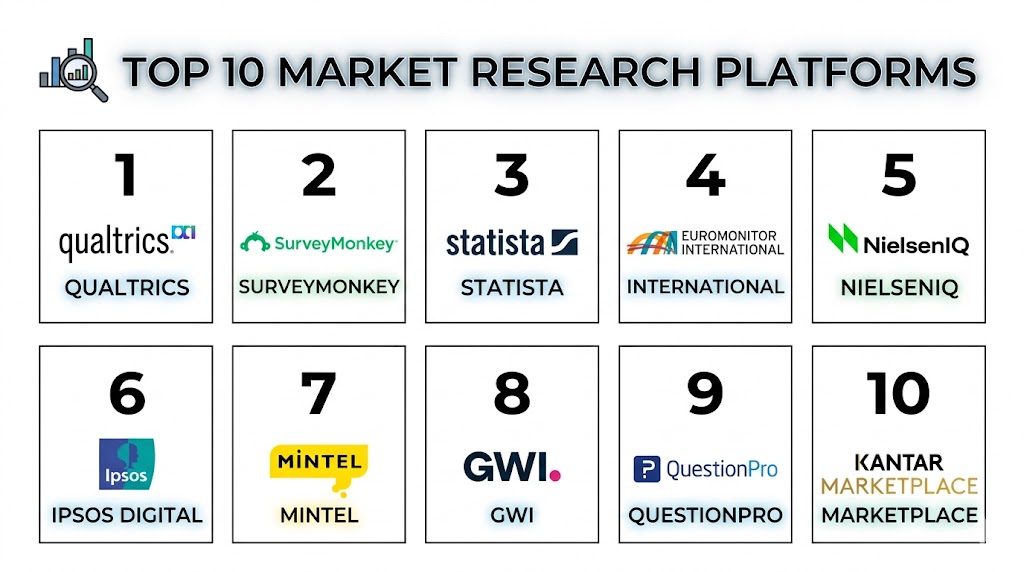
Top 10 Market Research Platforms
#1 — Qualtrics
Short description: Qualtrics is one of the most widely used enterprise research and experience management platforms. It supports surveys, customer feedback collection, brand tracking, employee experience research, and advanced analytics workflows. It is especially popular among enterprises, research teams, universities, and customer experience organizations.
Key Features
- Enterprise survey management
- Customer experience analytics
- AI-powered text analysis
- Brand tracking studies
- Employee experience workflows
- Advanced logic and branching
- Dashboard reporting and visualization
Pros
- Extremely flexible research workflows
- Strong enterprise scalability
- Advanced analytics and reporting support
Cons
- Premium pricing structure
- Learning curve for advanced workflows
- Smaller teams may not need full capabilities
Platforms / Deployment
- Web
- Cloud
Security & Compliance
- SSO/SAML support
- RBAC controls
- Audit logs
- GDPR support
- Additional certifications not publicly stated
Integrations & Ecosystem
Qualtrics integrates deeply into enterprise analytics, CRM, and customer experience ecosystems.
- Salesforce
- HubSpot
- Tableau
- Slack
- APIs
- Business intelligence tools
Support & Community
Strong enterprise onboarding, certification programs, documentation, and global implementation support.
#2 — SurveyMonkey
Short description: SurveyMonkey is a highly popular survey and research platform used by businesses, educators, marketers, and research teams. It simplifies survey creation, data collection, and reporting for organizations of all sizes.
Key Features
- Survey builder
- Templates and question libraries
- Response analytics
- AI-assisted survey workflows
- Collaboration features
- Audience targeting
- Export and reporting tools
Pros
- Very easy to use
- Broad market adoption
- Fast deployment for surveys
Cons
- Advanced enterprise workflows are limited
- Complex analytics may require external tools
- Enterprise governance varies by plan
Platforms / Deployment
- Web
- Cloud
Security & Compliance
- MFA support
- GDPR support
- Access controls
- Additional certifications not publicly stated
Integrations & Ecosystem
SurveyMonkey supports integrations across productivity, analytics, and CRM ecosystems.
- Salesforce
- HubSpot
- Slack
- Microsoft Teams
- APIs
- Google Workspace
Support & Community
Large user community with extensive templates, onboarding resources, and practical support documentation.
#3 — GWI
Short description: GWI is a consumer insights platform focused on audience intelligence, demographics, behaviors, and global market research. It provides survey-based insights across multiple international markets and is widely used by brands, agencies, and strategy teams.
Key Features
- Global audience insights
- Consumer behavior analysis
- AI-powered research assistance
- Market segmentation
- Trend analysis
- Audience profiling
- Brand and media insights
Pros
- Strong global consumer dataset
- Excellent audience segmentation support
- Useful for brand and media planning
Cons
- Less focused on custom survey creation
- Enterprise pricing may be high
- Best suited for consumer insight workflows
Platforms / Deployment
- Web
- Cloud
Security & Compliance
- Access controls
- GDPR support
- Additional certifications not publicly stated
Integrations & Ecosystem
GWI integrates with analytics and marketing workflows for audience research and planning.
- APIs
- Analytics tools
- Media planning systems
- CRM workflows
- Business intelligence tools
- Data export systems
Support & Community
Strong onboarding support and analyst resources for marketing, strategy, and consumer insights teams.
#4 — Attest
Short description: Attest is a consumer research platform designed to make market research faster and more accessible for brands and marketers. It supports surveys, brand tracking, audience segmentation, and international consumer research workflows.
Key Features
- Consumer survey research
- Brand tracking
- Audience segmentation
- Global respondent panels
- Dashboard analytics
- Message and campaign testing
- Market sizing studies
Pros
- Easy-to-use interface
- Good international panel coverage
- Fast research deployment workflows
Cons
- Enterprise customization may be limited
- Advanced analytics vary by workflow
- Specialized methodologies may require external support
Platforms / Deployment
- Web
- Cloud
Security & Compliance
- GDPR support
- Access controls
- Additional certifications not publicly stated
Integrations & Ecosystem
Attest supports integrations across marketing, analytics, and business intelligence workflows.
- APIs
- CRM systems
- Analytics tools
- Data export workflows
- Business intelligence systems
- Collaboration tools
Support & Community
Good onboarding experience with strong customer support and practical research deployment guidance.
#5 — Forsta
Short description: Forsta is an enterprise market research and experience management platform used for customer research, employee feedback, and advanced survey operations. It supports sophisticated research methodologies and enterprise-scale insight workflows.
Key Features
- Advanced survey workflows
- Panel management
- Multi-channel feedback collection
- AI-powered analytics
- Research automation
- Reporting dashboards
- Enterprise governance controls
Pros
- Strong enterprise research capabilities
- Advanced methodological flexibility
- Good scalability for large organizations
Cons
- Complex implementation workflows
- Requires onboarding and operational planning
- Smaller teams may find it overwhelming
Platforms / Deployment
- Web
- Cloud
Security & Compliance
- SSO/SAML support
- RBAC controls
- Audit logs
- GDPR support
Integrations & Ecosystem
Forsta integrates with enterprise analytics and customer experience environments.
- CRM systems
- APIs
- Business intelligence tools
- Customer experience systems
- Analytics workflows
- Collaboration platforms
Support & Community
Enterprise onboarding and implementation support with strong operational consulting resources.
#6 — Suzy
Short description: Suzy is a consumer insights platform focused on rapid feedback collection and agile market research workflows. It combines audience access with survey deployment and AI-driven insight generation for fast-moving consumer brands.
Key Features
- Rapid consumer surveys
- Video response support
- Audience targeting
- AI-powered insight summaries
- Real-time analytics
- Collaborative workspaces
- Brand testing workflows
Pros
- Fast insight turnaround
- Strong mobile-first workflows
- Good for agile marketing teams
Cons
- Less suitable for highly complex enterprise research
- Advanced methodologies are moderate
- Premium workflows may increase costs
Platforms / Deployment
- Web
- Cloud
Security & Compliance
- GDPR support
- Access controls
- Additional certifications not publicly stated
Integrations & Ecosystem
Suzy integrates with modern marketing, analytics, and collaboration environments.
- APIs
- Collaboration tools
- CRM systems
- Analytics dashboards
- Marketing workflows
- Data export systems
Support & Community
Strong onboarding support with accessible research workflows for marketing and brand teams.
#7 — Kantar Marketplace
Short description: Kantar Marketplace is an on-demand research platform used for brand testing, campaign analysis, innovation research, and consumer insights. It is widely recognized for combining syndicated research with custom study capabilities.
Key Features
- Brand tracking
- Creative testing
- Innovation research
- Consumer insight analytics
- Survey workflows
- Market segmentation
- Dashboard reporting
Pros
- Strong brand research capabilities
- Trusted market research reputation
- Useful global research coverage
Cons
- Enterprise workflows may require support
- Premium pricing for advanced studies
- Some workflows are more structured than flexible
Platforms / Deployment
- Web
- Cloud
Security & Compliance
- Access controls
- GDPR support
- Additional certifications not publicly stated
Integrations & Ecosystem
Kantar Marketplace integrates with analytics and enterprise research workflows for consumer insights and brand strategy.
- Analytics systems
- APIs
- Business intelligence tools
- Reporting workflows
- CRM systems
- Data export workflows
Support & Community
Strong enterprise support and research guidance with global market research expertise.
#8 — Meltwater
Short description: Meltwater combines media monitoring, social listening, and market intelligence into a unified research platform. It is widely used for brand perception analysis, consumer sentiment tracking, and competitive market visibility.
Key Features
- Media monitoring
- Social listening
- Sentiment analysis
- Brand perception tracking
- Competitive intelligence
- Trend analysis
- Analytics dashboards
Pros
- Strong social and media intelligence
- Good real-time monitoring capabilities
- Useful brand sentiment insights
Cons
- Less focused on traditional survey methodologies
- Enterprise pricing can be high
- Research workflows depend heavily on digital signals
Platforms / Deployment
- Web
- Cloud
Security & Compliance
- SSO support
- RBAC capabilities
- GDPR support
- Additional certifications not publicly stated
Integrations & Ecosystem
Meltwater integrates with PR, analytics, and customer intelligence ecosystems.
- CRM systems
- APIs
- Social platforms
- Analytics tools
- Collaboration systems
- Business intelligence workflows
Support & Community
Strong customer support and onboarding resources for communications, marketing, and research teams.
#9 — Displayr
Short description: Displayr is a market research analysis and reporting platform focused on survey analytics, dashboards, and automated reporting workflows. It is widely used by professional researchers and analytics teams.
Key Features
- Survey analysis
- Automated reporting
- Data visualization
- Dashboard creation
- Statistical analysis
- Collaboration workflows
- Presentation-ready outputs
Pros
- Strong analytics capabilities
- Useful automated reporting workflows
- Good for research and analytics teams
Cons
- Requires research and analytics familiarity
- Less focused on panel recruitment
- Advanced analysis may require expertise
Platforms / Deployment
- Web
- Cloud
Security & Compliance
- Access controls
- GDPR support
- Additional certifications not publicly stated
Integrations & Ecosystem
Displayr integrates with survey, analytics, and business intelligence environments.
- Survey tools
- APIs
- Data warehouses
- Analytics systems
- Reporting workflows
- Spreadsheet integrations
Support & Community
Good documentation and analytics-focused onboarding support for research professionals.
#10 — Pollfish
Short description: Pollfish is a mobile-first market research platform focused on survey distribution and consumer audience targeting. It is commonly used by marketers, startups, and research teams that need fast and scalable consumer feedback.
Key Features
- Mobile survey distribution
- Consumer targeting
- Real-time responses
- Survey templates
- Audience segmentation
- Analytics dashboards
- API support
Pros
- Fast survey deployment
- Strong mobile reach
- Good for agile research workflows
Cons
- Enterprise research depth is moderate
- Advanced analytics are limited
- Specialized methodologies may require external tools
Platforms / Deployment
- Web
- Cloud
Security & Compliance
- GDPR support
- Access controls
- Additional certifications not publicly stated
Integrations & Ecosystem
Pollfish supports integrations across analytics and survey management workflows.
- APIs
- Analytics tools
- CRM systems
- Reporting systems
- Data exports
- Marketing workflows
Support & Community
Accessible onboarding with strong documentation and practical support for rapid survey deployment.
Comparison Table
| Tool Name | Best For | Platform(s) Supported | Deployment | Standout Feature | Public Rating |
|---|---|---|---|---|---|
| Qualtrics | Enterprise research operations | Web | Cloud | Advanced experience management | N/A |
| SurveyMonkey | General-purpose surveys | Web | Cloud | Easy survey creation | N/A |
| GWI | Global consumer insights | Web | Cloud | Audience intelligence datasets | N/A |
| Attest | Fast consumer research | Web | Cloud | Accessible international research | N/A |
| Forsta | Enterprise survey workflows | Web | Cloud | Advanced research methodologies | N/A |
| Suzy | Agile consumer feedback | Web | Cloud | Rapid audience insights | N/A |
| Kantar Marketplace | Brand and campaign testing | Web | Cloud | Trusted research methodologies | N/A |
| Meltwater | Social and media intelligence | Web | Cloud | Real-time sentiment analysis | N/A |
| Displayr | Research analytics and reporting | Web | Cloud | Automated survey reporting | N/A |
| Pollfish | Mobile-first surveys | Web | Cloud | Fast mobile audience reach | N/A |
Evaluation & Scoring of Market Research Platforms
| Tool Name | Core 25% | Ease 15% | Integrations 15% | Security 10% | Performance 10% | Support 10% | Value 15% | Weighted Total |
|---|---|---|---|---|---|---|---|---|
| Qualtrics | 9.5 | 7.8 | 9.2 | 9.0 | 9.2 | 8.9 | 7.5 | 8.8 |
| SurveyMonkey | 8.4 | 9.2 | 8.0 | 7.8 | 8.3 | 8.5 | 9.0 | 8.5 |
| GWI | 9.0 | 8.1 | 8.4 | 8.0 | 8.8 | 8.4 | 7.9 | 8.5 |
| Attest | 8.6 | 8.7 | 8.1 | 7.8 | 8.4 | 8.3 | 8.6 | 8.4 |
| Forsta | 9.1 | 7.4 | 8.8 | 8.8 | 8.9 | 8.6 | 7.3 | 8.5 |
| Suzy | 8.7 | 8.8 | 8.0 | 7.7 | 8.5 | 8.4 | 8.4 | 8.4 |
| Kantar Marketplace | 9.0 | 7.9 | 8.5 | 8.2 | 8.8 | 8.7 | 7.5 | 8.5 |
| Meltwater | 8.5 | 8.4 | 8.7 | 8.0 | 8.7 | 8.4 | 7.9 | 8.4 |
| Displayr | 8.6 | 7.8 | 8.3 | 7.9 | 8.5 | 8.3 | 8.5 | 8.3 |
| Pollfish | 8.2 | 8.9 | 7.9 | 7.6 | 8.1 | 8.2 | 8.8 | 8.3 |
These scores are comparative rather than absolute. Enterprise-focused platforms generally score higher in governance, analytics depth, and scalability, while lightweight research tools perform better in usability and affordability. Organizations should prioritize the criteria most aligned with research complexity, audience size, and operational maturity.
Which Market Research Platforms Tool Is Right for You?
Solo / Freelancer
Independent researchers, startups, and small teams usually benefit most from SurveyMonkey or Pollfish because they offer fast deployment, simple onboarding, and affordable research workflows without requiring dedicated research departments.
SMB
SMBs often need broader analytics, audience targeting, and collaborative research capabilities. Attest, Suzy, and SurveyMonkey provide balanced functionality for growing customer insight and brand research programs.
Mid-Market
Mid-market businesses typically require stronger reporting, research automation, and cross-functional collaboration. GWI, Meltwater, and Displayr provide broader market visibility and operational scalability for growing insight teams.
Enterprise
Large organizations should prioritize Qualtrics, Forsta, Kantar Marketplace, or Alpha-level enterprise research platforms because of their advanced governance, scalability, AI analysis, and enterprise workflow support.
Budget vs Premium
Budget-conscious businesses may prefer Pollfish or SurveyMonkey because of their accessibility and lower operational complexity. Premium platforms like Qualtrics and Forsta provide broader enterprise research capabilities and governance controls.
Feature Depth vs Ease of Use
SurveyMonkey and Pollfish prioritize usability and rapid deployment, while Qualtrics and Forsta provide more advanced methodological flexibility and enterprise-grade analytics that may require stronger onboarding.
Integrations & Scalability
Organizations with CRM, BI, analytics, and enterprise reporting requirements should prioritize Qualtrics, Forsta, or Meltwater because of their broader integration ecosystems.
Security & Compliance Needs
Businesses with strict governance requirements should focus on platforms supporting SSO, RBAC, audit logging, and centralized administrative controls.
Frequently Asked Questions
1. What is a Market Research Platform?
A Market Research Platform helps businesses collect, analyze, and interpret customer, competitor, and market data through surveys, panels, analytics, and research workflows.
2. Why are Market Research Platforms important?
These platforms help organizations make data-driven decisions about products, branding, pricing, marketing, customer experience, and strategic planning.
3. What types of research can these platforms support?
Most platforms support surveys, customer feedback studies, brand tracking, product testing, pricing research, audience segmentation, sentiment analysis, and qualitative interviews.
4. Do Market Research Platforms use AI?
Many modern platforms now use AI for survey recommendations, text analysis, sentiment detection, summarization, and automated insight generation.
5. Are these platforms suitable for global research?
Yes. Many enterprise platforms provide international respondent panels, multilingual surveys, and global audience targeting capabilities for cross-market research studies.
6. How difficult is implementation?
Implementation complexity depends on workflow sophistication, integrations, and research scale. Lightweight tools can be deployed quickly, while enterprise platforms may require structured onboarding.
7. Are Market Research Platforms secure?
Most enterprise-focused platforms support governance features such as SSO, RBAC, audit logs, and administrative controls. Security capabilities vary by platform and pricing tier.
8. What are common mistakes when selecting a platform?
Common mistakes include focusing only on survey creation, ignoring analytics depth, underestimating respondent quality requirements, and failing to evaluate integrations and governance capabilities.
9. Can these platforms integrate with CRM and analytics systems?
Yes. Many Market Research Platforms integrate with CRM systems, BI tools, analytics platforms, collaboration environments, and workflow automation systems.
10. What are alternatives to Market Research Platforms?
Alternatives include manual surveys, spreadsheets, focus groups, social listening tools, analytics dashboards, and external research agencies. These approaches may work initially but can become difficult to scale.
Conclusion
Market Research Platforms help organizations transform customer feedback, market signals, and audience insights into faster and more confident business decisions. The right platform depends on research complexity, operational scale, audience reach, analytics requirements, and organizational maturity. Smaller teams may prefer lightweight and accessible tools like SurveyMonkey or Pollfish, while growing organizations often benefit from Attest, GWI, or Suzy for broader consumer insight workflows. Enterprises with mature research operations should evaluate Qualtrics, Forsta, Kantar Marketplace, or Meltwater for advanced governance, analytics, and scalable insight management. Instead of choosing solely based on feature count, businesses should shortlist a few platforms, validate panel quality, test integrations, involve research stakeholders early, and run pilot studies before making a long-term investment decision.