Introduction
Music Streaming Apps allow users to access, stream, discover, organize, and share millions of songs, podcasts, playlists, and audio experiences across devices without requiring local downloads or physical media. Modern streaming platforms have evolved into highly personalized entertainment ecosystems powered by AI-driven recommendations, social discovery, offline listening, smart device integration, and high-quality audio streaming.
As digital entertainment consumption continues growing globally, Music Streaming Apps have become essential for consumers, creators, fitness users, commuters, gamers, educators, and businesses managing audio experiences. Many platforms now combine music streaming with podcasts, live audio, AI-generated playlists, lyrics synchronization, collaborative listening, and creator monetization ecosystems.
Real-world use cases include:
- Streaming music across mobile and desktop devices
- Discovering personalized playlists and recommendations
- Managing podcast and audio entertainment workflows
- Supporting fitness, gaming, and productivity environments
- Enabling offline listening for travel and commuting
Evaluation Criteria for Buyers:
- Music catalog size and diversity
- Audio quality and streaming performance
- Recommendation and discovery algorithms
- Offline listening capabilities
- Cross-platform compatibility
- Podcast and multimedia support
- Playlist and library management
- Device ecosystem integration
- Subscription flexibility and value
- Social and collaboration features
Best for: music enthusiasts, podcast listeners, commuters, students, fitness users, creators, gamers, and consumers seeking personalized audio experiences across multiple devices.
Not ideal for: users who prefer owning local music libraries exclusively or individuals with extremely limited internet connectivity and no interest in subscription-based media consumption.
Key Trends in Music Streaming Apps
- AI-generated playlists and recommendation systems are becoming increasingly sophisticated.
- Lossless and high-resolution audio streaming is expanding rapidly across premium tiers.
- Podcast integration is becoming a core feature within major streaming ecosystems.
- Social listening and collaborative playlist workflows are growing in popularity.
- Personalized recommendation engines are using behavioral and contextual AI data.
- Offline listening and smart downloads continue improving for mobile users.
- Creator monetization and artist engagement tools are expanding across platforms.
- Smart speaker and automotive integrations are becoming critical ecosystem differentiators.
- Spatial audio and immersive listening technologies are improving audio experiences.
- Music streaming platforms are increasingly integrating video and live event content.
How We Selected These Tools Methodology
The apps in this list were selected based on music library quality, streaming reliability, personalization, and ecosystem maturity.
- Strong global adoption and user trust
- Large and diverse music catalogs
- Audio quality and playback stability
- Recommendation and discovery quality
- Cross-platform device support
- Offline listening and synchronization
- Integration ecosystem and smart device support
- Subscription flexibility and pricing value
- Podcast and multimedia capabilities
- Long-term platform innovation and scalability
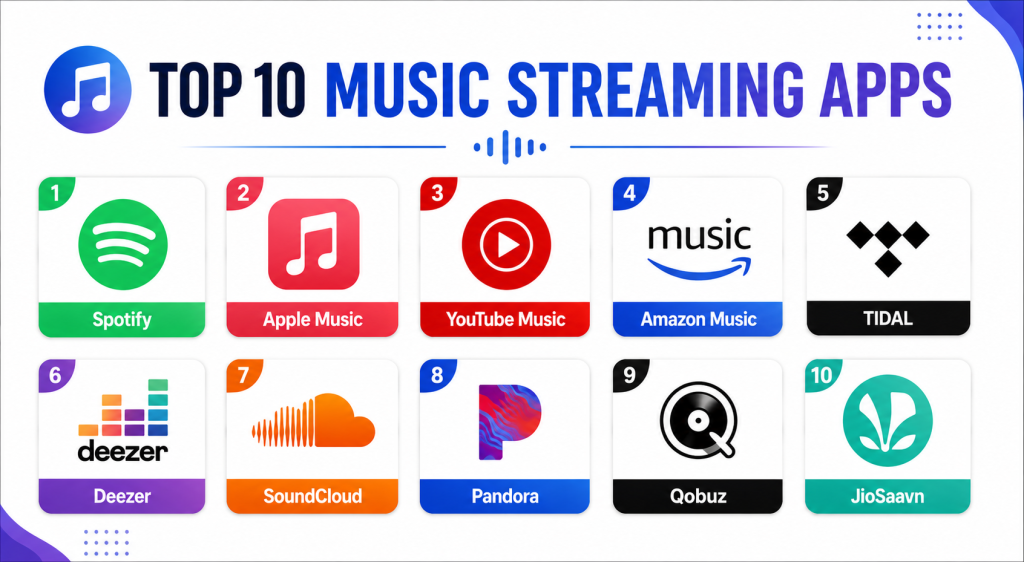
Top 10 Music Streaming Apps
#1 — Spotify
Short description: Spotify is one of the most dominant music streaming platforms globally, known for its personalized playlists, recommendation engine, podcast ecosystem, and extensive cross-platform compatibility. It serves casual listeners, creators, and advanced music discovery workflows.
Key Features
- AI-powered music recommendations
- Personalized playlists
- Podcast integration
- Offline listening
- Collaborative playlists
- Cross-device synchronization
- Social sharing features
Pros
- Excellent music discovery algorithms
- Massive global ecosystem
- Strong cross-platform support
Cons
- Lossless audio rollout varies by region
- Free tier includes advertisements
- Artist compensation debates continue
Platforms / Deployment
- Web / Windows / macOS / Linux / iOS / Android
- Cloud
Security & Compliance
Account protections and MFA-related protections supported through account systems.
Integrations & Ecosystem
Spotify integrates deeply with entertainment, gaming, and smart device ecosystems.
- Smart speakers
- Gaming consoles
- Automotive systems
- Social platforms
- Wearables
- Smart TVs
Support & Community
Massive global user base with extensive creator and community ecosystems.
#2 — Apple Music
Short description: Apple Music is a premium streaming platform focused on high-quality audio, deep Apple ecosystem integration, curated playlists, and seamless synchronization across Apple devices and services.
Key Features
- Lossless audio streaming
- Spatial audio support
- Offline listening
- Curated playlists
- Lyrics synchronization
- Device synchronization
- Apple ecosystem integration
Pros
- Excellent audio quality
- Strong Apple device integration
- High-quality curated experiences
Cons
- Less effective social discovery features
- Best experience tied to Apple ecosystem
- Interface preferences vary by user
Platforms / Deployment
- Web / Windows / macOS / iOS / Android
- Cloud
Security & Compliance
Apple account protections and MFA supported.
Integrations & Ecosystem
Apple Music integrates tightly with Apple hardware and entertainment ecosystems.
- Siri
- Apple devices
- Apple Watch
- CarPlay
- HomePod
Support & Community
Strong ecosystem support with extensive Apple platform integration.
#3 — YouTube Music
Short description: YouTube Music combines traditional music streaming with video content, live performances, remixes, and user-generated audio experiences. It is especially attractive for users deeply connected to YouTube ecosystems.
Key Features
- Music video integration
- Personalized recommendations
- Offline playback
- Live performance content
- Playlist management
- Smart search capabilities
- Cross-device synchronization
Pros
- Excellent video and music combination
- Huge content variety
- Strong search capabilities
Cons
- Interface can feel cluttered
- Audio-first workflows less polished
- Advertisements in free tier
Platforms / Deployment
- Web / Windows / macOS / iOS / Android
- Cloud
Security & Compliance
Google account protections supported.
Integrations & Ecosystem
YouTube Music integrates strongly with Google’s media and streaming ecosystems.
- YouTube ecosystem
- Smart TVs
- Android devices
- Google Assistant
- Chromecast
Support & Community
Massive global entertainment ecosystem with continuous platform updates.
#4 — Amazon Music
Short description: Amazon Music is a streaming platform designed for consumers within Amazon ecosystems, offering music streaming, high-definition audio, smart speaker integration, and bundled subscription advantages.
Key Features
- HD and Ultra HD audio
- Alexa integration
- Offline listening
- Curated playlists
- Podcast support
- Smart speaker workflows
- Cross-device playback
Pros
- Strong Amazon ecosystem integration
- Good audio quality options
- Competitive bundled pricing
Cons
- Interface less intuitive for some users
- Discovery features weaker than competitors
- Ecosystem strongest for Amazon users
Platforms / Deployment
- Web / Windows / macOS / iOS / Android
- Cloud
Security & Compliance
Amazon account protections supported.
Integrations & Ecosystem
Amazon Music integrates deeply with smart home and Amazon entertainment ecosystems.
- Alexa
- Echo devices
- Fire TV
- Automotive integrations
- Smart speakers
Support & Community
Strong smart-home ecosystem adoption and broad device support.
#5 — TIDAL
Short description: TIDAL is a premium music streaming platform focused heavily on high-fidelity audio quality, artist-centered experiences, and professional-grade listening environments.
Key Features
- HiFi audio streaming
- Lossless music playback
- Curated editorial content
- Offline listening
- Music videos
- Artist-focused experiences
- Spatial audio support
Pros
- Exceptional audio quality
- Strong premium music experience
- Good artist-focused branding
Cons
- Smaller mainstream ecosystem
- Higher premium pricing
- Recommendation engine less mature
Platforms / Deployment
- Web / Windows / macOS / iOS / Android
- Cloud
Security & Compliance
Account protections supported.
Integrations & Ecosystem
TIDAL integrates strongly with professional audio and premium entertainment workflows.
- HiFi audio systems
- DJ software
- Smart devices
- Streaming hardware
Support & Community
Strong audiophile-focused community with premium entertainment positioning.
#6 — Deezer
Short description: Deezer is a music streaming platform known for personalized discovery, multilingual content, and broad international catalog support. It serves both casual listeners and global music audiences.
Key Features
- Flow recommendation engine
- Offline listening
- Lyrics support
- Personalized playlists
- Podcast integration
- Cross-device sync
- International music catalogs
Pros
- Strong global music diversity
- Good recommendation workflows
- User-friendly experience
Cons
- Smaller ecosystem than market leaders
- Regional availability varies
- Fewer social collaboration tools
Platforms / Deployment
- Web / Windows / macOS / iOS / Android
- Cloud
Security & Compliance
Account protections supported.
Integrations & Ecosystem
Deezer supports mainstream consumer and smart-device ecosystems.
- Smart speakers
- Mobile devices
- Wearables
- Automotive integrations
Support & Community
International user base with multilingual support ecosystems.
#7 — SoundCloud
Short description: SoundCloud is a creator-focused streaming platform emphasizing independent artists, remixes, podcasts, and emerging music communities. It remains highly popular among creators and underground music audiences.
Key Features
- Independent artist uploads
- Community engagement
- Playlist sharing
- Podcast hosting
- Offline listening
- Music discovery
- Creator monetization tools
Pros
- Excellent independent music discovery
- Strong creator ecosystem
- Large remix and underground music community
Cons
- Audio quality varies
- Interface consistency issues
- Premium workflows less polished
Platforms / Deployment
- Web / Windows / macOS / iOS / Android
- Cloud
Security & Compliance
Account protections supported.
Integrations & Ecosystem
SoundCloud supports creator and community-driven music ecosystems.
- Creator tools
- Social sharing
- DJ workflows
- Podcast systems
Support & Community
Massive creator community with strong independent music culture.
#8 — Pandora
Short description: Pandora focuses heavily on personalized radio-style music streaming and recommendation experiences. It is especially known for automated music discovery based on listening behavior.
Key Features
- AI-powered radio stations
- Personalized recommendations
- Offline listening
- Podcast support
- Voice controls
- Playlist generation
- Smart speaker support
Pros
- Excellent radio-style discovery
- Simple user experience
- Good passive listening workflows
Cons
- Regional availability limitations
- Smaller global footprint
- Less flexible playlist management
Platforms / Deployment
- Web / Windows / macOS / iOS / Android
- Cloud
Security & Compliance
Account protections supported.
Integrations & Ecosystem
Pandora integrates well with automotive and smart speaker ecosystems.
- Smart speakers
- Automotive systems
- Voice assistants
- Mobile integrations
Support & Community
Strong brand recognition with stable long-term streaming support.
#9 — Qobuz
Short description: Qobuz is a high-resolution music streaming platform designed for audiophiles and premium music listeners seeking studio-quality playback and editorial-driven discovery experiences.
Key Features
- High-resolution audio
- Editorial recommendations
- Offline listening
- Curated playlists
- Music purchasing support
- Audiophile workflows
- Metadata-rich experiences
Pros
- Exceptional audio quality
- Strong editorial content
- High-quality music catalog
Cons
- Premium pricing
- Smaller mainstream ecosystem
- Limited social features
Platforms / Deployment
- Web / Windows / macOS / iOS / Android
- Cloud
Security & Compliance
Account protections supported.
Integrations & Ecosystem
Qobuz integrates strongly with premium audio hardware ecosystems.
- HiFi systems
- Audio hardware
- Streaming devices
- Audiophile workflows
Support & Community
Strong audiophile-focused user community with premium music positioning.
#10 — JioSaavn
Short description: JioSaavn is a leading music streaming platform focused heavily on Indian and regional music markets. It combines music streaming, playlists, podcasts, and multilingual entertainment experiences.
Key Features
- Regional music catalogs
- Playlist recommendations
- Podcast support
- Offline listening
- Multilingual content
- Cross-device synchronization
- Radio workflows
Pros
- Excellent regional music support
- Affordable subscription pricing
- Strong mobile usability
Cons
- Global catalog smaller than competitors
- Advanced recommendation features less mature
- Ecosystem strongest in regional markets
Platforms / Deployment
- Web / Windows / macOS / iOS / Android
- Cloud
Security & Compliance
Account protections supported.
Integrations & Ecosystem
JioSaavn integrates primarily with regional entertainment and mobile ecosystems.
- Mobile devices
- Smart speakers
- Telecom ecosystems
- Regional entertainment workflows
Support & Community
Large South Asian user base with multilingual content ecosystems.
Comparison Table
| Tool Name | Best For | Platform(s) Supported | Deployment | Standout Feature | Public Rating |
|---|---|---|---|---|---|
| Spotify | Personalized music discovery | Web, Windows, macOS, Linux, iOS, Android | Cloud | AI-powered recommendations | N/A |
| Apple Music | Apple ecosystem users | Web, Windows, macOS, iOS, Android | Cloud | Lossless and spatial audio | N/A |
| YouTube Music | Video and music integration | Web, Windows, macOS, iOS, Android | Cloud | Music video ecosystem | N/A |
| Amazon Music | Smart-home streaming | Web, Windows, macOS, iOS, Android | Cloud | Alexa integration | N/A |
| TIDAL | Audiophile workflows | Web, Windows, macOS, iOS, Android | Cloud | HiFi audio streaming | N/A |
| Deezer | International music discovery | Web, Windows, macOS, iOS, Android | Cloud | Flow recommendation engine | N/A |
| SoundCloud | Independent music discovery | Web, Windows, macOS, iOS, Android | Cloud | Creator ecosystem | N/A |
| Pandora | Radio-style streaming | Web, Windows, macOS, iOS, Android | Cloud | Personalized radio stations | N/A |
| Qobuz | High-resolution audio | Web, Windows, macOS, iOS, Android | Cloud | Audiophile-quality streaming | N/A |
| JioSaavn | Regional music streaming | Web, Windows, macOS, iOS, Android | Cloud | Multilingual music catalogs | N/A |
Evaluation & Scoring of Music Streaming Apps
| Tool Name | Core 25% | Ease 15% | Integrations 15% | Security 10% | Performance 10% | Support 10% | Value 15% | Weighted Total |
|---|---|---|---|---|---|---|---|---|
| Spotify | 9.5 | 9.5 | 9 | 8 | 9 | 9 | 8.5 | 9.0 |
| Apple Music | 9 | 8.5 | 9 | 8.5 | 9 | 8.5 | 8 | 8.7 |
| YouTube Music | 8.5 | 8.5 | 8.5 | 8 | 8.5 | 8 | 8.5 | 8.4 |
| Amazon Music | 8.5 | 8 | 8.5 | 8 | 8.5 | 8 | 8.5 | 8.3 |
| TIDAL | 8.5 | 8 | 7.5 | 8 | 9 | 8 | 7 | 8.0 |
| Deezer | 8 | 8.5 | 7.5 | 7.5 | 8 | 7.5 | 8 | 7.9 |
| SoundCloud | 8 | 8 | 8 | 7 | 7.5 | 7.5 | 8 | 7.8 |
| Pandora | 7.5 | 8.5 | 7 | 7 | 8 | 7.5 | 8 | 7.6 |
| Qobuz | 8 | 7.5 | 7 | 8 | 9 | 7.5 | 6.5 | 7.7 |
| JioSaavn | 7.5 | 8 | 7 | 7 | 7.5 | 7.5 | 9 | 7.6 |
These scores are comparative evaluations designed to help buyers understand platform strengths across different listening priorities. Some apps excel in recommendation quality and ecosystem integration, while others focus more on audio quality, regional content, or creator-driven experiences. Buyers should align platform selection with their listening habits, device ecosystems, and subscription priorities.
Which Music Streaming App Is Right for You?
Solo / Freelancer
Solo users often benefit most from strong recommendations, affordable pricing, and offline listening. Spotify, Apple Music, and YouTube Music provide excellent all-around experiences for everyday entertainment workflows.
SMB
Small businesses managing office environments, retail music, or collaborative playlists may benefit from Spotify and Apple Music because of their broad ecosystem support and reliability.
Mid-Market
Mid-market organizations supporting entertainment workflows or branded audio experiences may prioritize scalability, integrations, and streaming consistency. Spotify and Amazon Music provide strong ecosystem maturity.
Enterprise
Enterprise entertainment environments often prioritize reliability, licensing compatibility, and smart-device integrations. Amazon Music and Spotify provide stronger ecosystem scalability for larger environments.
Budget vs Premium
Budget-conscious users may prefer YouTube Music, JioSaavn, or free Spotify tiers. Premium platforms like TIDAL and Qobuz justify higher pricing through superior audio quality and audiophile workflows.
Feature Depth vs Ease of Use
Spotify and Apple Music provide balanced experiences with advanced discovery and usability. TIDAL and Qobuz focus more heavily on premium listening quality for advanced audio enthusiasts.
Integrations & Scalability
Users heavily invested in smart-home ecosystems should carefully evaluate integrations. Amazon Music excels within Alexa environments, while Apple Music performs best within Apple ecosystems.
Security & Compliance Needs
Most mainstream streaming platforms provide standard account protections and encrypted connections. Organizations managing shared business accounts should validate administrative and account security controls carefully.
Frequently Asked Questions FAQs
1. What are Music Streaming Apps?
Music Streaming Apps allow users to stream songs, podcasts, playlists, and other audio content directly from cloud-based platforms without needing to download or store files locally.
2. Which Music Streaming App has the best recommendations?
Spotify is widely recognized for its advanced recommendation engine and personalized playlists powered by listening behavior and AI-driven discovery systems.
3. Which platform offers the best audio quality?
TIDAL and Qobuz are especially respected for high-resolution and lossless audio streaming designed for audiophile listening experiences.
4. Can Music Streaming Apps work offline?
Yes. Most premium streaming subscriptions support offline listening by allowing users to download songs, playlists, and podcasts to local devices temporarily.
5. Which Music Streaming App is best for Apple users?
Apple Music provides the strongest native integration with Apple devices, Siri, HomePod, and Apple ecosystem workflows.
6. Are free streaming plans worth using?
Free plans can work well for casual listeners, but they often include advertisements, limited offline access, reduced audio quality, and playback restrictions.
7. Which app is best for discovering independent artists?
SoundCloud is especially popular for discovering independent musicians, underground creators, remixes, and experimental audio content.
8. What mistakes should buyers avoid?
Common mistakes include ignoring audio quality preferences, underestimating ecosystem compatibility, overlooking offline listening needs, and selecting overly expensive plans for casual usage.
9. Can Music Streaming Apps integrate with smart devices?
Yes. Most major platforms support smart speakers, automotive systems, gaming consoles, wearables, and smart TVs for cross-device playback workflows.
10. Is switching between Music Streaming Apps difficult?
Most platforms support playlist transfer tools and account migration workflows, but recommendation history and personalized listening data may not transfer perfectly.
Conclusion
Music Streaming Apps have evolved into sophisticated entertainment ecosystems that combine personalized discovery, podcast platforms, smart-device integrations, and high-quality audio experiences. Some platforms focus heavily on AI-powered recommendations and social discovery, while others prioritize audiophile listening, creator ecosystems, or regional music catalogs. Spotify remains the strongest all-around platform for personalized discovery and ecosystem compatibility, while Apple Music excels for Apple users seeking premium audio integration. TIDAL and Qobuz stand out for high-fidelity listening experiences, while SoundCloud remains highly valuable for independent music discovery and creator engagement. The best Music Streaming App ultimately depends on your listening habits, audio quality expectations, device ecosystem, and subscription priorities. Before selecting a platform, shortlist two or three apps, test recommendation quality and playback performance, evaluate offline listening workflows, and confirm compatibility with your preferred devices and entertainment environment.