Introduction
Recipe Management Apps help users organize, save, plan, and manage recipes digitally across mobile and web platforms. These applications simplify meal preparation by allowing users to create shopping lists, store favorite recipes, manage meal plans, and synchronize cooking workflows across devices. Modern recipe management platforms now include AI-powered meal recommendations, smart grocery integrations, nutritional tracking, and collaborative cooking features.
As digital wellness and smart kitchen adoption continue growing, recipe management apps have become essential tools for home cooks, meal planners, fitness-focused individuals, and busy families. Many platforms now integrate with grocery delivery services, nutrition tracking tools, and smart kitchen ecosystems to create streamlined cooking experiences.
Real-world use cases include:
- Organizing personal recipe collections
- Weekly meal planning
- Creating automated grocery lists
- Managing healthy eating routines
- Sharing recipes across families or teams
Key evaluation criteria for buyers include:
- Recipe organization capabilities
- Meal planning features
- Grocery list automation
- Ease of importing recipes
- Cross-device synchronization
- Nutrition tracking support
- Smart kitchen integrations
- Collaboration features
- AI-powered recommendations
- Subscription pricing structure
Best for: home cooks, families, fitness enthusiasts, nutrition-conscious users, meal planners, and users seeking digital kitchen organization.
Not ideal for: users wanting professional restaurant kitchen systems, enterprise culinary management platforms, or users who prefer manual recipe books and offline cooking methods.
Key Trends in Recipe Management Apps
- AI-powered recipe recommendations are becoming increasingly personalized.
- Smart grocery list automation is improving shopping efficiency.
- Meal planning and nutrition tracking integrations are expanding rapidly.
- Smart kitchen and connected appliance integrations are becoming more common.
- Cloud synchronization across devices is now expected by most users.
- Voice assistant compatibility is improving cooking convenience.
- Collaborative meal planning for families and groups is growing in popularity.
- Subscription-based premium recipe ecosystems continue expanding.
- AI-generated meal suggestions are becoming more sophisticated.
- Wellness-focused recipe personalization is increasing across nutrition ecosystems.
How We Selected These Tools
We evaluated recipe management apps based on usability, feature depth, ecosystem maturity, and long-term cooking workflow value. The goal was to identify solutions suitable for casual cooks, families, meal planners, and advanced wellness-focused users.
Selection criteria included:
- Market popularity and adoption
- Recipe organization quality
- Meal planning functionality
- Grocery list automation
- Import and synchronization capabilities
- Cross-platform usability
- Performance and reliability
- Integration ecosystem maturity
- Security and privacy considerations
- Overall value for money
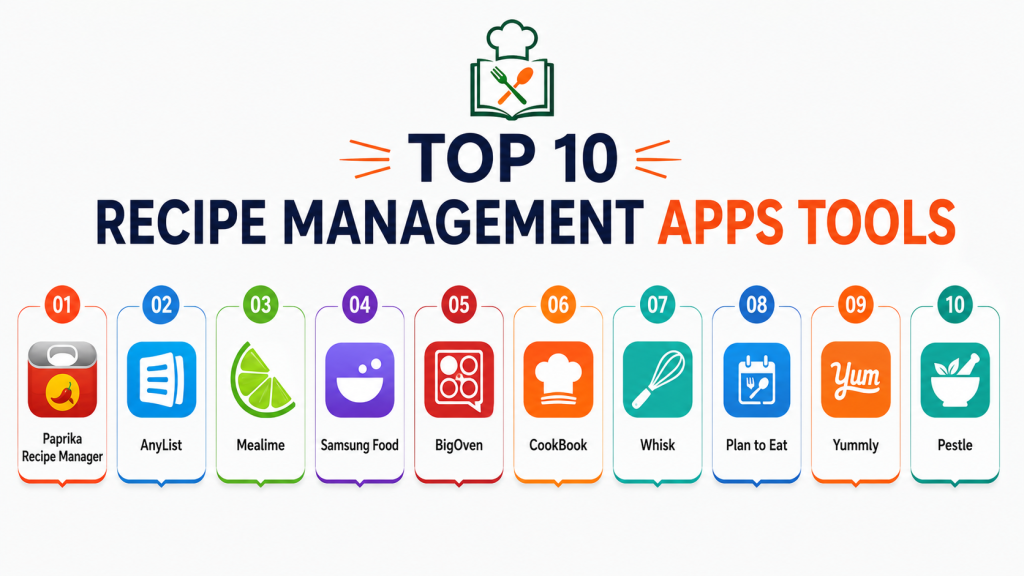
Top 10 Recipe Management Apps Tools
#1 — Paprika Recipe Manager
Short description:
Paprika Recipe Manager is one of the most popular recipe organization tools for home cooks and meal planners. It helps users save recipes, build meal plans, create shopping lists, and manage cooking workflows across devices.
Key Features
- Recipe importing
- Meal planning calendar
- Grocery list automation
- Pantry tracking
- Offline access
- Recipe scaling
- Cross-device synchronization
Pros
- Excellent recipe organization
- Strong offline functionality
- Easy meal planning workflows
Cons
- Interface feels dated compared to newer apps
- Limited social collaboration features
- No advanced AI meal recommendations
Platforms / Deployment
- iOS
- Android
- Windows
- macOS
- Cloud
Security & Compliance
- Cloud synchronization support
- Additional compliance details not publicly stated
Integrations & Ecosystem
Paprika focuses primarily on recipe organization and personal meal planning workflows.
- Cloud synchronization
- Shopping list integrations
- Cross-device support
- Recipe importing tools
Support & Community
Strong user community with reliable onboarding resources and long-term product stability.
#2 — AnyList
Short description:
AnyList combines grocery list management, recipe organization, and collaborative family planning in a clean and user-friendly mobile experience. It is ideal for households managing shared shopping and meal planning routines.
Key Features
- Shared grocery lists
- Recipe storage
- Meal planning
- Voice assistant support
- Pantry management
- Shopping reminders
- Family collaboration
Pros
- Excellent family collaboration
- Simple user interface
- Strong grocery management tools
Cons
- Limited advanced nutrition analytics
- Premium plan needed for some features
- Less suited for advanced meal tracking
Platforms / Deployment
- iOS
- Android
- Web
- Cloud
Security & Compliance
- Encryption practices publicly referenced
- Additional certifications not publicly stated
Integrations & Ecosystem
AnyList integrates well with smart home and shopping ecosystems.
- Siri support
- Smart speaker integrations
- Grocery planning tools
- Cloud synchronization
Support & Community
Strong onboarding experience with active family-oriented user communities.
#3 — Mealime
Short description:
Mealime focuses on guided meal planning and healthy recipe recommendations. It is designed for busy users wanting quick meal preparation and simplified grocery shopping workflows.
Key Features
- Personalized meal planning
- Grocery list automation
- Nutrition tracking
- Healthy recipe recommendations
- Meal customization
- Cooking instructions
- Smart meal suggestions
Pros
- Beginner-friendly design
- Excellent meal planning workflows
- Strong healthy eating support
Cons
- Smaller recipe customization ecosystem
- Premium features require subscription
- Limited advanced recipe management
Platforms / Deployment
- iOS
- Android
- Cloud
Security & Compliance
- Privacy protections publicly referenced
- Additional certifications not publicly stated
Integrations & Ecosystem
Mealime integrates wellness and shopping workflows for easier meal preparation.
- Grocery shopping support
- Nutrition tracking
- Wellness integrations
- Mobile synchronization
Support & Community
Good onboarding experience with practical cooking guidance and healthy lifestyle resources.
#4 — Samsung Food
Short description:
Samsung Food combines recipe management, meal planning, smart shopping, and connected kitchen experiences. It is particularly useful for users invested in Samsung smart device ecosystems.
Key Features
- Recipe organization
- Smart meal planning
- Grocery list management
- Nutrition analysis
- Smart kitchen support
- Personalized recommendations
- Cooking workflow management
Pros
- Strong smart kitchen integrations
- Useful recipe recommendation engine
- Easy grocery planning tools
Cons
- Best experience within Samsung ecosystem
- Limited advanced nutrition analytics
- Smaller community than leading competitors
Platforms / Deployment
- Android
- iOS
- Web
- Cloud
Security & Compliance
- Samsung ecosystem privacy protections
- Additional certifications not publicly stated
Integrations & Ecosystem
Samsung Food integrates meal planning with smart kitchen and wellness ecosystems.
- Samsung smart devices
- Recipe synchronization
- Grocery workflows
- Wellness tracking integrations
Support & Community
Growing global community with regular platform updates and smart cooking resources.
#5 — BigOven
Short description:
BigOven is a recipe management and meal planning platform focused on helping users organize recipes, reduce food waste, and simplify meal preparation workflows.
Key Features
- Recipe management
- Meal planning calendar
- Grocery list creation
- Leftover recipe suggestions
- Recipe sharing
- Cooking guidance
- Cloud synchronization
Pros
- Large recipe ecosystem
- Useful leftover management tools
- Strong cross-device synchronization
Cons
- Interface feels crowded
- Premium features require subscription
- Some imported recipes need formatting adjustments
Platforms / Deployment
- iOS
- Android
- Web
- Cloud
Security & Compliance
- Cloud account protections
- Additional compliance details not publicly stated
Integrations & Ecosystem
BigOven supports integrations focused on meal planning and recipe sharing.
- Grocery planning tools
- Cloud synchronization
- Recipe sharing ecosystem
- Meal planning workflows
Support & Community
Large cooking community with recipe-sharing features and active onboarding support.
#6 — CookBook
Short description:
CookBook focuses on recipe organization, AI-assisted importing, and digital cookbook management. It is ideal for users wanting clean recipe storage and structured meal preparation workflows.
Key Features
- AI recipe importing
- Recipe categorization
- Grocery list support
- Meal planning
- Offline recipe access
- Cloud backup
- Multi-device synchronization
Pros
- Clean and modern interface
- Strong recipe importing tools
- Good organizational structure
Cons
- Smaller ecosystem compared to larger competitors
- Limited advanced nutrition analytics
- Premium plan required for some cloud features
Platforms / Deployment
- iOS
- Android
- Web
- Cloud
Security & Compliance
- Cloud synchronization protections
- Additional certifications not publicly stated
Integrations & Ecosystem
CookBook focuses heavily on digital recipe organization and synchronization.
- Cloud backup
- Recipe importing
- Meal planning workflows
- Mobile synchronization
Support & Community
Growing user base with good onboarding support and practical recipe organization resources.
#7 — Whisk
Short description:
Whisk combines recipe saving, meal planning, and shopping list automation in a collaborative cooking ecosystem. It is popular among users who regularly discover recipes online.
Key Features
- Recipe importing
- Meal planning
- Grocery list automation
- Collaborative cooking
- Shopping integrations
- Smart recommendations
- Recipe sharing
Pros
- Excellent online recipe importing
- Strong collaboration features
- Good shopping list automation
Cons
- Requires internet connectivity for best experience
- Smaller advanced customization features
- Limited offline capabilities
Platforms / Deployment
- iOS
- Android
- Web
- Cloud
Security & Compliance
- Privacy protections publicly referenced
- Additional certifications not publicly stated
Integrations & Ecosystem
Whisk integrates with online cooking, shopping, and recipe ecosystems.
- Shopping integrations
- Recipe websites
- Cloud synchronization
- Meal planning tools
Support & Community
Active recipe-sharing community with strong onboarding experience for casual cooks.
#8 — Plan to Eat
Short description:
Plan to Eat is a meal planning and recipe organization platform focused on simplifying weekly cooking workflows and grocery shopping routines.
Key Features
- Drag-and-drop meal planning
- Recipe organization
- Grocery list generation
- Calendar-based planning
- Recipe importing
- Pantry tracking
- Batch cooking support
Pros
- Excellent meal planning workflows
- Easy grocery organization
- Strong recipe importing support
Cons
- Interface feels basic
- Limited advanced analytics
- No strong AI recommendation engine
Platforms / Deployment
- iOS
- Android
- Web
- Cloud
Security & Compliance
- Cloud account protections
- Additional compliance details not publicly stated
Integrations & Ecosystem
Plan to Eat focuses on meal planning efficiency and organization.
- Recipe importing
- Grocery workflows
- Meal planning calendars
- Cloud synchronization
Support & Community
Reliable support resources with a loyal meal-planning-focused user community.
#9 — Yummly
Short description:
Yummly combines smart recipe discovery, guided cooking, and personalized meal recommendations within a modern cooking platform.
Key Features
- Personalized recipe recommendations
- Guided cooking
- Smart filtering
- Grocery planning
- Recipe importing
- Nutrition insights
- Smart kitchen integrations
Pros
- Strong recipe discovery engine
- Beginner-friendly cooking support
- Useful personalization features
Cons
- Some premium functionality limited
- Smaller offline support
- Recipe organization less advanced than dedicated managers
Platforms / Deployment
- iOS
- Android
- Web
- Cloud
Security & Compliance
- Privacy protections publicly referenced
- Additional certifications not publicly stated
Integrations & Ecosystem
Yummly integrates cooking workflows with smart kitchen ecosystems.
- Smart kitchen devices
- Recipe ecosystems
- Grocery integrations
- Personalized meal planning
Support & Community
Large recipe discovery community with beginner-friendly cooking guidance.
#10 — Pestle
Short description:
Pestle is a modern recipe management application focused on clean design, recipe importing, and organized digital cooking experiences for Apple ecosystem users.
Key Features
- Recipe importing
- Guided cooking mode
- Grocery list management
- Meal planning
- Recipe categorization
- Offline support
- Clean cooking interface
Pros
- Modern and polished interface
- Excellent recipe importing
- Strong Apple ecosystem support
Cons
- Limited Android support
- Smaller ecosystem
- Fewer advanced collaboration features
Platforms / Deployment
- iOS
- macOS
- Cloud
Security & Compliance
- Apple ecosystem privacy protections
- Additional certifications not publicly stated
Integrations & Ecosystem
Pestle focuses on streamlined recipe management and Apple ecosystem compatibility.
- Apple ecosystem integrations
- Recipe importing tools
- Cloud synchronization
- Grocery workflows
Support & Community
Growing user community with strong onboarding and clean cooking workflow design.
Comparison Table
| Tool Name | Best For | Platforms Supported | Deployment | Standout Feature | Public Rating |
|---|---|---|---|---|---|
| Paprika Recipe Manager | Recipe organization | iOS, Android, Windows, macOS | Cloud | Offline recipe management | N/A |
| AnyList | Family meal planning | iOS, Android, Web | Cloud | Shared grocery lists | N/A |
| Mealime | Healthy meal planning | iOS, Android | Cloud | Personalized meal plans | N/A |
| Samsung Food | Smart kitchen workflows | Android, iOS, Web | Cloud | Smart kitchen integration | N/A |
| BigOven | Large recipe collections | iOS, Android, Web | Cloud | Leftover meal suggestions | N/A |
| CookBook | Digital cookbook organization | iOS, Android, Web | Cloud | AI recipe importing | N/A |
| Whisk | Online recipe importing | iOS, Android, Web | Cloud | Collaborative cooking | N/A |
| Plan to Eat | Weekly meal planning | iOS, Android, Web | Cloud | Calendar meal planning | N/A |
| Yummly | Recipe discovery | iOS, Android, Web | Cloud | Personalized recommendations | N/A |
| Pestle | Apple ecosystem cooking | iOS, macOS | Cloud | Modern cooking workflows | N/A |
Evaluation & Scoring of Recipe Management Apps
| Tool Name | Core 25% | Ease 15% | Integrations 15% | Security 10% | Performance 10% | Support 10% | Value 15% | Weighted Total |
|---|---|---|---|---|---|---|---|---|
| Paprika Recipe Manager | 9 | 8.5 | 7.5 | 7 | 8.5 | 8 | 8.5 | 8.3 |
| AnyList | 8 | 9 | 7.5 | 7 | 8 | 8 | 8.5 | 8.0 |
| Mealime | 8.5 | 9 | 7 | 7 | 8 | 8 | 8 | 8.0 |
| Samsung Food | 8 | 8 | 8 | 7 | 8 | 7.5 | 8 | 7.9 |
| BigOven | 8.5 | 7.5 | 7.5 | 7 | 8 | 8 | 8 | 7.9 |
| CookBook | 8 | 8.5 | 7 | 7 | 8 | 7.5 | 8 | 7.8 |
| Whisk | 8 | 8.5 | 8 | 7 | 8 | 7.5 | 8 | 8.0 |
| Plan to Eat | 8 | 8 | 7 | 7 | 8 | 7.5 | 8.5 | 7.8 |
| Yummly | 8.5 | 8.5 | 8 | 7 | 8 | 8 | 7.5 | 8.0 |
| Pestle | 7.5 | 9 | 7 | 7 | 8 | 7.5 | 8 | 7.8 |
These scores are comparative and designed to help buyers understand strengths across usability, recipe organization, integrations, and long-term cooking workflow value. Some tools prioritize simplicity and family collaboration, while others focus on advanced recipe management and smart kitchen integrations. Buyers should evaluate both usability and ecosystem compatibility before selecting a platform.
Which Recipe Management Apps Tool Is Right for You?
Solo / Freelancer
Solo users often benefit from lightweight and easy-to-use applications such as Paprika Recipe Manager, Mealime, or Yummly because they simplify meal planning and recipe organization without unnecessary complexity.
SMB
Small wellness groups, family households, and collaborative cooking environments may prefer AnyList or Whisk because of their shared grocery lists and collaborative planning features.
Mid-Market
Advanced meal planners and wellness-focused users may benefit from Samsung Food or CookBook because of stronger recipe organization and smart workflow capabilities.
Enterprise
Larger wellness and smart kitchen ecosystems may prioritize platforms with mature synchronization, integrations, and broader ecosystem compatibility such as Samsung Food or BigOven.
Budget vs Premium
Budget-conscious users may prefer Plan to Eat or AnyList because they provide strong organization features without excessive complexity. Premium users seeking advanced smart features may prefer Samsung Food or Yummly.
Feature Depth vs Ease of Use
Paprika Recipe Manager and CookBook provide deeper recipe organization capabilities, while Mealime and Yummly focus more on beginner-friendly experiences and guided meal planning.
Integrations & Scalability
Users invested in smart kitchens and wellness ecosystems may benefit more from Samsung Food, Whisk, or Yummly because of broader ecosystem compatibility.
Security & Compliance Needs
Privacy-conscious users should evaluate how recipe data, shopping habits, and wellness information are synchronized and stored across cloud ecosystems and connected devices.
Frequently Asked Questions
1. What are Recipe Management Apps used for?
Recipe Management Apps help users save recipes, organize meal plans, create grocery lists, and simplify cooking workflows across mobile and web devices.
2. Are Recipe Management Apps useful for meal planning?
Yes. Most modern platforms provide meal planning calendars, grocery automation, and recipe recommendations that make weekly meal preparation easier and more organized.
3. Which Recipe Management App is best for beginners?
Mealime, Yummly, and AnyList are commonly recommended for beginners because they provide user-friendly interfaces and simplified meal planning experiences.
4. Can these apps generate grocery lists automatically?
Many leading platforms automatically create shopping lists based on selected recipes and meal plans, helping users save time during grocery shopping.
5. Do Recipe Management Apps work offline?
Some applications such as Paprika Recipe Manager provide strong offline functionality, while others require internet connectivity for full feature access.
6. Are Recipe Management Apps good for healthy eating?
Yes. Many apps include nutrition insights, meal recommendations, and wellness tracking features that support healthier eating habits and structured meal planning.
7. Why are integrations important in Recipe Management Apps?
Integrations help synchronize recipes, shopping workflows, smart kitchen devices, wellness tools, and grocery services into a unified cooking experience.
8. Are Recipe Management Apps secure?
Most platforms provide standard account protections and cloud synchronization security. However, enterprise-grade compliance transparency varies between vendors.
9. What mistakes do users commonly make with recipe apps?
Common mistakes include poor recipe categorization, inconsistent meal planning, overcomplicated grocery workflows, and failing to maintain updated recipe collections.
10. How should I choose the right Recipe Management App?
Start by identifying your primary goal such as meal planning, recipe organization, grocery automation, or healthy cooking. Then evaluate integrations, usability, and long-term workflow compatibility before selecting a platform.
Conclusion
Recipe Management Apps have evolved into comprehensive digital cooking platforms that combine meal planning, grocery automation, recipe organization, wellness tracking, and smart kitchen integrations. Casual users may prefer beginner-friendly platforms such as Mealime, Yummly, or AnyList, while advanced users often benefit more from deeper organization tools like Paprika Recipe Manager or CookBook. The ideal solution depends on cooking habits, family collaboration needs, smart device ecosystems, and the level of automation required. Buyers should also evaluate subscription costs, offline access, integration flexibility, and long-term usability before selecting a platform. Rather than searching for a single universal winner, shortlist two or three tools that align with your cooking style, test them consistently over several weeks, and validate whether they genuinely improve meal planning, recipe organization, and daily cooking efficiency.