Introduction
A beginner opens a messaging app and sees a screenshot showing a 400% profit made in three days. A friendly “analyst” offers free stock tips, shares a link to a professional-looking trading app, and encourages a small test deposit. Within weeks, the investor puts in their life savings, only to discover that the profits were fake and the withdrawal button does not work.
This scenario happens every day across the globe. Retail investors want to grow their savings, beat inflation, and build financial security. However, the stock market has complex rules, fast-moving prices, and technical terms that can easily confuse newcomers. Fraudsters exploit this knowledge gap by presenting complicated scams as simple shortcuts to wealth.
Falling for a financial scam does more than cause stress. It can wipe out years of hard-earned savings, leave you with tax or legal complications, and destroy your confidence in genuine wealth-building tools.
This guide explains how modern stock market scams work behind the scenes. You will learn the exact red flags to watch for, how to verify any financial platform or advisor independently, and the practical habits that keep your money safe on Stocksmantra.com and beyond.
Understanding How Stock Market Scams Work
To protect your money, you first need to understand the basic mechanics of legitimate investing versus financial fraud.
In a genuine stock market transaction, your money flows through strictly regulated pipes. When you buy a share, your order goes through a licensed stockbroker (an authorized middleman who executes trades for you) to an official stock exchange (a regulated marketplace like the NYSE, NASDAQ, NSE, or BSE). Your purchased shares are stored electronically in a custodial or demat account (a secure digital vault held by an authorized depository, not by the broker personally).
Scammers bypass these regulated pipes entirely. Instead of connecting you to a real stock exchange, they build fake environments that look identical to real ones.
The Anatomy of a Modern Investment Scam
Most financial frauds follow a predictable four-step operational workflow:
- The Hook: Scammers use social media ads, fake celebrity endorsements, or unsolicited messages to offer free market education, exclusive stock tips, or automated trading software.
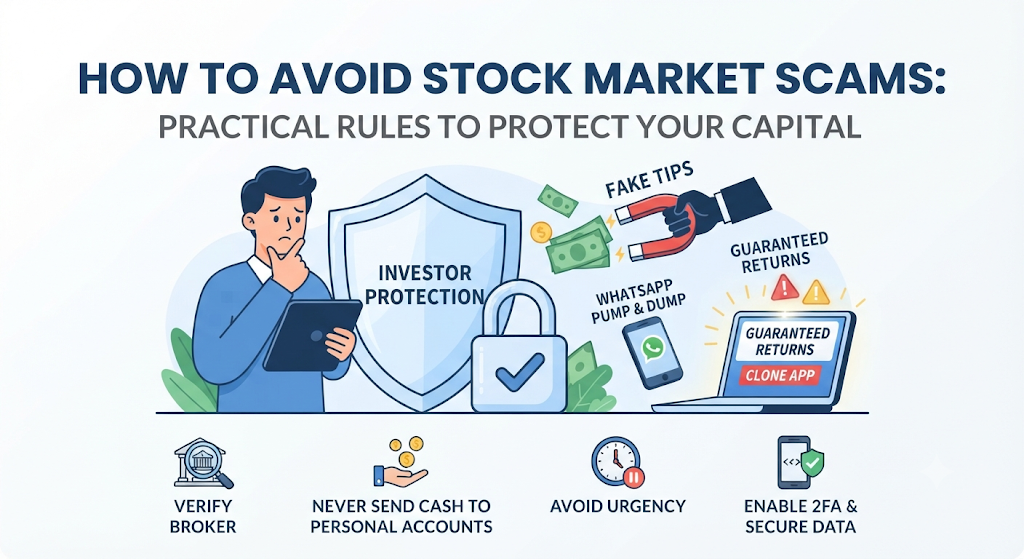
- Trust Building: They move you into a private group on WhatsApp, Telegram, or Discord. Inside, fake members—often bots or paid accomplices—post fake profit screenshots and praise the “mentor.”
- The Controlled Win: They encourage you to invest a small amount on their proprietary app or website. They manually manipulate the numbers on your screen to show quick profits and may even let you withdraw a small amount to prove the system works.
- The Trap: Once you trust the platform and deposit a large sum, the exit closes. When you try to withdraw your funds, they demand upfront “taxes,” “clearance fees,” or “margin deposits.” Even if you pay, your money is never returned.
Common Types of Stock Market Scams
Fraudsters constantly update their technology, but their core strategies fall into clear categories. Knowing how each one works helps you spot them early.
1. Pump-and-Dump Schemes
A pump-and-dump scheme is a form of market manipulation where fraudsters artificially inflate the price of a cheap, low-volume stock and then sell their own shares at the peak.
- Why it matters: When the scammers sell their shares, the stock price crashes immediately, leaving regular investors stuck with worthless shares they cannot sell.
- How it works: Scammers quietly buy large amounts of a penny stock (a low-priced share of a small, poorly traded company). Next, they spread false hype via bulk text messages, social media influencers, or fake newsletters claiming the company is about to sign a massive deal. As beginners rush to buy, the price shoots up. The scammers then dump all their shares, causing the price to collapse.
2. Fake Trading Apps and Cloned Websites
Clone firms are fraudulent websites or mobile apps that copy the exact name, logo, and design of legitimate brokerage companies to trick investors.
- Why it matters: Because the app looks identical to a trusted brand, investors transfer money thinking their funds are protected by national investor compensation laws.
- How it works: Scammers buy search engine ads or send links that lead to a lookalike web address (for example, changing a single letter in a famous broker’s domain name). These apps are often downloaded outside official app stores via direct installation files. The price charts inside the app are simulated, meaning your money goes straight into the scammer’s bank account rather than the stock market.
3. Pig Butchering (Long-Con Investment Fraud)
Pig butchering is a long-term scam where a fraudster builds a personal friendship or romantic relationship with the victim before introducing a fake investment opportunity.
- Why it matters: Unlike quick scams, this method relies on deep emotional trust, causing victims to ignore normal financial warnings and invest massive amounts—sometimes even borrowing money to invest.
- How it works: It often begins with a seemingly accidental text message (“Hi, are we still meeting for golf tomorrow?”). When you reply that they have the wrong number, the sender strikes up a polite conversation. Over weeks or months, they casually mention how they make steady money trading stocks, gold, or foreign currency through an “insider uncle” or special algorithm, eventually offering to teach you.
4. Unauthorized Portfolio Management and Guaranteed Returns
This occurs when an individual or unregistered company asks for your brokerage login details or direct cash transfers to trade on your behalf for a share of the profits.
- Why it matters: Legitimate financial professionals never ask for your personal passwords, and no one can legally guarantee profits in the stock market.
- How it works: A self-proclaimed “fund manager” promises a fixed monthly return—such as 5% to 10% every month—regardless of market conditions. In reality, they either steal the cash outright, run a Ponzi scheme (paying old investors using money collected from new investors), or take reckless risks with your account that wipe out your balance.
5. Impersonation of Regulators and Registered Advisors
Scammers frequently steal the real registration numbers and photos of licensed financial advisors or government officials to appear legitimate.
- Why it matters: Even cautious investors who check registration databases can be fooled if they do not verify the contact details directly from the official registry.
- How it works: Fraudsters create fake social media profiles using a real analyst’s name and license number. When you check the regulator’s website, the license appears valid. However, the scammer uses their own phone number, email address, and bank account to collect fees or deposits.
Red Flags: Real vs. Fraudulent Investment Offers
Comparing standard market behavior with common fraud tactics makes warning signs obvious.
| Feature | Legitimate Stock Investing | Stock Market Scam |
| Return Promises | Explains that returns vary and loss of capital is possible. | Promises guaranteed, fixed, or unusually high daily/monthly profits. |
| Urgency | Gives you time to read disclosures and decide calmly. | Pressures you to act immediately before a “secret window” closes. |
| Payment Method | Funds go only to a verified corporate brokerage account in your own name. | Asks for transfers to personal bank accounts, gift cards, or unverified crypto wallets. |
| App Download | Available directly on official Apple App Store or Google Play Store under the verified corporate developer. | Sent via direct APK links, custom configuration profiles, or unlisted web links. |
| Communication | Uses official corporate email domains and documented client portals. | Operates primarily through encrypted WhatsApp, Telegram, or Signal groups. |
| Withdrawals | Automated withdrawal to your linked bank account within standard settlement timelines. | Demands upfront “tax,” “unlock fee,” or “verification deposit” before releasing funds. |
Step-by-Step Verification Framework Before Investing
Before you transfer a single dollar or rupee to any platform or advisor, run through this five-step verification process.
Step 1: Check Official Regulatory Registries
Every country has a primary financial regulator that maintains a public database of licensed brokers and advisors (such as the SEC and FINRA in the United States, SEBI in India, or the FCA in the United Kingdom).
- Search the exact legal name of the company or advisor on the regulator’s official website.
- Verify their license status. Ensure they are authorized for the specific service they are offering (for example, being registered as a mutual fund distributor does not authorize someone to manage a stock portfolio).
Step 2: Cross-Check Contact Details Independently
Do not trust the website links, phone numbers, or certificates sent to you by the person pitching the investment.
- Look up the official website and customer support number listed directly inside the regulator’s registry.
- Call that official number or email that verified domain to confirm whether the person messaging you actually works for them.
Step 3: Verify the Bank Account Destination
Legitimate brokers use dedicated, regulated client bank accounts that clearly display the registered corporate name.
- Never transfer investment capital to an individual’s personal savings account.
- Never transfer money to a third-party shell company whose name does not match the registered broker.
- Be suspicious if the payment instructions change every time you make a deposit.
Step 4: Inspect the App and Domain History
Check the technical footprint of the platform you are about to use.
- Use a free WHOIS lookup tool (a public database showing when a website domain was registered). If a firm claims to have 15 years of Wall Street experience, yet their website was created three weeks ago, it is a scam.
- On mobile app stores, check the developer name, download count, and release date. Scammers often publish brand-new apps with a handful of generic five-star reviews.
Step 5: Test a Small Withdrawal Early
If you are trying a new, verified platform, start with a minimal amount you can afford to lose. After a few days, request a withdrawal back to your primary bank account. A regulated broker processes standard withdrawals smoothly without asking for extra payments.
Common Mistakes That Put Investors at Risk
Even intelligent beginners make operational mistakes that expose them to financial fraud. Understanding why these mistakes happen helps you avoid them.
Mistake 1: Treating Social Media Screenshots as Proof
- What people do: Investors trust edited screenshots of massive trading profits shared on social media or messaging groups.
- Why they do it: Visual numbers trigger emotional excitement and FOMO (Fear Of Missing Out—the anxiety that others are making easy money while you are left behind).
- Why it causes problems: Scammers use demo accounts, basic photo editing, or fake trading simulators to generate any profit number they want in seconds.
- What to do instead: Ignore all profit screenshots. Judge any financial opportunity solely by its regulatory registration and audited financial disclosures.
Mistake 2: Sharing Screen Access or Login Credentials
- What people do: Beginners allow a “support agent” or “mentor” to view their screen using remote desktop apps (like AnyDesk or TeamViewer) or share their brokerage passwords and OTP (One-Time Password—a temporary security code sent to your phone).
- Why they do it: They feel overwhelmed by technical setup steps and want someone experienced to configure the account for them.
- Why it causes problems: Remote access lets criminals silently drain your bank accounts, change your passwords, and execute unauthorized trades in seconds.
- What to do instead: Never install remote-access software at the request of any financial representative, and never share passwords or security codes with anyone.
Mistake 3: Paying “Taxes” Upfront to Release Profits
- What people do: When a fake trading app blocks a withdrawal and demands a 20% “capital gains tax” or “anti-money laundering fee,” victims pay it out of pocket.
- Why they do it: They believe their large balance on the screen is real and fear losing it if they do not pay the fee.
- Why it causes problems: Legitimate brokers either deduct applicable statutory charges automatically from your balance or leave tax filing to you and your government tax authority. Paying an upfront fee only increases your total loss.
- What to do instead: Stop all payments immediately the moment a platform demands extra money to unlock your own funds.
Mistake 4: Investing in Illiquid Penny Stocks Based on Tips
- What people do: Investors buy heavily promoted, tiny companies trading at very low prices based on unsolicited tips.
- Why they do it: They assume a $1 stock can easily double to $2 faster than a $200 blue-chip stock.
- Why it causes problems: These stocks suffer from low liquidity (a lack of active buyers and sellers in the market). When the pump-and-dump group exits, there are no buyers left, trapping you in a falling stock you cannot sell at any price.
- What to do instead: Stick to liquid, well-researched companies listed on major exchanges, or use regulated index funds (investment funds that automatically track a broad market index like the S&P 500 or Nifty 50).
Essential Security Habits for Online Investing
Protecting your brokerage account requires strong digital hygiene alongside smart financial judgment.
Enable Multi-Factor Authentication (MFA)
Multi-Factor Authentication (MFA) is a security layer that requires two or more verification methods—such as your password plus a code from an authenticator app—before granting account access.
- Use an authenticator app (like Google Authenticator or Microsoft Authenticator) rather than SMS text messages whenever possible, as phone numbers can be hijacked through SIM-swapping (a fraud technique where criminals trick your mobile carrier into transferring your phone number to their SIM card).
Use Unique Passwords and Dedicated Email Addresses
Never reuse your email or social media passwords on your brokerage account. If a random shopping website suffers a data breach, criminals will immediately test those leaked passwords on major financial platforms. Using a dedicated email address solely for banking and investing reduces exposure to phishing emails (fraudulent messages disguised as official alerts to steal your login details).
Review Account Statements Regularly
Check your official trade confirmations and depository holding statements directly from the clearinghouse or depository—not just inside your broker’s app dashboard. Independent depository statements confirm that the shares you paid for actually exist in your legal name.
Pre-Investment Safety Checklist
Run through this quick checklist before committing funds to any new stock, advisor, or platform:
- [ ] Have I verified the broker or advisor’s license directly on the official government regulator’s website?
- [ ] Does the website domain match the exact official URL listed in the regulatory database?
- [ ] Am I downloading the trading app strictly from the official Apple App Store or Google Play Store?
- [ ] Is the bank account receiving my deposit registered under the exact corporate name of the licensed broker?
- [ ] Are the expected returns realistic, with clear disclosures about market risk?
- [ ] Have I made this decision calmly without pressure from a messaging group or cold caller?
- [ ] Have I kept my passwords, OTPs, and screen access completely private?
Key Terms to Know
- Custodial / Demat Account: A secure electronic account held by a regulated depository that stores your purchased shares in digital form, keeping them separate from your broker’s business funds.
- Fiduciary: A financial professional legally and ethically required to act strictly in your best financial interest rather than earning hidden commissions from selling risky products.
- Liquidity: How quickly and easily a stock can be bought or sold in the market without causing a major change in its price.
- Market Manipulation: Intentional actions designed to deceive investors by artificially raising, lowering, or controlling the price of a stock.
- Penny Stock: A share of a very small company that trades at a low price, usually outside major market indexes, carrying high volatility and manipulation risk.
- Phishing: Fraudulent emails, text messages, or websites that pretend to be trusted institutions to trick you into revealing passwords or financial details.
- Ponzi Scheme: An investment fraud that pays returns to earlier investors using capital contributed by newer investors rather than legitimate business profits.
- Pump-and-Dump: A scheme where scammers buy a cheap stock, spread false hype to drive the price up, and sell their shares at the peak before the price crashes.
- Regulatory Registry: An official public database maintained by a government financial authority listing all licensed brokers, advisors, and investment firms.
- Settlement: The official process where purchased shares are delivered to the buyer’s account and cash is transferred to the seller’s account after a trade executes.
Frequently Asked Questions (FAQs)
1. Can anyone legally guarantee profits in the stock market?
No. Stock prices depend on company performance, economic conditions, and buyer demand, all of which carry uncertainty. Any person or platform promising guaranteed, risk-free, or fixed daily returns from stock trading is either breaking financial regulations or running a scam.
2. Are WhatsApp and Telegram stock tip groups safe to join?
Most unsolicited WhatsApp and Telegram groups offering free stock tips or “VIP trading signals” are fronts for pump-and-dump schemes or fake trading apps. Even if a few early tips appear accurate, the group operators usually use those wins to lure members into a much larger trap later.
3. How can I check if a trading app is real or fake?
Verify the broker’s registration on your country’s official financial regulator website first. Then, visit the broker’s verified website and click their official app store link rather than searching randomly or clicking links sent over messaging apps. Check the developer name, company address, and review history on the app store page.
4. What should I do if a platform asks for a tax or fee before I can withdraw my money?
Do not pay it. Legitimate brokers never ask you to wire extra external money to pay taxes or unlock withdrawals. If a platform demands upfront payment to release your funds, it is a confirmed scam, and sending more money will only increase your financial loss.
5. Why do scammers let victims withdraw a small amount of money at the beginning?
Scammers allow small early withdrawals to overcome your natural skepticism. Once you see real cash land in your bank account, you assume the platform is trustworthy and feel comfortable depositing much larger amounts—at which point the scammers block all future withdrawals.
6. Is it safe to let a trading mentor manage my brokerage account?
No. Sharing your brokerage username, password, or two-factor authentication codes violates your broker’s terms of service and removes your legal protection against unauthorized trades. Only licensed portfolio managers operating through formal, regulated custodial agreements are authorized to manage client funds.
7. What steps should I take immediately if I realize I have been scammed?
Stop all communication and payments immediately. Contact your bank or payment provider right away to report the fraudulent transaction and request a recall or freeze if possible. Change your banking and email passwords, remove any remote-access apps from your devices, and file an official complaint with your national cybercrime unit and financial market regulator.
8. How do pump-and-dump scammers pick which stocks to target?
They target small, thinly traded companies with low market capitalization and low daily trading volume. Because very few institutional investors watch these stocks, a coordinated group of scammers can easily push the price up with relatively small amounts of money before selling out to retail buyers.
Conclusion
Avoiding stock market scams does not require advanced financial math or insider connections. It comes down to disciplined verification and healthy skepticism. Real wealth in the stock market is built gradually through regulated brokers, transparent investments, and informed decisions—never through secret chat groups or guaranteed return promises.
Before trusting any platform or advisor with your savings, verify their regulatory license independently, confirm where your money is actually going, and protect your digital security credentials. By following clear verification habits and staying away from high-pressure offers, you keep full control over your capital and build a safer foundation for long-term investing.