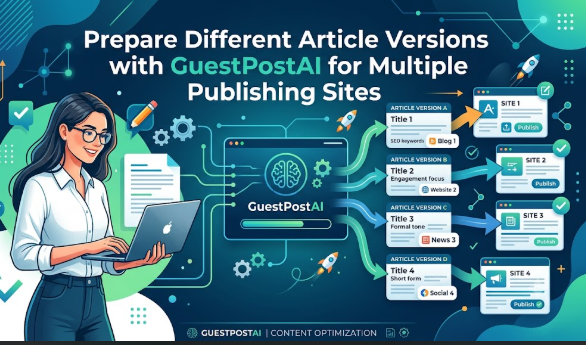
Guest posting remains one of the more practical ways for businesses and marketers to share expertise, reach new audiences, and support broader content efforts. At its core, the approach involves creating valuable articles and placing them on relevant third-party sites. When done thoughtfully, it helps build visibility and relationships. Yet the day-to-day reality often looks far less smooth.
Finding suitable websites, drafting articles from scratch, producing images, coordinating with publishers, tracking deadlines, and managing multiple campaigns quickly turns into a patchwork of spreadsheets, email threads, freelancers, and scattered files. As the volume grows, the manual overhead becomes hard to sustain. Teams spend more time on logistics than on strategy or quality.
This is where centralized, AI-supported platforms have started to change the picture. Tools that bring content generation, site discovery, scheduling, publishing, and campaign oversight into one place reduce the friction that traditionally slows guest posting. GuestPostAI is one such platform. It was built to address the fragmented nature of guest posting workflows by combining AI writing, image generation, website discovery, scheduling, publishing options, and project management in a single environment. The goal is not to replace human judgment but to handle repetitive steps so marketers, agencies, and publishers can focus on relevance, quality, and results.
What is GuestPostAI?
GuestPostAI is an AI guest posting platform designed to streamline the full cycle of creating and placing guest content. It brings together an AI guest post generator, image creation tools, content templates, website search and filtering, a guest post marketplace, scheduling features, and campaign management functions. Users can move from idea to published piece without constantly switching between separate tools or managing endless external communications.
The platform was developed because traditional guest posting workflows scale poorly. Writing original articles takes time. Finding and vetting websites requires research. Coordinating publication dates, payments, revisions, and tracking often relies on manual systems that break under volume. GuestPostAI aims to solve these pain points by centralizing the process. Content buyers and publishers both have a place in the system. Writers and marketers can generate drafts, refine them, select sites, submit requests, schedule publication, and monitor progress. Publishers can list their sites, receive requests, and manage incoming content through the same environment.
In practice, the platform supports prompt-based content creation, reusable templates, draft management, preview options, website comparison, instant or scheduled publishing, role-based access for teams, payment handling, activity history, and reporting. The result is a more organized workflow that keeps everything connected rather than scattered across documents and inboxes.
Why Traditional Guest Posting Can Be Time-Consuming
Anyone who has run guest posting campaigns knows the friction points. Locating relevant websites often means searching for “write for us” pages, checking metrics, reviewing guidelines, and maintaining lists that quickly go out of date. Writing each article from a blank page takes hours, especially when the topic must fit a specific audience and editorial style. Featured images need to be sourced or designed. Multiple freelancers may be involved for research, writing, editing, and design, which introduces coordination overhead.
Once content is ready, outreach begins. Emails go out, responses trickle in, revisions are requested, and publication dates are negotiated. Tracking everything usually happens in spreadsheets: which sites were contacted, status of each piece, payment details, live URLs, and performance notes. As campaigns multiply, the spreadsheets grow, deadlines slip, and visibility into the overall effort declines.
Centralized workflows improve efficiency by reducing context switching and manual handoffs. When content generation, site selection, scheduling, and tracking live in one system, teams spend less time chasing files and more time refining strategy and quality.
Why AI is Changing Guest Posting Workflows
AI tools help with several practical parts of the process. Content generation can produce structured first drafts based on a topic, audience, and guidelines, giving writers a solid starting point instead of a blank screen. Consistency becomes easier when templates and prompts guide tone, structure, and key messages across multiple pieces. Time savings appear in the drafting and image stages, which free capacity for review, customization, and relationship-building.
Better organization follows when drafts, versions, selected websites, and campaign statuses sit in one place. Campaigns move faster because the time between idea and submission shrinks. Workflow management improves as teams can assign roles, track progress, and maintain visibility without constant status meetings or email chains. The value lies in reducing repetitive labor so human effort focuses on judgment, originality, and relevance.
Who Should Use GuestPostAI?
Different users face different bottlenecks. GuestPostAI addresses many of them through the same core capabilities.
Bloggers often struggle to maintain a steady publishing rhythm while also placing content elsewhere. The platform helps by speeding draft creation and simplifying site selection, so they can focus on topics they know well.
SEO professionals need relevant placements that fit topical clusters. Website search, filtering, and comparison tools support more deliberate site choices, while AI-assisted content helps produce pieces aligned with target themes.
Digital marketing agencies manage multiple clients and campaigns simultaneously. Project management, role-based access, reusable templates, and campaign tracking reduce the administrative load of coordinating writers, editors, and outreach.
Content writers benefit from prompt-based generation and templates that provide structure, then spend their time refining voice, adding insights, and ensuring accuracy.
Content marketing teams gain a shared workspace for drafts, reviews, and publication calendars, which improves coordination across planning and execution.
Marketing managers need visibility into progress and resource use. Activity history, reporting, and centralized project views support oversight without constant check-ins.
Freelancers can generate drafts faster, manage multiple client projects in one place, and handle site selection and submission more efficiently.
Startups often operate with limited time and headcount. An integrated flow from content to publication helps them execute guest posting without building large internal teams.
SaaS companies typically need educational or thought-leadership content distributed across relevant sites. Templates and scheduling support consistent messaging and planned rollouts.
eCommerce businesses can use the platform to create and place content around product categories, seasonal themes, or customer education topics.
Small businesses gain access to a structured process that would otherwise require significant manual effort or external coordination.
Enterprise marketing teams benefit from role-based access, version management, team collaboration features, and scalable campaign handling.
PR agencies can treat guest placements as part of broader visibility efforts, using the marketplace and scheduling tools to organize outreach.
Link building specialists find value in website discovery, filtering, and comparison features that support more intentional site selection.
Brand managers appreciate editorial control, templates that maintain consistency, and the ability to review content before it goes live.
Website owners and publishers can list sites, receive publishing requests, and manage incoming content through the platform’s marketplace and management tools.
Influencers may use it to create and place content that expands reach beyond their primary channels.
Educational institutions can distribute research summaries, guides, or expert perspectives more systematically.
Non-profit organizations benefit from efficient content creation and placement when resources are limited.
Growing businesses gain a repeatable process that scales as content needs increase.
In each case the practical benefit is the same: fewer scattered tools, clearer progress tracking, and more time for the parts of the work that require human expertise.
Core Features of GuestPostAI
AI Guest Post Generator This tool creates structured article drafts from topics, prompts, or templates. It matters because starting from a blank page is often the slowest step. The practical benefit is a usable first version that writers can refine rather than invent entirely.
AI Image Generation Featured images can be produced alongside the text. Consistent visuals support professional presentation without separate design requests for every piece.
AI Content Templates Reusable structures guide tone, length, sections, and key elements. Templates reduce variation in quality and speed up production across campaigns.
Prompt-Based Content Creation Users guide the AI with specific instructions. This keeps outputs closer to the intended angle and audience.
Content Editing Built-in editing tools allow review and refinement inside the platform. Changes stay connected to the draft and project.
Draft Management Multiple versions and statuses can be organized. Teams avoid losing track of which version is current.
Content Preview Seeing the piece in a readable format before submission helps catch issues early.
Guest Post Marketplace A space where content buyers and publishers connect. It simplifies finding opportunities and managing requests.
Website Search Users can look for sites that match their needs instead of relying solely on external research.
Website Filtering Criteria such as category, relevance, or other attributes help narrow options efficiently.
Website Categories Organized groupings make discovery more structured.
Website Comparison Side-by-side views support better selection decisions.
Website Selection Chosen sites feed directly into publishing requests and campaign tracking.
Publishing Requests Formal submission of content to selected publishers happens inside the system.
Instant Publishing When available and approved, content can go live without delay.
Scheduled Publishing Dates can be set in advance for planned rollouts.
Publishing Calendar A visual overview of upcoming and completed publications improves coordination.
Campaign Management Groups of related posts and sites can be tracked as a unit.
Guest Post Project Management Individual projects keep content, sites, and status organized.
Website Management Users maintain lists of preferred or previously used sites.
Publisher Management Relationships and request history stay accessible.
Role-Based Access Teams assign permissions so the right people can edit, approve, or publish.
Content Version Management Earlier drafts remain available for reference or rollback.
Payment Management Transactions related to publishing can be handled within the workflow.
Order Tracking Status of requests and publications is visible.
Activity History A record of actions supports accountability and review.
Team Collaboration Multiple users can work on the same projects with shared visibility.
Workflow Management Stages from draft to publication follow a clearer path.
Reusable Templates Once refined, structures can be applied repeatedly.
Editorial Control Human review remains central before anything goes live.
Reporting & Campaign Monitoring Progress and outcomes can be reviewed without rebuilding spreadsheets.
Together these features turn a fragmented process into a more continuous flow.
Step-by-Step Guide to Using GuestPostAI
A typical workflow looks like this:
Step 1 – Choose a guest post topic Select a subject that fits both your goals and the likely audience of target sites.
Step 2 – Generate AI content Use the AI guest post generator with a clear prompt or template to produce a first draft.
Step 3 – Review and edit the article Refine accuracy, voice, examples, and any brand-specific points. Human review is essential.
Step 4 – Generate a featured image Create a supporting visual that matches the article’s tone and subject.
Step 5 – Select a reusable template Apply or adjust a template for structure and consistency if needed.
Step 6 – Search for suitable publishing websites Use the platform’s search and category tools to find relevant options.
Step 7 – Compare available websites Review differences in focus, audience, and other factors.
Step 8 – Select a publisher Choose the sites that best match the content and goals.
Step 9 – Submit the publication request Send the finished piece through the system.
Step 10 – Choose immediate or scheduled publishing Decide whether the post should go live right away or on a planned date.
Step 11 – Complete payment Handle any associated costs inside the platform where applicable.
Step 12 – Track campaign progress Monitor status, live links, and overall campaign activity from the central dashboard.
Each step builds on the previous one, keeping the work connected rather than scattered.
How Different Teams Can Collaborate Using GuestPostAI
SEO teams can focus on topic relevance and site selection. Content teams handle drafting and refinement. Marketing teams set goals and review messaging. Editors apply quality standards. Outreach or publisher-facing roles manage requests and relationships. Managers monitor progress and resource use. Publishers receive and process submissions.
Centralized access, role permissions, shared drafts, version history, and activity logs reduce the need for constant status updates. Everyone works from the same information, which improves coordination and reduces duplicated effort.
How GuestPostAI Supports Different Marketing Goals
For content marketing, the platform speeds production and distribution of useful articles. Thought leadership benefits from consistent, well-placed pieces that demonstrate expertise. Brand awareness grows through placement on relevant sites. SEO campaigns gain structured support for topical content distribution. Link building efforts become more organized through deliberate site selection and tracking. PR campaigns can incorporate guest placements as part of broader visibility work. Product launches can schedule supporting content in advance. Educational content reaches wider audiences through targeted publishers. Authority building happens through steady, relevant contributions rather than one-off efforts.
Real Business Use Cases
Challenge → Solution → Practical Outcome structures illustrate how the platform fits different situations.
A digital marketing agency juggling campaigns for several clients struggled with scattered drafts, separate outreach lists, and unclear status updates. Using GuestPostAI, the team generated drafts with shared templates, selected sites through the marketplace tools, scheduled publications, and tracked everything in one project view. Coordination improved and delivery timelines became more predictable.
A startup with a small team needed to place educational content but lacked capacity for full manual outreach and writing. They used the AI generator for initial drafts, refined them internally, found relevant sites, and scheduled a series of posts. The process became manageable without expanding headcount.
A SaaS company wanted consistent thought-leadership pieces across industry sites. Templates maintained messaging consistency, the AI tools accelerated drafting, and the publishing calendar organized the rollout. The team maintained a steady presence without constant reinvention.
An enterprise marketing team required role-based control and version history for compliance and quality. The platform’s access settings and project management features supported multiple contributors while keeping oversight centralized.
A publisher looking for reliable content submissions listed sites on the marketplace, received structured requests, and managed incoming pieces more efficiently than through open email inboxes.
A personal brand focused on expertise-sharing used the tools to produce and place articles more regularly, expanding reach beyond a single owned channel.
An educational organization distributed research summaries and guides by generating structured drafts, selecting appropriate sites, and tracking publications as a coordinated effort.
A content writer freelancing for multiple clients organized projects separately, reused effective templates, and handled site selection and submission within one system, reducing administrative time.
Common Mistakes to Avoid
Choosing websites based only on traffic numbers can lead to poor audience fit. Relevance to the topic and readers matters more. Publishing AI-generated content without careful review risks inaccuracies or generic tone. Always edit for accuracy, insight, and brand voice. Ignoring a publisher’s editorial guidelines reduces acceptance chances. Read and follow them. Weak campaign planning leaves deadlines and priorities unclear. Define goals and timelines first. Inconsistent templates create uneven quality. Standardize where it helps. Managing everything manually becomes unsustainable as volume grows. Centralize what can be centralized. Publishing near-duplicate content across sites harms both value and perception. Customize each piece. Selecting sites solely by metrics without checking audience relevance wastes effort. Match content to the actual readers.
Practical alternatives include thorough review, relevance-focused site selection, clear planning, template use for consistency, and treating AI output as a starting point rather than a finished product.
Tips for Better Guest Posting Workflows
Review every AI-generated draft carefully before submission. Customize templates to reflect brand voice and audience needs. Prioritize website relevance over pure metrics. Schedule campaigns in advance so publication dates support broader plans. Maintain consistency in messaging and quality. Organize work into clear projects. Track progress and outcomes so future campaigns improve. Keep content accurate and updated where needed. These habits compound the efficiency gains of a centralized platform.
How GuestPostAI Fits Into a Modern Content Marketing Workflow
Modern content efforts usually move from topic planning through creation, review, distribution, and measurement. GuestPostAI supports several of those stages in sequence: topic selection feeds the AI generator, drafts move into editing and preview, images are created alongside, templates maintain structure, website discovery and selection happen next, publishing requests and scheduling follow, and campaign management plus reporting close the loop. Long-term organization benefits from version history, reusable assets, and centralized records. The platform does not replace strategy or human expertise; it reduces the operational drag between steps.
GuestPostAI Features | Purpose | Practical Business Benefit
| GuestPostAI Features | Purpose | Practical Business Benefit |
|---|---|---|
| AI Guest Post Generator | Create structured first drafts | Faster starting point for writers |
| AI Image Generation | Produce supporting visuals | Consistent visuals without extra design steps |
| Content Templates | Standardize structure and tone | More consistent output across campaigns |
| Website Search & Filtering | Discover relevant publishing sites | More deliberate site selection |
| Guest Post Marketplace | Connect buyers and publishers | Simplified opportunity discovery and requests |
| Scheduled & Instant Publishing | Control when content goes live | Better alignment with campaign timing |
| Campaign & Project Management | Organize multiple efforts | Clearer visibility and reduced administrative load |
| Role-Based Access & Collaboration | Support team workflows | Safer permissions and shared progress |
| Draft & Version Management | Track changes and history | Easier review and accountability |
| Reporting & Activity History | Monitor progress | Informed decisions without rebuilding spreadsheets |
Traditional Guest Posting Workflow | AI-Powered Workflow with GuestPostAI
| Traditional Guest Posting Workflow | AI-Powered Workflow with GuestPostAI |
|---|---|
| Manual website research and list building | Website search, filtering, and comparison tools |
| Writing each article from a blank page | AI generation followed by human editing |
| Separate tools for images and design | Integrated image generation |
| Email outreach and spreadsheet tracking | In-platform publishing requests and status tracking |
| Scattered files and version confusion | Centralized drafts, versions, and project views |
| Manual calendar coordination | Built-in scheduling and publishing calendar |
| Limited team visibility | Role-based access and activity history |
Example
Example 1: A digital marketing agency managing multiple guest posting campaigns for different clients used separate documents for drafts, outreach lists, and status updates. Coordination required frequent check-ins. After adopting a centralized approach with GuestPostAI, the team generated initial drafts with shared templates, selected sites through the platform’s discovery tools, submitted requests, scheduled publications, and monitored progress in one place. The administrative overhead decreased and delivery became more predictable.
Example 2: A blogger who wanted to place content on relevant sites while maintaining a regular publishing schedule spent significant time writing from scratch and researching opportunities. Using GuestPostAI, the blogger generated structured drafts, refined them, created supporting images, searched for suitable sites, and scheduled placements. The process became more sustainable alongside the blogger’s own content production.
Key Benefits of Using GuestPostAI
- Centralized workflow that keeps content, sites, and status connected
- AI-assisted content creation that provides usable first drafts
- AI image generation for supporting visuals
- Faster campaign execution by reducing repetitive steps
- Better project organization through dedicated management tools
- Easier website discovery with search, filtering, and comparison
- Reusable templates that support consistency
- Improved collaboration via role-based access and shared visibility
- Flexible scheduling for planned or immediate publishing
- Better content consistency across multiple pieces and campaigns
Frequently Asked Questions
What is GuestPostAI?
GuestPostAI is an AI guest posting platform that combines content generation, image creation, website discovery, a marketplace for publishers, scheduling, publishing options, and campaign management in one place.
Who should use GuestPostAI?
Bloggers, SEO professionals, agencies, content teams, freelancers, startups, SaaS companies, marketing managers, publishers, and others who regularly create and place guest content can benefit from the organized workflow.
How does AI content generation work?
Users provide a topic, prompt, or template. The system produces a structured draft that can then be reviewed, edited, and refined by a human before any submission.
Can agencies manage multiple campaigns?
Yes. Project and campaign management features, along with role-based access, support handling several client efforts within the same environment.
Can publishers join the platform?
Publishers can participate through the guest post marketplace, listing sites and receiving structured publishing requests.
How does scheduled publishing work?
Once content is approved, users can set a future publication date so the piece goes live according to the planned timeline.
How do reusable templates help?
Templates provide consistent structure, tone, and sections, reducing variation and speeding production across similar pieces.
Can teams collaborate?
Role-based access, shared drafts, version history, and activity logs allow multiple people to contribute while maintaining clear responsibilities.
How does the marketplace work?
It connects those seeking publication opportunities with site owners who accept guest content, supporting discovery, requests, and related management tasks.
What makes GuestPostAI different from a manual workflow?
It reduces reliance on separate tools, spreadsheets, and email chains by keeping content creation, site selection, scheduling, publishing, and tracking in one connected system while still requiring human review and judgment.
Conclusion
Centralized guest posting workflows matter because the traditional approach of scattered research, writing, outreach, and tracking does not scale well. AI can simplify repetitive tasks such as first-draft generation and image creation, freeing time for the judgment and customization that quality requires. GuestPostAI brings content generation, website discovery, publishing options, scheduling, and campaign management together so the process stays organized from idea to live article.
If your current guest posting efforts feel fragmented or overly time-intensive, it may be worth examining how a more integrated approach could change the day-to-day experience. Evaluating existing workflows against clearer, connected processes is often the first practical step toward improvement.