Introduction
Print-on-demand platforms help businesses, creators, and entrepreneurs sell customized products without purchasing inventory upfront or managing production facilities. These platforms print products only after a customer places an order, helping businesses reduce operational risk while scaling online sales efficiently. Products commonly include apparel, mugs, tote bags, posters, phone cases, accessories, and personalized merchandise.
The rise of creator-led commerce, social selling, influencer branding, and personalized shopping experiences has significantly increased demand for print-on-demand services. Modern platforms now provide AI-assisted design tools, automated fulfillment, global shipping networks, analytics dashboards, and multi-channel commerce integrations.
Real-world use cases include:
- Launching online clothing brands
- Selling creator and influencer merchandise
- Running Etsy or Shopify businesses
- Producing branded corporate merchandise
- Offering personalized gifts and accessories
Evaluation Criteria for Buyers:
- Product catalog diversity
- Fulfillment reliability
- Print quality consistency
- Shipping speed and coverage
- Marketplace integrations
- Branding and packaging customization
- Automation and workflow support
- API availability
- Pricing and profitability
- Customer support quality
Best for: creators, influencers, apparel startups, online retailers, artists, agencies, SMBs, and e-commerce businesses looking for low-overhead product fulfillment.
Not ideal for: businesses requiring complete manufacturing control, large wholesale operations, specialized industrial printing, or highly customized local production workflows.
Key Trends in Print-on-Demand Platforms
- AI-powered artwork creation and automated mockup generation are becoming standard features.
- Faster localized fulfillment centers are improving delivery performance globally.
- Sustainable product sourcing and eco-friendly printing are gaining importance.
- Personalized and variable-data printing is expanding into premium product categories.
- Creator economy integrations with YouTube, TikTok, and Instagram continue to grow.
- Subscription-based merchandise models are becoming more popular.
- API-first fulfillment automation is helping larger businesses scale operations.
- Multi-channel commerce management is now expected by most sellers.
- Advanced analytics tools are improving pricing and profitability decisions.
- White-label branding and premium packaging options are becoming competitive differentiators.
How We Selected These Tools Methodology
The platforms below were selected based on operational reliability, market popularity, ecosystem maturity, and fulfillment capabilities.
Our evaluation criteria included:
- Market adoption and seller popularity
- Product catalog variety
- Fulfillment performance and shipping reliability
- Ease of onboarding and usability
- Integration ecosystem maturity
- Branding and customization capabilities
- Automation and scalability support
- API and developer flexibility
- Security and account protection features
- Support quality and community reputation
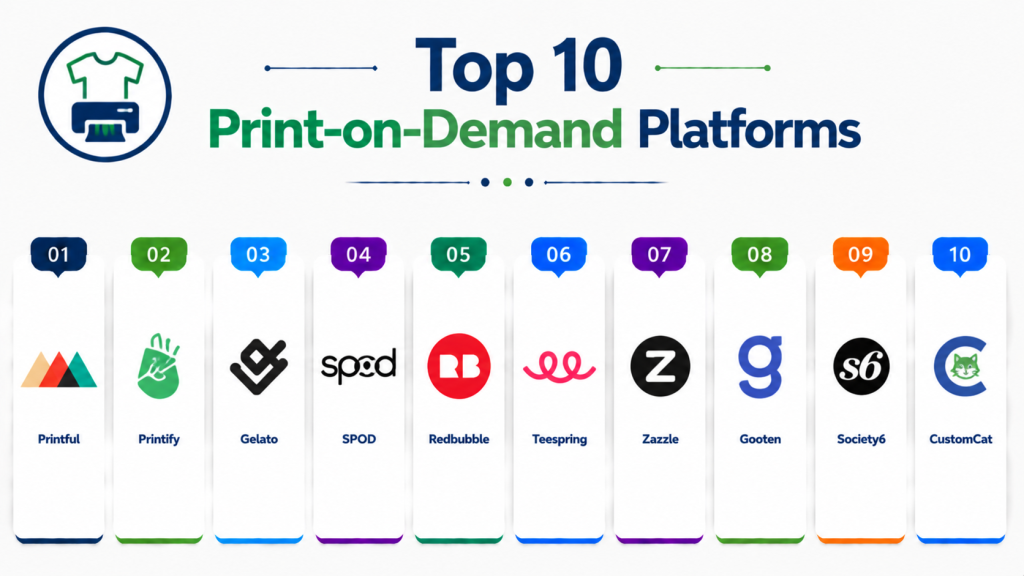
Top 10 Print-on-Demand Platforms Tools
#1 — Printful
Short description: Printful is one of the most recognized print-on-demand platforms for e-commerce brands, creators, and apparel businesses. It offers premium-quality fulfillment services, extensive integrations, and strong branding customization capabilities for scaling online stores.
Key Features
- Large apparel and accessories catalog
- Warehousing and fulfillment support
- White-label branding options
- Built-in mockup generator
- Embroidery and DTG printing support
- API access for automation workflows
- Multi-store management
Pros
- Strong fulfillment reliability
- Excellent integration ecosystem
- Premium print quality
Cons
- Higher pricing than some competitors
- Lower margins on certain products
- Advanced branding features may increase costs
Platforms / Deployment
- Web / iOS / Android
- Cloud
Security & Compliance
- MFA support
- GDPR support
- Encryption in transit
- Not publicly stated for broader certifications
Integrations & Ecosystem
Printful supports a large e-commerce ecosystem and integrates with major marketplaces and online store builders.
- Shopify
- Etsy
- WooCommerce
- Amazon
- BigCommerce
- API access
Support & Community
Printful offers extensive documentation, onboarding tutorials, webinars, and educational resources. It also has a large global creator and seller community.
#2 — Printify
Short description: Printify provides access to a broad supplier network that allows sellers to choose fulfillment providers based on pricing, shipping speed, and regional availability. It is especially popular among Etsy and Shopify sellers seeking flexibility and profitability.
Key Features
- Global supplier marketplace
- Extensive product catalog
- Automated order routing
- Product mockup tools
- Bulk order capabilities
- Supplier comparison system
- Marketplace integrations
Pros
- Competitive pricing structure
- Large supplier ecosystem
- Flexible fulfillment choices
Cons
- Quality varies by supplier
- Shipping consistency may differ
- Support experience can vary
Platforms / Deployment
- Web
- Cloud
Security & Compliance
- MFA support
- GDPR support
- Not publicly stated for SOC or ISO certifications
Integrations & Ecosystem
Printify supports many popular e-commerce systems and marketplace integrations.
- Shopify
- Etsy
- WooCommerce
- Wix
- eBay
- API support
Support & Community
Printify provides strong onboarding content, educational resources, and a large creator-focused user community.
#3 — Gelato
Short description: Gelato focuses heavily on localized production and sustainable fulfillment. Its distributed fulfillment model helps businesses reduce shipping times and improve international delivery efficiency.
Key Features
- Localized fulfillment infrastructure
- Sustainability-focused operations
- Global print partner network
- Automated order management
- Product personalization support
- Multi-currency selling
- Branded packaging
Pros
- Faster international delivery
- Eco-conscious fulfillment model
- Strong global production coverage
Cons
- Smaller product catalog
- Limited advanced customization
- Product availability varies regionally
Platforms / Deployment
- Web
- Cloud
Security & Compliance
- MFA support
- GDPR support
- Not publicly stated for broader certifications
Integrations & Ecosystem
Gelato integrates with major commerce and creative platforms for multi-channel selling.
- Shopify
- Etsy
- WooCommerce
- API integrations
- Adobe Express
Support & Community
Gelato provides onboarding guides, tutorials, and SMB-focused support resources for growing e-commerce businesses.
#4 — SPOD
Short description: SPOD by Spreadshirt is known for fast fulfillment times and beginner-friendly onboarding. It is commonly used by SMBs and online sellers looking for rapid product production.
Key Features
- Fast production turnaround
- Product customization tools
- Apparel-focused catalog
- Real-time order tracking
- Shopify integration
- Bulk order support
- Mockup generator
Pros
- Very fast fulfillment
- Easy setup process
- Beginner-friendly interface
Cons
- Smaller integration ecosystem
- Limited enterprise features
- Fewer advanced branding capabilities
Platforms / Deployment
- Web
- Cloud
Security & Compliance
- MFA support
- GDPR support
- Not publicly stated for enterprise certifications
Integrations & Ecosystem
SPOD mainly focuses on SMB-oriented e-commerce integrations.
- Shopify
- WooCommerce
- Spreadshirt ecosystem
- Order APIs
Support & Community
SPOD provides useful onboarding resources and setup tutorials for new sellers entering print-on-demand commerce.
#5 — Redbubble
Short description: Redbubble combines marketplace discovery with print-on-demand fulfillment, allowing artists and creators to monetize designs without building independent stores or managing fulfillment operations.
Key Features
- Built-in marketplace traffic
- Artist storefront support
- Global fulfillment network
- Automated royalty management
- Large product variety
- Community discovery features
- Simplified design uploads
Pros
- No separate storefront required
- Strong artist marketplace
- Simple monetization workflow
Cons
- Limited branding control
- Competitive marketplace environment
- Lower pricing flexibility
Platforms / Deployment
- Web / iOS / Android
- Cloud
Security & Compliance
- MFA support
- GDPR support
- Not publicly stated for advanced certifications
Integrations & Ecosystem
Redbubble focuses more on marketplace commerce than extensive third-party integrations.
- Marketplace ecosystem
- Social sharing tools
- Limited API support
Support & Community
Large artist community with onboarding resources and educational materials for creators.
#6 — Spring
Short description: Spring is a creator-focused merchandise platform designed for influencers, streamers, and social media personalities. It simplifies merchandise selling through creator economy integrations and social commerce workflows.
Key Features
- Creator storefronts
- Social commerce integrations
- YouTube merchandise shelf support
- Mobile-friendly design tools
- Campaign-based selling
- Automated fulfillment
- Apparel and accessories catalog
Pros
- Strong creator ecosystem
- Easy merchandise setup
- Social platform integrations
Cons
- Limited advanced customization
- Smaller product catalog
- Fewer enterprise-focused capabilities
Platforms / Deployment
- Web
- Cloud
Security & Compliance
- MFA support
- GDPR support
- Not publicly stated for broader certifications
Integrations & Ecosystem
Spring integrates heavily with creator and influencer commerce platforms.
- YouTube
- TikTok
- Twitch
- Shopify
- Social storefront tools
Support & Community
Spring offers onboarding guides and creator-focused support for influencers and online communities.
#7 — Zazzle
Short description: Zazzle provides advanced personalization capabilities and a large product catalog for creators and businesses. It is commonly used for personalized gifts, event merchandise, and branded products.
Key Features
- Deep personalization support
- Large product catalog
- Customer design customization
- Marketplace exposure
- Business merchandise tools
- Product configuration engine
- Design templates
Pros
- Strong personalization workflows
- Large marketplace reach
- Wide product selection
Cons
- User interface feels outdated
- Marketplace competition is intense
- Limited external integrations
Platforms / Deployment
- Web
- Cloud
Security & Compliance
- MFA support
- GDPR support
- Not publicly stated for enterprise certifications
Integrations & Ecosystem
Zazzle emphasizes marketplace-driven commerce and customer customization experiences.
- Marketplace ecosystem
- Product design tools
- Personalization workflows
Support & Community
Established seller ecosystem with onboarding support and educational resources.
#8 — Gooten
Short description: Gooten focuses on scalable fulfillment automation and API-driven workflows for growing e-commerce operations. It is commonly used by businesses needing operational efficiency and automation flexibility.
Key Features
- Automated order management
- API-first architecture
- Global fulfillment network
- Supplier routing optimization
- White-label fulfillment
- Analytics dashboard
- Product customization support
Pros
- Strong automation capabilities
- Good scalability support
- Flexible API ecosystem
Cons
- Less beginner-friendly
- Smaller creator community
- Product catalog smaller than some competitors
Platforms / Deployment
- Web
- Cloud
Security & Compliance
- MFA support
- GDPR support
- Not publicly stated for advanced certifications
Integrations & Ecosystem
Gooten supports automation-heavy commerce workflows and scalable integrations.
- Shopify
- Etsy
- WooCommerce
- APIs
- Order management systems
Support & Community
Gooten is better suited for operationally mature e-commerce businesses and scaling fulfillment teams.
#9 — Apliiq
Short description: Apliiq specializes in premium apparel customization and fashion-oriented print-on-demand production. It is especially popular among streetwear brands and clothing startups focused on branding quality.
Key Features
- Premium apparel customization
- Private label branding
- Embroidery support
- Custom woven labels
- Fashion-oriented production
- Screen printing capabilities
- Brand packaging customization
Pros
- Strong apparel branding support
- High-quality fashion production
- Excellent for premium clothing brands
Cons
- Narrower product catalog
- Higher production costs
- Less suitable for general merchandise
Platforms / Deployment
- Web
- Cloud
Security & Compliance
- MFA support
- GDPR support
- Not publicly stated for broader certifications
Integrations & Ecosystem
Apliiq primarily supports apparel-focused e-commerce workflows.
- Shopify
- Etsy
- WooCommerce
- API access
Support & Community
Apliiq provides onboarding guidance and branding assistance for apparel-focused businesses.
#10 — TeePublic
Short description: TeePublic is a marketplace-focused print-on-demand platform that allows artists and designers to monetize artwork through merchandise sales without operating independent e-commerce stores.
Key Features
- Marketplace exposure
- Artist storefronts
- Apparel and accessories catalog
- Promotional campaign support
- Automated fulfillment
- Community discovery tools
- Simplified artwork uploads
Pros
- Easy creator onboarding
- Marketplace-driven traffic
- Simple monetization process
Cons
- Limited branding flexibility
- Competitive marketplace environment
- Reduced customer ownership
Platforms / Deployment
- Web
- Cloud
Security & Compliance
- MFA support
- GDPR support
- Not publicly stated for enterprise certifications
Integrations & Ecosystem
TeePublic focuses primarily on marketplace operations and artist visibility workflows.
- Social sharing tools
- Marketplace ecosystem
- Limited third-party integrations
Support & Community
Good onboarding experience for independent creators and artists entering merchandise commerce.
Comparison Table
| Tool Name | Best For | Platforms Supported | Deployment | Standout Feature | Public Rating |
|---|---|---|---|---|---|
| Printful | Premium e-commerce brands | Web, iOS, Android | Cloud | Premium fulfillment quality | N/A |
| Printify | Budget-conscious sellers | Web | Cloud | Large supplier network | N/A |
| Gelato | Global fulfillment | Web | Cloud | Localized printing | N/A |
| SPOD | Fast fulfillment | Web | Cloud | Rapid production speed | N/A |
| Redbubble | Independent artists | Web, iOS, Android | Cloud | Built-in marketplace | N/A |
| Spring | Influencer merchandise | Web | Cloud | Creator integrations | N/A |
| Zazzle | Personalized products | Web | Cloud | Deep customization | N/A |
| Gooten | Operational scalability | Web | Cloud | API-first automation | N/A |
| Apliiq | Fashion brands | Web | Cloud | Premium apparel branding | N/A |
| TeePublic | Artist monetization | Web | Cloud | Marketplace exposure | N/A |
Evaluation & Scoring of Print-on-Demand Platforms
| Tool Name | Core 25% | Ease 15% | Integrations 15% | Security 10% | Performance 10% | Support 10% | Value 15% | Weighted Total |
|---|---|---|---|---|---|---|---|---|
| Printful | 9 | 9 | 9 | 8 | 9 | 9 | 7 | 8.6 |
| Printify | 8 | 9 | 8 | 7 | 8 | 8 | 9 | 8.2 |
| Gelato | 8 | 8 | 8 | 8 | 9 | 8 | 8 | 8.1 |
| SPOD | 7 | 9 | 7 | 7 | 8 | 7 | 8 | 7.7 |
| Redbubble | 7 | 9 | 6 | 7 | 7 | 8 | 8 | 7.5 |
| Spring | 7 | 8 | 7 | 7 | 7 | 7 | 8 | 7.4 |
| Zazzle | 8 | 7 | 6 | 7 | 7 | 7 | 7 | 7.2 |
| Gooten | 8 | 7 | 8 | 7 | 8 | 7 | 8 | 7.8 |
| Apliiq | 7 | 7 | 6 | 7 | 8 | 7 | 7 | 7.1 |
| TeePublic | 6 | 8 | 5 | 7 | 7 | 7 | 8 | 6.9 |
These scores are comparative rather than absolute. A higher score does not automatically mean a platform is universally superior for every business model. Some platforms prioritize branding and premium fulfillment, while others focus more heavily on marketplace traffic, automation, or pricing flexibility. Businesses should evaluate operational priorities carefully before choosing a provider. Running small pilot campaigns with shortlisted platforms is usually the most effective evaluation strategy.
Which Print-on-Demand Platforms Tool Is Right for You?
Solo / Freelancer
Independent creators and freelancers usually benefit most from easy-to-launch platforms with built-in audience exposure. Redbubble, TeePublic, and Spring are strong choices for creators wanting simple monetization without building independent stores.
SMB
Small businesses generally require stronger branding, integrations, and fulfillment reliability. Printful and Gelato are excellent options for SMBs needing scalable e-commerce operations and branding support.
Mid-Market
Mid-market businesses should prioritize automation, API flexibility, and operational scalability. Gooten and Printful provide stronger workflow automation and scalable fulfillment management.
Enterprise
Enterprise organizations often require operational visibility, integration flexibility, global fulfillment coverage, and branding consistency. Printful and Gooten are among the strongest options for larger-scale commerce operations.
Budget vs Premium
Printify offers strong pricing flexibility and supplier choice, while Printful and Apliiq focus more heavily on premium branding and higher-quality apparel fulfillment.
Feature Depth vs Ease of Use
SPOD and Spring provide easier onboarding for beginners, while Gooten offers deeper automation and operational flexibility for mature e-commerce teams.
Integrations & Scalability
Businesses operating across Shopify, Etsy, WooCommerce, and Amazon should prioritize platforms with mature integration ecosystems such as Printful, Printify, and Gelato.
Security & Compliance Needs
Most print-on-demand platforms provide basic account protection and GDPR support. Businesses with advanced governance or compliance requirements should validate authentication controls, API security, and operational protections directly with vendors.
Frequently Asked Questions
1. What is a print-on-demand platform?
A print-on-demand platform allows businesses and creators to sell customized products without holding inventory. Products are manufactured only after customer orders are placed, reducing operational costs and inventory risk.
2. Which print-on-demand platform is best for beginners?
Printful, Printify, and SPOD are commonly considered beginner-friendly because they offer simple onboarding, easy integrations, and intuitive management dashboards.
3. Can print-on-demand platforms integrate with Shopify?
Yes. Most major print-on-demand platforms integrate directly with Shopify and other e-commerce systems to automate order syncing and fulfillment management.
4. How do print-on-demand businesses generate profit?
Businesses earn profit by pricing products higher than production and fulfillment costs. Profitability depends on branding, niche targeting, pricing strategy, and marketing effectiveness.
5. Are print-on-demand businesses scalable?
Yes. Many businesses scale successfully using print-on-demand platforms because fulfillment, inventory management, and shipping are handled by the provider.
6. What products are commonly sold using print-on-demand?
Popular products include apparel, mugs, tote bags, posters, phone cases, stickers, accessories, notebooks, and personalized gifts.
7. Why is fulfillment speed important?
Faster fulfillment improves customer satisfaction, reduces refund risks, and supports repeat purchases. Localized fulfillment networks can significantly improve delivery performance.
8. Can enterprises use print-on-demand platforms?
Yes. Enterprises commonly use print-on-demand for branded merchandise, employee apparel, event kits, and promotional campaigns.
9. What are the biggest mistakes new sellers make?
Common mistakes include poor niche selection, weak branding, low-quality artwork, unrealistic pricing expectations, and ignoring fulfillment quality testing.
10. Is marketplace selling better than operating an independent store?
Marketplace platforms provide built-in traffic and simpler onboarding, while independent stores offer greater branding control and stronger customer ownership.
Conclusion
Print-on-demand platforms have evolved into powerful commerce ecosystems supporting creators, influencers, apparel startups, online retailers, and enterprise merchandise operations. The best platform depends heavily on business priorities such as fulfillment speed, product quality, branding flexibility, automation depth, marketplace exposure, and pricing structure. Printful remains one of the strongest all-around choices for professional e-commerce brands, while Printify delivers strong value for margin-focused sellers and Gelato excels in localized fulfillment. Marketplace-driven platforms like Redbubble and TeePublic simplify monetization for artists and creators, while Gooten and Apliiq provide stronger support for automation and premium apparel branding. Businesses should carefully compare integrations, operational workflows, fulfillment quality, and scalability before making a final decision. Shortlisting two or three platforms, testing product quality, and validating fulfillment performance through pilot campaigns is usually the most effective approach before scaling long-term operations.