Introduction
Music distribution platforms help artists, labels, and music businesses publish, manage, distribute, and monetize music across streaming services, digital stores, social platforms, and content ecosystems. These platforms simplify the process of getting music onto services like Spotify, Apple Music, YouTube Music, Amazon Music, TikTok, and other digital channels while also supporting royalty collection, analytics, rights management, and audience growth.
As the music industry becomes more creator-driven and streaming-focused, distribution platforms now play a major role beyond simple delivery. Artists and labels increasingly expect marketing tools, AI-driven insights, automated royalty tracking, social monetization, publishing support, and direct fan engagement capabilities. Modern music distribution systems also help creators manage multi-platform releases, split royalties between collaborators, and monitor streaming performance in real time.
Real-world use cases include:
- Independent artist music releases
- Label catalog distribution management
- Global streaming and store delivery
- Collaborative royalty splitting
- Social media music monetization
Evaluation Criteria for Buyers
- Streaming platform coverage
- Royalty payment flexibility
- Revenue share and pricing model
- Analytics and reporting quality
- Rights management capabilities
- Ease of release management
- Marketing and promotion tools
- Collaboration and royalty splitting
- Customer support quality
- Scalability for labels and catalogs
Best for: independent musicians, record labels, producers, publishers, distributors, content creators, and music businesses managing digital music releases and monetization workflows.
Not ideal for: creators who only publish music casually on social platforms without monetization goals or organizations requiring fully custom enterprise rights infrastructure beyond standard distribution workflows.
Key Trends in Music Distribution Platforms
- AI-powered analytics are helping artists predict audience engagement and streaming trends.
- Social media monetization is becoming a major revenue source alongside streaming platforms.
- Automated royalty splitting is simplifying collaboration between artists and producers.
- Short-form video integrations are becoming essential for music promotion workflows.
- Distribution platforms increasingly include marketing, playlist pitching, and fan engagement tools.
- Subscription-based pricing models continue replacing commission-heavy structures.
- Real-time streaming analytics are becoming standard expectations.
- Rights management and copyright protection tools are improving across platforms.
- Independent artists are demanding label-style capabilities without traditional label contracts.
- Multi-channel monetization across streaming, gaming, and creator platforms is expanding rapidly.
How We Selected These Tools Methodology
The platforms in this list were selected based on real-world music distribution, monetization, and artist management requirements.
Selection factors included:
- Market visibility and artist adoption
- Streaming platform coverage
- Royalty and payment management capabilities
- Ease of release workflows
- Analytics and reporting depth
- Pricing transparency and value
- Rights management functionality
- Scalability for labels and larger catalogs
- Marketing and promotional features
- Overall creator ecosystem maturity
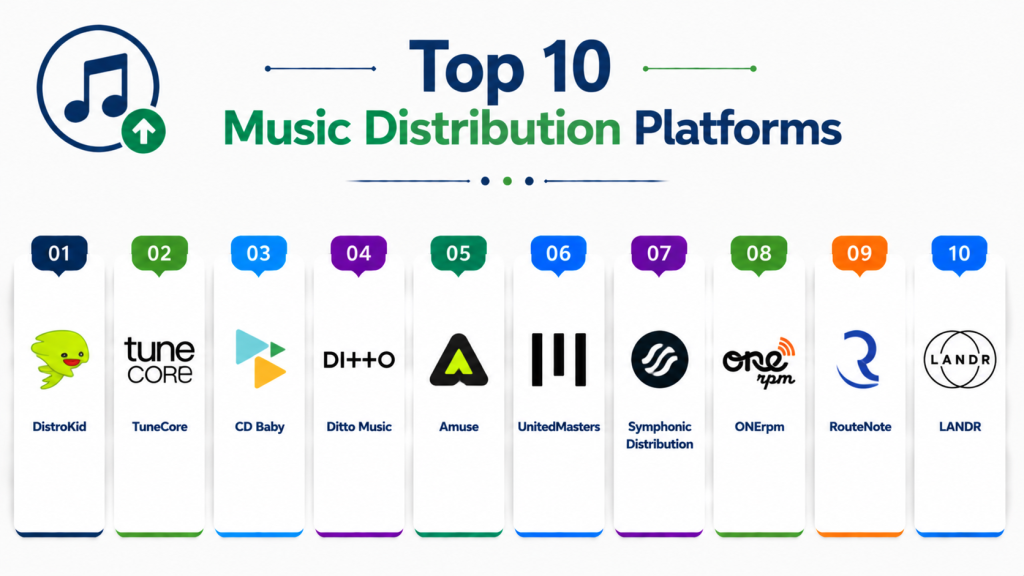
Top 10 Music Distribution Platforms
#1 — DistroKid
Short description: DistroKid is one of the most popular music distribution platforms for independent artists and creators. It allows users to upload unlimited music releases to major streaming services for a flat subscription fee. The platform is widely known for its fast distribution workflows, royalty splitting features, and artist-friendly pricing structure.
Key Features
- Unlimited music uploads
- Automated royalty splitting
- Fast release distribution
- Streaming revenue tracking
- YouTube monetization tools
- Hyperfollow promotional pages
- Playlist and metadata management
Pros
- Affordable flat-rate pricing
- Very fast release processing
- Strong independent artist ecosystem
Cons
- Some advanced features require add-ons
- Customer support response times may vary
- Limited label-focused enterprise tools
Platforms / Deployment
- Web
- Cloud
Security & Compliance
- MFA support
- User account controls
- Additional certifications not publicly stated
Integrations & Ecosystem
DistroKid integrates with major streaming platforms, social music channels, and monetization services.
- Spotify
- Apple Music
- TikTok
- YouTube Music
- Streaming analytics platforms
Support & Community
DistroKid has a very large independent artist user base. Documentation is accessible, though support quality may vary depending on subscription tier.
#2 — TuneCore
Short description: TuneCore is a long-established music distribution platform offering streaming distribution, publishing administration, royalty collection, and artist monetization services. It is suitable for both independent artists and growing labels seeking strong global distribution coverage and financial reporting tools.
Key Features
- Global digital music distribution
- Publishing administration
- Royalty reporting dashboards
- Social platform monetization
- Analytics and trend tracking
- Revenue collection support
- Marketing promotion tools
Pros
- Strong global reach
- Good royalty transparency
- Broad monetization support
Cons
- Pricing may become expensive for large catalogs
- Advanced tools may require higher plans
- Some workflows feel enterprise-heavy
Platforms / Deployment
- Web
- Cloud
Security & Compliance
- User authentication controls
- Account security protections
- Additional certifications not publicly stated
Integrations & Ecosystem
TuneCore supports broad digital music and monetization integrations.
- Spotify
- Apple Music
- TikTok
- YouTube
- Publishing services
Support & Community
TuneCore offers structured onboarding resources and educational material for independent musicians and labels.
#3 — CD Baby
Short description: CD Baby is a music distribution and artist services platform supporting streaming distribution, physical music sales, publishing administration, and sync licensing opportunities. It is widely used by independent musicians looking for broad distribution with additional monetization services.
Key Features
- Streaming platform distribution
- Physical music sales support
- Sync licensing opportunities
- Publishing administration
- Revenue collection services
- YouTube monetization
- Artist analytics dashboards
Pros
- Strong artist services ecosystem
- One-time release pricing options
- Good monetization coverage
Cons
- Distribution fees may add up over time
- Slower release workflows than some competitors
- Interface can feel dated
Platforms / Deployment
- Web
- Cloud
Security & Compliance
- User access controls
- Account protection measures
- Additional certifications not publicly stated
Integrations & Ecosystem
CD Baby integrates with streaming, monetization, and publishing ecosystems.
- Spotify
- Apple Music
- Amazon Music
- YouTube
- Social platforms
- Publishing collection systems
Support & Community
CD Baby has a large independent artist community and extensive educational resources for creators.
#4 — UnitedMasters
Short description: UnitedMasters combines music distribution with artist marketing, fan engagement, and brand partnership opportunities. The platform focuses heavily on independent creators who want to maintain ownership while growing audiences through digital and social channels.
Key Features
- Streaming music distribution
- Brand partnership opportunities
- Audience analytics
- Social media integrations
- Royalty management
- Fan engagement tools
- Creator marketing support
Pros
- Strong creator-focused ecosystem
- Good social monetization support
- Useful marketing opportunities
Cons
- Premium features may require subscription upgrades
- Less label-focused workflow depth
- Enterprise functionality is limited
Platforms / Deployment
- Web
- iOS
- Android
- Cloud
Security & Compliance
- User account controls
- MFA support
- Additional certifications not publicly stated
Integrations & Ecosystem
UnitedMasters emphasizes integrations with streaming and creator ecosystems.
- TikTok
- Spotify
- YouTube
- Social analytics tools
Support & Community
The platform is popular among emerging independent creators and social-first artists. Educational resources are improving steadily.
#5 — AWAL
Short description: AWAL is a music distribution and artist services platform focused on independent artists and labels seeking higher-level support without traditional label contracts. It combines distribution, analytics, marketing support, and funding opportunities for growing artists.
Key Features
- Global music distribution
- Advanced analytics dashboards
- Artist funding opportunities
- Marketing support tools
- Playlist promotion support
- Revenue tracking
- Label services capabilities
Pros
- Strong artist development support
- Good analytics visibility
- More premium artist services
Cons
- Selective onboarding process
- Less suitable for hobby creators
- Pricing structure may vary
Platforms / Deployment
- Web
- Cloud
Security & Compliance
- User authentication controls
- Access management
- Additional certifications not publicly stated
Integrations & Ecosystem
AWAL integrates with major streaming and artist marketing ecosystems.
- Spotify
- Apple Music
- YouTube
- Social platforms
- Analytics systems
Support & Community
AWAL is known for more hands-on support for selected artists and growing music businesses.
#6 — Amuse
Short description: Amuse is a mobile-friendly music distribution platform designed for independent artists seeking simple release management and streaming distribution. It offers both free and premium plans while focusing heavily on artist ownership and ease of use.
Key Features
- Mobile-first music distribution
- Streaming revenue tracking
- Artist analytics
- Fast release workflows
- Royalty payment support
- Label services options
- Team collaboration features
Pros
- Easy onboarding experience
- Mobile-friendly workflows
- Flexible pricing structure
Cons
- Advanced label features are limited
- Premium features require paid plans
- Smaller ecosystem than major competitors
Platforms / Deployment
- Web
- iOS
- Android
- Cloud
Security & Compliance
- Account security controls
- User authentication
- Additional certifications not publicly stated
Integrations & Ecosystem
Amuse supports integrations across streaming and digital music ecosystems.
- Spotify
- Apple Music
- TikTok
- YouTube Music
- Social platforms
Support & Community
Amuse is especially popular among newer independent artists looking for simple release workflows.
#7 — Ditto Music
Short description: Ditto Music provides digital distribution, label services, royalty collection, and promotional tools for artists and labels. The platform is designed to support creators ranging from independent musicians to larger distribution networks.
Key Features
- Unlimited music distribution
- Label services support
- Publishing administration
- Royalty collection
- Chart registration support
- Smart release scheduling
- Analytics dashboards
Pros
- Good label management capabilities
- Flexible pricing options
- Broad distribution coverage
Cons
- Support experience may vary
- Interface usability could improve
- Some advanced tools require premium plans
Platforms / Deployment
- Web
- Cloud
Security & Compliance
- User account controls
- Access protections
- Additional certifications not publicly stated
Integrations & Ecosystem
Ditto supports integrations across streaming, publishing, and monetization ecosystems.
- Spotify
- Apple Music
- TikTok
- YouTube
- Publishing systems
Support & Community
Ditto provides educational resources and artist support programs for independent musicians and labels.
#8 — Symphonic Distribution
Short description: Symphonic Distribution is a music distribution and label services platform supporting artists, managers, and independent labels. It combines distribution, royalty collection, video monetization, and marketing services in one ecosystem.
Key Features
- Global digital distribution
- Video monetization support
- Royalty collection tools
- Marketing and playlist support
- Analytics reporting
- Label management workflows
- Rights administration tools
Pros
- Strong label support capabilities
- Good monetization coverage
- Professional service offerings
Cons
- Selective onboarding for some services
- Higher-tier features may cost more
- Enterprise workflows can be complex
Platforms / Deployment
- Web
- Cloud
Security & Compliance
- User access controls
- Account security protections
- Additional certifications not publicly stated
Integrations & Ecosystem
Symphonic supports streaming, monetization, and rights management integrations.
- Spotify
- Apple Music
- YouTube
- TikTok
- Social monetization platforms
Support & Community
Symphonic is well regarded among independent labels and professional artist management teams.
#9 — LANDR Distribution
Short description: LANDR Distribution combines music distribution with audio mastering, collaboration, and creator workflow tools. It is designed for musicians who want an all-in-one ecosystem covering production, release management, and monetization.
Key Features
- Digital music distribution
- AI-assisted mastering tools
- Collaboration workflows
- Royalty tracking
- Streaming analytics
- Release scheduling
- Creator workflow ecosystem
Pros
- Integrated production ecosystem
- Useful creator collaboration tools
- Strong workflow simplicity
Cons
- Enterprise label functionality is limited
- Some advanced features require subscriptions
- Less focused on large catalog operations
Platforms / Deployment
- Web
- macOS
- Windows
- Cloud
Security & Compliance
- User account protections
- Authentication controls
- Additional certifications not publicly stated
Integrations & Ecosystem
LANDR connects production, mastering, and streaming workflows together.
- Spotify
- Apple Music
- DAW ecosystems
- Collaboration tools
- Creator workflows
Support & Community
LANDR has a strong creator-focused community with educational and production-oriented resources.
#10 — ONErpm
Short description: ONErpm is a music distribution and artist services platform supporting creators, labels, and music businesses globally. It combines streaming distribution, analytics, royalty management, and marketing support with scalable artist development services.
Key Features
- Global music distribution
- Royalty tracking and reporting
- Marketing support
- Social monetization tools
- Label service capabilities
- Streaming analytics
- Multi-platform release management
Pros
- Strong global reach
- Useful artist growth support
- Good label scalability
Cons
- Service levels may vary by region
- Some advanced features are selective
- Workflow complexity can increase for large catalogs
Platforms / Deployment
- Web
- iOS
- Android
- Cloud
Security & Compliance
- User authentication controls
- Access management
- Additional certifications not publicly stated
Integrations & Ecosystem
ONErpm integrates with major streaming and creator monetization ecosystems.
- Spotify
- Apple Music
- TikTok
- YouTube
- Social monetization platforms
Support & Community
ONErpm supports both independent creators and labels with regional teams and artist development services.
Comparison Table
| Tool Name | Best For | Platform Supported | Deployment | Standout Feature | Public Rating |
|---|---|---|---|---|---|
| DistroKid | Independent artists | Web | Cloud | Unlimited uploads | N/A |
| TuneCore | Global artist distribution | Web | Cloud | Broad monetization support | N/A |
| CD Baby | Independent musicians | Web | Cloud | Artist service ecosystem | N/A |
| UnitedMasters | Social-first creators | Web, Mobile | Cloud | Brand partnerships | N/A |
| AWAL | Growing independent artists | Web | Cloud | Premium artist support | N/A |
| Amuse | Mobile-first creators | Web, Mobile | Cloud | Simple onboarding | N/A |
| Ditto Music | Labels and creators | Web | Cloud | Label support tools | N/A |
| Symphonic Distribution | Independent labels | Web | Cloud | Professional label services | N/A |
| LANDR Distribution | Music producers | Web, Desktop | Cloud | AI-assisted mastering | N/A |
| ONErpm | Global music businesses | Web, Mobile | Cloud | Artist growth ecosystem | N/A |
Evaluation & Scoring of Music Distribution Platforms
| Tool Name | Core 25% | Ease 15% | Integrations 15% | Security 10% | Performance 10% | Support 10% | Value 15% | Weighted Total |
|---|---|---|---|---|---|---|---|---|
| DistroKid | 9.0 | 9.0 | 8.5 | 7.5 | 8.5 | 7.5 | 9.5 | 8.65 |
| TuneCore | 8.5 | 8.0 | 8.5 | 7.5 | 8.5 | 8.0 | 8.0 | 8.18 |
| CD Baby | 8.0 | 7.5 | 8.0 | 7.0 | 8.0 | 8.0 | 8.0 | 7.83 |
| UnitedMasters | 8.0 | 8.5 | 8.0 | 7.5 | 8.0 | 7.5 | 8.0 | 8.00 |
| AWAL | 8.5 | 7.5 | 8.0 | 7.5 | 8.5 | 8.5 | 7.0 | 8.03 |
| Amuse | 7.5 | 8.5 | 7.5 | 7.0 | 7.5 | 7.5 | 8.5 | 7.75 |
| Ditto Music | 8.0 | 7.5 | 8.0 | 7.0 | 7.5 | 7.0 | 8.0 | 7.65 |
| Symphonic Distribution | 8.5 | 7.5 | 8.5 | 7.5 | 8.5 | 8.0 | 7.5 | 8.10 |
| LANDR Distribution | 8.0 | 8.5 | 7.5 | 7.0 | 8.0 | 7.5 | 8.0 | 7.88 |
| ONErpm | 8.5 | 7.5 | 8.5 | 7.5 | 8.0 | 8.0 | 7.5 | 8.03 |
These scores are comparative rather than absolute. Higher scores generally indicate stronger feature depth, broader distribution support, better integrations, and stronger operational scalability. Independent creators may prioritize ease of use and affordability, while labels and larger businesses may focus more on analytics, royalty workflows, and marketing support. Businesses should validate workflow compatibility before selecting a platform.
Which Music Distribution Platform Is Right for You?
Solo / Freelancer
Independent artists and solo musicians usually prioritize affordability, simplicity, and fast release management. DistroKid, Amuse, and LANDR Distribution are practical options for creators seeking streamlined publishing workflows.
SMB
Small labels and growing artist teams often need analytics, royalty splitting, marketing tools, and catalog management. TuneCore, Ditto Music, and ONErpm provide balanced operational capabilities for expanding music businesses.
Mid-Market
Mid-market labels and artist management organizations should prioritize scalability, monetization depth, reporting, and artist services. Symphonic Distribution and AWAL provide stronger support for growth-focused music operations.
Enterprise
Large labels and entertainment organizations require advanced rights workflows, catalog management, global monetization support, and large-scale reporting capabilities. Symphonic Distribution and ONErpm are stronger options for broader operational scalability.
Budget vs Premium
Budget-focused creators often prefer flat-fee or low-cost distribution models such as DistroKid or Amuse. Premium platforms typically provide stronger artist development, marketing, and operational support.
Feature Depth vs Ease of Use
Simpler platforms prioritize faster onboarding and release management, while larger ecosystems provide deeper analytics, marketing workflows, and label support. Businesses should balance usability against long-term operational needs.
Integrations & Scalability
Labels and agencies managing larger catalogs should prioritize platforms with stronger API ecosystems, analytics tools, royalty management, and marketing integrations.
Security & Compliance Needs
Music businesses handling financial records, royalty splits, and sensitive contract data should prioritize platforms with strong account protections, access controls, and operational transparency.
Frequently Asked Questions FAQs
1. What is a music distribution platform?
A music distribution platform helps artists and labels deliver music to streaming services, digital stores, and social platforms while managing royalties and monetization workflows.
2. Do music distribution platforms collect royalties?
Yes. Most platforms collect streaming and download revenue from supported stores and distribute earnings back to artists or rights holders.
3. Which platform is best for independent artists?
DistroKid, TuneCore, and Amuse are popular among independent artists because they offer simple workflows, broad distribution, and affordable pricing options.
4. Can labels use these platforms?
Yes. Many music distribution platforms support labels with catalog management, artist reporting, and royalty splitting functionality.
5. Do these tools support social media monetization?
Most modern distribution platforms support monetization across TikTok, YouTube, Instagram, and other creator-focused ecosystems.
6. Are music distribution platforms secure?
Most platforms include standard account protections, authentication controls, and payment security workflows. Businesses should still review operational security practices carefully.
7. How do pricing models work?
Some platforms use annual subscription pricing, while others charge per release or take a percentage of revenue. Pricing structures vary significantly between vendors.
8. Can artists split royalties automatically?
Yes. Many platforms include automated royalty splitting tools for collaborators, producers, writers, and labels.
9. What should artists evaluate before choosing a platform?
Artists should evaluate pricing, royalty policies, analytics quality, release speed, marketing tools, customer support, and streaming platform coverage.
10. Can artists switch distribution platforms later?
Yes. Artists can usually migrate catalogs between platforms, although metadata management and release coordination should be handled carefully during transitions.
Conclusion
Music distribution platforms have evolved far beyond simple digital delivery systems and now play a major role in artist monetization, marketing, royalty management, and audience growth. The right platform depends heavily on artist goals, catalog size, pricing preferences, operational complexity, and growth strategy. Independent creators may prioritize affordability and fast release workflows with platforms like DistroKid or Amuse, while labels and larger music businesses may need stronger analytics, royalty infrastructure, and artist support from platforms such as TuneCore, AWAL, Symphonic Distribution, or ONErpm. Businesses should compare pricing structures, monetization features, reporting capabilities, and long-term scalability before making a final decision. The best approach is to shortlist two or three platforms, test release workflows, validate royalty handling, and confirm that the ecosystem supports future growth requirements.