Introduction
Sleep Tracking Apps help users monitor, understand, and improve their sleep habits using smartphone sensors, wearable devices, AI-driven insights, and wellness analytics. These applications track sleep duration, sleep quality, recovery patterns, heart rate behavior, disturbances, and bedtime consistency. Many modern solutions also provide smart alarms, guided relaxation content, and personalized wellness recommendations.
Sleep quality has become increasingly important as people deal with stress, digital overload, irregular work schedules, and wellness challenges. Modern sleep tracking platforms now go beyond simple tracking by offering behavioral insights, recovery intelligence, and personalized health recommendations.
Real-world use cases include:
- Improving sleep quality and bedtime routines
- Monitoring recovery after workouts or physical activity
- Reducing stress and mental fatigue
- Supporting long-term wellness tracking
- Building healthier daily habits
Key evaluation criteria for buyers include:
- Sleep tracking accuracy
- Wearable compatibility
- AI-powered insights
- Ease of use
- Reporting and analytics
- Battery efficiency
- Privacy and security features
- Health ecosystem integrations
- Coaching and wellness features
- Subscription pricing structure
Best for: wellness-focused individuals, fitness enthusiasts, athletes, professionals, students, and users interested in improving recovery and sleep quality.
Not ideal for: users requiring medical-grade sleep diagnostics, people unwilling to use wearables or subscriptions, or users seeking highly specialized clinical sleep monitoring tools.
Key Trends in Sleep Tracking Apps
- AI-powered sleep coaching is becoming a standard feature across premium wellness platforms.
- Recovery analytics now combine sleep, stress, heart rate variability, and activity data.
- Wearable ecosystems continue driving innovation in sleep monitoring accuracy.
- Privacy-focused health data storage and encryption expectations are increasing globally.
- Subscription-based wellness ecosystems are replacing one-time purchase models.
- Smart alarm automation is becoming more adaptive through sleep stage analysis.
- Meditation and mindfulness integrations are becoming more common.
- Cross-platform compatibility with Apple Health and Google Fit continues improving.
- Passive sleep tracking without manual activation is becoming more reliable.
- Wellness programs and health partnerships are expanding adoption across organizations.
How We Selected These Tools
We evaluated sleep tracking apps based on usability, feature depth, market adoption, ecosystem maturity, and long-term reliability. The goal was to identify platforms suitable for different types of users ranging from casual wellness users to athletes and advanced recovery-focused individuals.
Selection criteria included:
- Market adoption and user popularity
- Feature completeness and usability
- Sleep tracking and recovery analytics quality
- Reliability and performance consistency
- Health ecosystem integrations
- Wearable compatibility
- Security and privacy practices
- Value for money
- Long-term reporting capabilities
- Suitability across multiple user segments
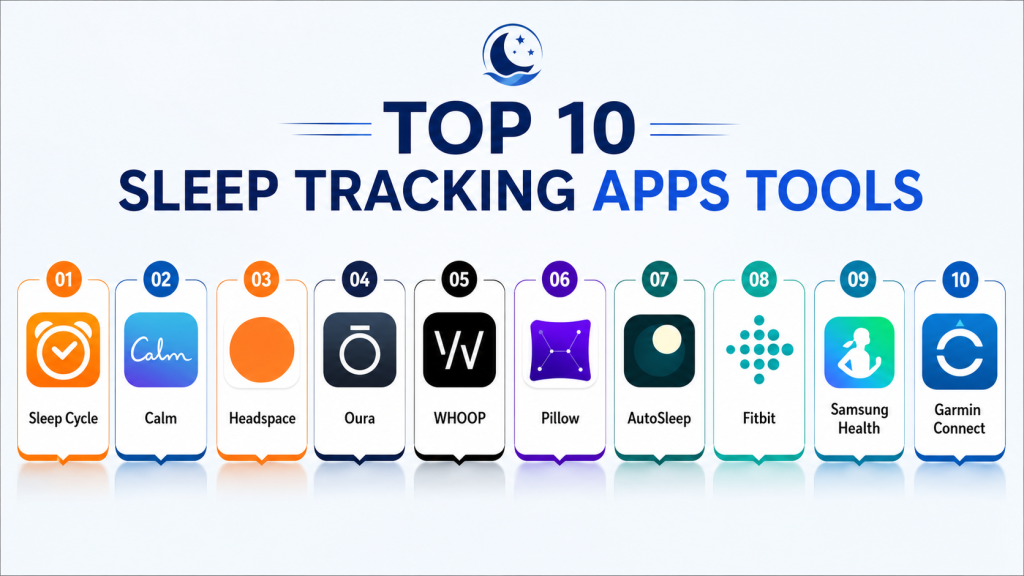
Top 10 Sleep Tracking Apps Tools
#1 — Sleep Cycle
Short description:
Sleep Cycle is one of the most widely used sleep tracking applications for mobile users. It focuses on intelligent sleep analysis, smart wake-up alarms, sleep quality insights, and long-term sleep reporting. The platform is ideal for users wanting a balance between simplicity and practical wellness insights.
Key Features
- Smart wake-up alarm
- Sleep stage monitoring
- Snore and sound detection
- Sleep quality scoring
- Long-term trend analysis
- Relaxation and sleep aid content
- Wellness reporting dashboards
Pros
- Easy-to-use interface
- Excellent smart alarm functionality
- Strong sleep trend reporting
Cons
- Advanced features require subscription
- Not designed for clinical diagnostics
- Tracking accuracy depends on phone placement
Platforms / Deployment
- iOS
- Android
- Cloud
Security & Compliance
- GDPR-focused privacy policies
- Encryption features publicly referenced
- Additional certifications not publicly stated
Integrations & Ecosystem
Sleep Cycle supports integration with major mobile wellness ecosystems and wearable environments.
- Apple Health
- Google Fit
- Smartwatch compatibility
- Wellness tracking platforms
- Mobile health integrations
Support & Community
Strong onboarding experience with a large global user base and well-designed in-app guidance.
#2 — Calm
Short description:
Calm is a wellness-focused platform known for meditation, stress reduction, and sleep improvement content. It combines sleep stories, guided relaxation, mindfulness exercises, and wellness programs for users seeking healthier bedtime routines.
Key Features
- Sleep stories
- Guided meditation
- Relaxation audio sessions
- Breathing exercises
- Wellness routines
- Sleep-focused music
- Mood and wellness support
Pros
- High-quality wellness content
- Excellent for stress management
- Beginner-friendly experience
Cons
- Limited deep sleep analytics
- Premium subscription required for full access
- Less focused on biometric tracking
Platforms / Deployment
- iOS
- Android
- Web
- Cloud
Security & Compliance
- GDPR-related privacy practices
- Encryption support publicly referenced
- Additional certifications not publicly stated
Integrations & Ecosystem
Calm integrates with wellness and health ecosystems to support mindfulness and sleep improvement.
- Apple Health
- Google Fit
- Smartwatch compatibility
- Wellness ecosystems
- Meditation integrations
Support & Community
Large user community with strong onboarding resources and consistent product updates.
#3 — Headspace
Short description:
Headspace combines sleep support, mindfulness training, and meditation tools in a polished wellness platform. It works well for users seeking guided sleep routines and mental wellness support in a single application.
Key Features
- Sleepcasts
- Guided meditation
- Sleep music
- Focus sessions
- Relaxation exercises
- Daily wellness routines
- Mental wellness analytics
Pros
- Excellent user experience
- Strong mindfulness ecosystem
- High-quality guided sessions
Cons
- Limited advanced sleep metrics
- Subscription-focused pricing
- Less suitable for athlete recovery tracking
Platforms / Deployment
- iOS
- Android
- Web
- Cloud
Security & Compliance
- GDPR support
- Encryption practices publicly referenced
- Additional compliance details not publicly stated
Integrations & Ecosystem
Headspace focuses heavily on wellness integrations and mindfulness ecosystems.
- Apple Health
- Google Fit
- Smartwatch support
- Corporate wellness platforms
- Wellness application ecosystem
Support & Community
Strong onboarding experience with active wellness communities and enterprise wellness adoption.
#4 — Oura
Short description:
Oura combines a smart wearable ring with advanced sleep and recovery analytics. It is widely used by athletes, biohackers, executives, and wellness-focused users seeking detailed biometric insights and long-term recovery tracking.
Key Features
- Sleep stage analysis
- Recovery scoring
- Heart rate variability tracking
- Readiness scores
- Temperature monitoring
- AI-powered wellness insights
- Long-term health reporting
Pros
- Advanced biometric tracking
- Comfortable wearable design
- Excellent recovery analytics
Cons
- Requires dedicated hardware
- Subscription needed for full functionality
- Higher total ownership cost
Platforms / Deployment
- iOS
- Android
- Cloud
Security & Compliance
- Encryption support publicly referenced
- GDPR-related privacy practices
- Additional certifications not publicly stated
Integrations & Ecosystem
Oura supports a strong ecosystem of health, fitness, and wellness integrations.
- Apple Health
- Google Health Connect
- Fitness applications
- Wellness platforms
- Smart device integrations
Support & Community
Strong global wellness community with extensive educational resources and onboarding guidance.
#5 — WHOOP
Short description:
WHOOP focuses on recovery, strain analysis, and sleep optimization through a wearable tracking ecosystem. The platform is especially popular among athletes and high-performance users seeking deeper recovery intelligence.
Key Features
- Recovery scoring
- Sleep need calculations
- Strain analysis
- Heart rate variability tracking
- Behavioral coaching
- Continuous wellness monitoring
- Recovery trend analysis
Pros
- Excellent recovery insights
- Advanced athlete analytics
- Strong coaching recommendations
Cons
- Requires subscription membership
- Premium pricing structure
- Complex for casual users
Platforms / Deployment
- iOS
- Android
- Cloud
Security & Compliance
- Encryption practices publicly referenced
- Additional compliance details not publicly stated
Integrations & Ecosystem
WHOOP integrates with multiple fitness and recovery ecosystems.
- Apple Health
- Fitness tracking platforms
- Wearable integrations
- Recovery analytics systems
- Wellness data sharing
Support & Community
Large athlete-focused community with premium onboarding and wellness coaching resources.
#6 — Pillow
Short description:
Pillow is a sleep tracking platform optimized for Apple ecosystem users. It provides sleep analytics, smart alarms, audio recordings, and Apple Watch integration for users wanting seamless mobile wellness tracking.
Key Features
- Apple Watch sleep tracking
- Smart wake-up alarm
- Audio recording support
- Sleep history analysis
- Nap tracking
- Heart rate integration
- Sleep trend reporting
Pros
- Excellent Apple ecosystem integration
- User-friendly analytics
- Lightweight mobile experience
Cons
- Limited Android support
- Subscription required for advanced features
- Best experience requires Apple Watch
Platforms / Deployment
- iOS
- watchOS
- Cloud
Security & Compliance
- Apple privacy framework support
- Additional certifications not publicly stated
Integrations & Ecosystem
Pillow integrates deeply with Apple health and smartwatch environments.
- Apple Health
- Apple Watch
- Siri support
- Wellness ecosystem integrations
Support & Community
Strong mobile onboarding and positive adoption among Apple device users.
#7 — AutoSleep
Short description:
AutoSleep is a lightweight sleep tracking application focused on passive monitoring and detailed reporting. It is especially popular among Apple Watch users looking for automatic sleep tracking without manual activation.
Key Features
- Automatic sleep detection
- Readiness monitoring
- Sleep consistency tracking
- Heart rate analytics
- Detailed reporting dashboards
- Sleep bank analysis
- Passive tracking automation
Pros
- Fully automatic tracking
- Strong Apple Watch support
- Detailed long-term insights
Cons
- Apple ecosystem only
- Interface may feel complex initially
- No Android compatibility
Platforms / Deployment
- iOS
- watchOS
- Cloud
Security & Compliance
- Apple privacy controls
- Additional certifications not publicly stated
Integrations & Ecosystem
AutoSleep integrates closely with Apple wellness ecosystems and smartwatch environments.
- Apple Health
- Apple Watch
- Siri integrations
- Health analytics platforms
Support & Community
Strong niche user community with active updates and consistent feature improvements.
#8 — Fitbit
Short description:
Fitbit combines fitness tracking, wellness analytics, and sleep monitoring within a large wearable ecosystem. It is ideal for mainstream users seeking balanced wellness tracking and easy-to-understand sleep insights.
Key Features
- Sleep score analytics
- Smart wake alarms
- Heart rate monitoring
- Wellness and recovery metrics
- Guided mindfulness sessions
- Fitness tracking integration
- Long-term health reporting
Pros
- Large wearable ecosystem
- Beginner-friendly experience
- Balanced health tracking features
Cons
- Full experience requires Fitbit hardware
- Premium features require subscription
- Less advanced than dedicated recovery platforms
Platforms / Deployment
- iOS
- Android
- Web
- Cloud
Security & Compliance
- Google ecosystem security controls
- GDPR support
- Additional certifications not publicly stated
Integrations & Ecosystem
Fitbit offers one of the broadest consumer wellness ecosystems available.
- Apple Health
- Google Health Connect
- Smartwatch integrations
- Fitness platforms
- Wellness APIs
Support & Community
Large global community with mature documentation and strong customer support resources.
#9 — Samsung Health
Short description:
Samsung Health provides sleep tracking, activity monitoring, and wellness analytics for Samsung device users. It delivers a balanced experience for mobile users seeking integrated wellness and health tracking.
Key Features
- Sleep stage tracking
- Snore detection
- Heart rate monitoring
- Wellness scoring
- Smartwatch integration
- Activity analytics
- Daily health reporting
Pros
- Strong Samsung ecosystem support
- Free core functionality
- Reliable smartwatch compatibility
Cons
- Best experience requires Samsung devices
- Limited advanced recovery analytics
- Some features vary across regions
Platforms / Deployment
- Android
- iOS
- Cloud
Security & Compliance
- Samsung account security protections
- Additional certifications not publicly stated
Integrations & Ecosystem
Samsung Health integrates with mobile wellness and smartwatch ecosystems.
- Galaxy Watch
- Fitness integrations
- Health APIs
- Wellness tracking platforms
- Smart device ecosystem
Support & Community
Strong mobile ecosystem support with reliable documentation and product updates.
#10 — Garmin Connect
Short description:
Garmin Connect provides advanced sleep analytics and recovery monitoring for users within the Garmin wearable ecosystem. It is especially valuable for endurance athletes and performance-focused users.
Key Features
- Sleep scoring
- Recovery analytics
- Body battery monitoring
- Stress tracking
- Heart rate variability analysis
- Performance readiness insights
- Athlete-focused reporting
Pros
- Excellent athlete analytics
- Strong wearable reliability
- Detailed recovery insights
Cons
- Requires Garmin hardware
- Complex for casual users
- Premium wearable investment required
Platforms / Deployment
- iOS
- Android
- Web
- Cloud
Security & Compliance
- Encryption practices publicly referenced
- Additional compliance details not publicly stated
Integrations & Ecosystem
Garmin Connect integrates with sports, wellness, and fitness ecosystems.
- Apple Health
- Google Fit
- Fitness tracking platforms
- Performance analytics systems
- Wearable integrations
Support & Community
Large athlete-focused community with extensive support documentation and active product development.
Comparison Table
| Tool Name | Best For | Platforms Supported | Deployment | Standout Feature | Public Rating |
|---|---|---|---|---|---|
| Sleep Cycle | Everyday sleep tracking | iOS, Android | Cloud | Smart wake-up alarms | N/A |
| Calm | Relaxation and wellness | iOS, Android, Web | Cloud | Sleep stories | N/A |
| Headspace | Mindfulness and sleep routines | iOS, Android, Web | Cloud | Guided sleep sessions | N/A |
| Oura | Advanced biometric tracking | iOS, Android | Cloud | Smart ring analytics | N/A |
| WHOOP | Athlete recovery monitoring | iOS, Android | Cloud | Recovery intelligence | N/A |
| Pillow | Apple ecosystem users | iOS, watchOS | Cloud | Apple Watch optimization | N/A |
| AutoSleep | Passive automatic tracking | iOS, watchOS | Cloud | Automatic detection | N/A |
| Fitbit | Mainstream wellness tracking | iOS, Android, Web | Cloud | Sleep score reporting | N/A |
| Samsung Health | Samsung mobile users | Android, iOS | Cloud | Integrated wellness ecosystem | N/A |
| Garmin Connect | Athlete performance tracking | iOS, Android, Web | Cloud | Recovery and readiness analytics | N/A |
Evaluation & Scoring of Sleep Tracking Apps
| Tool Name | Core 25% | Ease 15% | Integrations 15% | Security 10% | Performance 10% | Support 10% | Value 15% | Weighted Total |
|---|---|---|---|---|---|---|---|---|
| Sleep Cycle | 8.5 | 9 | 7.5 | 7 | 8 | 8 | 8.5 | 8.2 |
| Calm | 7.5 | 9 | 7 | 7 | 8 | 8.5 | 7.5 | 7.8 |
| Headspace | 7.5 | 8.5 | 7 | 7 | 8 | 8 | 7.5 | 7.7 |
| Oura | 9.5 | 8 | 8.5 | 8 | 9 | 8.5 | 7 | 8.5 |
| WHOOP | 9 | 7.5 | 8 | 8 | 9 | 8 | 7 | 8.2 |
| Pillow | 8 | 8.5 | 7 | 7 | 8 | 7.5 | 8 | 7.9 |
| AutoSleep | 8 | 7.5 | 7 | 7 | 8 | 7.5 | 8.5 | 7.8 |
| Fitbit | 8.5 | 8.5 | 8.5 | 8 | 8.5 | 8 | 8 | 8.3 |
| Samsung Health | 8 | 8 | 7.5 | 7.5 | 8 | 7.5 | 8.5 | 7.9 |
| Garmin Connect | 9 | 7.5 | 8 | 8 | 9 | 8 | 7.5 | 8.2 |
These scores are comparative and designed to help buyers evaluate strengths across different categories. Higher scores typically indicate stronger overall capability, but the best choice still depends on user goals, preferred ecosystem, and budget. Athlete-focused platforms may prioritize advanced recovery analytics, while wellness-focused apps often emphasize usability and mindfulness support. Buyers should evaluate both feature depth and long-term usability before selecting a platform.
Which Sleep Tracking Apps Tool Is Right for You?
Solo / Freelancer
Solo users often benefit most from lightweight and easy-to-use applications such as Sleep Cycle, Calm, or Fitbit. These platforms provide simple onboarding, practical sleep insights, and wellness support without overwhelming complexity.
SMB
Small wellness programs and growing organizations may prefer Fitbit, Calm, or Headspace because they are easier to deploy across broader user groups and support general wellness initiatives effectively.
Mid-Market
Mid-sized wellness and fitness-focused environments often benefit from Oura or WHOOP due to their advanced recovery tracking and behavioral analytics capabilities.
Enterprise
Large organizations focusing on wellness, executive health, or employee recovery programs may prioritize platforms with mature ecosystems, wearable integrations, and stable reporting capabilities such as Fitbit or Oura.
Budget vs Premium
Budget-conscious users may prefer Samsung Health, Sleep Cycle, or AutoSleep because they offer strong value with lower entry costs. Premium users seeking advanced analytics may prefer WHOOP or Oura.
Feature Depth vs Ease of Use
WHOOP, Garmin Connect, and Oura provide the deepest recovery analytics. Calm, Sleep Cycle, and Headspace focus more on simplicity and user-friendly wellness experiences.
Integrations & Scalability
Users heavily invested in Apple ecosystems may prefer Pillow or AutoSleep, while Android and mixed-device users may benefit more from Fitbit, Samsung Health, or Garmin Connect.
Security & Compliance Needs
Privacy-conscious users should carefully evaluate how wellness data is stored, synchronized, and shared across connected ecosystems. Enterprise-grade compliance transparency varies across consumer-focused wellness platforms.
Frequently Asked Questions
1. Are sleep tracking apps accurate?
Most modern sleep tracking apps provide useful estimates for sleep duration and sleep quality. However, they are not replacements for medical sleep studies. Accuracy depends heavily on sensor quality, wearable placement, and user behavior.
2. Do I need a wearable device for sleep tracking?
Some applications can track sleep using smartphone sensors alone. However, wearable devices usually provide more accurate heart rate monitoring, recovery analytics, and sleep stage tracking.
3. Which sleep tracking app is best for beginners?
Sleep Cycle, Fitbit, and Calm are often ideal for beginners because they combine simple onboarding with user-friendly wellness features and understandable reporting.
4. Are sleep tracking apps useful for athletes?
Yes. Platforms such as WHOOP, Garmin Connect, and Oura are widely used by athletes because they combine sleep tracking with recovery, strain, and performance analytics.
5. Do sleep tracking apps require subscriptions?
Many platforms use subscription models for advanced analytics, coaching, and recovery features. Basic functionality may still be available through free plans or bundled wearable ecosystems.
6. Can sleep tracking apps improve mental wellness?
Sleep quality strongly impacts mood, stress, and cognitive performance. Applications like Calm and Headspace support mental wellness through meditation, relaxation, and guided sleep routines.
7. Why are integrations important in sleep tracking apps?
Integrations help users combine wellness, fitness, smartwatch, and health data into a unified experience. Strong integrations reduce manual syncing and improve long-term wellness visibility.
8. Are sleep tracking apps secure?
Most leading vendors provide encryption and account security protections. However, enterprise-grade compliance certifications and privacy transparency differ significantly across platforms.
9. What mistakes do users commonly make with sleep tracking apps?
Common mistakes include inconsistent wearable usage, ignoring long-term trends, focusing too heavily on daily scores, and expecting medical-grade diagnostics from consumer wellness tools.
10. How should I choose the right sleep tracking app?
Start by identifying your primary goal such as wellness improvement, athlete recovery, stress reduction, or habit tracking. Then evaluate wearable compatibility, pricing, ecosystem integrations, and reporting quality before choosing a platform.
Conclusion
Sleep tracking apps have evolved into sophisticated wellness platforms that combine AI-driven insights, wearable analytics, recovery intelligence, mindfulness support, and long-term health reporting. Casual users may prefer accessible tools such as Sleep Cycle, Calm, or Fitbit, while advanced users and athletes often benefit more from platforms like Oura, WHOOP, and Garmin Connect. The right solution depends on personal goals, budget, device ecosystem, and the level of biometric detail required. Buyers should also evaluate long-term subscription costs, integration flexibility, privacy expectations, and overall ease of use before committing to a platform. Instead of searching for a single universal winner, shortlist two or three tools that align with your lifestyle, test them consistently over several weeks, and validate whether the insights genuinely improve sleep quality, recovery, and overall wellness.