Introduction
Influencer marketing platforms are tools that help brands discover creators, manage collaborations, run campaigns, and measure results across social media channels. Instead of handling influencer outreach manually, these platforms provide a structured way to identify the right creators, automate workflows, and track performance.
As the creator economy grows, influencer marketing has become a key channel for customer acquisition and brand awareness. Businesses now require data-driven tools to ensure authenticity, measure ROI, and scale campaigns efficiently. These platforms reduce guesswork and enable smarter decisions using analytics and automation.
Common Use Cases
- Discovering relevant influencers based on audience and niche
- Managing outreach, contracts, and communication
- Tracking campaign performance and ROI
- Running affiliate and creator programs
- Monitoring content and engagement
Key Evaluation Criteria
- Influencer database size and quality
- AI-based discovery and filtering
- Campaign management capabilities
- Analytics and reporting depth
- Integration with eCommerce and CRM tools
- Fraud detection and audience authenticity
- Ease of use and automation
- Pricing flexibility and scalability
Best for: Marketing teams, D2C brands, agencies, and startups aiming to scale influencer campaigns efficiently.
Not ideal for: Businesses with minimal social media activity or those not leveraging influencer partnerships.
Key Trends in Influencer Marketing Platforms
- AI-driven influencer matching based on audience quality and engagement
- Growth of micro and nano influencers for targeted campaigns
- Integration with eCommerce platforms for direct revenue tracking
- Automation of outreach, contracts, and payments
- Increased focus on fake follower detection
- Rise of user-generated content marketplaces
- Expansion into affiliate marketing and creator monetization
- Cross-platform campaign management
- Data-driven performance prediction
- Emphasis on compliance and transparency
How We Selected These Tools (Methodology)
- Market popularity and adoption
- Feature completeness across campaign lifecycle
- Data accuracy and influencer insights
- Automation and AI capabilities
- Integration ecosystem strength
- Scalability across different business sizes
- User experience and onboarding
- Support quality and documentation
- Practical usability across industries
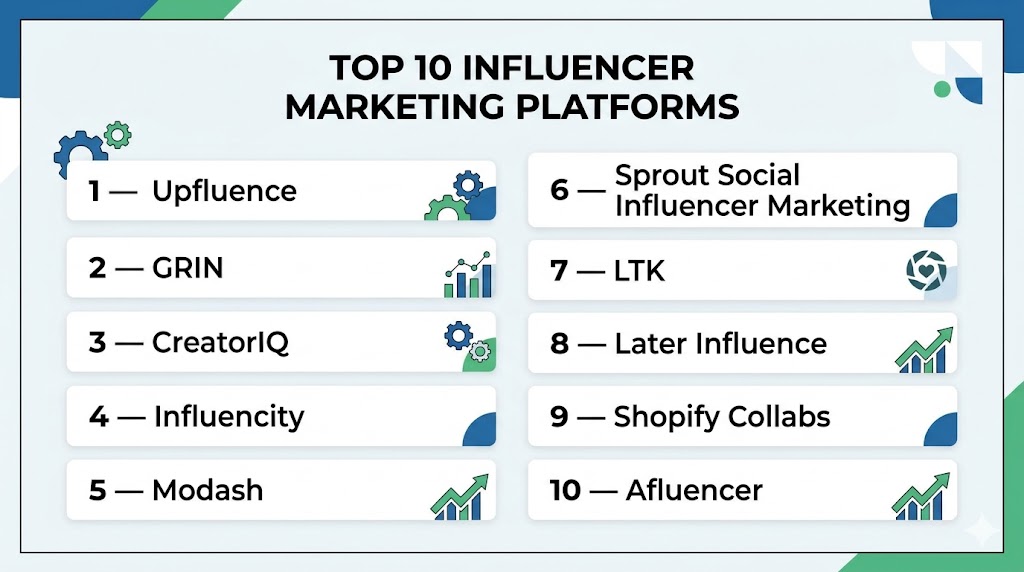
Top 10 Influencer Marketing Platforms
#1 — Upfluence
Short description: A comprehensive platform for influencer and affiliate marketing, especially suited for eCommerce brands.
Key Features
- AI-powered influencer discovery
- Affiliate tracking and promo codes
- Built-in CRM
- Payment automation
- Campaign analytics
- eCommerce integrations
Pros
- Strong ROI tracking
- End-to-end workflow
Cons
- Premium pricing
- Learning curve
Platforms / Deployment
Cloud
Security & Compliance
Not publicly stated
Integrations & Ecosystem
Supports strong eCommerce and marketing integrations.
- Shopify
- WooCommerce
- CRM tools
- APIs
Support & Community
Professional onboarding and support
#2 — GRIN
Short description: A platform focused on building long-term relationships with influencers and creators.
Key Features
- Creator relationship management
- Product seeding workflows
- Content tracking
- Influencer CRM
- Payment management
- Workflow automation
Pros
- Ideal for long-term partnerships
- Strong automation
Cons
- Expensive
- Best for larger teams
Platforms / Deployment
Cloud
Security & Compliance
Not publicly stated
Integrations & Ecosystem
- eCommerce tools
- Email systems
- APIs
Support & Community
Strong onboarding support
#3 — CreatorIQ
Short description: An enterprise-level platform for managing large-scale influencer campaigns globally.
Key Features
- AI-driven discovery
- Brand safety monitoring
- Campaign workflows
- Advanced analytics
- Multi-team collaboration
- Reporting tools
Pros
- Enterprise scalability
- Strong analytics
Cons
- Complex setup
- High cost
Platforms / Deployment
Cloud
Security & Compliance
Not publicly stated
Integrations & Ecosystem
- Enterprise tools
- CRM systems
- APIs
Support & Community
Enterprise-grade support
#4 — Influencity
Short description: A user-friendly platform for influencer discovery and campaign management.
Key Features
- Influencer database
- Advanced filters
- Campaign tracking
- Relationship management
- Analytics dashboards
Pros
- Easy to use
- Good data coverage
Cons
- Limited advanced features
- Tier-based restrictions
Platforms / Deployment
Cloud
Security & Compliance
Not publicly stated
Integrations & Ecosystem
- Social platforms
- APIs
Support & Community
Good documentation
#5 — Modash
Short description: A data-driven platform focused on influencer discovery and audience analytics.
Key Features
- Large creator database
- Audience insights
- Fake follower detection
- Performance tracking
- Cross-platform coverage
Pros
- Strong analytics
- Reliable data
Cons
- Limited campaign tools
- Pricing varies
Platforms / Deployment
Cloud
Security & Compliance
Not publicly stated
Integrations & Ecosystem
- APIs
- Analytics tools
Support & Community
Moderate support
#6 — Sprout Social Influencer Marketing
Short description: A platform combining influencer marketing with social media management.
Key Features
- Influencer discovery
- Brand fit scoring
- Campaign management
- Analytics
- Workflow tools
Pros
- Integrated ecosystem
- Easy workflows
Cons
- Pricing higher
- Limited niche flexibility
Platforms / Deployment
Cloud
Security & Compliance
Not publicly stated
Integrations & Ecosystem
- Social platforms
- CRM tools
- APIs
Support & Community
Strong support resources
#7 — LTK
Short description: A creator commerce platform connecting influencers with shopping audiences.
Key Features
- Influencer marketplace
- Affiliate tools
- Campaign tracking
- Content monetization
- Performance insights
Pros
- Strong for retail
- Built-in audience
Cons
- Limited beyond lifestyle niche
- Less flexible
Platforms / Deployment
Cloud
Security & Compliance
Not publicly stated
Integrations & Ecosystem
- eCommerce tools
- Affiliate systems
Support & Community
Good support
#8 — Later Influence
Short description: A platform designed for managing influencer campaigns and analytics.
Key Features
- Influencer discovery
- Campaign workflows
- Referral tracking
- Analytics dashboards
- Reporting tools
Pros
- Strong campaign tools
- Reliable performance tracking
Cons
- Learning curve
- Pricing not transparent
Platforms / Deployment
Cloud
Security & Compliance
Not publicly stated
Integrations & Ecosystem
- Social platforms
- APIs
Support & Community
Reliable support
#9 — Shopify Collabs
Short description: A built-in influencer platform for Shopify-based businesses.
Key Features
- Affiliate program management
- Creator discovery
- Automated payments
- Product gifting
- Campaign tracking
Pros
- Easy to use
- Cost-effective
Cons
- Limited ecosystem
- Basic analytics
Platforms / Deployment
Cloud
Security & Compliance
Not publicly stated
Integrations & Ecosystem
- Shopify ecosystem
- Payment tools
Support & Community
Strong platform support
#10 — Afluencer
Short description: A simple influencer marketplace connecting brands with creators.
Key Features
- Influencer marketplace
- Campaign listings
- Messaging tools
- Search filters
- Dashboard
Pros
- Affordable
- Easy to start
Cons
- Limited features
- Basic analytics
Platforms / Deployment
Cloud
Security & Compliance
Not publicly stated
Integrations & Ecosystem
- Social platforms
- APIs
Support & Community
Basic support
Comparison Table (Top 10)
| Tool Name | Best For | Platform(s) Supported | Deployment | Standout Feature | Public Rating |
|---|---|---|---|---|---|
| Upfluence | eCommerce | Web | Cloud | Affiliate tracking | N/A |
| GRIN | D2C brands | Web | Cloud | Relationship management | N/A |
| CreatorIQ | Enterprise | Web | Cloud | Brand safety | N/A |
| Influencity | SMB | Web | Cloud | Ease of use | N/A |
| Modash | Analytics | Web | Cloud | Audience insights | N/A |
| Sprout Influencer | Social teams | Web | Cloud | Brand scoring | N/A |
| LTK | Retail | Web | Cloud | Creator commerce | N/A |
| Later Influence | Campaigns | Web | Cloud | Workflow tools | N/A |
| Shopify Collabs | Shopify users | Web | Cloud | Native integration | N/A |
| Afluencer | Startups | Web | Cloud | Marketplace model | N/A |
Evaluation & Scoring of Influencer Marketing Platforms
| Tool Name | Core | Ease | Integrations | Security | Performance | Support | Value | Weighted Total |
|---|---|---|---|---|---|---|---|---|
| Upfluence | 9 | 7 | 9 | 6 | 8 | 8 | 7 | 8.0 |
| GRIN | 9 | 7 | 8 | 6 | 8 | 8 | 6 | 7.9 |
| CreatorIQ | 9 | 6 | 9 | 7 | 9 | 8 | 6 | 8.1 |
| Influencity | 7 | 8 | 7 | 6 | 7 | 7 | 7 | 7.2 |
| Modash | 8 | 7 | 7 | 6 | 8 | 7 | 7 | 7.5 |
| Sprout Influencer | 8 | 8 | 8 | 6 | 8 | 8 | 7 | 7.8 |
| LTK | 7 | 8 | 7 | 6 | 7 | 7 | 7 | 7.2 |
| Later Influence | 8 | 7 | 7 | 6 | 8 | 7 | 7 | 7.5 |
| Shopify Collabs | 6 | 9 | 7 | 6 | 7 | 7 | 9 | 7.4 |
| Afluencer | 6 | 8 | 6 | 5 | 6 | 6 | 8 | 6.8 |
How to interpret:
- Scores are comparative across tools
- Higher totals indicate stronger overall capability
- Enterprise tools lead in depth and scalability
- SMB tools perform better in ease and value
- Choose based on your priorities
Which Influencer Marketing Platform Is Right for You?
Solo / Freelancer
Afluencer and Shopify Collabs are ideal for simple and affordable campaigns.
SMB
Influencity and Sprout Influencer offer a balance of features and usability.
Mid-Market
Upfluence and Modash provide strong analytics and campaign tools.
Enterprise
CreatorIQ and GRIN are best for large-scale operations.
Budget vs Premium
- Budget: Afluencer, Shopify Collabs
- Premium: CreatorIQ, GRIN
Feature Depth vs Ease of Use
- Deep features: CreatorIQ, Upfluence
- Easy to use: Influencity, Shopify Collabs
Integrations & Scalability
- Strong: Upfluence, GRIN
- Basic: Afluencer
Security & Compliance Needs
- Advanced: Enterprise tools
- Basic: SMB tools
Frequently Asked Questions (FAQs)
What is an influencer marketing platform?
It helps brands find, manage, and measure influencer collaborations.
How do these platforms work?
They use databases and analytics to match brands with relevant creators.
Are they expensive?
Pricing varies depending on features and scale.
Can I track ROI?
Yes, most tools provide campaign and revenue tracking.
Do they support multiple platforms?
Yes, including major social networks.
Can they detect fake followers?
Many tools include fraud detection features.
How long does setup take?
From a few hours to longer depending on complexity.
Are they beginner-friendly?
Many platforms are designed for ease of use.
Can small businesses use them?
Yes, several tools cater to SMBs.
What are alternatives?
Manual outreach or influencer agencies.
Conclusion
Influencer marketing platforms simplify how brands discover, manage, and scale creator partnerships. They bring structure, automation, and measurable insights into what was once a manual process. While enterprise tools offer deep capabilities, many platforms also serve smaller teams effectively. The best choice depends on your goals, budget, and campaign complexity. Focus on platforms that align with your workflow and integration needs. Start with a small pilot campaign to validate performance before committing long term.