Introduction
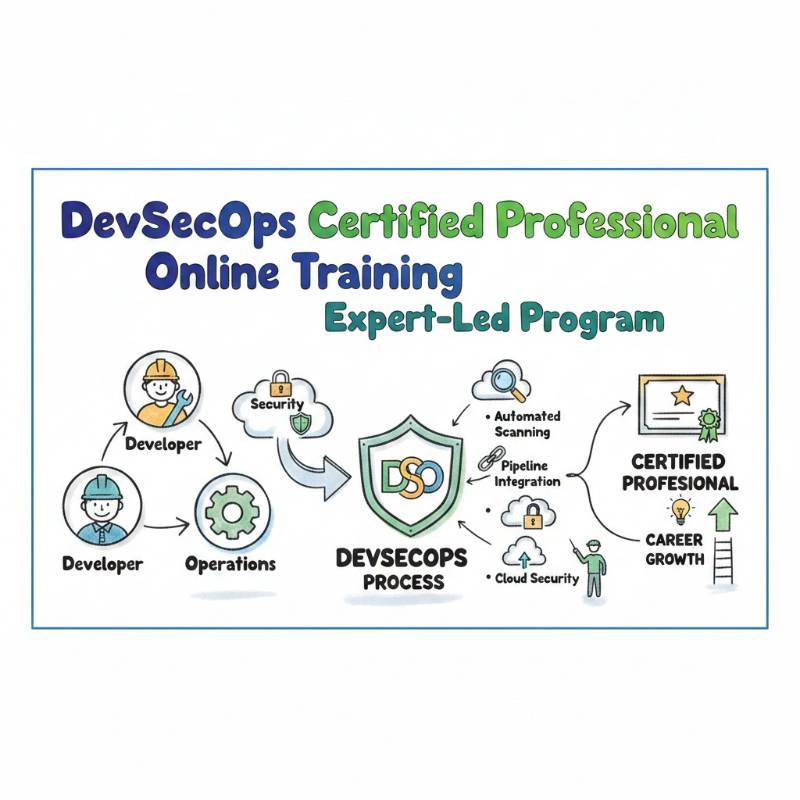
The way we build and deliver software has changed fundamentally over the last few decades. In the early days, security was often something that happened at the very end of a project. It was treated like a final inspection before a product left the factory. However, this old way of working is no longer safe or efficient. Today, software is updated constantly, and threats are more sophisticated. This is why DevSecOps Certified Professional Online Training has become so important. It teaches a way of working where security is baked into every single step, from the first line of code to the final deployment.
Introduction to DevSecOps Certified Professional Online Training
DevSecOps Certified Professional Online Training is a deep-dive program created to help people understand how to merge development, operations, and security into one smooth process. For a long time, these three areas worked in separate rooms and rarely talked to each other. This led to delays and mistakes. This training changes that by teaching a “shared responsibility” model. When you take this course, you are learning how to make security a natural part of the daily workflow rather than a hurdle that slows everyone down.
Why It Matters in Today’s Ecosystem
In our current world of cloud computing and automation, everything moves at high speed. Companies use powerful tools to push out new features every day. If security is still being done manually or at the very end, it creates a massive bottleneck. Worse, it creates holes that hackers can exploit. DevSecOps matters because it introduces the idea of “Shift Left.” This means finding and fixing security flaws as early as possible. By doing this, you save the company money, protect the users, and make the entire system much more stable.
Why Certifications are Important for Engineers and Managers
A certification acts as a bridge between what you know and what you can prove. For an engineer, it serves as a formal recognition of your skills. It tells an employer that you have met a high standard and that you understand the best practices of the industry. For a manager, certifications are a way to ensure that the entire team is speaking the same language. When a team is certified, there is a baseline of quality that everyone follows. This leads to fewer errors, better communication, and a much higher level of trust within the organization and with outside clients.
Certification Overview Table
| Track | Level | Who it’s for | Prerequisites | Skills Covered |
| Security & Ops | Professional | Engineers & Managers | Basic DevOps Knowledge | SCA, SAST, DAST, Container Security |
Why Choose DevOpsSchool?
Selecting the right place to learn is just as important as what you are learning. DevOpsSchool stands out because they do not just focus on theory. They understand that in the real world, knowing the “why” is just as important as knowing the “how.” Their training is built by people who have spent years in the trenches of the IT industry. This means the lessons are filled with practical wisdom that you cannot find in a standard textbook.
The support provided by DevOpsSchool is also a major factor. They offer a structured environment where students can ask questions and get help with difficult concepts. The study materials are written in a way that is easy to follow, even for those who might be new to certain security topics. By choosing this institution, you are gaining access to a community that is dedicated to helping you grow your career and stay updated with the changes in the technical world.
Certification Deep-Dive: DevSecOps Certified Professional
What is this certification?
This is a professional-level program that focuses on the automation of security. It is designed to show you how to use various tools and methods to check your code and your infrastructure for weaknesses automatically, every time a change is made.
Who should take this certification?
- Software Engineers who want to write safer code from the start.
- DevOps Professionals who need to add security to their automation pipelines.
- Cloud Engineers who are responsible for protecting data in virtual environments.
- Managers who need to lead teams through a secure digital transformation.
Skills you will gain
- Automated Scanning: You will learn how to set up tools that look at your source code and find mistakes without a human having to check every line.
- Dependency Checking: You will gain the ability to scan the third-party libraries your software uses to make sure they don’t have known security holes.
- Container Safety: You will learn the best ways to secure Docker and Kubernetes, ensuring that your modern apps are protected from the inside out.
- Policy Management: You will understand how to write rules that the system follows automatically to keep everything in compliance with legal standards.
- Testing Methods: You will master both static and dynamic testing, giving you a full view of your application’s health at all times.
Real-world projects you should be able to do
- Secure Pipeline Building: You will be able to create a workflow where code is tested, scanned for security, and deployed all in one automated chain.
- Secret Management: You will learn how to properly store and use passwords and digital keys so they never get leaked or stolen.
- Audit Automation: You will be able to generate reports that prove your system is secure, which is very helpful during official company audits.
- Vulnerability Remediation: You will know how to prioritize which security issues to fix first based on how much risk they pose to the business.
Preparation Plan
7–14 Days Plan (The Quick Review)
- First Half: Spend your time reading the core manuals and understanding the basic definitions of security testing like SAST and DAST.
- Second Half: Practice using the main tools in a lab environment and take as many practice quizzes as you can to get used to the exam style.
30 Days Plan (The Standard Path)
- Week 1: Focus on the “Shift Left” philosophy and how security fits into the cultural side of a company.
- Week 2: Go deep into the technical tools. Learn how to install them and how to read the reports they generate.
- Week 3: Work on real-world scenarios. Try to fix a “broken” system and see how the security tools help you find the problem.
- Week 4: Spend this time reviewing your notes and making sure you understand the order in which security steps should happen.
60 Days Plan (The Deep Mastery)
- Month 1: Take your time with each topic. Read extra articles and watch videos on how different companies handle security at scale.
- Month 2: Focus entirely on hands-on work. Build your own projects from scratch and try to break them to see if your security measures actually work.
Common mistakes to avoid
- Focusing Only on Tools: Many people think buying a tool solves the problem. You must understand the process and the people involved to be successful.
- Skipping the Basics: Do not try to learn advanced automation if you do not understand basic networking and Linux commands first.
- Ignoring the Results: Setting up a scan is useless if you do not have a plan for how to fix the issues that the scan finds.
Best next certification after this
- In the same track: Look for advanced courses in Cloud Native Security or specific tool mastery.
- Across tracks: Site Reliability Engineering (SRE) is a great next step to understand how security and uptime work together.
- For Leadership: A course on Strategic Engineering Management will help you move into a role where you oversee entire departments.
Choose Your Learning Path
1. The DevOps Path
This is for the builders. If you enjoy creating the systems that allow software to move from a developer’s laptop to a real server, this is for you. It is about flow, speed, and making sure everything is automated.
2. The DevSecOps Path
This is for those who care about safety. You take the DevOps path and add a layer of protection. You become the person who ensures that the speed of the company does not lead to a disaster or a data leak.
3. The Site Reliability Engineering (SRE) Path
This path is for people who love stability. You will learn how to use code to manage systems so that they stay up and running even when things go wrong. It is about balance and reliability.
4. The AIOps / MLOps Path
This is a newer area for those working with data models and artificial intelligence. You will learn how to manage the lifecycle of a machine learning model just like you would manage a piece of software.
5. The DataOps Path
If you like working with large amounts of information, this is your path. It focuses on getting data from one place to another quickly and accurately so that the business can make good decisions.
6. The FinOps Path
This is for the business-minded engineer. You will learn how to track how much money is being spent in the cloud and how to save the company money by making the systems more efficient.
Role → Recommended Certifications Mapping
- DevOps Engineer: You should start with a general DevOps certification and then add the DevSecOps Professional certificate to show you can handle security.
- Site Reliability Engineer (SRE): Focus on the SRE Foundation and then look into Chaos Engineering to learn how to test system limits.
- Platform Engineer: You need to master Kubernetes and container security, so the DevSecOps track is very helpful for you.
- Cloud Engineer: Focus on certificates that cover the major cloud providers along with a solid security foundation.
- Security Engineer: You already know security, so you should take the DevSecOps course to learn how to automate what you do.
- Data Engineer: Look for DataOps and Big Data certifications to help you manage large-scale information pipelines.
- FinOps Practitioner: Focus on cloud financial management and cost optimization courses.
- Engineering Manager: You need a mix of technical understanding and leadership training to guide your team effectively.
Next Certifications to Take
Once you have finished your first major certification, it is a good idea to keep the momentum going. Here are three directions you can take:
- Same-Track: If you enjoyed DevSecOps, look for a course that focuses specifically on Cloud Security. This will help you understand the unique challenges of protecting data in a virtual world.
- Cross-Track: Consider taking an SRE course. Understanding how to keep a system reliable will make you a much better security professional, as you will see how security changes can affect performance.
- Leadership: If you want to move up the ladder, look for a management course. These programs teach you how to handle budgets, people, and long-term planning for your department.
Training & Certification Support Institutions
DevOpsSchool
This school is very well-known for its practical approach. They provide a lot of hands-on labs and real-world examples. It is a great place for someone who wants to learn by doing rather than just reading.
Cotocus
This institution offers very focused and specialized training. They are great for people who want to dive deep into a specific technical area and want a more personalized learning experience.
ScmGalaxy
This is more than just a school; it is a massive library of information. They have thousands of articles and tutorials that can help you solve almost any technical problem you run into during your workday.
BestDevOps
They provide clear and straightforward training for those who are busy and need to get to the point. Their courses are designed to give you the most important information in the shortest amount of time.
devsecopsschool.com
This is a dedicated site for security professionals. Everything here is about the intersection of development and security, making it a perfect resource for anyone on the DevSecOps path.
sreschool.com
If you want to learn about system reliability and uptime, this is the place to go. They focus entirely on the principles that keep big websites and apps running smoothly all the time.
aiopsschool.com
This school focuses on the future of IT operations. They teach you how to use artificial intelligence and machine learning to find problems in your systems before they even happen.
dataopsschool.com
For those who handle data, this institution provides the training needed to manage data pipelines correctly. They focus on quality, speed, and accuracy in data delivery.
finopsschool.com
This school is all about the money side of the cloud. They teach you how to understand your cloud bill and how to make changes that save your company a lot of money.
FAQs Section
General Career FAQs
- Is it hard to pass these exams?
It depends on your experience, but if you study consistently for a month or two, most people find them manageable. - How long does the study process take?
Most working professionals find that 30 to 60 days is the right amount of time to feel fully prepared. - Do I need to be a programmer?
You do not need to be an expert, but knowing how to read code and write simple scripts is very helpful. - Should I take DevOps before DevSecOps?
It is usually better to understand the basics of DevOps first, as it provides the foundation for the security part. - Will this help me get a raise?
While it is not guaranteed, having a professional certification often leads to better job opportunities and higher pay. - Can I take the exam from home?
Yes, most of these certifications now offer online proctored exams so you can stay in your own office. - What if I don’t have a degree?
Many companies in this field value certifications and hands-on experience just as much as a college degree. - How often do I need to recertify?
Most certificates are good for two or three years. After that, you usually take a short update exam. - Are these recognized outside of India?
Yes, the skills and the certificates are based on global standards used by companies all over the world. - What is the best way to start?
Start by reading the free resources online and then sign up for a structured course when you are ready to get serious. - Do I need a powerful computer to study?
Most of the labs are done in the cloud, so any basic laptop with a good internet connection will work. - Is there a lot of math involved?
No, these courses focus much more on logic, processes, and using tools than they do on complex math.
DevSecOps Specific FAQs
- What is the main goal of DevSecOps?
The main goal is to make security a part of everything the team does, rather than a separate chore. - Which tools will I learn to use?
You will learn about scanners like SonarQube, dependency checkers like Snyk, and container security tools. - Does this cover cloud security?
Yes, a large part of the training is about how to keep your applications safe when they are running in the cloud. - How much time should I spend on labs?
You should try to spend at least half of your study time doing hands-on work in a lab environment. - Is there support if I get stuck?
Yes, if you choose a good training provider, you will have access to instructors and community forums. - How does this help my company?
It helps by reducing the risk of a data breach, which can be very expensive and damaging to a company’s reputation. - What is “Compliance as Code”?
It is the idea of writing your legal and security requirements as code so the system can check them automatically. - Is the course updated for new threats?
Yes, the training material is regularly reviewed to make sure it covers the latest security challenges.
Testimonials
Rajesh
“I had been working in IT for years but felt like I was falling behind. This training gave me a clear path forward and helped me understand the new security tools.”
Sunita
“The best part was the hands-on labs. Instead of just hearing about security, I actually got to build a secure pipeline myself. It gave me a lot of confidence.”
Amit
“I used to think security was someone else’s job. Now I see how I can make my own work better and safer from the very first day of a project.”
Priya
“The instructors were very patient and explained things in a way that was easy to understand. I never felt overwhelmed, even when the topics got technical.”
Vikram
“This certification helped me move into a senior role. My company saw that I was serious about my career and gave me more responsibility after I finished the course.”
Conclusion
The DevSecOps Certified Professional Online Training is a vital step for anyone who wants to stay relevant in the modern software world. It is not just about passing a test; it is about learning a better, safer way to work. By bringing security into the daily conversation, we can build software that is faster, stronger, and more reliable. Taking the time to plan your learning and get certified is one of the best investments you can make for your long-term career growth.